Have you ever felt frustrated by bulky VR headsets, blurry graphics, or games that just don’t feel real enough? Many people want to escape into digital worlds but end up feeling held back by uncomfortable devices and weak immersion. You might have even wondered if truly lifelike virtual or augmented reality gaming was still years away.
I get it, I’ve faced these same issues too. I spent hours researching what’s changing in 2026 and found out the market for AR and VR is set to reach $118.79 billion next year. That number shows big changes are here! In fact, technology upgrades like powerful new headsets and smarter wearables mean we’re on the edge of a brand-new era for immersive gaming.
Let’s break down how VR and AR gaming trends 2026 are transforming everything from game design to player comfort. You’ll learn about lighter hardware, epic advances in haptics, why mixed reality matters now more than ever, and what all this means for gamers like us.
Why Immersive Gaming Is Growing So Fast
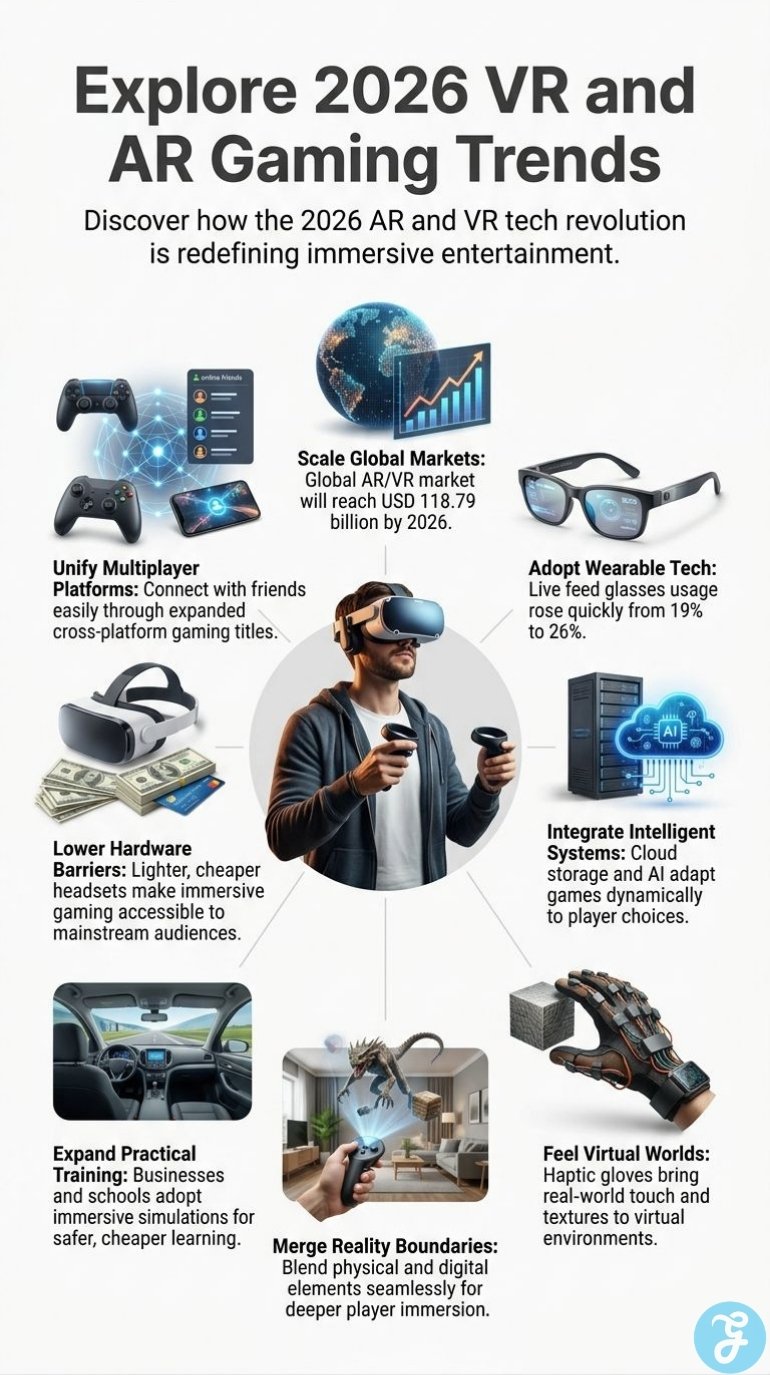
The AR and VR gaming market is booming. By 2026, it will hit a value of USD 118.79 billion. This growth shows how much gamers, developers, and tech lovers want immersive gaming experiences.
New technology drives this change every day.
In 2026, we see advanced graphics and better hardware transforming games. Lighter headsets offer more comfort while playing. I notice that haptic feedback improves the sense of touch in virtual worlds too.
With these advancements, players can feel even more engaged in digital environments than ever before.
Key Gaming Technology Advances in 2026
In 2026, we will see new tech that makes gaming even more exciting. AI and cloud computing will change how games are played. We’ll also enjoy sound that feels real and touch feedback like never before.
Headsets and smart glasses will be lighter, stronger, and cheaper too. This is just a glimpse into the bright future of gaming technology. Want to know more?
AI, Cloud Gaming, and Advanced Graphics
I see exciting changes in gaming thanks to AI, cloud computing, and advanced graphics. These technologies make games more engaging. They allow for smarter opponents and richer worlds.
With AI, characters can learn and adapt to player actions. This creates unique experiences each time we play.
Cloud computing also plays a big part in immersive gaming. It allows game developers to store data online rather than on devices. As a result, I can enjoy high-quality graphics without needing powerful hardware at home.
The new VR models feature higher resolution displays and better motion tracking, making gameplay smoother than ever before. Gamers like me will appreciate the realistic environments that come from these advancements in technology innovations.
Spatial Audio and Ultra-Realistic Haptics
Spatial audio and ultra-realistic haptics are changing the way I play games. In 2026, they play a big role in making immersive gaming feel real. With spatial audio, sounds come from different directions.
This helps me hear every detail around me, just like in the real world.
I have felt the power of haptic feedback through new gloves designed for VR experiences. These gloves let me feel textures and shapes as if they were right in front of me. New VR models come with higher resolution displays and advanced motion tracking too; this makes everything smoother and more lifelike.
The combination of these technologies makes every game more interactive and engaging for players like me.
Lighter and More Affordable Headsets and Smart Glasses
Headsets and smart glasses are getting lighter and more powerful. This change makes immersive gaming easier for everyone. I have noticed that the new VR models in 2026 offer higher resolution displays.
They also provide a wider field of view and better motion tracking.
Prices for these devices are dropping too, making them more affordable. As a gamer, I appreciate how this helps bring virtual reality into my home without breaking the bank. The growing adoption rate signals that many others feel the same way.
Smart glasses now account for 26% of wearable tech usage; this shows just how popular AR is becoming in our everyday lives.
The Convergence of AR, VR, and Mixed Reality
AR and VR are coming together in exciting ways. Mixed Reality lets us explore new worlds while staying connected to our real surroundings.
Blending Physical and Digital Worlds
AR and VR gaming is changing how I see the world. They blend physical and digital spaces in exciting ways. For instance, AR overlays virtual images onto real-life scenes. This makes it feel like characters are right in front of me.
In 2026, I noticed that the live feed’s glasses share grew from 19% to 26%. More people are using AR/VR devices daily.
Mixed Reality (MR) takes this concept further. It allows players to interact with both real and virtual elements at the same time. This creates a rich experience where games come alive around us.
Companies are investing heavily in these technologies because they know that’s where immersive gaming is headed. With headset resolutions getting higher each year, I find myself more immersed than ever before; it feels real!
The Rise of Mixed Reality and Hybrid Gaming
Mixed Reality (MR) is changing how I experience gaming. It blends the real world with digital elements, creating a unique way to play. In 2026, MR is playing a bigger role in games.
Players can explore new environments that mix physical and virtual worlds.
Hybrid gaming environments are becoming popular too. These spaces allow me to interact with both AR and VR content seamlessly. The use of smart glasses is also rising; their share went from 19% to 26%.
This shows more players are using AR/VR devices for immersive gaming experiences.
Smart Glasses and Wearables Take Center Stage
Smart glasses and wearable tech are becoming very important in gaming. In 2026, AR/VR wearables’ share rose from 19% to 26%. This shows how many people are adopting these cool devices.
They make games more fun and interactive.
I see smart glasses enhancing the way players interact with their environment. These tools bring digital elements into our real world. Players can enjoy immersive experiences like never before.
As hardware gets lighter and cheaper, I expect even more gamers will jump on board with this technology.
Market Growth and Game Evolution
The gaming market is growing fast. More players are joining every day, and new games are being made for both VR and AR.
Global Market and Player Growth
In 2026, the global AR and VR market is set to reach an amazing value of USD 118.79 billion. This shows a big jump from past years. I see many more players joining in, both in the U.S. and around the world.
More people are discovering how exciting virtual reality can be.
VR-native games are growing fast as well as cross-platform titles. The mix of different devices is helping all kinds of players join in on the fun. I feel thrilled to watch this community grow, with new gamers trying out immersive experiences every day.
As technology becomes cheaper and better, I believe we will see even more friends playing together online soon!
More VR-Native and Cross-Platform Games
More VR-native games are coming out this year. The market is growing fast. I see many new titles that focus on Virtual Reality alone, which offers rich experiences. These games provide deep immersion and make players feel like they are in a different world.
Cross-platform titles are also rising in popularity. Gamers can connect with friends across different devices. This makes it easier to play together, no matter what hardware someone uses.
With the global AR and VR market expected to reach USD 118.79 billion by 2026, more people will join the fun of immersive gaming soon.
Enterprise and Educational Adoption
In 2026, I see a big shift toward using VR and AR in schools and businesses. Companies are adopting these technologies to improve training and collaboration. They allow workers to practice skills safely in a virtual environment.
This helps reduce costs while improving learning outcomes.
Schools also embrace immersive learning methods. Students can explore different subjects through interactive experiences instead of just reading books. The global market for VR and AR is expected to reach USD 118.79 billion this year, showing that more people see the value of these tools for education and work alike.
As we move forward, I’m excited to see how these trends continue to shape our learning journey!
Challenges and Opportunities for Immersive Gaming
The future of immersive gaming has many challenges and chances for growth. We need to focus on comfort and safety for all players. Ethics in gaming is also essential as we move forward.
Improving Comfort, Accessibility, and Safety
User comfort is key in VR and AR gaming. In 2026, new VR models feature higher resolution displays and advanced motion tracking. These improvements offer smoother experiences. Light and powerful hardware makes longer play sessions easier for everyone.
Accessibility is also growing fast. More players can now enjoy immersive games with affordable headsets and smart glasses. Haptic gloves are being developed to give better feedback in virtual spaces, adding safety during playtime.
The goal is to create enjoyable environments where all gamers feel included and safe while they explore digital worlds.
Ethics and Digital Well-Being
I see important ethical issues in VR and AR gaming. As the market grows, so does the need to think about user safety and comfort. Many players enjoy deep immersion in virtual worlds, but it can affect their well-being.
I want developers to focus on making games that keep players safe from too much screen time.
Additionally, I’ve noticed a rise in haptic gloves for tactile feedback. This technology can make experiences feel more real but raises questions about how much sensory input is healthy.
Balancing fun with wellness is key for everyone involved in this exciting space.
Player Agency, Community Content, and Sustainable Growth
The future of gaming is bright. Players will have more control over their experiences. Community-driven content will shape games in new ways. I see this trend growing, especially with the rise of hybrid environments and VR-native titles.
Sustainable growth is key for our industry. With VR and AR hardware becoming lighter and cheaper, many more people can join the fun. The global market could reach USD 118.79 billion by 2026.
This growth opens doors for exciting player agency and fresh community ideas that enhance immersive learning and entertainment goals across different platforms.
Future of VR and AR Gaming Trends
The VR and AR gaming trends 2026 show that immersive gaming is becoming more accessible, realistic, and connected. Lighter headsets, smarter AI, cloud technology, spatial audio, haptic feedback, and mixed reality are improving how players experience digital worlds.
At the same time, cross-platform games, smart glasses, and practical uses in education and professional training are expanding the role of immersive technology beyond entertainment. Developers must now balance innovation with accessibility, comfort, privacy, and player well-being. As these technologies continue to evolve, 2026 could become a defining year for the future of VR and AR gaming.
Frequently Asked Questions About VR and AR Gaming Trends 2026
1. What Are the Main VR and AR Gaming Trends in 2026?
In 2026 VR and AR gaming trends push deeper immersion. Developers use better devices, cloud streaming, and smart AI. Games blend virtual reality and augmented reality elements. They add more social play and richer touch tech.
2. How Will These Trends Change the Player Experience?
They make games feel more real. Players see and hear lifelike worlds. Games react to player moves with smart AI. Friends can play together across devices.
3. Do Players Need New Hardware for 2026 Games?
Some games need newer devices for full features. Many games use cloud streaming and run on older gear with software updates. Often players only need a device and a fast internet link.
4. How Should Game Makers Adapt to These Trends?
Developers should build for immersion and safety. Test ideas with real players. Use AI to make nonplayer characters smarter. Design games to run on many devices and cloud services. Protect player data and privacy.