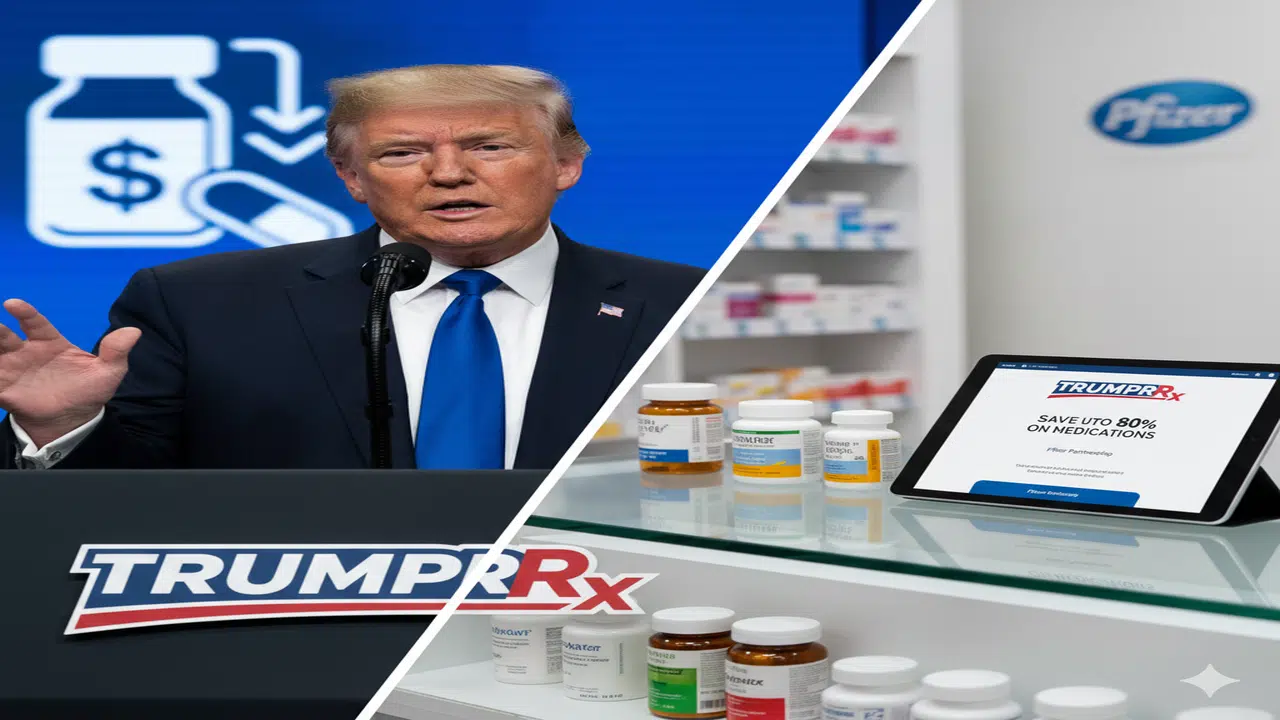
In a significant policy move aimed directly at the perennially high cost of prescription drugs in the United States, the Trump administration has announced a two-pronged strategy: the creation of a new government-operated, direct-to-consumer drug purchasing website named “TrumpRx,” and a comprehensive pricing agreement with the pharmaceutical titan Pfizer.
The initiative represents one of the most direct federal interventions into the pharmaceutical market in recent history, promising steep discounts for American consumers and a fundamental shift in how drug prices are determined.
The “TrumpRx” Initiative: A Government-Run Digital Pharmacy
The centerpiece of the announcement is “TrumpRx,” a planned online platform slated for a public launch in early 2026. The administration has laid out a vision for this website as a transparent, competitive marketplace where American consumers can bypass the complex and often opaque system of insurance companies and pharmacy benefit managers (PBMs).
Mechanism and Intended Audience: The core concept of TrumpRx is to allow individuals, particularly the uninsured and underinsured, to pay for certain prescription medications directly with cash at a price pre-negotiated by the federal government. This model seeks to leverage the immense purchasing power of the U.S. government to secure lower prices, a strategy long advocated for by healthcare reformers. While primarily aimed at those without robust insurance coverage, it is conceivable that even insured individuals might find the cash price on TrumpRx to be lower than their co-pay or deductible for certain drugs.
Operational Framework: The website will function as a centralized e-commerce portal. The government, through a designated agency, will be responsible for negotiating prices with drug manufacturers, managing the website’s infrastructure, processing payments, and coordinating with pharmacies for prescription fulfillment and delivery. The administration has stressed that this will eliminate the layers of middlemen who contribute to inflated drug costs through rebates and fees that are rarely passed on to the consumer. The 2026 launch date, however, underscores the significant logistical and regulatory hurdles that must be overcome to build and secure such a massive public-facing pharmaceutical platform.
Branding and Political Significance: The deliberate branding of the platform as “TrumpRx” is politically notable. It ties the initiative directly to the President, framing it as a signature accomplishment and a fulfillment of campaign promises to tackle “Big Pharma.” This move aims to create a tangible, consumer-facing program that voters can directly associate with the administration’s efforts on healthcare.
The Pfizer Agreement: A Blueprint for Industry-Wide Reductions

To give the TrumpRx platform immediate credibility and a foundational partner, the administration concurrently announced a groundbreaking agreement with Pfizer, one of the world’s largest pharmaceutical companies. This deal serves as both a practical starting point and a powerful signal to the rest of the industry.
“Most Favored Nation” Pricing for Medicaid: A cornerstone of the agreement is Pfizer’s commitment to implementing “most favored nation” (MFN) pricing for all of its drugs sold to the U.S. Medicaid program. This principle dictates that the price charged to Medicaid cannot exceed the lowest price that Pfizer charges to any comparable developed nation. Given that U.S. drug prices are often multiples of what is paid in countries like Canada, Germany, or Japan, this clause is expected to generate substantial savings for the federal and state governments that jointly fund the Medicaid program.
Deep Discounts on the TrumpRx Platform: Pfizer has also agreed to be a flagship manufacturer on the TrumpRx website, offering a portfolio of its drugs directly to consumers at significant discounts. The administration provided specific examples to illustrate the potential impact:
- Eucrisa, a topical treatment for eczema, will be offered at an 80% discount.
- Xeljanz, a widely used oral medication for rheumatoid arthritis and other autoimmune conditions, will see a 40% price reduction.
- Zavzpret, a newer nasal spray for migraines, will be available at a 50% discount.
The White House stated that the average discount across Pfizer’s offerings on the platform would be approximately 50% off their list prices.
Leverage and Investment Commitments: This agreement was not reached in a vacuum. It was reportedly precipitated by the administration’s credible threat to impose substantial tariffs on pharmaceuticals and their chemical ingredients imported from abroad. This pressure created a powerful incentive for a global company like Pfizer to cooperate to avoid supply chain disruptions and higher operational costs.
In return for this cooperation, and as part of the deal, Pfizer has committed to a massive $70 billion investment in its U.S.-based operations. This investment is earmarked for expanding research and development facilities and domestic manufacturing capabilities, aligning with the administration’s broader economic goals of reshoring critical industries and creating American jobs.
Reactions, Analysis, and Unanswered Questions
The announcement has generated a wave of analysis from across the healthcare, political, and economic spectrums.
- Praise and Cautious Optimism: Supporters have lauded the initiative as a bold and innovative solution that cuts through bureaucratic red tape to deliver real savings. They argue that by establishing a clear “cash price,” it will inject much-needed transparency and competition into the market.
- Skepticism from Healthcare Experts: Many healthcare policy experts remain skeptical. They question whether the program will have a broad impact, noting that the initial selection of drugs, while important, may not include the highest-cost specialty drugs that are the primary drivers of healthcare spending. They also point out the existence of private-sector discount platforms like GoodRx and Mark Cuban’s Cost Plus Drugs, questioning the necessity of a government-run competitor. A key concern is how this program will affect the private insurance market, with some fearing it could lead to higher premiums if healthier, cash-paying customers leave the insurance pools.
- Industry Response: The broader pharmaceutical industry, represented by trade groups like PhRMA, has historically resisted government price-setting and MFN proposals, arguing they stifle innovation. The Pfizer deal places other major drug manufacturers in a difficult position, as the White House has explicitly stated it is now pursuing similar agreements with them.
Many critical questions remain unanswered. The full list of drugs to be included on TrumpRx is unknown. The precise, confidential terms of the Pfizer deal have not been disclosed. Furthermore, it is unclear how the “TrumpRx” initiative will integrate or compete with existing federal programs like Medicare Part D and the Affordable Care Act marketplaces. The path to the 2026 launch is long, and the ultimate success and impact of this ambitious program will depend on its implementation and the willingness of other pharmaceutical giants to follow Pfizer’s lead.