August 9 stands as one of the most transformative calendar days in human history. Across centuries and continents, this single date has witnessed pivotal military turning points, radical political reshufflings, tragic humanitarian crises, and extraordinary artistic and scientific achievements.
From the atomic flash over Nagasaki in 1945 and the political fallout of the Watergate scandal in Washington to the fiery birth of the Quit India Movement across the Indian subcontinent and the unexpected independence of Singapore, August 9 holds a rich tapestry of stories.
Below is an extensive, multi-perspective chronicle of August 9, detailing the global events, key birth and death anniversaries, and cultural observances that define this day.
August 9 At a Glance
| Category | Key Highlights & Milestones |
| Major World Events | Nagasaki Atomic Bombing (1945), Nixon’s Resignation (1974), Singapore’s Expulsion/Independence (1965) |
| South Asian History | Quit India Movement launched (1942), India-Soviet Treaty signed (1971), Shahid Minar renaming (1969) |
| Key Birth Anniversaries | Amedeo Avogadro (1776), Jean Piaget (1896), Tove Jansson (1914), Whitney Houston (1963) |
| Key Death Anniversaries | Roman Emperor Trajan (117), Hermann Hesse (1962), Dmitri Shostakovich (1975), Mahmoud Darwish (2008) |
| Global Observances | UN International Day of the World’s Indigenous Peoples, Singapore National Day, South Africa National Women’s Day |
The Bangalee Sphere & South Asian History
The Indian subcontinent, particularly Bengal, has experienced profound political and cultural shifts on August 9. These events shaped the trajectory of anti-colonial resistance and late 20th-century geopolitical diplomacy.
Historical Milestones in the Region
1942: The Launch of the Quit India Movement (August Kranti)
On the morning of August 9, 1942, the British colonial administration in India initiated a preemptive crackdown following the All-India Congress Committee’s adoption of the “Quit India” resolution in Bombay the previous evening. Mahatma Gandhi, Jawaharlal Nehru, and almost the entirety of the Congress leadership were arrested and imprisoned without trial.
Rather than crushing public resolve, these mass arrests sparked a fierce, leaderless uprising across the country. In Bengal, the response was immediate and intense. Resistance fighters organized strike actions, disrupted rail and telegraph lines, and established parallel nationalist governments. Most notably, in the Midnapore district, local revolutionaries formed the Tamralipta Jatiya Sarkar, an autonomous local authority that operated its own police force, tax system, and social relief programs until 1944.
1969: The Renaming of the Ochterlony Monument to Shahid Minar
In Kolkata (then Calcutta), West Bengal, the iconic 157-foot monument originally erected in 1828 to honor Major General Sir David Ochterlony was officially renamed Shahid Minar (Martyrs’ Monument) on August 9, 1969. The rededication honored the freedom fighters who laid down their lives during the struggle against British rule. Today, it remains a central venue for political rallies and cultural gatherings.
1971: The Indo-Soviet Treaty of Peace, Friendship, and Cooperation
During the height of the Bangladesh Liberation War, Indian Foreign Minister Swaran Singh and Soviet Foreign Minister Andrei Gromyko signed a historic 20-year friendship treaty in New Delhi on August 9, 1971.
This diplomatic alliance provided India with political and military backing from a global superpower at a time when the United States and China were aligning with West Pakistan. The treaty proved crucial in deterring external intervention, ultimately paving the way for the liberation of Bangladesh later that December.
South Asian Births & Deaths
Births
-
Ramendu Majumdar (Born 1941): Prominent Bangladeshi actor, theater director, and cultural leader. Majumdar played a foundational role in modernizing Bangladeshi theater post-independence. He served as the World President of the International Theatre Institute (ITI), becoming only the second Asian to hold the position. He is an Ekushey Padak awardee.
-
Riksundar Banerjee (Born 1987): Contemporary West Bengali writer, researcher, and academic noted for his literary explorations of ghost lore, folk beliefs, and supernatural fiction in Bengali literature.
Deaths
-
Trailokyanath Chakravarty (Died 1970): Known affectionately as Maharaj, Chakravarty was a legendary Bengali revolutionary belonging to the Anushilan Samiti. He spent over three decades in various colonial prisons, including the infamous Cellular Jail in the Andaman Islands. He passed away in New Delhi shortly after being honored by the Indian Parliament.
Global Historical Turning Points
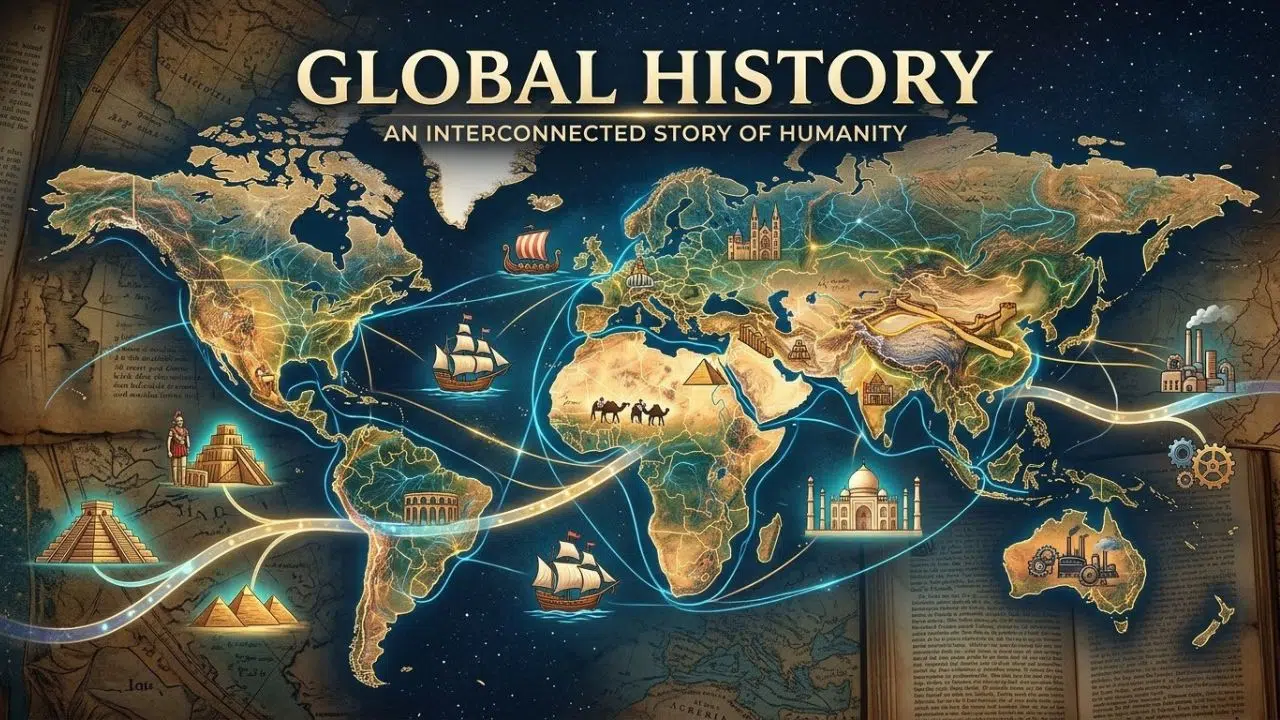
Outside the subcontinent, August 9 features moments of monumental political change, modern military history, and ancient conflict.
Ancient & Medieval Era
-
48 BC – Battle of Pharsalus: In central Greece, Julius Caesar achieved a decisive victory over Pompey the Great despite being heavily outnumbered. Pompey fled to Egypt, where he was assassinated, effectively ending the Roman Republic’s constitutional balance and cementing Caesar’s dominance over Rome.
-
378 AD – Battle of Adrianople: A massive Gothic army under Fritigern defeated a Roman force led by Emperor Valens in modern-day Turkey. Emperor Valens was killed in battle, an event widely regarded by historians as a major milestone in the decline and eventual collapse of the Western Roman Empire.
-
1173 – Construction Begins on the Leaning Tower of Pisa: Builders broke ground on the bell tower (campanile) for the cathedral complex in Pisa, Italy. Due to a soft subsoil foundation of sand, clay, and silt, the structure began tilting before the third floor was completed five years later.
Modern Political & Military History
1945: The Atomic Bombing of Nagasaki
Three days after the destruction of Hiroshima, the United States Army Air Forces bomber Bockscar, piloted by Major Charles Sweeney, dropped a 21-kiloton plutonium implosion device named “Fat Man” over the Japanese port city of Nagasaki at 11:02 AM local time.
Nagasaki was actually the secondary target; the primary target, Kokura, was obscured by cloud cover and industrial smoke. The blast devastated an estimated 30% of the city, instantly killing between 35,000 and 40,000 people, with total fatal casualties reaching over 70,000 by the end of 1945 due to radiation poisoning and severe burns. Six days later, on August 15, Japan announced its unconditional surrender, concluding World War II.
Primary Target: Kokura (Obscured by smoke)
       ↓
Secondary Target: Nagasaki (Struck at 11:02 AM)
       ↓
Immediate & Long-Term Casualties: ~70,000+
       ↓
Historical Impact: End of World War II & Beginning of the Atomic Era
1965: Singapore Gains Sovereign Independence
In an unusual historical turn, Singapore became an independent republic not through armed revolution, but by forced separation. Tensions between the state leadership of Singapore, headed by Lee Kuan Yew, and the federal government of Malaysia over ethnic representation and economic policy culminated in a parliamentary vote in Kuala Lumpur.
On August 9, 1965, the Malaysian Parliament voted 126–0 to expel Singapore from the federation. A tearful Lee Kuan Yew announced the birth of an independent Singapore on live television, taking on the challenge of transforming a natural-resource-scarce island into a major global financial center.
1974: The Resignation of US President Richard Nixon
Following the fallout of the Watergate scandal and facing near-certain impeachment and conviction by the U.S. Congress, Richard M. Nixon officially resigned as the 37th President of the United States. His resignation took effect at noon, making him the first and only U.S. president to step down from office. Vice President Gerald R. Ford was sworn in shortly thereafter, declaring to the nation that “our long national nightmare is over.”
Major International Observances & National Days
August 9 is marked by important international awareness campaigns and national celebrations around the globe.
International Days
-
UN International Day of the World’s Indigenous Peoples: Formally established by the UN General Assembly in December 1994, this day marks the first meeting of the UN Working Group on Indigenous Populations in 1982. It aims to protect the rights, human dignity, environmental stewardship, and cultural heritage of an estimated 476 million indigenous individuals worldwide.
National Days & Memorials
-
Singapore – National Day: Commemorates Singapore’s formal separation from Malaysia in 1965 with military parades, flypasts, and public celebrations across the island state.
-
South Africa – National Women’s Day: Honors the 1956 march of roughly 20,000 women to the Union Buildings in Pretoria. Organised by the Federation of South African Women, the protest targeted the apartheid regime’s pass laws, which forced Black South Africans to carry internal passports.
-
Japan – Nagasaki Atomic Bomb Victim Memorial Day: A solemn national observation marked by a moment of silence at 11:02 AM at the Nagasaki Peace Park, accompanied by calls for global nuclear non-proliferation.
Comprehensive Birthday & Death Anniversaries
August 9 has seen the birth and passing of influential figures across science, literature, politics, sports, and the arts.
Famous Births
| Name | Year | Nationality | Primary Field / Profession | Significance & Achievements |
| Izaak Walton | 1593 | English | Writer / Biographer | Author of The Compleat Angler, a classic celebration of fishing and nature. |
| Amedeo Avogadro | 1776 | Italian | Physicist & Chemist | Formulated Avogadro’s Law; namesake of the fundamental Avogadro constant ($6.022 \times 10^{23}$). |
| William Howe | 1729 | British | Military Commander | Commander-in-Chief of British forces during the American Revolutionary War. |
| Jean Piaget | 1896 | Swiss | Psychologist | Pioneer in child development; established the theory of cognitive development stages. |
| Tove Jansson | 1914 | Finnish | Author & Illustrator | Creator of the world-famous Moomins franchise, beloved across global children’s literature. |
| Mario Soffici | 1900 | Argentine | Film Director | Key figure in the golden age of Argentine cinema (Prisioneros de la tierra). |
| David Lee | 1931 | American | Physicist | Co-awarded the 1996 Nobel Prize in Physics for the discovery of superfluidity in helium-3. |
| Rod Laver | 1938 | Australian | Tennis Player | Grand Slam champion who achieved the calendar-year Grand Slam twice (1962, 1969). |
| Whitney Houston | 1963 | American | Singer & Actress | Iconic pop/R&B vocalist; one of the best-selling music artists in history with 200M+ records sold. |
| Deion Sanders | 1967 | American | Athlete & Coach | NFL Hall of Famer and MLB player; the only athlete to play in both a Super Bowl and World Series. |
| Gillian Anderson | 1968 | American-British | Actress | Emmy and Golden Globe winner, famous for portraying Dana Scully in The X-Files. |
| Filippo Inzaghi | 1973 | Italian | Footballer & Manager | World Cup-winning striker for Italy and two-time UEFA Champions League winner with AC Milan. |
| Audrey Tautou | 1976 | French | Actress | International acclaim for her starring role in the critically acclaimed film Amélie (2001). |
| Willian | 1988 | Brazilian | Professional Footballer | Premier League winner with Chelsea FC and veteran international winger for Brazil. |
Famous Deaths
| Name | Year | Nationality | Primary Field / Profession | Legacy & Cause of Death |
| Trajan | 117 | Roman | Emperor | Expanded the Roman Empire to its maximum territorial extent; died of stroke/edema. |
| Sir Thomas Fairfax | 1671 | English | Parliamentary General | Key commander of the New Model Army during the English Civil War. |
| Thomas Telford | 1834 | Scottish | Civil Engineer | Known as the “Colossus of Roads”; built major canals, bridges, and highways in Britain. |
| Ernst Haeckel | 1919 | German | Biologist & Artist | Coined ecological terms like ecology and phylum; promoted Darwinism in Europe. |
| Ruggiero Leoncavallo | 1919 | Italian | Opera Composer | Composer of Pagliacci, one of the most enduring verismo operas in classical repertoire. |
| Chaim Soutine | 1943 | Belarusian-French | Expressionist Painter | Major contributor to the School of Paris; died of ulcers while hiding from Nazi forces. |
| Hermann Hesse | 1962 | German-Swiss | Author & Poet | Nobel Prize winner in Literature (1946); authored classics Siddhartha and Steppenwolf. |
| Sharon Tate | 1969 | American | Actress & Model | Rising Hollywood star; tragically murdered by members of the Manson Family cult. |
| Dmitri Shostakovich | 1975 | Soviet-Russian | Classical Composer | Renowned 20th-century composer whose symphonies navigated artistic expression under Stalinism. |
| Bernie Mac | 2008 | American | Comedian & Actor | Celebrated stand-up comic and star of The Bernie Mac Show and Ocean’s Eleven. |
| Mahmoud Darwish | 2008 | Palestinian | Poet & Author | Recognized as the Palestinian national poet; celebrated across the Arab world for epic verse. |
| Mike Wallace | 2012 | American | Broadcast Journalist | Legendary correspondent and interviewer for CBS News’ flagship program 60 Minutes. |
“Did You Know?” Trivia
1. Singapore’s Unintended Independence
Singapore stands as the only modern nation to gain independence entirely against its own initial wishes. When Malaysia’s parliament voted to exclude Singapore on August 9, 1965, Singaporean leaders were attempting to negotiate federal integration rather than succession. Lee Kuan Yew regarded the separation as a moment of severe crisis, given the island’s total lack of natural resources and drinking water infrastructure at the time.
2. The Cloud Cover That Saved Kokura
The atomic bomb dropped on August 9, 1945, was never intended for Nagasaki. The B-29 bomber Bockscar spent 50 minutes making three separate runs over its primary target, Kokura. However, thick industrial smoke from a nearby firebombed city, combined with overcast cloud cover, prevented the crew from visually confirming their target. Low fuel levels forced the aircraft to head toward its secondary target, Nagasaki.
3. Immediate Tilting of Pisa’s Bell Tower
The Leaning Tower of Pisa did not sink over centuries of wear; it began leaning almost as soon as construction reached the second story in 1178. The name “Pisa” originates from a Greek word meaning “marshy land,” highlighting the unstable foundation soil that caused the engineering anomaly.
Quote of the Day
“The principal goal of education in the schools should be creating men and women who are capable of doing new things, not simply repeating what other generations have done.”
— Jean Piaget (Born August 9, 1896)
Final Thoughts
August 9 serves as a powerful reminder of how interconnected human history is across regions, eras, and cultures. It is a date marked by moments of profound gravity—such as the atomic bombing of Nagasaki and the mass arrests of the Quit India Movement—alongside milestones of sovereignty, civic courage, and scientific discovery.
By looking back at the events, births, and deaths of August 9, we gain a clearer perspective on the political landscapes, artistic traditions, and social movements that continue to shape our world today.