Ever feel like the term “Metaverse” is just a buzzword people throw around at tech conferences? You are not the only one. If you’ve been wondering why virtual worlds matter or how they actually work, you’ve come to the right place. Here is the reality: for millions of people, this isn’t the future. It is just Tuesday.
Right now, over half of young gamers in the US are logging into digital worlds not just to play, but to hang out, build things, and even run businesses. It is less about sci-fi headsets and more about where we choose to spend our time. In my work as a front-end engineer, I see the code behind these worlds every day. I want to show you exactly how gaming won the war for the virtual world and what that means for you.
Let’s walk through it together. I’ll show you the tools, the tricks, and the real opportunities hiding in plain sight.
What Is Metaverse Gaming?
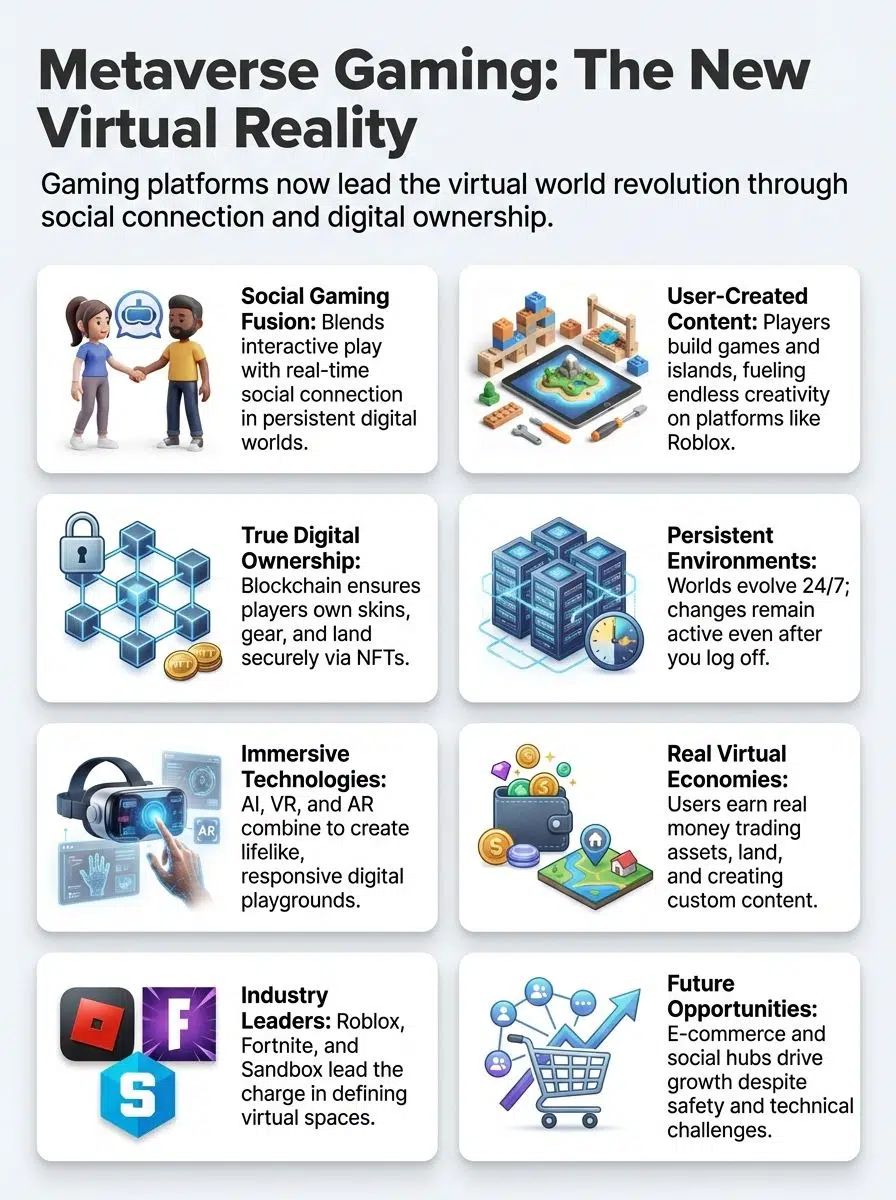
Metaverse gaming is simply the mix of playing a game and hanging out in a shared digital space. Instead of just shooting bad guys or solving puzzles alone, you are inside a persistent world where you can build, chat, and trade with others.
Definition and core concepts
Think of these platforms as digital playgrounds that never close. You use an avatar, a digital character, to represent yourself. Unlike an old-school video game that has a “Game Over” screen, these worlds keep running even when you log off.
The gaming industry drives this bus. Platforms like Roblox and Fortnite are the current leaders because they figured out one secret: people want to do things together. It isn’t just about the graphics; it is about the community.
For example, in Roblox Studio, kids aren’t just playing; they are using Lua scripting to build entire games. A 2024 report showed that Roblox paid out nearly $930 million to creators in a single year. That is a real economy, not just play money.
Blockchain technology also plays a role here. It helps track who owns what. If you buy a rare digital sword in a blockchain-based game, that record lives on a public ledger, meaning you truly own it, not the game developer.
Avatars let you be anything you want; that’s half the fun in any virtual space.
How the metaverse integrates with gaming
The lines are blurring fast. You might jump into Fortnite not to battle, but to watch a live concert or hang out in a “social hub” with no weapons allowed.
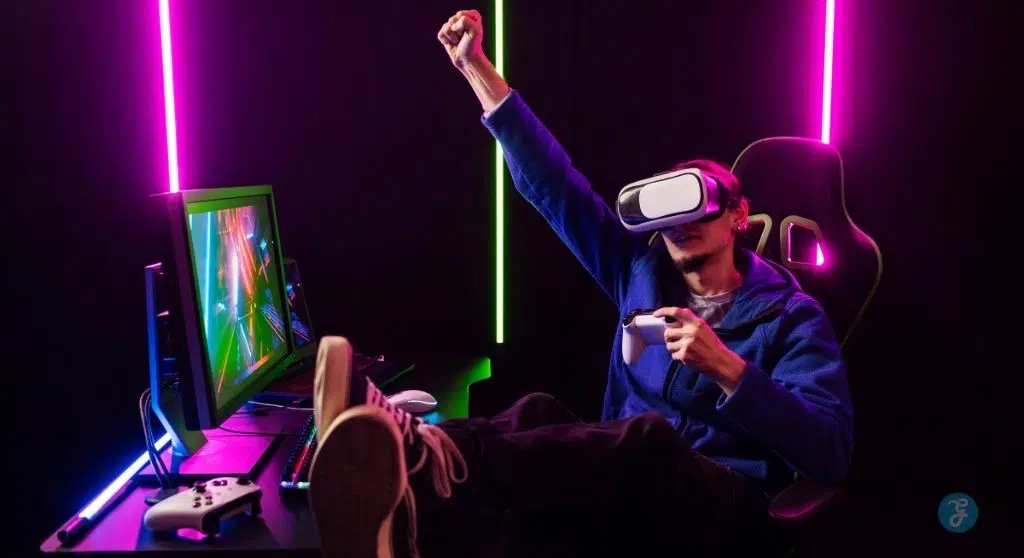
Virtual reality (VR) headsets like the Meta Quest 3 take this a step further by blocking out the real world so you feel like you are standing inside the game. Augmented reality (AR) does the opposite; it puts game characters into your living room through your phone screen.
Companies like Epic Games (creators of Fortnite) are betting big on this. In 2024, Disney invested $1.5 billion into Epic to build a massive Disney universe connected to Fortnite. This proves that major corporations see these gaming worlds as the next version of the internet.
Key Features of Metaverse Gaming
Metaverse gaming gives players fresh ways to connect. These spaces spark creativity, draw crowds, and make every moment feel huge.
Video games pull people into computer-generated environments through VR and AR. Gamers use avatars to run, jump, or chat with others inside these interactive worlds.
One day, you might play hide-and-seek with a friend in Roblox; the next, you are fighting dragons together using VR headsets. But the “social” part is key. In the US, data shows that Gen Z gamers spend more time socializing in games than they do on social media apps.

“Games make you feel like part of a living world,” says Jaiden from my coding group.
Players do not just press buttons anymore. They host digital concerts, dance parties, and even form online communities. The line between gaming and hanging out blurs as users share jokes or build cities side-by-side.
User-generated content and creativity
This is where the real magic happens. Players are the ones building the worlds. In Fortnite, a tool called Unreal Editor for Fortnite (UEFN) lets creators make professional-grade maps and earn money based on how long people play them.
Insider Tip: If you want to build in UEFN, watch your memory usage. The most common mistake new creators make is overloading their map with high-detail assets. Pros use “HLODs” (Hierarchical Levels of Detail) to keep the game running smoothly even when the map is huge.
Roblox is another giant here. With over 89 million daily active users as of late 2024, it is less of a game and more of a YouTube for games. Users create the content, and the platform just provides the tools.
Imagination sets no limits on these platforms. Decentraland and Sandbox both let users buy virtual land, set up shops, or create art galleries. Each object or structure can show off someone’s style and skills to the wider community.
Persistent virtual worlds
A persistent virtual world never turns off. Even after you log out, the digital environment keeps running. Changes happen every hour, and other users can keep building or exploring while you are away.
For example, in games like Roblox or Decentraland, your avatars save progress, own assets, and come back to find things just as they left them, or with exciting new updates.
Unlike older video games, where each session resets from scratch, these multiplayer platforms work more like real life. You might plant a tree today and see it grow tomorrow in the same spot.
Blockchain and digital ownership
Games use blockchain technology to track who owns digital objects. This gives players true control over items, skins, and even property inside virtual worlds.
While the hype around “NFTs” has cooled down, the tech is still useful. Major brands are pivoting. Nike’s.Swoosh platform, for instance, moved away from using the term “NFT” in 2025 and now focuses on “virtual products” that you can wear in video games like Tekken 8.
This shift turns online communities into bustling economies where every pixel counts for something valuable.
Popular Technologies Driving Metaverse Gaming
New tech like smart computers and lifelike graphics make games feel more real than ever. Here is how these tools change playtime for everyone.
Artificial intelligence (AI)
Smart game characters act and react like real people because of AI. These virtual helpers can talk with players, solve problems on their own, and change how the story goes.
The big leap in 2025 is NVIDIA ACE (Avatar Cloud Engine). This tech allows non-player characters (NPCs) to have unscripted, natural conversations with you using generative AI, rather than just reciting pre-written lines. It makes the world feel unpredictable and alive.
AI also brings life to computer-generated environments by making avatars move in natural ways. As a result, players get more immersive experiences that feel less robotic.
Augmented reality (AR) and virtual reality (VR)
Put on a headset, and you step inside the computer-generated environment. VR gives players new eyes and ears in digital spaces.
The Meta Quest 3 and the budget-friendly Quest 3S (released late 2024) are the current standards for home VR in the US. They offer “mixed reality,” which lets you see your real room with digital objects floating in it.
Pro Tip: If you buy a Quest 3, plan to replace the stock head strap immediately. The default strap is notorious for being uncomfortable after 20 minutes. Most Reddit users swear by third-party options like the BoboVR S3 Pro for long sessions.
Augmented reality (AR) works in the real world but adds virtual things right before your eyes. Pokémon GO shook up the gaming industry by mixing monsters into city parks, and now smart glasses like the Ray-Ban Meta glasses are making AR more subtle and stylish.
Blockchain and cryptocurrency
Blockchain works like a giant digital ledger. It keeps track of items, trades, and money across the digital ecosystem.
Cryptocurrency acts as money inside these games. People use coins such as Ethereum or MANA to buy land or rare avatars in Decentraland and Sandbox. No company can secretly change your items because blockchain locks every move on its network.
Some gamers even earn real cash by playing or selling digital goods. However, the industry is moving away from “Play-to-Earn” (which felt like a job) to “Play-and-Earn,” where the fun comes first.
3D reconstruction and Internet of Things (IoT)
Switching from coins and tokens, gamers get another set of cool tools. 3D reconstruction builds computer-generated graphics that look real. It lets players see objects and avatars in a digital space as if they exist right in front of them.
Developers use this tech to scan real things, like furniture or cars, then bring them into online spaces. The Internet of Things (IoT) connects smart devices to the gaming ecosystem. Your smartwatch or home speaker can link up with virtual worlds for quick actions.
In some games, sensors read your moves and send that data back into the game instantly. This mix creates interactive environments where everything talks to each other.
Leading Companies in Metaverse Gaming
Big names shape this digital playground, setting trends that ripple across online spaces. Curious who is pushing boundaries and changing how gamers connect?
Roblox
Roblox lets people build, play, and share games inside a huge virtual space. It is a juggernaut in the US market. Over 89 million users log in every day as of late 2024.
The platform gives everyone free tools to make interactive environments. People can sell items with digital currency called Robux. This creates an active economy for young creators.
Insider Tip: If you are a creator trying to cash out your Robux, be careful. You must have “Earned Robux” (from game sales), not just Robux you bought or traded. Many new devs get their “DevEx” request denied because they didn’t check this requirement first.
Epic Games
Epic Games shapes how people play and build in digital ecosystems. Fortnite stands as a huge online space where players create, interact, and socialize. Their Unreal Engine 5 powers many immersive experiences for both big studios and smaller creators.
The gaming industry feels Epic’s bold moves daily. With the massive Disney partnership underway, we can expect iconic characters like Iron Man and Mickey Mouse to have permanent, interactive homes inside the Fortnite ecosystem soon.
Decentraland
Decentraland lets players create, buy, and sell land using blockchain technology. Users explore a computer-generated environment through avatars, build shops, or hold concerts.
While the hype of 2021 has settled, the platform has stabilized. Land prices are no longer millions of dollars; they are more accessible for creators who want to build specific niche communities. It is less about speculation now and more about building cool hangouts.
Sandbox
Sandbox is a hit in digital spaces. It launched as a simple game but grew into something much bigger. Players build worlds, create games, and sell their items.
Sandbox supports NFTs, so players own land or buy avatars inside this environment. Big brands like Gucci and Adidas have built experiences here. In 2025, the focus has shifted to “neighborhoods” where brands and creators cluster together to keep things lively.
Microsoft
Microsoft plays a huge part in virtual spaces through its Xbox and Minecraft platforms. Millions use Minecraft to build, share, and play in computer-generated environments.
Buying Activision Blizzard put Microsoft among the top leaders in the gaming industry. Players now get more interactive experiences, from immersive games to new ways of socialization across devices. Microsoft Teams has even added avatars so users can meet as cartoon-like figures inside online spaces.
The Future of Metaverse Gaming
The digital scene keeps shifting, with games leading the charge into new online spaces. Players shape these worlds more each day, making tomorrow feel closer than ever.
Play-and-earn models and Digital Collectibles
Players can earn real money in metaverse games, but the model has changed. We are seeing a shift from “Play-to-Earn” (grinding for tokens) to “Play-and-Earn” (playing for fun, with ownership as a bonus).
NFTs are now often called “digital collectibles” to sound less technical. For example, Ubisoft’s Champions Tactics game uses blockchain for characters, but they focus on the gameplay first. The goal is to make ownership feel natural, not like a financial transaction.
E-commerce opportunities in virtual worlds
People buy and sell things inside digital spaces using avatars. Skins, outfits, tools, pets, even plots of land—all these become products in a computer-generated environment.
A prime example in the US is Walmart Discovered on Roblox. As of early 2026, it has racked up over 39 million visits. They even launched a “Discovered Pass” in May 2025, allowing players to earn real-world items and digital perks.
Sellers reach millions across countries without shipping a single box, just quick downloads right into your digital inventory.
Challenges and growth potential
Staying safe in virtual worlds gives game makers a real headache. Hacking, cheating, and scams keep popping up in games like Roblox and Decentraland. Parents worry about young players talking to strangers or seeing bad content online.
Protecting assets, such as NFTs or digital currency, can be tricky because blockchain is not simple for everyone. Keeping servers stable during high-traffic events sometimes feels like juggling with one hand tied behind your back.
Growth looks bright despite these bumps in the road. Millions of users log on to multiplayer platforms every day. Companies push new tech forward fast; Epic Games brings concerts into Fortnite while Microsoft mixes education with gaming using VR and AR tools.
Wrapping Up
People now play, build, and trade in digital spaces every day. Avatars zip through computer-generated worlds filled with bright colors and wild ideas. Kids create games on Roblox, while adults build communities in Sandbox. The line between gaming and life online gets blurry fast.
The gaming industry leads the way with VR headsets, AR filters, and busy multiplayer platforms. This shift makes virtual economies strong and keeps online communities active around the clock. Games are more than fun; they spark creativity in each new digital ecosystem.