
Do you find your thoughts racing and your sleep too short? CNET staff say mental fitness apps can ease stress and boost your mood. This guide shows tools like guided meditation, breathing exercises, sleep stories and modules for cognitive therapy to help you focus and rest.
Give them a try.
Key Takeaways
- Headspace costs $70 per year or $13 per month after a free trial. It offers warm, guided meditations, breathing exercises, mood tracking, and sleep stories for sharper focus and better rest.
- Calm costs $14.99 per month or $69.99 per year after a seven-day free trial. It features expert-led meditations, breathing exercises, mood charts, and sleep stories read by Matthew McConaughey.
- Insight Timer gives you over 100,000 free guided meditations, a custom timer, and community groups. Smiling Mind adds free, age-specific programs by psychologists for kids and adults.
- MyLife Meditation adapts to your mood by asking you to rate stress and anxiety, then suggests personalized sessions. It meets HIPAA standards to protect your privacy. 10% Happier, built by Dan Harris, blends science-based meditations and expert interviews.
- Mindfulness Coach is a free VA app that meets HIPAA rules and works offline. It delivers daily breathing drills, guided meditations, and mood tracking tools for stress relief and mental fitness.
Headspace: Guided meditation for focus and relaxation
Headspace trains your brain with short, guided meditation sessions. You pick tools for focus, stress relief, or mindfulness meditation. Each lesson packs breathing exercises and soft background sounds.
The narration feels warm and friendly. Many beginners call it the best mental fitness app.
Subscribers pay $70 per year with a 14 day free trial or $13 per month with a 7 day trial. This plan unlocks sleep stories and relaxation techniques. It also offers mood tracking and stress management exercises.
Every user taps a topic and starts a quick session during a busy day.
Calm: Tools for mindfulness and improved sleep
Calm packs a library of mindfulness exercises. It ranks as a top mental wellness app and offers guided meditations that sharpen attention and aid stress management. Mental health professionals shape every audio.
Sleep stories act as gentle sleep aids. You might nod off to calm tales read by Matthew McConaughey. The app costs $14.99 per month or $69.99 a year after a seven day free trial.
Breathing exercises guide you through simple relaxation techniques. Each session lasts just minutes. A mood tracker logs your moods for mental clarity. A visual chart shows your progress in well being.
You tap to start and a soft bell marks each practice. You build solid habits for sharper focus and deep sleep.
Insight Timer: Free meditations for mental clarity
Insight Timer hosts the largest free library of guided meditations. It offers over 100,000 sessions for mental fitness and stress management. This meditation app has a custom timer, community groups, and many mindfulness techniques.
Users report more peace and mental clarity after each practice.
You can meditate on any mobile device, day or night. It tracks goals, logs progress, and helps beginners and veterans. Pick a short lesson for quick calm, or try a long session for deep focus.
Anyone can build coping skills and boost mental well-being here.
10% Happier: Meditation for skeptics and beginners
Dan Harris built this app for healthy skepticism. It offers guided meditations, mindfulness courses, and short expert interviews built on science-based practices. Users share stories about less stress and stronger mental clarity in weeks.
The design makes clear it cannot replace cognitive behavioral therapy or other therapy sessions. Data privacy remains a worry, as many mental wellness apps may not meet HIPAA rules.
Active engagement makes a real difference. Users tap through daily drills and timed practices. Short bites fit busy lives; they boost anxiety management and mental fitness. Regular use can lead to stronger mental health outcomes, better sleep, sharper focus, and personal growth.
MyLife Meditation: Personalized mindfulness exercises
Mental fitness apps now adapt to your mood. App reads current feelings and offers short sessions. It asks users to rate stress, anxiety and mood. It suggests guided meditations, breathing exercises or mindfulness techniques that fit emotions.
The algorithm shifts recommendations based on daily patterns. App tracks progress and shows charts of emotional well-being over time. Many report big drops in tension and faster recovery from stress.
People praise the clear layout and simple tone. They drop into a session on phones, tablets or watches.
MyLife Meditation fits with therapy and cognitive behavioral therapy tools as a support, not a replacement. It links stress relief to guided meditation and daily mindfulness exercises.
This platform guides users through three-minute body scans, breathing drills and mindful walking. It tracks moods in a simple mood tracking log that shows progress in weeks. Many find better sleep and sharper focus after just four weeks.
The service meets HIPAA standards to secure patient privacy. And it protects personal details behind strong safeguards.
Breethe: All-in-one mental wellness and sleep app
Breethe offers guided meditations, breathing exercises, sleep programs, and motivational talks in one app, so you can cut stress and sharpen focus. It aims to boost cognitive skills and improve sleep quality with simple relaxation techniques.
Many users report fresh bursts of motivation and personal growth after regular sessions.
You can grab it on any phone for private e-health breaks, whether you sneak in a breathwork pause at work or explore a bedtime guide at home. The app tracks your progress, lets you set daily goals, and nudges you with mindfulness techniques and mood-tracking tools.
Experts list it among the top mental wellness apps for stress relief and better rest.
Smiling Mind: Free mental fitness for all ages
Smiling Mind offers free mental fitness for all ages. This app has sessions for youth and adults. Psychologists and educators crafted age specific programs to boost calm and emotional strength.
App uses daily check ins to prompt consistent practice. Parents and teachers praise its effect on youth emotional wellbeing.
Beginners get guided meditations that suit any skill level. They can choose from mindfulness techniques and relaxation exercises for stress relief. Progress tracker displays gains in mental resilience and cognitive skills.
It supports mental health care but does not replace therapy.
Meditopia: Deep meditation for emotional balance
Meditopia hosts over 1,000 guided meditations in nine languages, each crafted to target emotions. The platform guides users in gentle breathing exercises, relaxation techniques and sleep stories.
Its audio tracks run on a smartphone or tablet so you can relax on the go. The meditation app puts emotional well being at the core. It stays easy to use, so even beginners find their path to calm.
This mental health app aids in emotional healing and supports personal growth.
Daily practice lifts focus and builds mental resilience. It also boosts cognitive functioning and sleep quality. A study finds that consistent use leads to clearer thinking, deeper rest and fewer anxious moments.
The program serves as a support tool, not a substitute for therapy or diagnoses. Users can track mood trends, spot stress patterns and tackle emotional health concerns.
Mindfulness Coach: Practical tools for managing stress
May marks Stress Awareness Month, a time to boost mental fitness with mental health apps. Mindfulness Coach delivers simple breathing exercises, guided meditations, and mood tracking tools.
This free VA app meets HIPAA rules. Teens, parents, and seniors can use it offline. Each day, the app offers new mindfulness techniques.
Daily use can cut anxiety and boost stress reduction. It trains your cognitive skills much like a trainer builds biceps. The app logs stress patterns and suggests coping skills. One user felt calm as a lake and said the app boosted their emotional well-being.
The free price tag and clear guides win high marks.
Waking Up: Philosophical approach to mindfulness
Waking Up blends mindfulness meditation with philosophical insight. Sam Harris guides short sessions on consciousness, Stoicism, and Buddhism. These audio courses use thought experiments, breathing exercises, and gentle guidance to build mental resilience and reduce stress.
The app feels like a talk among friends. It also adds cognitive skills practice to boost focus.
Listeners can explore guided meditations, mindful lectures, and a daily podcast. This tool caters to stress management, anxiety management, and sleep stories. It supports life satisfaction, emotional well-being, mood tracking, and goal setting.
Waking Up stands out among mental health apps for its blend of guided meditation and deep thought.
Moodfit: Mental health tracking and mood enhancement
Moodfit app earns top marks in negative thought tracking. That app charges $8.99 per month or $39.99 a year. Logging covers sleep, meals, exercise. Mood analytics show mood swings in clear charts.
The interface feels like a friendly coach. Users get CBT lessons and breathing drills. Data stays safe under HIPAA rules.
Users see stress relief tips in each analytics report. Guided breathing sessions last two to five minutes. Smart reminders nudge you to log feelings at set intervals, so you catch bad days early.
These prompts build mental resilience day by day. Workout records link to mood shifts in clear graphs. The app syncs with Google Fit and Apple Health. That integration paints a full wellness picture.
Moodfit shines among mental wellness apps for focus and calm.
Sanvello: Combines CBT tools with relaxation techniques
Sanvello pairs cognitive behavioral therapy modules with guided relaxation techniques and meditations for quick stress relief. Its mood tracking feature records emotional trends and pinpoints anxiety triggers.
Premium access runs $8.99 per month or $50 monthly when you add personal coaching. AbleTo acquired the service in 2021 and pulled it from major stores.
Soaak: Sound therapy for focus and better rest
Soaak sets itself apart with layers of sound therapy that cut through chaos and clear stray thoughts. Listeners hear binaural beats and ambient tones crafted to boost cognitive skills, relieve stress, and calm racing minds.
A monthly plan runs at $29.99, and an annual one costs $359.88 for unlimited access. These soundscapes guide mental resilience and help users drift to deep rest after a busy day. Some users mix it with mental health apps, mood tracking, or light stretching for a balanced evening routine.
Breathwrk: Breathing exercises for mental clarity
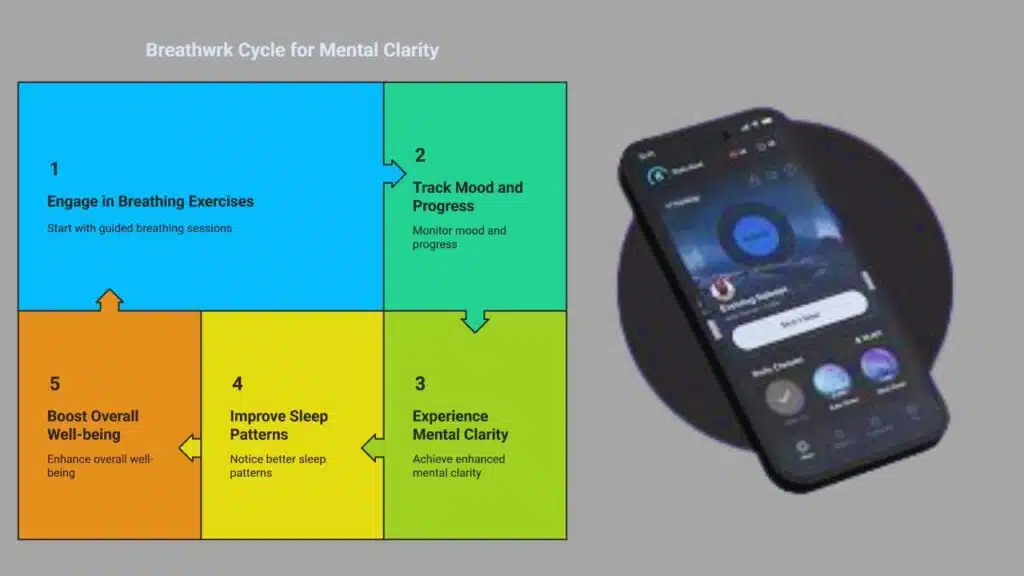
Breathwrk uses guided breathing exercises to sharpen mental clarity and support stress management. This mental health app features structured sessions that teach mindfulness techniques.
Android phone owners can tap into guided meditation and breathing drills anytime. Active mood tracking shows clear gains in focus and calm. Many users report calmer moods and stronger attention after each session.
Experts in psychology support this mental wellness app for boosting cognitive skills and emotional well-being. Its Heart Rate Variability feature syncs data with Apple Watch to measure stress response.
The platform logs progress and tracks goals to fuel personal growth. Regular practice yields better sleep patterns and boosts overall well-being.
BetterSleep: Optimized sleep with calming soundscapes
BetterSleep offers calming audio scenes that ease you into sleep. It sits in a lineup of mental health apps that join Stress Awareness Month. Soundscapes blend environmental sounds and gentle tunes to lower your racing thoughts.
Users gain mood lifts and find less anxiety as they drift off. The app logs your sleep patterns and shows trends on your phone screen. You spot late nights or restless hours and adjust your bedtime plan.
That routine fits mental fitness and stress management goals. It gives relaxation techniques like guided meditations and sleep stories. Users access nature tracks and stories on mobile devices.
People with mild mental health issues find extra mental health support here. This addition does not replace therapy, but boosts emotional well-being. The app may collect data that lacks HIPAA safeguards, so read privacy terms.
You can pair it with mood tracking or breathing exercises to build mental resilience.
Shine: Focused on mindfulness for diverse communities
Shine focused on mindfulness for BIPOC users. The mental wellness app cost $14.99 every month. Headspace bought Shine in 2022. You can now get Shine content inside Headspace. Users learned mindfulness techniques in short guided meditation sessions.
The app included breathing exercises and mood tracking to support stress management.
In-app reminders nudged you to practice daily. Community spaces let you share tips and empathize. Subscribers found mental health support with stress relief stories. The app followed the health insurance portability and accountability act for privacy.
Talkspace: Therapy support for mental health challenges
Talkspace stands out as the best online therapy app. This service links you with licensed experts, day or night. You send messages, choose a time for video, or use audio chat. Pricing kicks in at sixty nine dollars per week.
This mental health app uses cognitive behavioral therapy (CBT) methods for stress management and anxiety relief. Specialists help with post traumatic stress disorder and social anxiety.
Clients build mental resilience and improve psychological well being.
Users get mental health support in one place, no waiting rooms. Mood tracking and breathing exercises join guided meditations. Specialists share tips on relaxation techniques and stress relief.
You set small goals that boost mental fitness and working memory. This friendly chat feels like talking to a guide, not a stranger. Access stays open twenty four seven, on phone or tablet.
Happify: Science-based games for reducing stress
Happify uses cognitive behavioral therapy games to cut stress and lift emotional well-being. The app blends positive psychology and mental fitness challenges on mobile devices and web.
Short quests train your mind, and mood tracking tools mark your progress. It ranks high among mental health apps for stress relief. This mental health app pairs stress management exercises with bite sized science tasks.
Subscribers pay $14.99 per month or $139.99 per year, or they buy a lifetime pass for $449.99. People report clear mood gains after two weeks. The platform delivers guided tasks that boost positivity through interactive sessions.
Users explore relaxation techniques and simple quizzes for better sleep and improved well-being.
MindShift: Strategies for managing anxiety
MindShift costs zero dollars, so you can start today. It uses thought journals and coping cards to chase away racing thoughts. It blends cognitive behavioral therapy with easy guides.
You swipe for breathing exercises or a quiz that stops panic. It ranks high among mental wellness apps for anxiety management.
One guy wrote, “This app feels like a friend on call.” You log moods and tap anxiety-specific tools. The app gives tips that fit your day. It acts as a pocket coach for stress relief and mental health support.
Takeaways
These mental health apps use lead sessions and box breathing to sharpen focus. Some tools track your emotion logs to spot mood shifts. Ambient noise features calm your mind for restful nights.
Thought-reframe tasks build mental resilience and boost cognitive skills. Try one app today for clearer thoughts and deeper sleep.
FAQs
1. What are mental fitness apps?
They are digital tools that help with stress management and mental health support. They use breathing exercises and guided meditations. They offer mood tracking and sleep stories to boost emotional well-being. They teach mindfulness techniques.
2. How do meditation apps help with stress relief and anxiety management?
Apps like the breathing guide and the timer app offer mindfulness meditation sessions. They teach relaxation techniques and cognitive behavioral therapy tips. Users can track their mood and practice deep breathing to cope with distress.
3. Can these apps improve focus and cognitive skills?
Yes. They use a gamified approach and mental exercises, like puzzles and memory drills. These tasks build mental resilience and sharpen attention.
4. What features aid better sleep?
Many apps share calm sleep stories and soft soundscapes. They guide you with breathing exercises and meditative tracks to help you drift off. You can set timers for a full night of rest.
5. Are these apps safe for people with severe mental illness or Alzheimer’s disease?
These mental wellness apps offer support, but they are not a replacement for therapy or medical care. If you face severe mental illness or neurodegenerative conditions, please seek professional help.
6. How do these apps fit into corporate wellness and physical health plans?
Employers can add them to corporate wellness programs to reduce stress and boost psychological well-being. Teams can use mood tracking and short guided meditations to cope with high workloads and prevent burnout. They can complement physical fitness goals and help staff stay balanced.