


Israel’s far-right finance minister, Bezalel Smotrich, announced that the long-delayed E1 settlement plan in the occupied West Bank is moving forward, with final approval expected later this month. The decision concerns a tract of land east of Jerusalem between the settlement of Ma’ale Adumim and East Jerusalem, in an area that has been at the heart of international controversy for more than two decades.
The E1 project involves building 3,401 housing units along a narrow corridor that links Jerusalem to Ma’ale Adumim. Critics warn that this development would physically divide the West Bank into separate northern and southern sections, making the creation of a contiguous Palestinian state virtually impossible. Palestinians and human rights groups argue that this would cement Israeli control over key territory and preclude any meaningful negotiations toward a two-state solution.
Smotrich, who also holds significant Cabinet-level powers over settlement policy, described the project as a strategic measure to block recognition of a Palestinian state, emphasizing that political realities are shaped on the ground rather than through international declarations or diplomatic statements.
Strategic Location and Impact on Palestinian Movement
The E1 zone sits between the Palestinian cities of Ramallah in the north and Bethlehem in the south, which are approximately 22 kilometers (14 miles) apart in a straight line. At present, Palestinians can travel between them using a relatively direct route through the West Bank. Once the E1 construction is completed, this route would be eliminated.
Travelers would instead face lengthy detours around the Israeli settlement area, passing through multiple checkpoints and in some cases requiring circuitous travel through Jordan Valley roads. Rights groups have pointed out that such changes would add significant travel time—sometimes hours—to what should be a short journey, further limiting Palestinians’ freedom of movement and deepening the already severe fragmentation of the West Bank.
Two Decades of Delay and Renewed Momentum
The E1 plan has been on the table since the early 2000s but was repeatedly frozen, largely due to U.S. diplomatic pressure under previous administrations, including both Democratic and Republican presidents. International opposition has consistently been strong, with the United States, European Union, and United Nations warning that E1 development would undercut prospects for peace.
On August 6, 2025, Israel’s planning committee rejected all objections filed by rights organizations, including Peace Now, which closely monitors settlement expansion. That decision cleared a major bureaucratic hurdle, paving the way for the final approval scheduled for August 20. While a few administrative steps remain, Israeli officials have indicated that infrastructure work could begin within several months, with housing construction potentially starting in about a year.
International Recognition of Palestinian Statehood Adds Tensions
The announcement comes as several countries—including Australia, Britain, France, and Canada—are preparing to formally recognize a Palestinian state at the United Nations General Assembly in September. This push for recognition follows decades of stalled peace talks and growing frustration over ongoing settlement expansion and Israeli military control in the West Bank.
Palestinian officials interpret Israel’s acceleration of the E1 plan as a direct attempt to undermine this diplomatic momentum. By physically cutting off the southern West Bank from its center and north, they argue, Israel would effectively nullify the basis for recognizing a Palestinian state with viable borders.
Netanyahu’s Role and Historical Context
Prime Minister Benjamin Netanyahu did not publicly comment on Smotrich’s announcement, but he has previously expressed strong support for expanding settlement blocs, including E1. Netanyahu has long been aligned with the settlement movement and has used his political capital to advance construction in contested areas.
Smotrich publicly credited former U.S. President Donald Trump and current U.S. ambassador to Israel Mike Huckabee as strong allies of Israel’s settlement agenda, suggesting that their political backing has created a more favorable climate for advancing E1 after years of stagnation.
Palestinian and Rights Group Reactions
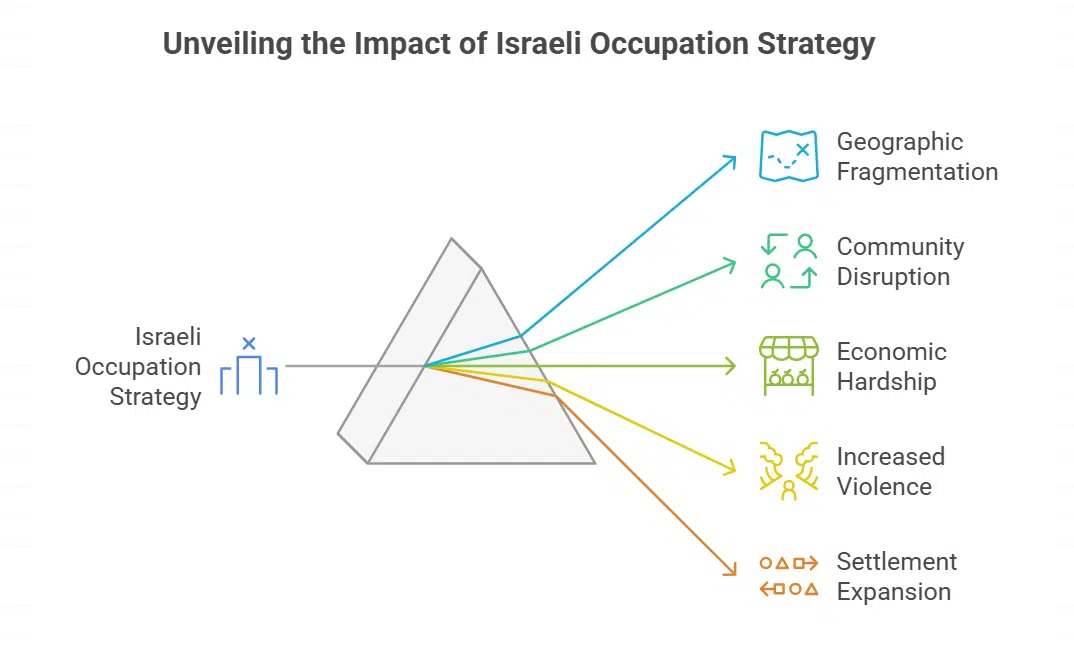
The Palestinian Ministry of Foreign Affairs condemned the decision as part of a larger Israeli strategy to entrench occupation and permanently block Palestinian statehood. Officials warned that the plan would sever critical geographic links, fragment communities, and make daily life for Palestinians even more difficult. They emphasized that it would isolate southern West Bank towns from central and northern areas, damaging social and economic cohesion.
Rights groups were equally critical. Peace Now described the move as a severe blow to both Israeli and Palestinian futures, predicting that it would lead to more violence and make a peaceful resolution far less likely. International NGOs highlighted that the plan fits into a broader pattern of settlement expansion, home demolitions, and land confiscations that systematically reduce the land available for Palestinian development.
United Nations and Global Diplomatic Response
At the United Nations, Secretary-General Antonio Guterres reiterated calls for Israel to halt all settlement activity in occupied territory. His spokesperson stressed that settlement construction violates international law, entrenches the occupation, fuels tensions, and erodes the viability of a Palestinian state within the framework of a two-state solution.
The UN emphasized that E1’s location makes it particularly damaging: building there would split the West Bank in two, severing territorial continuity and undermining any possibility of a viable, contiguous Palestinian state.
European governments have also voiced opposition. The European Union considers all Israeli settlements in occupied territories to be illegal under the Fourth Geneva Convention and an obstacle to peace. EU diplomats have repeatedly warned Israel that moving forward with E1 could trigger diplomatic and economic consequences.
Broader Settlement Landscape
The E1 plan is part of a wider expansion in the occupied territories. More than 700,000 Israeli settlers now live in the West Bank and East Jerusalem—areas captured by Israel in the 1967 Mideast War. These territories, along with the Gaza Strip, are claimed by Palestinians for a future independent state.
Israel’s government, dominated by religious and ultranationalist parties, has been advancing settlement policies more aggressively in recent years. Smotrich himself is a former settler leader who has pledged to double the settler population in the West Bank. Under his authority, settlement approvals have accelerated despite mounting international condemnation.
Historical and Legal Status of the Territories
Israel annexed East Jerusalem shortly after the 1967 war and claims it as part of its capital, a claim not recognized by most of the international community. It withdrew settlers from Gaza in 2005 but maintains control over most aspects of movement and trade through land, sea, and air restrictions.
The West Bank’s status remains officially “disputed” in Israeli government terminology, though under international law it is classified as occupied territory. The International Court of Justice and UN resolutions affirm that the settlements breach legal obligations and undermine prospects for a negotiated peace agreement.






















