The world’s best cup of coffee isn’t hiding in a trendy café or a five-star restaurant – it’s waiting to be brewed in your kitchen. Making barista-style coffee at home might seem daunting, but with the right knowledge and tools, you can elevate your home brewing game to rival professional baristas. This guide will walk you through everything you need to know to make café-quality coffee in your own kitchen.
The Fundamentals of Great Coffee

Coffee is more than just a morning pick-me-up; it’s a ritual, an art form, and for many, a passion. The difference between a mediocre cup of coffee and a great one often lies in the details – from the quality of beans to the brewing method. By learning the techniques used by professional baristas, you can transform your home coffee experience into something truly special.
In this comprehensive guide, we’ll explore the essential elements of making barista-style coffee at home. We’ll cover everything from selecting the right beans to mastering various brewing methods. Whether you’re a coffee novice or an experienced home brewer looking to refine your skills, this article will provide valuable insights to help you create coffee shop-quality beverages in the comfort of your own home.
Choosing the Right Beans
The journey to a perfect cup of coffee begins with high-quality beans. Here are some key factors to consider:
- Freshness: Look for beans with a recent roast date. Coffee is best consumed within 2-4 weeks of roasting.
- Origin: Single-origin beans offer unique flavor profiles, while blends provide balance and consistency.
- Roast level: Light roasts preserve more of the bean’s original flavors, while dark roasts offer a bolder, more intense taste.
- Whole beans vs. pre-ground: Always opt for whole beans and grind them just before brewing for maximum freshness and flavor.
The Importance of Water Quality
Water makes up 98% of your coffee, so its quality is crucial. Use filtered water to remove impurities that can affect taste. The ideal water temperature for brewing coffee is between 195°F and 205°F (90°C to 96°C).
Grinding Your Beans
Invest in a good quality burr grinder. The grind size significantly impacts extraction and flavor:
- Fine grind: For espresso and Moka pot
- Medium-fine grind: For pour-over methods
- Medium grind: For drip coffee makers
- Coarse grind: For French press and cold brew
Grind your beans immediately before brewing to preserve aromatics and oils.
Essential Equipment for Home Baristas
To make barista-style coffee at home, you’ll need some basic equipment:
- Coffee grinder (preferably a burr grinder)
- Scale for precise measurements
- Kettle (gooseneck kettle for pour-over methods)
- Brewing device (e.g., French press, pour-over dripper, espresso machine)
- Timer
- Thermometer (optional but helpful)
Popular Brewing Methods
The world of coffee brewing is rich with diverse methods, each offering a unique path to extracting the perfect cup. From the precision of pour-over to the boldness of French press, and the intensity of espresso, these techniques are the cornerstones of barista-style coffee. Mastering even one of these methods can dramatically elevate your home coffee game. Let’s explore how to execute each one with the finesse of a professional barista, unlocking flavors you never knew your beans could offer.
Pour-Over Method
The pour-over method offers excellent control over the brewing process, resulting in a clean, flavorful cup.
Steps:
- Place a filter in your dripper and rinse with hot water.
- Add 20-22 grams of medium-fine ground coffee.
- Start your timer and pour 50-60 grams of water (twice the coffee weight) for blooming.
- After 30 seconds, slowly pour the remaining water in a circular motion.
- Aim for a total brew time of 2.5 to 3 minutes.
French Press
The French press produces a full-bodied, rich coffee with more oils and sediment.
Steps:
- Add 30 grams of coarsely ground coffee to the French press.
- Pour 500 ml of hot water (195°F-205°F) over the grounds.
- Stir gently and let steep for 4 minutes.
- Slowly press the plunger down and serve immediately.
Espresso
Making espresso at home requires an espresso machine, but the results can be spectacular.
Steps:
- Grind 18-20 grams of coffee very finely.
- Tamp the grounds evenly in the portafilter.
- Extract 25-30 ml of espresso in 25-30 seconds.
- Look for a golden-brown crema on top.
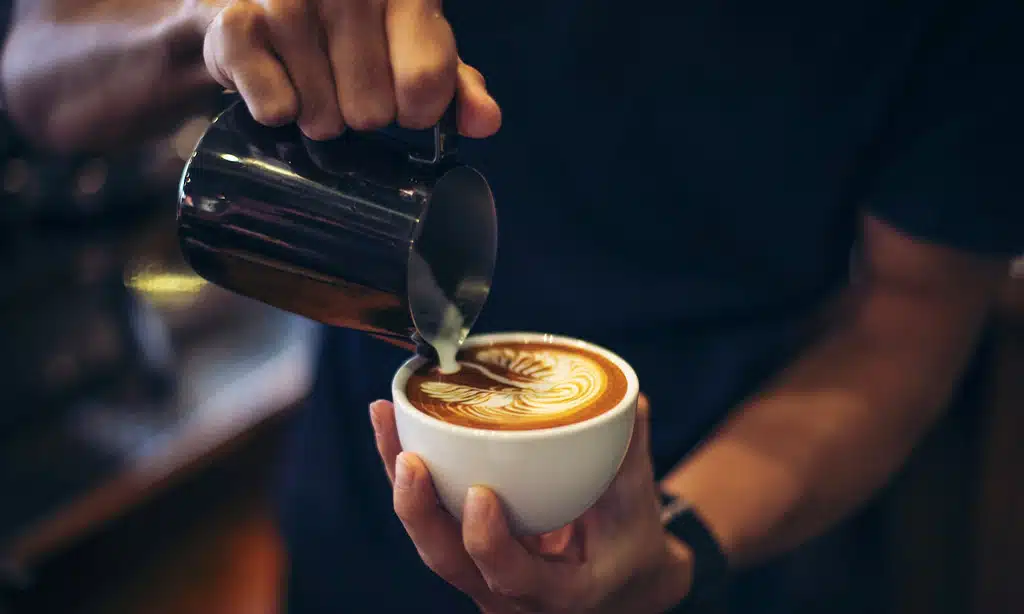
Milk Frothing Techniques
Many popular coffee drinks require frothed milk. Here’s how to achieve café-quality milk foam:
- Use cold, fresh milk (whole milk froths best, but plant-based alternatives can work too).
- Steam the milk to 150°F-160°F (65°C-70°C).
- Create a whirlpool effect in the milk pitcher to incorporate air and create microfoam.
- Tap the pitcher on the counter to break large bubbles and swirl to achieve a glossy texture.
Crafting Popular Coffee Drinks
Now that you’ve mastered the art of brewing, it’s time to channel your inner mixologist. The world of coffee drinks is a playground of flavors, textures, and aromas. From velvety lattes to bold Americanos, each drink is a unique canvas for your newfound barista skills. In this section, we’ll break down the recipes for some café favorites, empowering you to recreate – and perhaps even improve upon – the drinks you love. Get ready to impress with your latte art and perfect ratios.
Latte
- Extract a shot of espresso.
- Steam 8-10 oz of milk to create microfoam.
- Pour the steamed milk over the espresso, finishing with latte art if desired.
Cappuccino
- Extract a shot of espresso.
- Steam 4-5 oz of milk, creating more foam than for a latte.
- Pour equal parts steamed milk and foam over the espresso.
Americano
- Extract a shot of espresso.
- Add 6-8 oz of hot water to the espresso.
Tips for Perfecting Your Technique
- Consistency is key: Use the same measurements and timings for reproducible results.
- Experiment with different beans and roasts to find your preferred flavor profile.
- Clean your equipment regularly to prevent buildup that can affect taste.
- Pay attention to extraction time – under-extraction results in sour coffee, while over-extraction leads to bitterness.
- Practice latte art using YouTube tutorials and a lot of patience.
The Art of Coffee Tasting
Developing your palate is crucial for making great coffee. Here are some aspects to consider when tasting:
- Aroma: Smell the coffee before tasting. What scents do you detect?
- Acidity: Is there a bright, tangy quality? This is often described as citrusy or wine-like.
- Body: How does the coffee feel in your mouth? Is it light and tea-like or heavy and creamy?
- Flavor: What taste notes can you identify? Common descriptors include chocolate, nuts, fruit, and caramel.
- Finish: How does the taste linger after swallowing?
Practice describing these elements to refine your tasting skills and better understand your preferences.
Sustainability in Home Coffee Brewing
As a home barista, you can make choices that support sustainability:
- Choose coffee from responsible sources (look for Fair Trade or Rainforest Alliance certifications).
- Use reusable filters instead of paper ones.
- Compost used coffee grounds – they’re great for gardens!
- Opt for energy-efficient brewing methods and equipment.
Takeaway
Mastering the art of making barista-style coffee at home is a rewarding journey. It requires patience, practice, and attention to detail, but the result – a perfect cup of coffee tailored exactly to your taste – is well worth the effort. Remember, the key to great coffee lies in quality ingredients, proper technique, and a willingness to experiment.
As you continue to refine your skills, don’t be afraid to try new beans, brewing methods, and flavor combinations. The world of coffee is vast and diverse, offering endless opportunities for exploration and enjoyment. With the knowledge and techniques covered in this guide, you’re well on your way to becoming your own personal barista, capable of crafting café-quality coffee right in your own kitchen.
So, fire up that grinder, heat the water, and get ready to embark on your home barista adventure. Your perfect cup of coffee awaits!