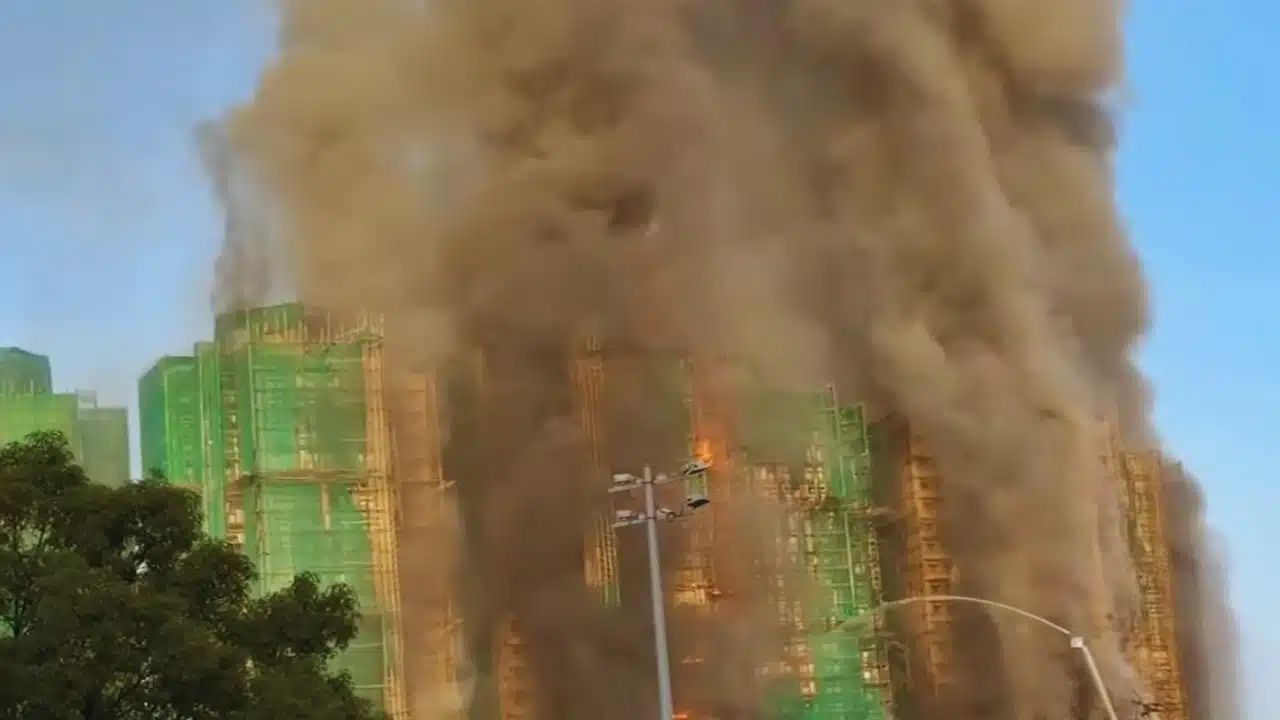
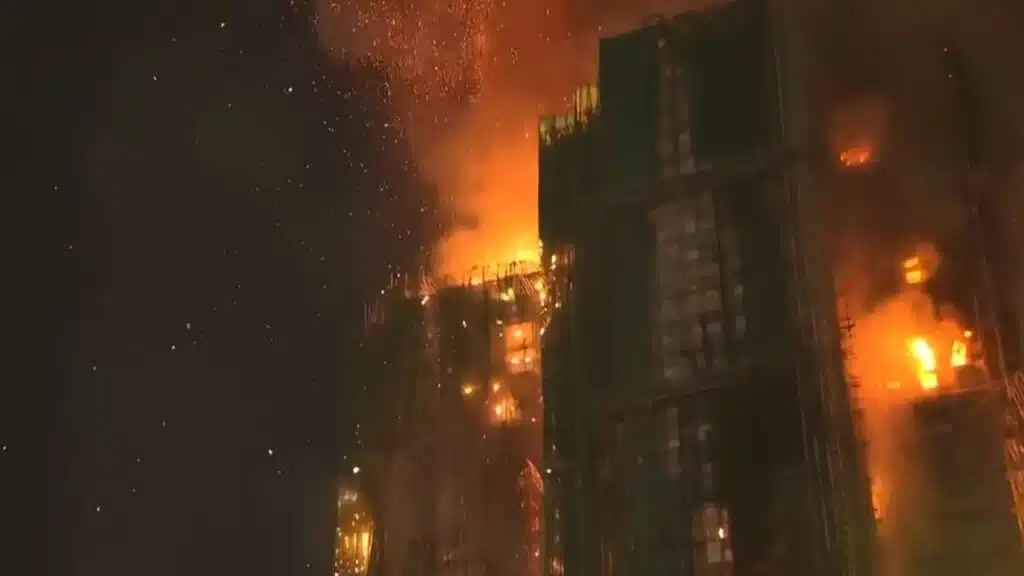
Hong Kong is reeling from one of the worst tragedies in its modern history after authorities confirmed that the death toll from last week’s catastrophic apartment complex fire has climbed to 151 people, with dozens still missing. The blaze tore through Wang Fuk Court, a densely populated residential estate in Tai Po, on November 26, engulfing seven of its eight towers in under an hour and leaving behind a landscape of charred concrete, collapsed scaffolding, and unrecognizable remains.
Rescue teams working around the clock reported that many victims were found inside stairwells, elevators, and sealed apartments—areas where residents likely sought refuge but were trapped by smoke and heat. Some remains were reduced to ash, making identification extremely difficult and extending the timeline for notifying families.
Officials described the inferno as Hong Kong’s deadliest building fire since 1948, when a warehouse blaze killed 176 people. The scale of destruction has stunned a city known for its strict building regulations and high-rise safety codes. Despite this reputation, the disaster exposed catastrophic regulatory failures, prompting urgent questions about oversight, contractor accountability, and government responsibility.
More than 4,600 residents once lived in Wang Fuk Court. Many have lost homes, family members, and all personal belongings. Those who survived describe scenes of panic as hallways filled with black smoke and alarms failed to activate, forcing people to flee blindly or become trapped.
Authorities continue searching upper floors of the towers, though survival chances diminish with each passing day. The full count of the dead may not be known for weeks.
Investigators Uncover Widespread Safety Violations and Deliberate Deception
A criminal investigation into the fire has uncovered alarming evidence suggesting that the disaster was not simply an accident but the result of deliberate cost-cutting and systematic fraud by construction contractors. At least 13 individuals, including company directors and senior subcontractors, have now been arrested on suspicion of manslaughter.
Initial tests conducted on the green mesh netting wrapped around the bamboo scaffolding revealed that seven of 20 samples failed fire-retardant standards. Investigators believe that contractors knowingly purchased thousands of rolls of cheap, substandard netting for renovations—materials that rapidly ignited and accelerated the spread of flames upward and across the building’s façade.
Evidence suggests that contractors bought approximately 2,300 rolls of unsafe netting at a fraction of the cost of compliant materials. To deceive inspectors, they allegedly installed proper fire-retardant netting only at ground-level edges and corners—areas easily visible during routine checks—while covering the rest of the complex with unsafe alternatives. This tactic allowed the company to pass multiple inspections undetected.
Beyond the netting, investigators found that flammable polyurethane foam insulation had been applied in several renovation zones, creating pathways for the fire to travel quickly between floors. Once ignited, the foam produced toxic smoke that filled stairwells and corridors, cutting off escape routes and overwhelming residents within minutes.
Compounding these hazards, fire alarms and smoke detectors throughout the complex malfunctioned or failed to activate. Many residents reported that alarm systems had been unreliable for months, and maintenance requests went unanswered. Some families were only alerted by neighbors or by the glow of flames outside their windows.
Residents had repeatedly raised concerns about fire hazards as early as September 2024, filing written complaints and requesting an urgent safety review. However, the Labour Department responded that the estate posed “relatively low fire risks,” a statement that now appears tragically inaccurate.
The revelation that multiple layers of safety had been knowingly compromised has fueled public anger and intensified scrutiny of Hong Kong’s construction oversight system. Authorities say more arrests are likely as investigators trace procurement documents, financial records, and communications that may reveal a wider web of negligence or corruption.
Public Grief Turns into Demands for Accountability as City Mourns Victims
As the death toll rose, thousands of Hongkongers gathered near the Wang Fuk Court estate, forming a long line—stretching more than a kilometer—to lay flowers, light candles, and offer prayers. The mass mourning has become one of the largest public tributes since the pandemic, with crowds from all districts and age groups standing in silence to honor the victims.
The mood, while solemn, is increasingly marked by frustration and disbelief. Many visitors expressed outrage that such a disaster could occur in a modern city with some of the world’s most stringent building regulations. Others demanded a full accounting of how contractors were allowed to bypass safety requirements, and why government inspectors failed to notice irregularities.
The tragedy has also reignited longstanding concerns over transparency in public housing maintenance, with families asking whether budget constraints or political pressure weakened oversight.
Emotional scenes unfolded as survivors recounted their experiences—children carried through smoke-filled hallways, elderly residents unable to descend blocked staircases, and families separated in the chaos. Many people escaped by draping wet towels over their mouths, crawling along the floor, or smashing windows to get fresh air. Some were rescued from balconies, but dozens never made it to safety.
Temporary shelters have been set up at nearby schools and community centers. Volunteers and NGOs are providing food, counseling, and legal assistance, while social workers help families locate missing relatives, secure medical care, and replace documents. With multiple towers likely uninhabitable for months, if not permanently, long-term rehousing plans are being arranged.
The collective grief has intensified calls for structural reform, stronger enforcement of safety laws, and independent monitoring of public housing projects.
Arrests, Censorship Concerns, and Political Fallout Amplify Tensions
The arrests of contractors and subcontractors are only one part of the broader government response. Authorities have also begun targeting online commentary surrounding the disaster, raising concerns about suppression of public discussion.
A 24-year-old student, Miles Kwan, who launched an online petition urging an independent investigation into possible corruption, was arrested on suspicion of sedition after the petition gained more than 10,000 signatures. The petition was quickly removed, and authorities issued a warning against spreading “inaccurate remarks” about the fire.
Security officials emphasized that misinformation could “harm public order,” but critics argue that the government’s actions risk silencing legitimate calls for accountability. Advocacy groups have condemned the arrests as politically motivated, drawing parallels to the broader tightening of free speech in Hong Kong since recent national security laws came into effect.
The national security office further cautioned the public against “using the disaster to disrupt Hong Kong,” echoing rhetoric from earlier political unrest. These statements have heightened fears that the tragedy may become entangled in political sensitivity, potentially overshadowing the pursuit of justice for victims.
Meanwhile, government leaders have attempted to project stability, insisting that Legislative Council elections scheduled for December 7 will continue as planned, despite growing criticism from residents who argue that the focus should be on ensuring full accountability and supporting affected families.
Path Forward as Hong Kong Confronts Systemic Failures
The aftermath of the Wang Fuk Court fire marks a turning point for Hong Kong, revealing vulnerabilities that extend beyond one construction project. The incident has prompted intense discussions across the city about enforcement failures, corruption risks, and understaffed inspection teams.
Authorities are now conducting a sweeping review of renovation practices across high-rise buildings, including procurement processes, materials testing, and contractor licensing. Engineers and fire safety experts are calling for more rigorous audits and surprise inspections, particularly for large-scale scaffolding work.
Families of victims are demanding long-term support and a transparent inquiry that fully explains how so many safety lapses aligned to produce such a devastating outcome. Lawmakers from across the spectrum have urged the government to release investigation findings publicly and to hold all responsible parties—regulators, contractors, and corporate executives—accountable.
Rebuilding trust will likely require substantive reforms, including stronger whistleblower protections, enhanced safety reporting systems, improved emergency preparedness in residential complexes, and mandatory independent verification of fire-retardant materials.
For now, Hong Kong stands united in grief yet divided over the government’s handling of the crisis. The tragedy has exposed painful truths about systemic weaknesses, but it has also sparked an outpouring of solidarity from ordinary citizens determined to ensure that such a disaster never happens again.