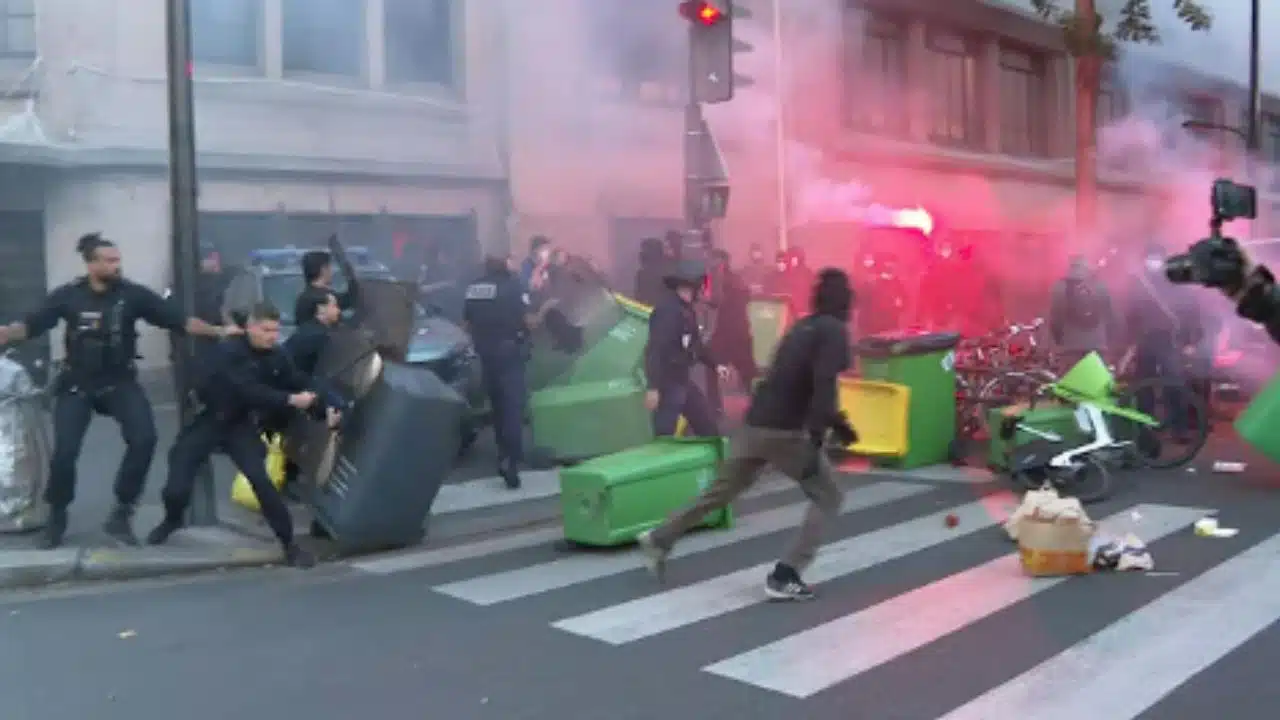
France has been shaken by a new wave of unrest as thousands of demonstrators took to the streets under the banner of “Bloquons Tout”—translated as “Block Everything.” The protests erupted just one day after President Emmanuel Macron appointed Sébastien Lecornu as the country’s new prime minister, following the ouster of François Bayrou. What should have been a moment of political transition quickly escalated into widespread chaos, signaling the deep social and political divisions running through France.
The demonstrations, which spread rapidly from Paris to cities including Rennes, Marseille, Lyon, Nantes, Toulouse, and Montpellier, have been described as Macron’s most difficult test yet in his second term. Protesters disrupted traffic, burned buses and garbage bins, damaged public property, and clashed violently with riot police.
How the Protests Started
The “Block Everything” movement is not led by a single political party but has emerged from grassroots anger at Macron’s government. Initially sparked by resentment over austerity measures in the proposed 2026 national budget, the protests quickly grew into a broader rejection of Macron’s leadership style.
Demonstrators say the budget plan threatens livelihoods, with €43–44 billion in spending cuts targeting healthcare, pensions, and subsidies. In addition, a controversial proposal to eliminate public holidays has outraged unions and workers’ groups. To many, Macron’s decision to appoint Lecornu—viewed as his close loyalist—was seen as ignoring popular calls for change.
One union representative described the move as a “slap in the face,” stressing that Macron, not his ministers, remains the core of the problem.
Chaos in Paris and Beyond
In Paris, major intersections were blocked, and fires broke out across several districts. Video footage widely shared on social media platforms such as X (formerly Twitter) and TikTok showed protesters setting a bus ablaze, toppling dumpsters, and confronting heavily armed police.
The protests were not confined to the capital. In Nantes and Rennes, demonstrators threw projectiles at police and torched barricades, while in Lyon and Marseille, public transport was disrupted as angry crowds attempted to paralyze traffic.
Rail services were also affected after a power line was damaged near Paris. Businesses reported vandalism, and local authorities urged people to stay home.
A Heavy Security Response
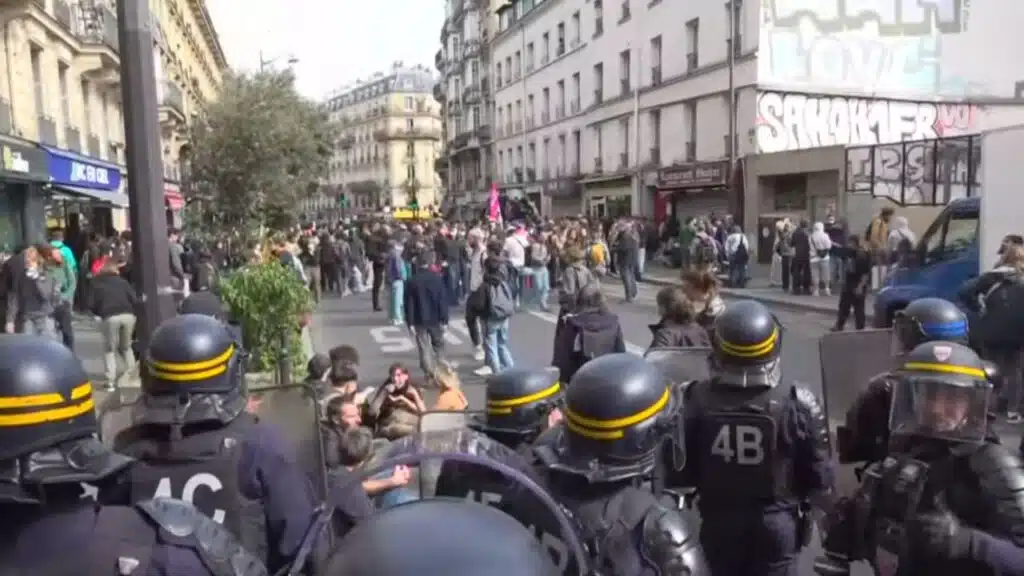
The French government has deployed an extraordinary number of security personnel in anticipation of unrest. According to Interior Minister Bruno Retailleau, about 80,000 police and gendarmes have been mobilized nationwide, with 6,000 officers concentrated in Paris.
By Wednesday evening, nearly 200 people had been arrested across the country, though the numbers continued to rise as clashes intensified. Retailleau condemned the violence, warning that radical groups had infiltrated the demonstrations and were attempting to “create a climate of insurrection.”
Authorities also reported incidents of police injuries and property destruction, though officials have not released a full estimate of damages.
Political Upheaval: Lecornu’s Rocky Start
The unrest coincides with a dramatic political shake-up. On September 9, 2025, Macron appointed Sébastien Lecornu as France’s new prime minister after François Bayrou was forced out in a confidence vote defeat. Bayrou had pushed for austerity policies—including cutting holidays and reducing public subsidies—that alienated lawmakers and the public alike.
At just 39 years old, Lecornu is one of the youngest leaders to hold the post. Previously serving as defense minister, he is seen as a close Macron ally with strong ties to the president’s centrist bloc. However, his appointment has been met with skepticism. Critics argue that Lecornu represents continuity rather than change, and his first day in office has been overshadowed by the “Block Everything” uprising—a true baptism by fire.
Why the Anger Runs Deep
The latest demonstrations are not an isolated event. Over the past three years, France has experienced a cascade of nationwide protests:
- 2023 Pension Reform Protests: Millions marched against Macron’s plan to raise the retirement age from 62 to 64.
- Nahel Merzouk Protests (2023): The police killing of a 17-year-old of Algerian descent in Nanterre sparked weeks of riots and renewed debates on racism, policing, and inequality.
- Farmers’ Protests in 2024: Farmers blocked roads over low food prices, reduced fuel subsidies, and concerns about EU free-trade deals with South America.
For many French citizens, the current unrest is part of a pattern of anger at Macron’s government—a continuation of earlier grievances that began as far back as the 2018 Yellow Vest movement, which opposed fuel taxes and rising living costs.
Pressure Mounts on Macron
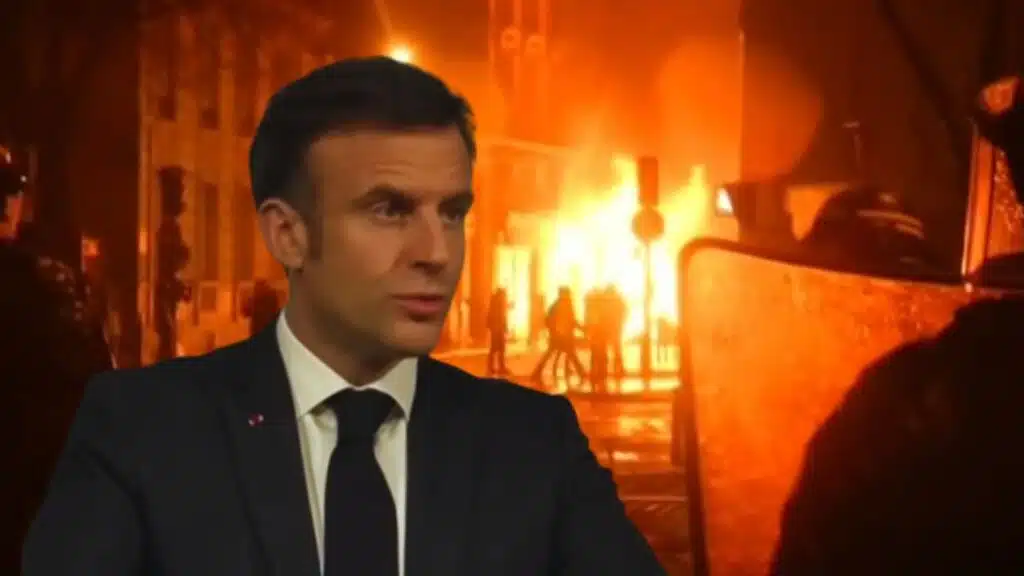
Although Macron insists he will not resign, calls for him to step down are growing louder. Protesters argue that the president has become increasingly disconnected from ordinary citizens, governing through executive decrees and relying heavily on loyalists.
Opposition leaders from both the left-wing NUPES coalition and the far-right National Rally have seized on the unrest to attack Macron, accusing him of authoritarian tendencies. With Macron’s Renaissance party lacking a majority in Parliament, passing critical legislation such as the 2026 budget remains uncertain.
The political deadlock has left Macron vulnerable. Analysts suggest that if Lecornu cannot build a coalition to pass the budget by October 7, France could face a snap election—deepening the crisis.
What Lies Ahead for France
The situation remains volatile. The “Block Everything” movement shows no signs of slowing down, and unions are already planning further strikes and demonstrations in the coming weeks. France now faces the dual challenge of governing amid parliamentary gridlock and responding to growing social unrest.
Observers warn that if Macron fails to restore confidence, France could enter one of its most unstable periods in decades. The stakes are especially high given the approaching 2026 presidential succession debate, where Macron is constitutionally barred from seeking a third term but hopes to shape the future of his political legacy.
France stands at a crossroads. With a fragile minority government, public anger spilling into the streets, and Macron under unprecedented pressure, the appointment of Sébastien Lecornu may do little to calm the storm. Instead, it has highlighted the widening gap between the government and its citizens.
The coming weeks will determine whether France can find stability through compromise—or whether the “Block Everything” movement will grow into a defining chapter of Macron’s presidency.
The Information is collected from NDTV and Yahoo.