Ever wondered how safe your personal info is in a virtual world like the metaverse? This digital space, powered by tech like virtual reality (VR) and augmented reality (AR), is growing fast as a spot for work and play.
In this blog, we’ll break down the seven biggest ethical worries, from privacy concerns to mental health risks, so you can stay informed. Keep reading to get the scoop!
Key Takeaways
- Privacy in the metaverse is at risk with biometric data like eye movements being tracked without clear consent.
- Digital ownership is unclear, especially with NFTs and virtual property rights, as laws lag behind tech in places like the UK.
- Cybersecurity threats loom large, with hackers targeting digital identities and assets like NFTs in virtual spaces.
- Mental health risks grow from too much time in VR, causing issues like addiction and confusion between real and virtual worlds.
- Energy use for metaverse tech, including VR and blockchain, is huge, creating environmental concerns for sustainability.
Privacy Concerns in the Metaverse
Hey, have you ever wondered how much of your life gets scooped up in virtual spaces? It’s a bit wild to think that every click, chat, and avatar tweak could spill your personal details, like biometric data, into the hands of who-knows-who!
Collection and misuse of personal data
Let’s talk about a big worry in the metaverse: the collection and misuse of personal data. Imagine every move you make, even your eye movements, being tracked as biometric data. Yep, that’s happening in these virtual spaces, and it’s a real concern for your privacy.
This isn’t just about numbers or stats; it’s personal. Companies might grab your digital identity details without clear consent, and who knows how they’ll use them? With risks like cyberattacks and identity theft on the rise, your info could fall into the wrong hands.
Stay sharp, folks, because protecting your user privacy in this mixed reality world is no small task.
Lack of transparency in data handling
Hey there, folks, let’s talk about something underhanded in the metaverse: the lack of clarity in data handling. You see, when you’re exploring virtual reality or playing around with digital assets, companies often collect your personal info, like biometric data, without revealing how they use it.
It’s like lending a buddy your favorite game, only to find out they’ve passed it on to a dozen strangers. Not cool, right?
Now, consider this issue with privacy concerns. Ethical principles call for clear guidelines and strong data protection, yet many metaverse platforms keep their practices hidden. You deserve to understand what’s happening with your digital identity! Regulatory frameworks are stepping in to address privacy and security, but they need to remain adaptable to match rapid tech advancements.
So, stay alert, and insist on knowing how your info is managed in these virtual spaces.
Digital Ownership and Intellectual Property
Hey, ever wonder who really owns your virtual goodies in the metaverse? Let’s chat about the wild west of digital assets, like non-fungible tokens (NFTs), and how copyright messes can trip up your creative vibes.
Challenges with virtual property rights
Virtual property rights in the metaverse are a real puzzle, folks. Imagine buying a cool digital house or a piece of virtual land with non-fungible tokens (NFTs), but then, who truly owns it? Laws haven’t caught up with these digital assets.
In the UK, talks are heating up about ownership rights for user-generated content. Yet, the legal framework is still a mess. It’s like building a castle on quicksand, waiting for the ground to firm up.
Now, think about this sticky spot with intellectual property. You create something awesome in a virtual environment, say, a wild avatar outfit. But, can someone just copy it without a nod? Without clear rules, it’s a free-for-all in these virtual communities.
The challenges tie into blockchain technology too, which promises secure tracking, but even that’s not foolproof yet. Stick around, ‘cause this digital turf war is just getting started.
Copyright issues in user-generated content
Hey there, folks, let’s chat about a sticky issue in the metaverse: copyright troubles with user-generated content. You see, when you craft something cool in these virtual spaces, like a funky design or a wild game level, who really owns it? It’s a bit of a mess, since platforms might claim rights over your work, leaving you scratching your head.
Now, toss in blockchain technology, and things get a tad clearer. It can track digital ownership with solid records, making sure your creations stay tied to you. Still, the rules around intellectual property in virtual environments are hazy at best.
We’ve gotta sort out these copyright knots to keep your freedom of creative expression safe in this digital playground.
Cybersecurity Threats
Hey there, are you ready to peek into the darker side of the metaverse? With hackers lurking around virtual corners, the risks of identity theft and stolen digital assets, like your prized NFTs, are sky-high.
Risks of hacking and identity theft
Let’s talk about a real danger in the metaverse, folks. Hacking and identity theft are huge risks in this virtual world. Cyberattack risks loom large, especially when crooks target your digital identity.
Imagine someone sneaking into your account, stealing who you are online. It’s like a thief breaking into your house, but this time, it’s your virtual self at stake.
Scary stuff, right? Protection of sensitive virtual assets is a must. Think about your digital currency or prized NFTs getting swiped. With tools like blockchain technology in play, you’d hope for safety, yet hackers still find cracks.
It’s a wild west out there in cyberspace, so staying sharp is key.
Protection of sensitive virtual assets
Hey there, readers, let’s chat about keeping your virtual treasures safe in the metaverse. Imagine your digital assets, like non-fungible tokens (NFTs), as prized possessions in a virtual vault.
You wouldn’t leave your front door wide open, right? Well, hackers are itching to swipe your stuff, from digital art to virtual land. That’s why strong cybersecurity is a must to guard these goodies.
Guess what? Blockchain technology steps up as a game-changer here. It locks in secure transactions and proves digital ownership, acting like a high-tech deed to your property. Plus, having solid digital identity systems is vital.
They help keep access global yet safe, making sure only you can touch your virtual stash. So, stay sharp and protect your online hoard!
Inclusivity and Accessibility
Hey there, let’s chat about making the metaverse a place for everyone, no matter who they are or where they come from. Ever think about how virtual reality gear, like those fancy headsets, might be tough to get for some folks due to cost or physical challenges?
Ensuring equitable access to the metaverse
Let’s discuss ensuring the metaverse is accessible to everyone, folks. Not all individuals can participate in this virtual environment due to expensive VR headsets and the requirement for high-speed internet.
This disparity, often referred to as the digital divide, excludes many from taking part. It’s disappointing to consider that some are unable to engage in these captivating experiences simply because of financial constraints or geographic limitations.
Imagine it as a huge celebration where only a select group receives invitations. We need to address this by introducing innovative features like haptic feedback, auditory signals, and text-to-speech capabilities.
These enhancements support individuals with varying abilities in joining virtual communities. Also, improving digital skills can create opportunities, ensuring no one is excluded from this exciting, innovative domain of augmented reality and digital resources.
Avoiding discrimination in digital spaces
Hey there, folks, let’s chat about keeping digital spaces fair for everyone in the metaverse. It’s vital to make sure no one gets left out or treated badly because of who they are.
Think of virtual communities as a big online park; we want all people, no matter their background, to play and connect without fear. Companies like Microsoft are stepping up with accessibility standards for mixed reality, setting a solid example.
Now, imagine a world where bias creeps into virtual reality (VR) or augmented reality (AR) experiences. That’s a real risk if we don’t watch out. We need teamwork among governments, private sectors, and civil society to build rules that protect digital identities and stop unfair treatment.
By focusing on inclusivity, using tools like blockchain technology for safe identity management, and pushing for digital ethics, we can create a space where everyone feels valued.
Psychological and Social Impacts
Hey there, have you ever thought about how the metaverse might mess with your head, or even change how you hang out with pals? Let’s chat more about this wild digital world and its impact on your mind, so stick around to dig deeper!
Risks of addiction and mental health challenges
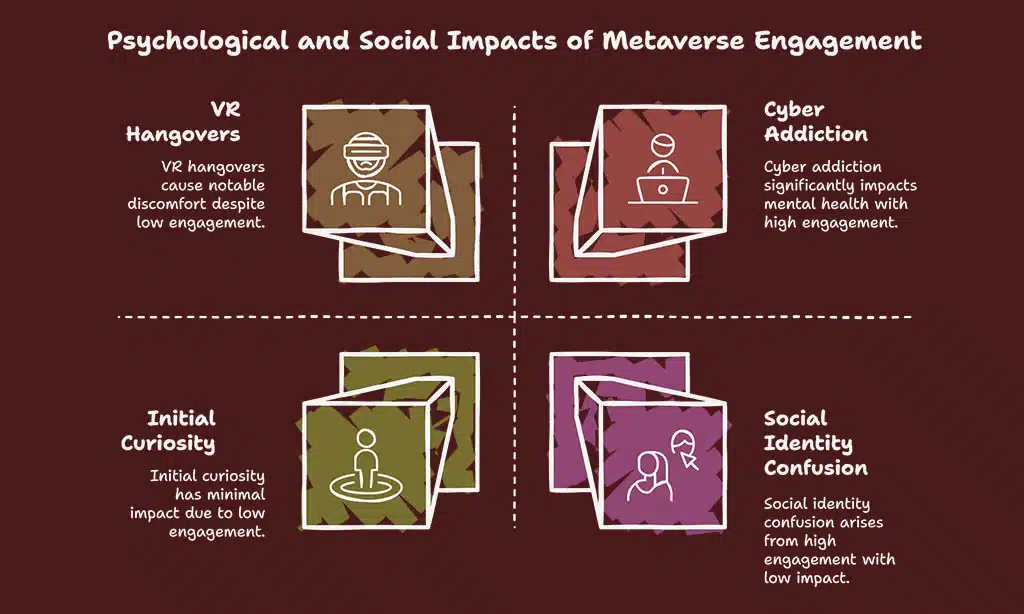
Spending too much time in the metaverse can hook you, folks. Virtual reality (VR) and immersive experiences might feel thrilling, but they can lead to real issues like cyber addiction.
Some even get “VR hangovers,” feeling dizzy or off after long sessions. It’s like chasing a high that leaves you drained, messing with your well-being.
Too much of this digital escape can hurt your mental health, no joke. Blurring reality and virtual worlds might confuse your mind, causing stress or anxiety. We need solid educational programs for digital literacy to help spot these risks.
Plus, accessible psychological support is a must to tackle these mental health conditions before they spiral. Let’s keep our heads clear in this wild virtual space!
Blurring the lines between reality and virtual environments
Hey there, readers, let’s chat about something wild happening in the metaverse. It’s getting tough to tell what’s real and what’s not. You slip into virtual reality (VR) or augmented reality (AR), and suddenly, you’re in immersive experiences that feel just like life.
But here’s the kicker, spending too much time in these digital spaces can mess with your head. Prolonged metaverse engagement can impact cognitive skills, personal identity, and even mental health.
It’s like living in a dream you can’t wake up from.
Now, think about this. These virtual communities start shaping how we act and think in the real world. Cultural and social norms get tangled up with what happens online. Your digital identity might clash with who you truly are.
It’s a bit like wearing a mask so long, you forget your own face. Plus, with artificial intelligence (AI) and simulations running the show, the ethical implications grow bigger. How do we keep our values straight in such a mixed-up space?
Ethical Governance and Regulation
Hey there, let’s chat about the wild west of the metaverse and how it needs some solid rules, ya know? We gotta push for global standards to keep developers and users playing fair in these digital worlds.
Need for global standards and policies
Folks, we gotta talk about rules for the metaverse. Right now, it’s like the Wild West out there in virtual reality (VR) and augmented reality (AR) spaces. Without global standards, companies can do whatever they please with your digital identity and biometric data.
Think about it, no clear policies mean your privacy concerns might get tossed aside. We need a solid plan that works across borders to keep everyone safe.
Current laws, like the EU’s GDPR and Online Safety Bill, lay a good base, but they ain’t enough. Then there’s the Ethical AI guidelines from the High-Level Expert Group on Artificial Intelligence (HLEG on AI), pushing for transparency and risk-based approaches.
That’s a start for handling artificial intelligence (AI) and blockchain technology in the metaverse. Let’s get everyone on the same page with ethical principles, so developers and users know what’s right and wrong in these immersive experiences.
Accountability for metaverse developers and users
Hey there, let’s chat about who’s responsible in the wild world of the metaverse. Developers and users both play big roles, and they gotta own up to their actions in these virtual spaces.
Think of it like a digital neighborhood; if someone trashes the place, there must be rules to set things right. Collaboration among governments, international bodies, and tech industries is super vital to make this work.
Without teamwork, chaos could rule these immersive experiences.
Now, imagine a playground with no grown-ups watching. That’s why self-regulation, like codes of conduct and regulatory sandboxes, can help a ton. These tools act as guardrails, keeping everyone on track while using stuff like blockchain technology or digital assets.
Accountability isn’t just a buzzword; it’s the key to building trust in virtual communities. So, let’s push for clear ethical principles to guide both creators and explorers in this exciting space.
Environmental Sustainability
Hey there, let’s chat about the heavy toll the metaverse takes on our planet. The energy drain from virtual reality (VR) tech and server farms, like those powering blockchain systems, is a real beast, gobbling up power faster than a kid with a candy stash!
Energy consumption of metaverse technologies
Metaverse tech, like virtual reality (VR) and augmented reality (AR), gulps down a ton of power. Think about it, all those immersive experiences need serious juice to run smoothly.
The demand spikes with fancy hardware and tools like 5G networks, which boost user fun but chug energy fast. On top of that, blockchain technology, often tied to digital assets and non-fungible tokens (NFTs), adds even more strain if not balanced for security and trust.
Here’s the kicker, though, this energy hunger can hit different groups unfairly. Folks in lower-income areas might struggle to access these digital spaces due to high costs or weak setups.
We must push for fair energy use across all communities for true inclusivity. Also, self-regulation and smart codes of conduct can help cut waste. Let’s not forget, building hardware for spatial computing has its own green footprint, so trimming that impact matters big time.
Minimizing the environmental impact of hardware production
Let’s discuss the eco-friendly aspect of tech in the Metaverse. Building hardware for virtual reality (VR) and augmented reality (AR) consumes a significant amount of energy and resources.
We must reduce this impact. Sustainable practices are essential for the tech foundation of Web3, everyone. Focus on minimizing waste, increasing recycling, and creating smarter designs to protect our planet while we engage in immersive experiences.
Reducing the environmental impact of hardware production requires consistent global standards. Strong collaboration between tech industries can drive eco-friendly solutions, I’m confident.
Accessibility in the digital space also calls for sustainable methods in producing gear. Thorough analysis and risk assessments are vital for developing reliable, planet-friendly hardware for digital assets and more.
Let’s ensure our virtual communities flourish without damaging the real world!
Takeaways
Hey there, readers, let’s wrap this up with a quick thought on the metaverse. It’s a wild, exciting space full of virtual reality and digital assets, but we’ve got to tackle those ethical bumps.
From privacy woes to ensuring fair access, the road ahead needs clear rules and teamwork. Picture it like a giant online playground; we all want to play safe and have fun, right? So, let’s keep pushing for a digital world that’s fair for everyone.
FAQs
1. What are the main privacy concerns in the Metaverse?
Hey, let’s chat about privacy in this wild virtual world. With virtual reality (VR) and augmented reality (AR) pulling us into immersive experiences, biometric data gets scooped up faster than candy at a parade. Think about it, your digital identity could be at risk if companies mishandle the right to privacy.
Yo, the Metaverse ain’t all fun and games with non-fungible tokens (NFTs) and digital assets. It can widen the gap between the haves and have-nots, especially when access to blockchain technology or augmented reality glasses isn’t equal for everyone.
3. Why is content moderation a big ethical issue in the Metaverse?
Content moderation in virtual communities is like herding cats, nearly impossible to get right. With freedom of creative expression on platforms using mixed reality (MR), who decides what’s okay to advertise or share? Ethical principles clash with subjectivity, making digital ethics a hot mess.
4. Can the Metaverse lead to addictive behaviors?
Absolutely, getting lost in the Internet of Things (IoT) and these mind-blowing digital spaces can hook you. Addictions sneak up like a thief in the night, especially with the constant pull of content creation and social implications.
5. What role does artificial intelligence (AI) play in Metaverse ethical issues?
Artificial intelligence (AI), including its use in healthcare, drives a lot in the Metaverse, but algorithmic bias can trip us up. It’s like playing a rigged game, where decisions might not be fair or morally sound. We gotta watch for ethical behavior and demand explainability, or we’re just rolling the dice.
6. How do we protect online safety in this new digital frontier?
Listen up, online safety in the Metaverse, tied to the Internet and edge computing, is no small potatoes. With decentralized autonomous organizations and digital services act rules from places like the European Union, we need two-factor authentication and informed consent to keep risks in check. Let’s not play fast and loose with integrity, or we’ll regret ignoring ethical standards and compliance.