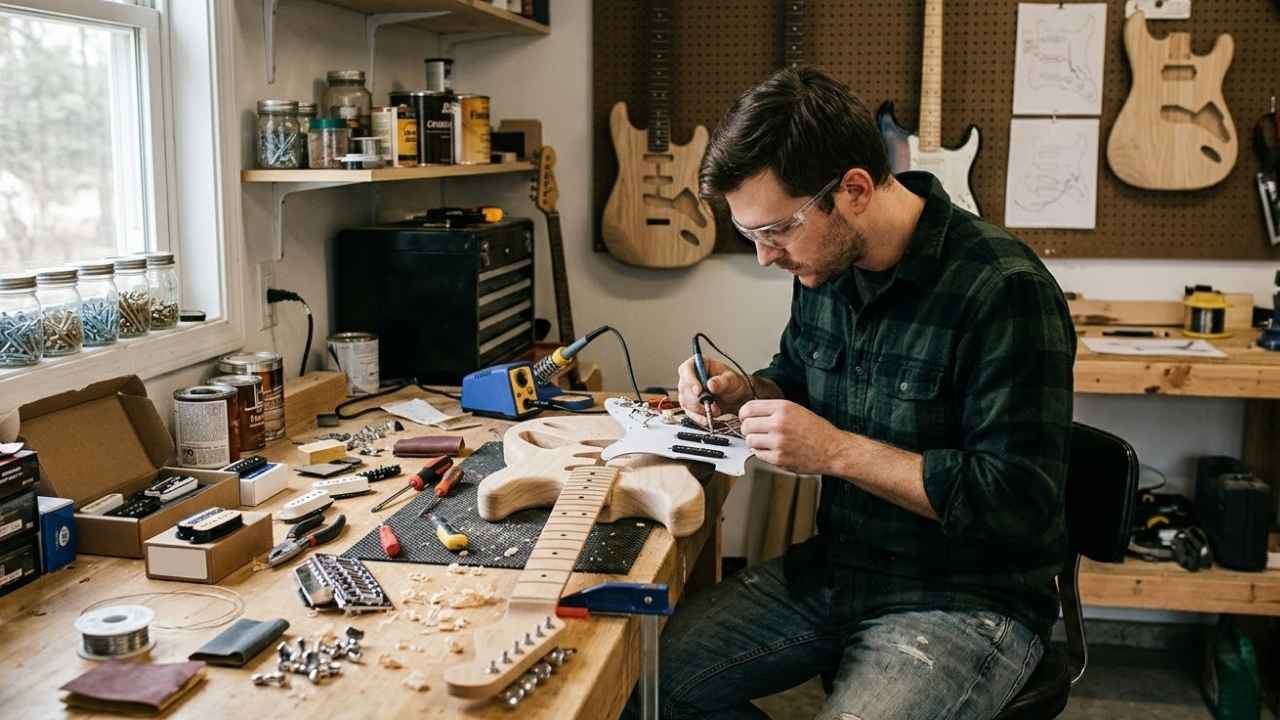
The modern guitar world is not just about learning chords or chasing the perfect riff anymore. A growing number of players are stepping beyond the stage or the practice room and heading straight for the workbench. Across the country, hobbyists, weekend musicians, and longtime collectors are discovering the satisfaction of building, modifying, and personalizing their own instruments. What used to feel like specialized work reserved for professional luthiers now sits comfortably within reach of everyday players who simply want something that feels uniquely theirs.
Social media has played a role, of course, but so has a broader cultural interest in hands-on creativity. Just as people rediscovered baking bread or restoring vintage furniture, guitars have become the latest canvas for do-it-yourself craftsmanship. The result is a new wave of players who care as much about the instrument itself as the music coming from it.
The Appeal Of Building Instead Of Buying
Buying a guitar off the rack still works for plenty of musicians, but many players find themselves curious about what lies beneath the glossy finish and factory setup. Building or assembling an instrument opens a door to that curiosity. Instead of accepting whatever combination of woods, pickups, and electronics a manufacturer decides on, musicians get to make those decisions themselves.
For many beginners, electric guitar kits provide the perfect entry point. These kits typically arrive with a pre-cut body, unfinished neck, hardware, and electronics ready for assembly. The process introduces players to the anatomy of the instrument without demanding advanced woodworking skills. Sanding, finishing, and wiring become part of the experience, and the reward is an instrument that carries a personal story along with its sound.
Players often say the first build changes how they hear guitars forever. Once you have installed pickups or adjusted a bridge yourself, every note feels more connected to the mechanics that produced it.
Understanding The Parts That Shape A Guitar’s Voice
The sound of a guitar comes from a mix of physical elements that work together like a small mechanical orchestra. Wood type, pickups, scale length, and bridge design all contribute to tone and feel. For players diving into DIY builds or upgrades, learning these components becomes part of the fun.
Pickups, for example, dramatically affect a guitar’s personality. Single coil pickups tend to deliver brightness and clarity, while humbuckers produce a thicker, warmer output. Swapping one for the other can change how a guitar sits in a band mix or responds to distortion.
Neck shape also matters more than many people realize. A slim neck encourages fast playing, while a chunkier profile can provide comfort and stability for rhythm work. Even small details like fret size influence how easily notes bend and sustain. Once players begin exploring these variables, the instrument stops feeling like a fixed object and starts acting more like a customizable tool.
The Personal Side Of Guitar Customization
For many musicians, modifying an instrument becomes less about performance and more about identity. A guitar can carry visual style as easily as it carries sound. Custom finishes, pickguards, knobs, and hardware allow players to reflect their taste in subtle ways.
That curiosity often leads musicians to research how to customize your guitar through upgrades like locking tuners, new bridges, or personalized electronics layouts. Some experiment with bold paint jobs or vintage-inspired relic finishes, while others pursue clean minimal aesthetics that highlight the wood itself.
The beauty of customization lies in its flexibility. One player might chase the tone of a favorite classic album, while another simply wants a guitar that feels comfortable after years of playing. Either way, the process builds a deeper relationship between the musician and the instrument in their hands.
Technology Is Expanding The DIY Guitar World
Digital tools have also made the process more accessible. Online tutorials break down complex tasks into manageable steps, and specialty retailers now ship components directly to hobbyists around the world. Even newcomers with limited experience can follow along and gradually build confidence with each project.
Computer-aided design software has begun influencing small builders as well. Some hobbyists experiment with custom body shapes or hardware layouts before ever touching a piece of wood. Others rely on communities of enthusiasts who trade advice about wiring diagrams, pickup combinations, and finishing techniques.
Instead of feeling intimidating, guitar building has evolved into a collaborative hobby where knowledge spreads quickly. A player in a small apartment can learn the same tricks once guarded by professional workshops.
Where Music And Craftsmanship Meet
At its heart, the growing DIY guitar culture reflects something simple. People enjoy making things with their hands. When the finished object also creates music, the connection becomes even stronger.
Players who build or customize their instruments often describe the first chord through a newly assembled guitar as unforgettable. Every piece of the instrument carries their fingerprints, decisions, and time.
Musicians have always searched for instruments that feel personal. Building, upgrading, or customizing a guitar simply takes that instinct one step further. The result is more than a tool for playing songs. It becomes a reflection of the player behind it, shaped note by note and screw by screw.