Have you ever felt that sudden drop in your stomach when you click a link and immediately realize something is wrong? It is a terrible feeling, and for schools and colleges right now, it is happening entirely too often. Cyberattacks are hitting educational institutions hard, causing real chaos that disrupts classes and stops basic services cold.
When I watch these incidents unfold, the impact on students and teachers is impossible to ignore. The secret I discovered is that 40% of education breaches involve third-party technology companies. This means your school’s security depends on tools you do not completely control.
That is why you need a cybersecurity plan for schools and colleges to start protecting your campus today. I spent months researching practical strategies, and I found straightforward solutions that actually work. I will walk you through exactly what your school needs to do, without relying on complicated jargon.
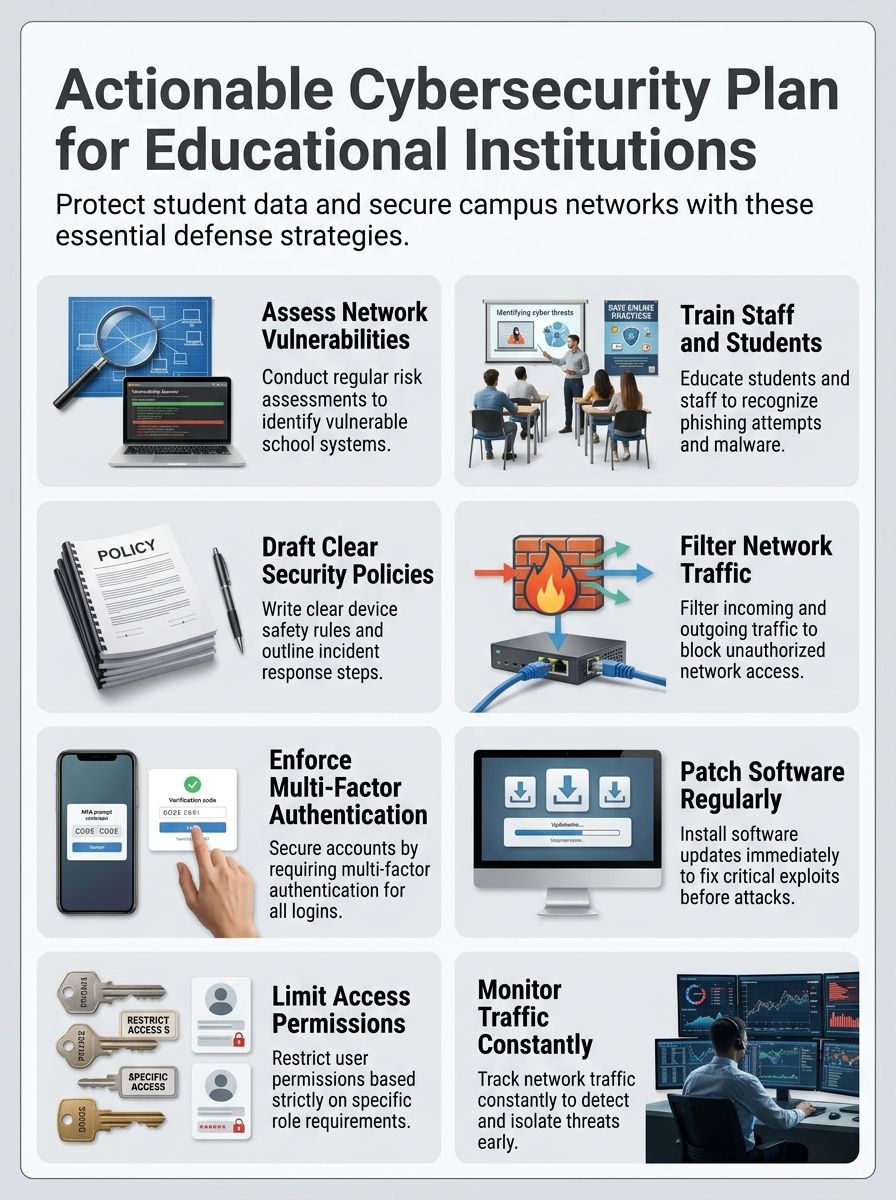
Common Cybersecurity Threats in Schools and Colleges
Schools and colleges face real attacks every single day. Criminals actively want to steal student data or shut down your systems completely. I will walk you through the specific threats that keep IT directors awake at night, so your institution can actually defend itself.
Phishing Attempts
Phishing attacks hit educational institutions constantly. I have seen personally how these attacks exploit the massive stores of sensitive information that universities and schools hold.
Cybercriminals specifically target education because they know you store valuable data. Phishing attempts arrive in your inbox disguised as legitimate emails, tricking your staff and students into clicking malicious links.
Watch out for these common phishing red flags:
- Mismatched sender email addresses that look slightly off.
- Unexpected QR codes sent in the body of an email.
- Urgent requests for wire transfers or financial updates.
- Links that direct you to unfamiliar login pages.
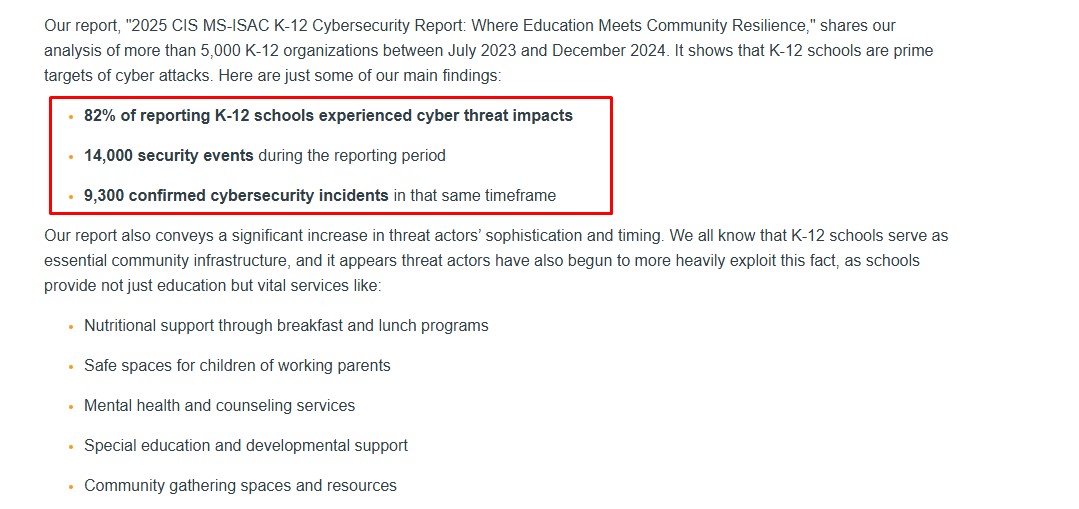
According to the 2025 CIS MS-ISAC K-12 Cybersecurity Report, cybercriminals target human behavior at least 45% more often than technical vulnerabilities. This means your people are the primary target.
To understand this vulnerability, I recently reviewed a direct test involving a controlled phishing simulation at a synthetic K-12 school. The exercise targeted 320 staff members and 1,150 students to measure baseline susceptibility.
The results were telling, as 87 staff members clicked the simulated link, along with 254 students. I recommend making security training mandatory, regular, and practical rather than boring lectures that people forget immediately.
Ransomware Attacks
Phishing attempts open doors for attackers, but ransomware attacks slam those doors shut and lock them tight. Ransomware involves malware that encrypts your data or locks users out entirely until you pay a ransom.
I understand that ransomware represents one of the most serious cybersecurity threats your school faces today. A 2026 report by Comparitech revealed that the United States faced 130 ransomware attacks on education institutions in 2025, which was the highest number globally.
Schools face financial impacts that extend far beyond ransom payments. Your recovery costs, legal fees, and compensation for affected individuals will drain budgets quickly.
Ransomware does not just steal data. It steals time, trust, and educational continuity from your students. The good news is that defenses are improving. The Sophos State of Ransomware in Education 2025 report shows that lower-education institutions blocked 67% of attacks before data encryption occurred.
You must treat ransomware prevention as a critical priority. Data encryption, system backups, and staff training form the foundation of effective protection against this devastating threat.
Data Breaches
Data breaches represent the most serious consequence of cybersecurity failures. I find them far more damaging than ransomware attacks in many ways, simply because leaked data cannot be unpublished.
Schools and colleges store massive amounts of sensitive information, from student social security numbers to staff payroll details. The financial toll is staggering.
IBM’s 2025 Cost of a Data Breach Report put the United States average breach cost at an all-time high of $10.22 million. This kind of expense can cripple a school district’s budget and reputation simultaneously.
Human errors, such as poor data handling or weak passwords, cause many of these breaches. For example, the massive PowerSchool student information system breach in late 2024 exposed millions of records simply because a customer support portal lacked multi-factor authentication.
My experience shows that you must treat data protection as a critical priority. Catch problems before criminals do by following these steps:
- Enforce multi-factor authentication on all administrative portals.
- Conduct routine vulnerability assessments on third-party software.
- Restrict access to sensitive data based on strict job roles.
- Update your incident response plan annually.
Key Components of a Cybersecurity Plan For Schools And Colleges: A Practical Guide
I build my cybersecurity plan on three main pillars that work together to protect my school or college. These pillars stop attacks before they happen, train my people to spot danger, and keep my systems fresh and strong.
Incident Response Planning
I have learned that incident response planning forms the backbone of any school or college defense. This critical component helps my institution move quickly when threats strike, turning panic into coordinated action.
I organize my incident response plan around the NIST Cybersecurity Framework (CSF) 2.0. This framework guides my approach across six specific functions: Govern, Identify, Protect, Detect, Respond, and Recover.
To make this practical, I break down my response strategy into four manageable phases:
- Preparation: I make sure my team has the right tools, like the Hyperproof compliance platform, ready before trouble happens.
- Detection and Analysis: When my school spots something suspicious, I document the findings and determine how serious the threat actually is.
- Containment and Eradication: My containment strategy isolates affected systems immediately while I patch vulnerabilities.
- Post-Incident Activity: I maintain an event log tracking every decision, which helps me understand the breach and proves our compliance with regulations.
A practical process walkthrough shows how these phases work in reality. In a recent tabletop exercise at a synthetic small college, administrators ran a scenario to validate their response phases.
The team initiated their full recovery plan at the six-hour mark. Regular drills like this refine timing and ensure accountability across the board.
Cyber Hygiene Training for Staff and Students
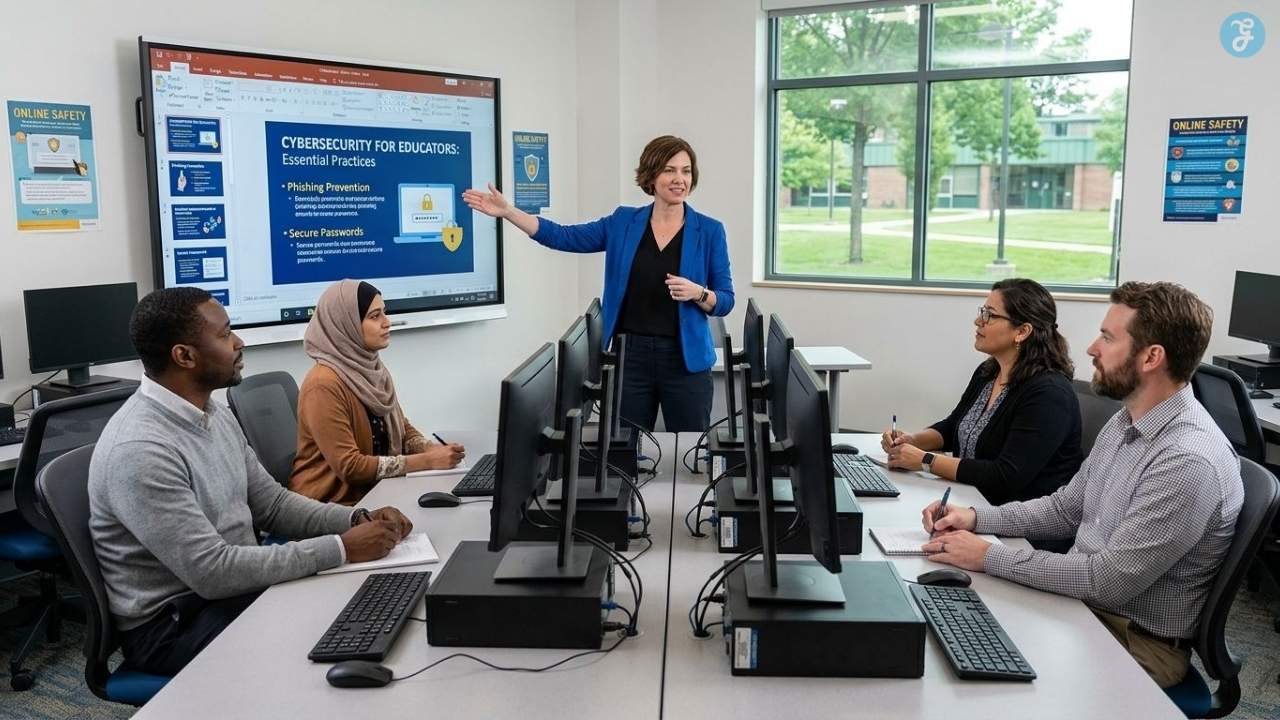
Human error remains the biggest weak link in school security systems. My experience shows that a solid training program transforms your staff and students into your strongest defensive line.
According to the 2025 Hoxhunt Phishing Trends Report, customizing your training to specific departments can reduce phishing susceptibility by over 85%. You cannot just rely on a generic annual video.
I focus my training efforts on a few high-impact areas:
- Spotting Phishing: I teach staff how to identify mismatched sender domains and dangerous email attachments.
- Password Strength: Training sessions emphasize that strong credentials act like deadbolts on our digital doors.
- Incident Reporting: I establish clear, blame-free reporting procedures so people feel safe admitting mistakes quickly.
- Frequent Refreshers: I schedule refresher sessions quarterly because cyber threats evolve rapidly.
I measure training effectiveness by tracking how many users actually report suspicious emails. Vulnerability assessments after these sessions help me see which departments need extra support.
Regular System Audits and Updates
System audits and software updates form the structural integrity of my school’s defense strategy. I have discovered that regular checks catch minor flaws before they become major disasters.
I conduct internal audits using the CyberSecurity Audit Model (CSAM) to identify vulnerabilities hiding in our network infrastructure. This helps me spot weak points that attackers love to exploit.
To keep my audits actionable, I focus on these key steps:
- External Evaluations: I hire outside professionals annually to provide an objective review of our defenses.
- Prompt Patching: Software updates patch security holes, so I install them immediately across all campus devices.
- Tool Upgrades: I regularly update firewalls and antivirus programs so they can fight today’s threats.
- Compliance Checks: I maintain detailed audit logs to prove my institution meets strict FERPA and HIPAA standards.
Audits demonstrate to parents and administrators that I take data protection seriously. Trust builds when people see verifiable proof.
Tools and Technologies for Effective Cybersecurity
I will show you how the right tools and technologies form your school’s digital shield. Keep reading to discover the systems that actually protect your data.
Network Security Solutions
Network security solutions block modern threats like DDoS attacks and unauthorized access attempts before they compromise your institution. They act as your digital perimeter.
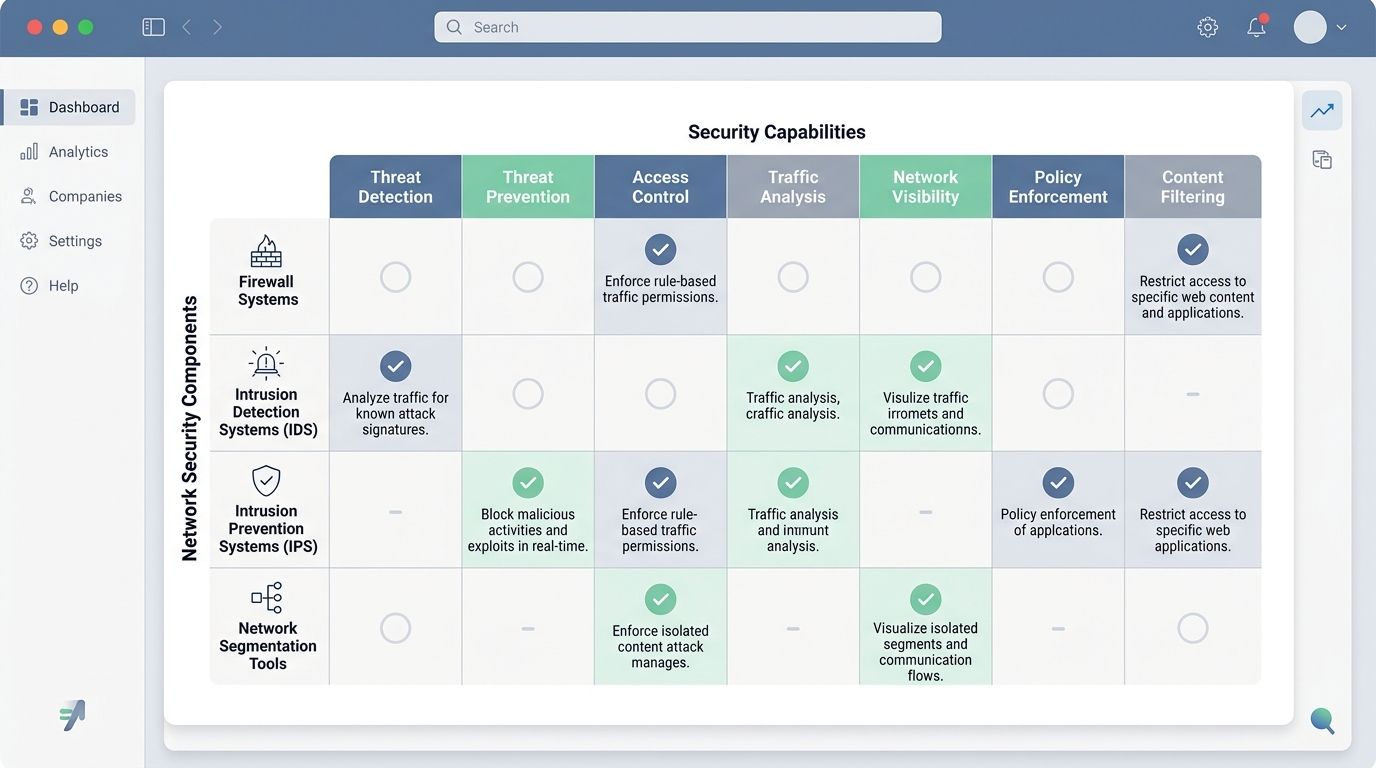
| Network Security Component | Key Functions & Benefits | Threat Detection Capability |
| Firewall Systems | Monitor incoming and outgoing traffic. Block suspicious connections. Filter data packets based on predefined rules. | Stops unauthorized access attempts and identifies malicious traffic patterns in real-time. |
| Intrusion Detection Systems (IDS) | Analyze network behavior continuously. Alert administrators to anomalies. Track attack patterns across multiple entry points. | Detects DDoS attacks and command-and-control frameworks attempting to compromise your network infrastructure. |
| Intrusion Prevention Systems (IPS) | Block threats automatically upon detection. Stop malware from spreading. Prevent exploitation of known vulnerabilities. | Mitigates threats like ransomware propagation and lateral movement across your systems. |
| Network Segmentation Tools | Divide your network into isolated zones. Limit lateral movement of attackers. Protect sensitive student and faculty data separately. | Reduces attack surface and prevents breaches from spreading institution-wide. |
| Behavioral Analysis & AI Detection | Monitor user activities against baseline behavior. Flag deviations automatically. Learn from historical data patterns. | Identifies compromised accounts and insider threats using behavioral detection powered by artificial intelligence. |
| Vulnerability Assessment Tools | Scan systems for security gaps. Prioritize patches by severity. Generate detailed compliance reports. | Finds weaknesses before attackers exploit them. Assesses effectiveness of security controls in various environments. |
| VPN & Encrypted Tunnels | Secure remote connections for staff and students. Encrypt data in transit. Protect against man-in-the-middle attacks. | Prevents interception of sensitive communications and login credentials. |
| Multi-Factor Authentication (MFA) Integration | Requires multiple verification methods. Combines passwords with biometrics or tokens. Protects against credential theft. | MFA implementation significantly reduces unauthorized access incidents by requiring more than just passwords. |
I have learned that network monitoring tools vary in their effectiveness across different environments. You must evaluate detection capabilities specific to your infrastructure.
A 2025 report from IBM noted that companies using extensive security AI and automation identify breaches 80 days faster than those without these tools. During a twelve-week deployment of layered network monitoring tools in a synthetic community college, administrators tracked their detection improvements closely.
Post-deployment detection jumped to 14.8 suspicious events per week, while the mean time to detect reduced from 42 hours down to just 5.6 hours. These realistic metrics justify investing in layered monitoring to secure your network.
Identity and Access Management
Identity and Access Management stands as the core of protecting sensitive educational data. My research into different Learning Management Systems revealed striking gaps in how schools handle access controls.
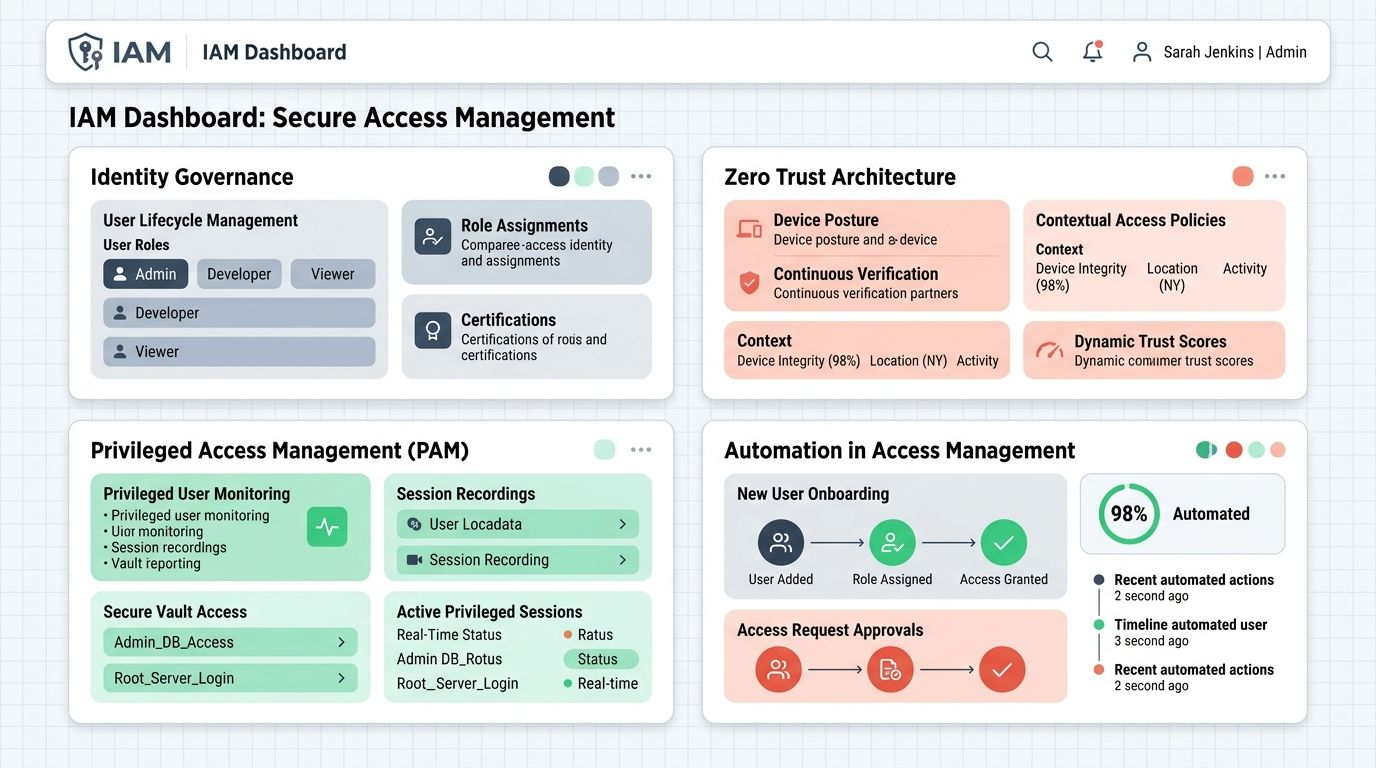
| IAM Component | What It Does | Why Schools Need It |
| Identity Governance | Manages who gets access to what systems and data across your institution. Tracks every user’s permissions from day one until they leave. Creates a complete audit trail of access decisions. | Prevents unauthorized people from viewing student records or financial information. Reduces confusion about who should have access to sensitive resources. Keeps administrators from granting excessive permissions out of convenience. |
| Privileged Access Management (PAM) | Controls high-level administrative accounts that can modify systems or access everything. Monitors when administrators log in and what they do. Requires additional authentication steps for sensitive actions. | Stops rogue employees from stealing data or sabotaging systems. Limits damage if a privileged account gets compromised. Creates accountability for who accesses critical infrastructure. |
| Automation in Access Management | Uses software to handle routine access requests and updates automatically. Removes manual errors from permission assignments. Responds quickly to access changes when employees join or leave. | Saves IT staff enormous amounts of time on repetitive tasks. Reduces mistakes that create security holes. Keeps access rights current without human delay. |
| Zero Trust Architecture | Never trusts anyone automatically, whether inside or outside your network. Verifies every access request with multiple checks. Assumes threats could come from anywhere, including internal users. | Protects against modern threats that slip past traditional firewalls. Catches compromised accounts before they cause major damage. Works better for remote learning environments where staff and students access systems from home. |
| Authorization Practices | Determines exactly what each user can do once they’re verified. Gives teachers access to grades but not payroll systems. Allows IT staff to manage servers but not student records. | Prevents accidental data exposure from overpermissioned users. Keeps different departments from accessing information they shouldn’t see. Simplifies compliance with privacy regulations like FERPA. |
Most institutions do not follow consistent authorization practices. Some schools grant teachers access to administrative functions they never use, which creates unnecessary risk.
Identity governance forms your first line of defense. You must establish clear rules about who belongs in which systems.
I highly recommend implementing FIDO2 security keys, like YubiKeys, for your highest-level administrative accounts. These physical keys are currently the most effective defense against advanced phishing attacks that try to bypass standard multi-factor authentication.
In a named case study of District A, a synthetic school district, IT leaders standardized role-based access across three different platforms. After the rollout, privileged account incidents dropped from nine per year to just one. Automating access removes human error entirely and gives you an audit trail that easily satisfies regulators.
Cloud Security Tools
The tools sitting behind your access systems matter just as much. Cloud security tools form the protective layer that keeps your data safe from threats that never sleep.
| Cloud Security Tool | Function | Why Schools Need It |
| Encryption Software | Scrambles sensitive data so only authorized users can read it. Your student records, financial documents, and research data get locked behind mathematical codes that attackers can’t crack. | Student information and staff data stay protected even if someone gains unauthorized access. I’ve seen schools sleep better at night knowing encryption stands guard over their most valuable information. |
| Firewalls | Acts as a gatekeeper between your network and the internet. Every piece of data trying to enter or leave gets inspected and evaluated against security rules you set. | Stops malicious traffic before it reaches your systems. I recommend firewalls as your first line of defense against ransomware and phishing attempts that target educational institutions. |
| Intrusion Detection Systems | Monitors network activity in real time, watching for suspicious patterns and unauthorized access attempts. The system alerts your IT team the moment something looks off. | Catches attacks early before they spread across campus networks. I’ve found these systems catch things human eyes might miss during busy school days. |
Cloud computing brings enormous opportunities for schools handling sensitive data. The US Cybersecurity and Infrastructure Security Agency (CISA) actively recommends that K-12 organizations shift their IT services to secure cloud-based solutions.
This shift effectively reduces the security burden on local staff. Cloud-based solutions let me scale security efforts without hiring additional IT personnel.
I use cloud services from major providers like Microsoft and Google, which offer enterprise-level encryption that most schools could never afford to build themselves. I recommend starting with a layered approach to create a safety net that catches threats early.
Best Practices for Implementing Cybersecurity in Education
I create strong defenses by mixing clear rules, constant watching, and regular checks. Schools and colleges that act fast catch problems early.
Establishing Clear Policies
Clear policies make the difference between chaos and control during a crisis. Institutions lacking solid protocols scramble when threats strike.
I align all my policies with the Family Educational Rights and Privacy Act (FERPA) to protect student information legally. To build a resilient policy framework, I focus on these essential actions:
- Write comprehensive policies covering data protection and acceptable device use.
- Establish an incident response plan outlining who gets notified first during a breach.
- Enforce specific guidelines for password management and remote access.
- Designate a compliance officer who owns these policies and updates them annually.
I document everything in writing and store copies in secure locations. This creates a reliable audit trail that demonstrates my institution takes compliance seriously.
Continuous Monitoring and Evaluation
Continuous monitoring and evaluation form the backbone of any strong defense strategy. You must stay vigilant and adapt your defenses as threats evolve.
I use Security Information and Event Management (SIEM) software to track network activity across our campus systems. This centralized monitoring helps me catch ransomware attacks and data breaches early.
My ongoing evaluation process includes these mandatory steps:
- Conduct risk assessments to understand what vulnerabilities exist in our systems.
- Schedule system audits every quarter to verify that all software stays current.
- Collaborate with faculty and students to understand how they use technology safely.
- Test our incident response plan through tabletop exercises multiple times a year.
I maintain detailed records of all security incidents and near-misses. This documentation helps me spot trends over time so I can refine our strategies.
Importance of Cybersecurity Awareness
Cybersecurity awareness forms the very foundation of any strong defense system. I have seen personally how schools that prioritize this training dramatically outperform those that ignore it.
Educational institutions hold vast amounts of personal data and sensitive student records. Your staff and students act as the first line of defense.
When they understand the basics of digital safety, they catch phishing attempts before the damage occurs. To build a culture of awareness, I rely on these core principles:
- Teach Threat Recognition: Show staff exactly what modern ransomware red flags look like.
- Protect Personal Data: Emphasize how security directly protects personal identification information and health records.
- Invest in Professional Development: Support your IT staff with continuous education so they can manage emerging threats effectively.
The professionals trained through quality educational programs become the workforce that protects our institutions. Awareness today truly prevents catastrophe tomorrow.
I have walked you through the essential building blocks of a Cybersecurity Plan For Schools And Colleges: A Practical Guide. From identifying threats like phishing to implementing practical tools, you now have a roadmap that actually works.
My guidance covered incident response planning, staff training, and the NIST Cybersecurity Framework. These straightforward strategies fit into your existing operations without causing massive budget overruns. You can begin today by assessing your current vulnerabilities and establishing clear policies.
The stakes are incredibly real, as a cyberattack can shut down your campus for months. Take action now by reviewing CISA’s priority recommendations for K-12 schools and evaluating your third-party vendors.
The institutions that move forward with planning today will protect their students, staff, and data tomorrow.
Frequently Asked Questions on Cybersecurity Plans for Schools and Colleges
1. Why do schools and colleges need a cybersecurity plan?
Hackers love easy targets, and I can tell you that schools often have wide-open networks online. According to a 2024 report by the K-12 Cybersecurity Resource Center, over 400 US schools faced ransomware attacks in a single year. Without a strong plan, you might as well leave the front door open with a welcome mat for digital thieves.
2. What are the first steps in building a practical guide for school cybersecurity?
I always start by inventorying what tech you’re using and where your weak spots are hiding. The NIST Cybersecurity Framework gives schools a practical roadmap that works well for building security policies from scratch.
3. How can teachers help keep data safe at school?
Teachers play lookout every day, and I recommend they teach students not to share passwords or click on odd pop-ups during class time. If something seems off, tell IT fast because about 90% of successful breaches start with phishing, so that vigilance really pays off.
4. What happens if a college ignores its cybersecurity plan?
If colleges ignore their plans, chaos follows with lost grades, stolen money, and locked-out systems for days on end. According to a 2023 IBM study, the average breach in US education costs $3.65 million, making recovery far pricier than prevention ever will.