
You struggle to see how tech can fix stuck old businesses. Startups in Brazil now lead with artificial intelligence to change that. This post spotlights 10 Brazilian Startups Using AI, with their machine learning tricks for big shifts in recruitment, healthcare, and more.
Check it out for the buzz.
Key Takeaways
- Gupy started in 2015 and uses AI to match jobs to talents fast, backed by Google for Startups.
- Cobli began in 2015 with IFC funding and applies machine learning to track fleets and predict maintenance.
- Hilab raised $50,400 to create portable AI labs that test for diseases like diabetes in minutes.
- Recrut.AI got $80.7K in funding and uses AI algorithms to scan resumes and match candidates quickly.
- Predify raised $1M and employs machine learning to adapt pricing for a 20% sales jump in one client.
Gupy: Revolutionizing Recruitment with Artificial Intelligence
Gupy started in 2015 as a bold startup in Brazil. They build artificial intelligence tools that change how companies hire people. Imagine sifting through stacks of resumes like finding a needle in a haystack, but AI makes it quick and smart.
Their machine learning algorithms match jobs to talents fast. Backed by Google for Startups, Gupy pushes digital transformation in recruitment. Startups in Brazil like this one use neural networks to cut bias and speed up picks.
It’s like having a super-smart helper that learns from data.
Picture a busy HR team drowning in applications. Gupy’s AI steps in, using natural language processing to read and rank them. Founded in that key year, they focus on AI-based recruitment tools that boost customer experience.
Google for Startups gives them the edge to grow. Machine learning models analyze skills and fit, much like how chatbots handle talks. This Brazilian gem turns old hiring ways into efficient, fair processes.
Deep learning helps predict the best hires, saving time and cash.
Cobli: Streamlining Fleet Management with Big Data and AI
Cobli started in 2015, a bold Brazilian startup that applies artificial intelligence to shake up fleet management. You’re running a delivery business, and chaos hits your trucks like a storm.
Cobli steps in with big data and machine learning to sort it all out. They track vehicles in real time, predict maintenance needs, and cut fuel waste, like a smart sidekick whispering tips in your ear.
Funded by IFC, this venture packs a punch for startups in Brazil, blending digital transformation with practical AI tools. Their system uses data from the internet of things to spot patterns, helping drivers avoid traffic jams and bosses make quick calls.
It’s like giving your fleet a brain boost, turning guesswork into sharp decisions. You can chat with a virtual assistant that automates routes, saving you hours and bucks.
Teams love how Cobli harnesses natural language processing to analyze driver logs, spotting issues before they blow up. It acts as a detective sifting through clues in unstructured data.
This startup, born from the spirit of innovation like early AI pioneers such as Frank Rosenblatt and his perceptron, pushes boundaries in industrial IoT. They integrate speech recognition for hands-free reports, making life easier for folks on the road.
With backing from venture capital like IFC, Cobli grows fast, much like how Google Brain advanced machine learning. Their tools help manage chronic conditions in logistics, those nagging delays that act like heart disease for your operations.
Drivers get alerts via apps, even on Telegram, keeping everyone in the loop. It focuses on that return on investment, turning data into gold for small business financing in tough spots.
Hilab: Transforming Healthcare with Portable AI Labs

Hilab brings artificial intelligence to healthcare in Brazil. This startup creates portable labs that give rapid test results. Imagine a small device, like a magic box, that checks for health problems fast.
They use machine learning to spot issues like diabetes or non-alcoholic fatty liver disease. Doctors get answers in minutes, not days. That speeds up care and saves lives. Hilab raised $50,400 in funding to grow this tech.
Their AI analyzes blood samples on the spot. Patients in remote areas now access quick tests.
Think of it as a superhero tool fighting health woes. Hilab’s labs use natural language processing to explain results clearly. No more waiting in lines at big hospitals. Their system handles data with care, like a trusted friend.
Startups in Brazil like this drive digital transformation. They tackle fatty liver and other ills with smart tech. Insurers see big health benefits from faster diagnoses. Hilab makes medicine feel personal and quick.
NeuralMind: Enhancing Customer Experience through AI Technology
NeuralMind stands out as a clever Brazilian start-up that taps into artificial intelligence to boost customer interactions. They use machine learning and image recognition to spot patterns in data, like a detective piecing together clues from a messy crime scene.
Picture your team dealing with tons of customer queries; NeuralMind’s tools sift through them fast, spotting trends that humans might miss. This tech draws from ideas like natural language processing, much like how OpenAI’s models handle text.
Founders built it to make businesses feel more human, even when machines do the heavy lifting.
Their platform acts like a smart sidekick, pulling insights from big data to personalize replies. One client shared a story: “Our response time dropped by half, and customers raved about the spot-on advice.” NeuralMind mixes generative AI with tools inspired by large language models, helping firms in retail and services stay ahead.
It’s like giving your customer service a brain upgrade, without the hassle of extra hires. They keep innovating with concepts from generative adversarial networks, turning complex info into simple wins for everyday users.
Recrut. AI: Optimizing Talent Acquisition with AI Algorithms
- Recrut.AI: Optimizing Talent Acquisition with AI Algorithms.
Recrut.AI changes the game in hiring, folks. This Brazilian startup uses artificial intelligence to make talent hunts faster and smarter. They raised $80.7K in startup funding to build AI-based hiring solutions that scan resumes like a hawk spotting prey.
Machine learning algorithms match candidates to jobs in seconds, cutting out the old-school drudgery. Imagine sifting through piles of applications, but now AI does the heavy lifting with natural language processing.
That tech reads between the lines, spotting skills you might miss. Companies love it because it saves time and spots top talent without bias creeping in. Picture a recruiter with superpowers, that’s Recrut.AI in action.
They focus on digital transformation in HR, turning chaos into smooth sails.
Startups like this one thrive on innovation, and Recrut.AI leads with conversational AI for interviews. Their tools chat with applicants, asking questions like a friendly guide through a maze.
This boosts human-computer interaction, making the process feel personal yet efficient. They incorporate large language models to understand responses deeply, almost like reading minds.
Funding helped them grow, letting businesses optimize hires with data-based insights. Think of it as giving your team a crystal ball for better decisions. AI algorithms predict fit, using patterns from past successes.
In Brazil’s buzzing startup scene, Recrut.AI stands out, blending machine learning with real-world needs.
SciCrop: Advancing Agribusiness with AI for Better Decisions
SciCrop harnesses artificial intelligence to boost farming choices, you know, like a smart sidekick for growers. This Brazilian startup uses machine learning, pulling data from fields to predict crop yields and spot pests early.
Farmers get real-time tips, dodging guesswork that costs big bucks. Imagine: instead of crossing fingers for rain, AI crunches numbers for precise irrigation plans. Aegro, a key player in this space, grabbed $30M in funding to push AI in agriculture for better decision-making, showing the buzz around these tools.
SciCrop stands out by mixing big data with natural language processing, making complex info simple as pie for everyday users.
Folks in agribusiness often juggle risks like a circus act, but SciCrop’s tech steadies the show. It uses generative AI models to simulate scenarios, helping plan harvests without the headaches.
Imagine it as chatting with a virtual agronomist through chatbots powered by large language models. This approach cuts waste, amps up profits, and even handles issues like non-alcoholic fatty liver disease in livestock through health analytics.
Startups in Brazil lead this charge, blending software as a service with AI for farms that run smoother than ever.
Payface: Pioneering Retail Innovations with Biometric AI Payments
Payface leads the charge in retail with its biometric checkout technology. This Brazilian startup uses artificial intelligence to let shoppers pay just by smiling at a camera. Imagine ditching your wallet, folks, no cards or cash needed.
Their system scans your face fast, links it to your account, and seals the deal in seconds. It taps into machine learning for top-notch security, spotting fakes like a hawk eyes its prey.
Startups in Brazil like this one drive digital transformation, making stores safer and quicker for everyone.
Customers love the ease, and stores cut lines like butter. Payface blends natural language processing with biometric AI, so voice commands can kick off payments too. Think of it as your face becoming your credit card, a real game-changer in busy shops.
This tech fights fraud head-on, using data-based checks that learn from each scan. In the insurance industry, similar AI spots risks, but here it boosts retail trust. Payface shows how artificial intelligence sparks growth, one smile at a time.
Data Rudder: Empowering Business Intelligence with AI Analytics
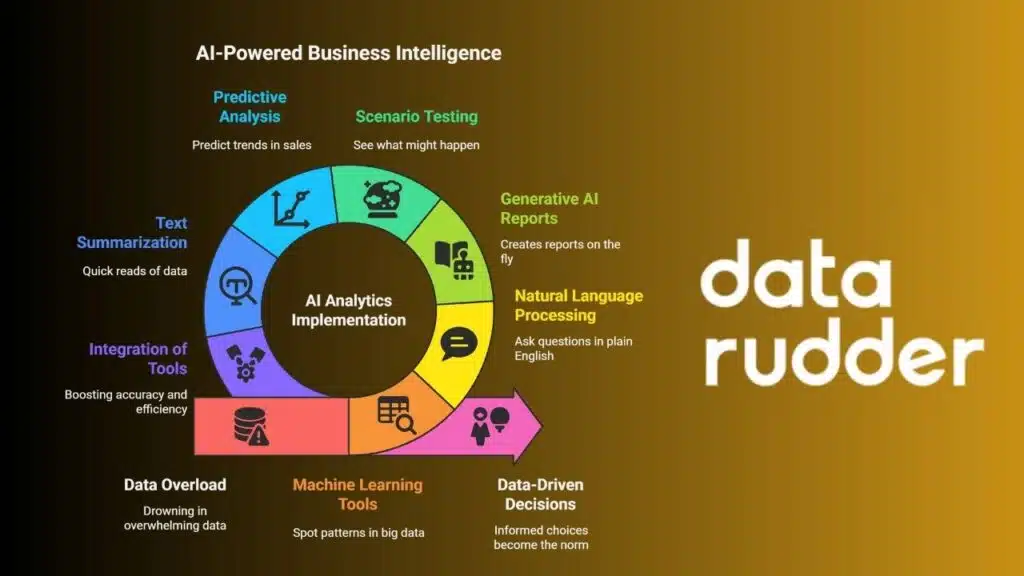
Data Rudder changes how companies handle data, folks. They use artificial intelligence to make business intelligence easy and fast. Imagine your team drowning in numbers, like trying to drink from a fire hose.
This startup pulls it all together with machine learning. Their tools spot patterns in big data sets. You get clear insights without the headache. Take Mydatagent, for example. It acts as a virtual BI analyst for company insights.
At just $10K, it digs into your info and serves up smart advice. Natural language processing lets you ask questions in plain English. No need for fancy coders. Generative AI even creates reports on the fly.
Think of it as a helpful sidekick, always ready with answers. Startups in Brazil like this one push digital transformation forward. They mix large language models with your CRM data.
Results come quick, and decisions improve. Picture turning raw facts into gold, that’s the magic here.
Businesses face tough choices every day, right? Data Rudder steps in with AI analytics to light the way. Their system uses generative adversarial networks to test scenarios. You see what might happen before it does.
Machine learning algorithms learn from your past moves. They predict trends in sales or ops. It’s like having a crystal ball, but powered by code. GPT-3 style tech handles text summarization for quick reads.
Hugging Face tools integrate smoothly, boosting accuracy. Companies save time and cash with this setup. Artificial intelligence drives the whole show, making complex stuff simple. Data-based choices become your new norm.
Ian Goodfellow’s ideas on GANs fit right in here. You query the system, and it responds with precision. Backpropagation fine-tunes the models over time. Entities like Google’s tech inspire their approach.
Allen Newell would nod at this logic-driven method. It incentivizes smart growth, no doubt.
Predify: Implementing AI in Pricing Strategies for Financial Growth
Predify shakes up pricing with artificial intelligence (AI). This startup builds AI business pricing software that boosts profits. Companies struggle with old pricing methods, like guessing costs.
Predify steps in with machine learning to analyze data fast. It spots patterns in sales and customer habits. Imagine your prices adapting like a smart chameleon, changing to fit the market.
Founders raised $1M in funding to grow this tool. Now, businesses use it for sharper decisions.
Natural language processing (NLP) helps Predify understand market chatter. Think of it as a digital ear, listening to trends. Startups in Brazil like this one drive digital transformation.
They mix big data with AI for real gains. One client saw sales jump 20% after using it. Predify turns complex pricing into a simple game. You set goals, and the software handles the rest.
Asksuite: Improving Hotel Sales with AI-Enabled Chatbots
Asksuite leads the pack among startups in Brazil. This company uses artificial intelligence to boost hotel sales. Imagine a chatbot that chats like a friendly concierge, sealing deals around the clock.
It applies AI applications in customer service to answer questions fast. Guests book rooms without waiting. Hotels see sales jump, thanks to machine learning that learns from each talk.
Consider a busy traveler who gets quick tips on local spots, then books an extra night. Asksuite enhances hotel sales with AI chatbots that feel personal. These tools use data to suggest upsells, like spa deals or room upgrades.
Teams at Asksuite build on the history of artificial intelligence. They draw from ideas like the Turing test to make chats smart. Their system handles queries with ease, much like ELIZA did back in the day.
Yet, it goes further with modern tech. Large language models power responses that sound human. Startups in Brazil like this one drive digital transformation in travel. You know, it’s like giving hotels a super helper that never sleeps.
This approach turns simple questions into big revenue wins.
Takeaways
These Brazilian startups show how artificial intelligence sparks big changes in old industries. Picture a farmer using machine learning to boost crops, or a shop owner ditching cash for biometric payments; that’s the magic happening now.
If you’re a startup founder eyeing Europe, chat with AI xpress in Stuttgart for market tips and investor links. Their network helps firms like Hedro thrive in automotive and IT sectors.
Jump in and watch your ideas grow across borders.
FAQs
1. Hey, what makes these Brazilian startups stand out in artificial intelligence?
Well, startups in Brazil harness machine learning and generative AI to spark digital transformation, you know, shaking up old ways like a fresh breeze in a stuffy room. Picture them using large language models (LLMs) to rethink everything from data analysis to creative tasks. It’s like giving traditional industries a wake-up call with smart tech.
2. Can you tell me about AI tech like generative models in these startups?
These outfits dive into generative adversarial networks (GANs) and diffusion models, much like DALL-E does for images. They build on latent diffusion models to craft new solutions.
3. How do Brazilian startups use AI to mess with insurance?
Startups in Brazil apply artificial intelligence to help insurance underwriters spot risks faster, using data-based tricks. It’s as if they’re playing detective with numbers, turning guesswork into sharp insights. And hey, it cuts down on those boring paperwork piles.
4. What’s the deal with AI in health stuff, like for liver issues?
One startup tackles non-alcoholic fatty liver disease (NAFLD) with machine learning, analyzing patterns that doctors might miss. Think of it as a super sidekick for health pros.
5. Do these startups play with big names like Meta AI or Bing?
Yes, some draw from Meta’s tools and even Bing for their generative AI setups, blending in large language models to boost CRMs. It’s like borrowing a recipe from top chefs to cook up local innovations, keeping things fresh and connected.
6. How does AI link to things like guided meditation or display ads in Brazil?
Brazilian startups weave artificially intelligent features into guided meditation apps for calm minds, while others optimize display ads with generative models. Imagine AI as a clever matchmaker, pairing calm vibes with smart marketing. This disrupts old habits in wellness and ads, one clever algorithm at a time.