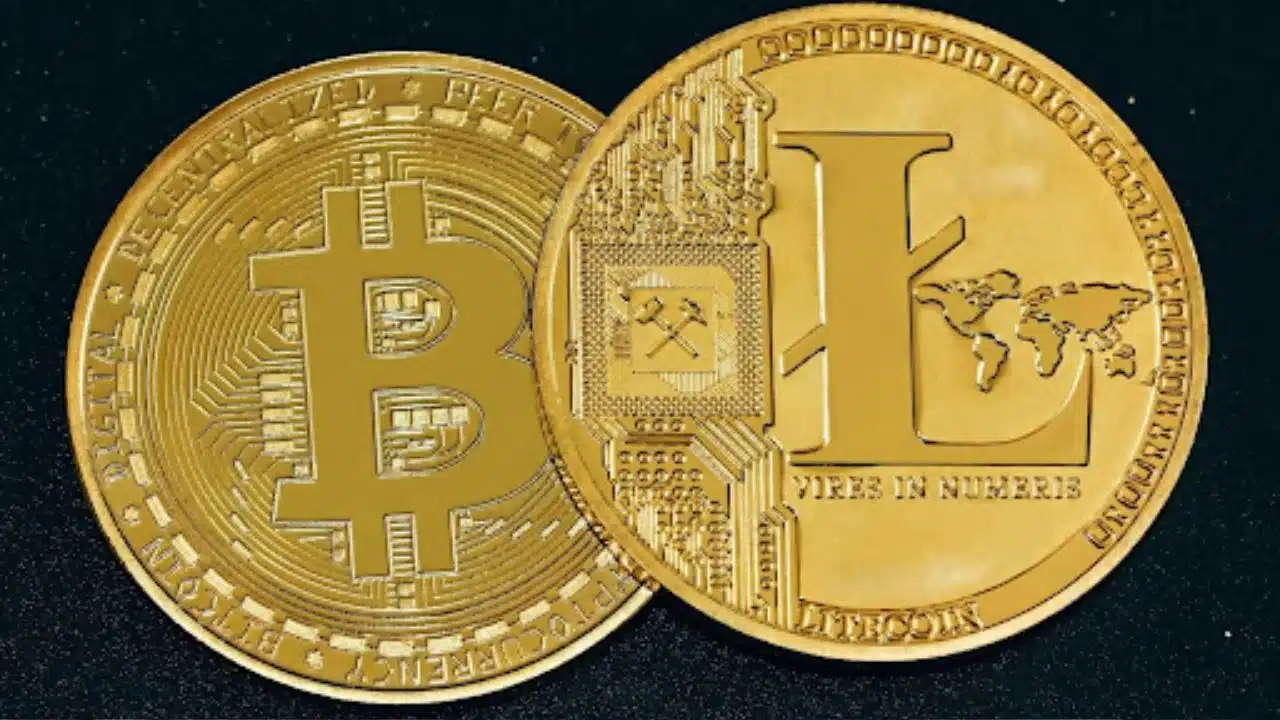
Bitcoin, as the first and most prominent cryptocurrency, has significantly impacted the financial world and sparked investors’ interest in learning how to read the bitcoin price chart. But since its inception in 2009, numerous other cryptocurrencies have emerged, offering captivating innovations and improvements.
These competitors challenge Bitcoin’s dominance, with some aiming to address its perceived weaknesses, such as scalability, energy consumption, or transaction speed. We will explore Bitcoin’s greatest competitors, focusing on key players like Ethereum, Ripple (XRP), Litecoin, Cardano, Binance Coin (BNB), and Solana. Each of these projects has carved out a niche in cryptocurrency, offering distinct advantages and addressing unique market needs.
Ethereum (ETH)
Perhaps the most well-known and formidable competitor to Bitcoin is Ethereum. While Bitcoin is primarily a digital currency designed for peer-to-peer transactions, Ethereum was conceived as a decentralized platform for smart contracts and decentralized applications (dApps). Created by Vitalik Buterin and launched in 2015, Ethereum introduced the concept of smart contracts, self-executing contracts with the terms of the agreement directly written into code.
Ethereum’s strength lies in its versatility. Unlike Bitcoin, which has a limited scripting language, Ethereum’s Turing-complete programming language allows for a broader range of applications, which led to Ethereum becoming the foundation for decentralized finance (DeFi) projects, non-fungible tokens (NFTs), and other decentralized applications.
However, Ethereum has faced challenges, particularly in terms of scalability and transaction fees. As the network grew, so did congestion, leading to high gas fees (the cost of executing transactions or contracts on Ethereum). To address these issues, Ethereum transitioned from its original Proof of Work (PoW) consensus mechanism to Proof of Stake (PoS) through Ethereum 2.0 to make the network more scalable, secure, and environmentally friendly.
Ripple (XRP)
Ripple is another major competitor to Bitcoin, but its focus is quite different because it was designed to facilitate fast and inexpensive cross-border payments. Whereas Bitcoin can take minutes or even hours to confirm transactions, Ripple’s consensus algorithm allows transactions to be settled in seconds, making it ideal for international payments.
Ripple’s vision is to revolutionize the global financial system by providing a real-time, decentralized solution for transferring money across borders. Ripple has already formed partnerships with major financial institutions and banks, positioning XRP as a bridge currency for converting and transferring different national currencies. While Bitcoin was designed to operate outside traditional financial institutions, Ripple actively seeks to work within the established financial system, a move that has both drawn praise and criticism.
Litecoin (LTC)
Litecoin, often referred to as the “silver to Bitcoin’s gold,” was created by Charlie Lee in 2011 as a fork of Bitcoin. While Litecoin shares many similarities with Bitcoin, including its Proof of Work consensus mechanism and limited supply of coins, it aims to improve Bitcoin in a few key areas. One of Litecoin’s primary advantages is its faster block generation time.
Bitcoin’s block time is around 10 minutes, while Litecoin is approximately 2.5 minutes, which results in quicker transaction confirmation times and greater liquidity. Additionally, Litecoin uses a different hashing algorithm (Scrypt), which is less susceptible to specialized mining hardware (ASICs), making it more accessible to individual miners.
Litecoin has positioned itself as a lightweight, fast, and affordable alternative to Bitcoin and is often used for smaller transactions where Bitcoin’s slower confirmation times and higher fees might be less practical. Though Litecoin offers a different level of innovation than newer projects like Ethereum or Cardano, its longevity, stability, and established user base make it a strong contender in the cryptocurrency market.
Cardano (ADA)
Cardano is a relatively newer competitor to Bitcoin, but it has quickly gained attention for its focus on security, sustainability, and scalability. Founded by Charles Hoskinson, one of the co-founders of Ethereum, Cardano seeks to improve upon many of the issues facing both Bitcoin and Ethereum. One of Cardano’s standout features is its layered architecture.
Cardano separates its settlement layer (used for transferring value, like Bitcoin) from its computation layer (used for smart contracts, like Ethereum) and allows for greater flexibility and scalability, as improvements can be made to one layer without disrupting the other. Cardano uses a Proof of Stake consensus mechanism called Ouroboros, which is more energy-efficient than Bitcoin’s Proof of Work system. The project has also strongly emphasized academic research and peer-reviewed development, which has earned it credibility in the cryptocurrency community. With a roadmap focused on sustainability and interoperability, Cardano has positioned itself as a competitor to Bitcoin and Ethereum.
Binance Coin (BNB)
Binance Coin (BNB) started as the native cryptocurrency of the Binance exchange, one of the largest cryptocurrency exchanges in the world. Initially launched on the Ethereum blockchain, Binance Coin has since migrated to Binance’s own blockchain, the Binance Smart Chain (BSC). While Binance Coin was originally used to pay transaction fees on the Binance platform, its use case has expanded significantly. Binance Smart Chain, a smart contract-enabled blockchain, has become a popular alternative to Ethereum for decentralized applications and DeFi projects.
It offers lower transaction fees and faster processing times than Ethereum, making it an attractive option for developers and users alike. BNB’s success is closely tied to the success of the Binance ecosystem. As Binance continues to grow and expand its services, BNB has risen in value and utility. With Binance constantly innovating and offering new services, Binance Coin has solidified itself as a major player in the cryptocurrency space, competing with both Bitcoin and Ethereum.
Solana (SOL)
Solana is one of the fastest-growing competitors to Bitcoin, particularly in the area of decentralized applications and smart contracts. Launched in 2020, Solana offers one of the fastest blockchains in the cryptocurrency world, with the capability to process over 65,000 transactions per second (TPS). This makes it vastly more scalable than Bitcoin or Ethereum, which can process only around 7 and 30 TPS, respectively. Solana’s unique Proof of History (PoH) consensus mechanism is one of the factors behind its speed. PoH allows for high throughput without sacrificing security, making Solana an appealing platform for developers looking to build scalable applications.
The Solana ecosystem has rapidly expanded, with many DeFi projects, NFTs, and dApps being built on the platform. Its low transaction fees and high-speed processing have made it a popular choice for developers and users alike.
What do you think about Bitcoin’s competitors?
Bitcoin remains the dominant cryptocurrency in terms of market capitalization and brand recognition. However, its most significant competitors—Ethereum, Ripple, Litecoin, Cardano, Binance Coin, and Solana—bring unique strengths and innovations to the table.