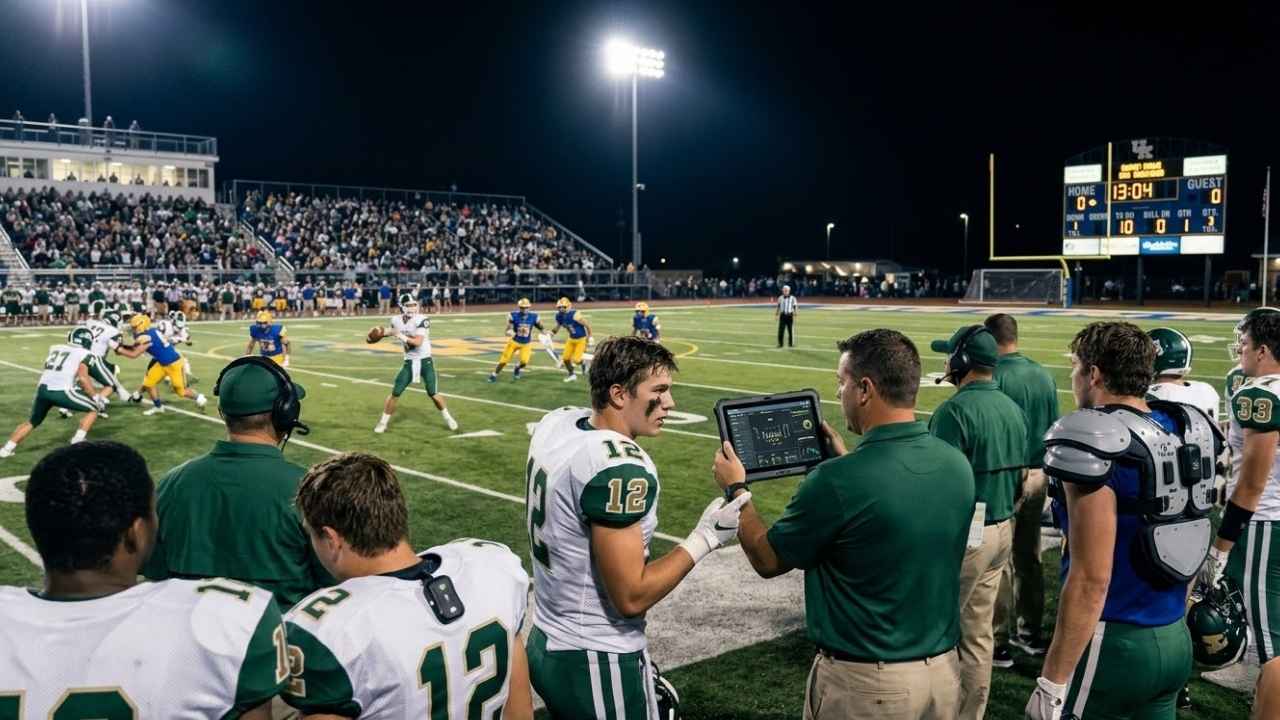
American football has always been a game of inches, but lately it has also become a game of information. From high school programs to the pros, teams are investing heavily in performance tracking, biomechanical analysis, and hyper-specific training plans that would have sounded futuristic a decade ago. GPS trackers stitched into shoulder pads measure acceleration and deceleration. Practice reps are broken down frame by frame. Coaches no longer rely solely on instinct, even if instinct still matters.
This shift is not about turning players into robots. It is about precision. When a wide receiver can see exactly how his stride length changes in the fourth quarter, fatigue stops being a vague feeling and starts becoming a measurable variable. When a defensive coordinator can chart tendencies down to formation and hash mark, game planning becomes surgical instead of speculative. The smartest programs are not drowning in numbers. They are asking better questions of them.
That analytical edge trickles down. Private quarterback coaches now use motion capture tools once reserved for elite training facilities. Strength staff design microcycles based on recovery metrics instead of tradition. The result is a generation of athletes who understand their bodies and their film at a deeper level than ever before. It is still football, still physical and emotional, but it is sharper.
The Equipment Evolution Players Rarely Talk About
Innovation does not stop at data dashboards. It shows up in the small, practical details that most fans never notice. Field surfaces are engineered for durability and traction, which changes how players cut and plant. Cleat design has become more specialized, built around position-specific movement patterns. Even practice fields are treated with precision, and supplies like football turf tape are part of the routine maintenance that keeps surfaces consistent and safe.
That kind of consistency matters. When footing is predictable, athletes move with more confidence. When it is not, hesitation creeps in, and hesitation is costly in a sport built on split-second reactions. Equipment managers and operations staff have become quiet power players behind the scenes. They are not chasing headlines, but their work shapes performance in ways that ripple across entire seasons.
Safety technology has also progressed, particularly in helmet design and impact monitoring. Sensors can now detect significant hits and flag them for review. That does not remove risk from a contact sport, but it does create accountability and faster response. Programs that take this seriously are building trust with players and families who expect modern standards, not outdated bravado.
College Football’s Financial Shift Is Changing The Pipeline
If you zoom out, the business side of football looks different too. Name, image, and likeness agreements have altered recruiting dynamics and raised expectations. College athletes are navigating contracts and branding conversations alongside playbooks. That adds pressure, but it also opens doors that used to be locked.
Programs are adapting by investing in compliance teams, media training, and financial education. Players who once had to wait for a professional contract to see meaningful earnings are now building personal brands in real time. The line between amateur and professional has blurred, and with it, the traditional development model.
For coaches, the challenge is balancing opportunity with focus. A distracted locker room rarely wins championships. The most effective leaders are setting clear cultural standards while acknowledging that the landscape has changed. Pretending it has not is not an option. The money is real, and so are the expectations.
Grassroots Growth Is Expanding The Game’s Footprint
At the youth and recreational level, participation patterns are shifting in interesting ways. Flag football leagues are expanding, particularly in suburban and urban communities that want a lower-contact entry point into the sport. Parents who might hesitate at full tackle are often open to skill-based formats that emphasize speed, strategy, and teamwork.
This growth is not accidental. Leagues are marketing football as one of the most accessible sports for beginners, highlighting that a basic understanding of space and movement can take a player far. You do not need years of technical mastery to start having fun. You need a ball, a field, and a willingness to learn the rules.
That accessibility is helping diversify the player base. Girls’ flag football programs are gaining official recognition in more states. Community leagues are partnering with schools to reduce costs and share facilities. When entry barriers drop, talent pools widen. The long-term effect could reshape the competitive landscape at higher levels, as more athletes get early exposure to the game’s fundamentals.
The Mental Game Is No Longer An Afterthought
For decades, toughness was defined narrowly. Play through pain. Shake it off. Keep quiet. That culture is evolving. Mental conditioning, once whispered about, is now part of structured programming at many levels of the sport. Sports psychologists work alongside strength coaches. Visualization drills sit next to tackling drills.
This does not soften the game. It strengthens it. A quarterback who can reset after an interception is not less competitive. He is more resilient. A defensive back who understands how to manage adrenaline late in a close game is not fragile. He is prepared. The smartest organizations treat the mind as part of the performance system, not an accessory.
There is also a recognition that football careers are finite. Preparing athletes for life beyond the field is not a distraction from winning. It is an extension of responsible leadership. Financial literacy workshops, career counseling, and alumni mentorship programs are becoming standard. The sport still demands intensity, but it is starting to pair that intensity with perspective.
Where The Game Goes From Here
American football has always reflected the era around it. Today, that means smarter training, more sophisticated business structures, upgraded equipment, and a broader entry point for new players. Tradition still matters. Friday night lights still draw crowds. Rivalries still define communities. But the engine under the hood has been rebuilt.
The programs that thrive will be the ones that blend heritage with innovation, respecting the sport’s roots while embracing its future. Football is not standing still, and that is exactly what keeps it compelling.