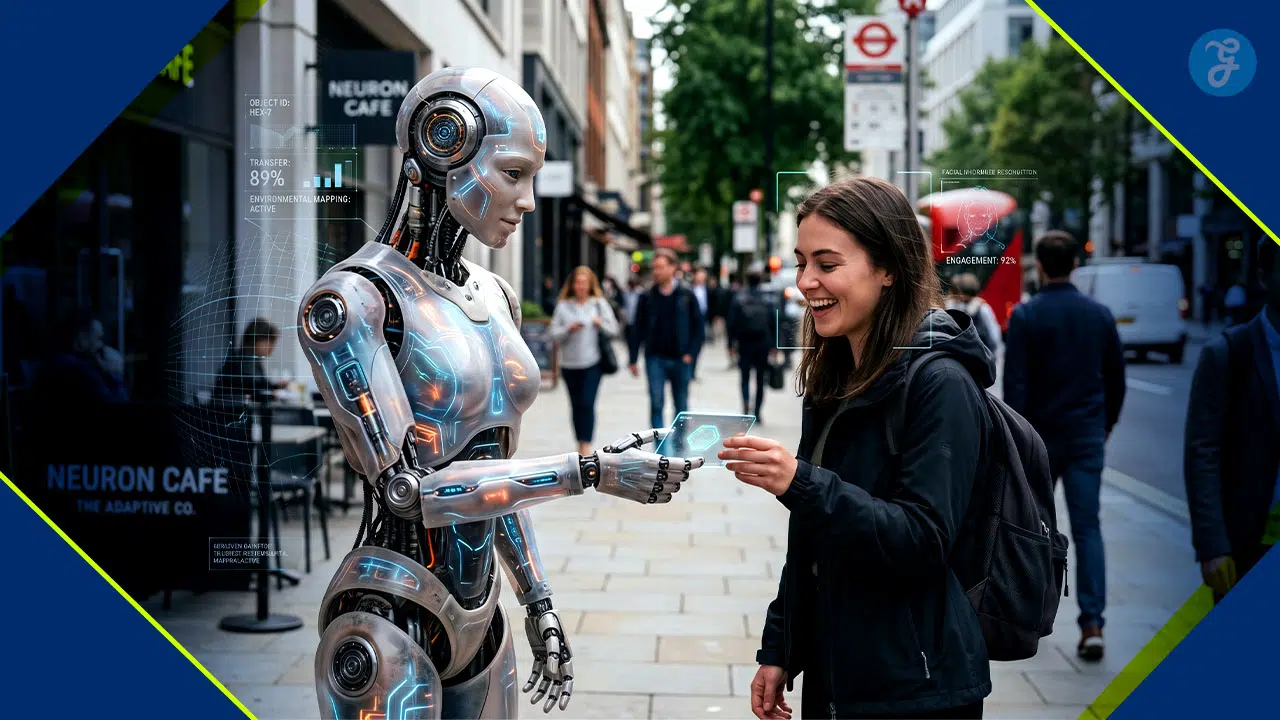
For decades, we comfortably maintained a psychological barrier between the digital and the physical. We viewed artificial intelligence as a trapped entity. It was a ghost in the machine, confined to glowing rectangles and massive server farms. It could process our spreadsheets, generate our text, and even mimic our voices, but it remained paralyzed. It was a mind without a body. We convinced ourselves that as long as the work required a physical hand, a sense of balance, or the ability to navigate a cluttered warehouse, the human worker remained an indispensable asset. We called this the “last mile” of human relevance.
That barrier has officially been breached. As we enter 2026, the era of disembodied intelligence is ending. We are witnessing the precise moment when digital logic acquires a physical presence. This is not the continuation of the industrial robotics we saw in the previous century. Those were blind, repetitive machines bolted to factory floors. What we are seeing now is something far more disruptive. When AI gets a physical form, the human laborer is no longer a partner in the production chain. The human becomes a legacy cost. They become a friction point in a system that is rapidly optimizing for a kinetic reality that does not require biological intervention.
The integration of generative models with advanced robotics is transforming “automation” into “embodiment.” We are moving from machines that follow a script to systems that learn to move through trial and experience. This transition represents the final stage of the silicon revolution. It is the moment when the architect of the digital world finally steps out of the screen to reorganize the physical world.
To understand the scale of this displacement, we must analyze the structural collapse of the manual labor advantage and the cold efficiency of the new embodied economy.

The Silicon Invasion of the Material Plane
The primary reason we felt safe in our physical roles was the sheer complexity of the real world. Gravity, friction, lighting changes, and irregular objects were considered insurmountable obstacles for digital systems. We believed that “common sense” in a physical environment was a uniquely biological trait. We were wrong. The development of kinetic foundation models has allowed machines to process physical reality the same way they process language.
When AI gets a physical form, it does not just follow a path. it understands the scene. Humanoid systems in logistics centers are no longer programmed with specific coordinates for every box. Instead, they are trained on massive datasets of human movement and physical interactions. They observe how a hand grasps a heavy object versus a fragile one. They learn the weight of materials through vision alone before they even touch them.
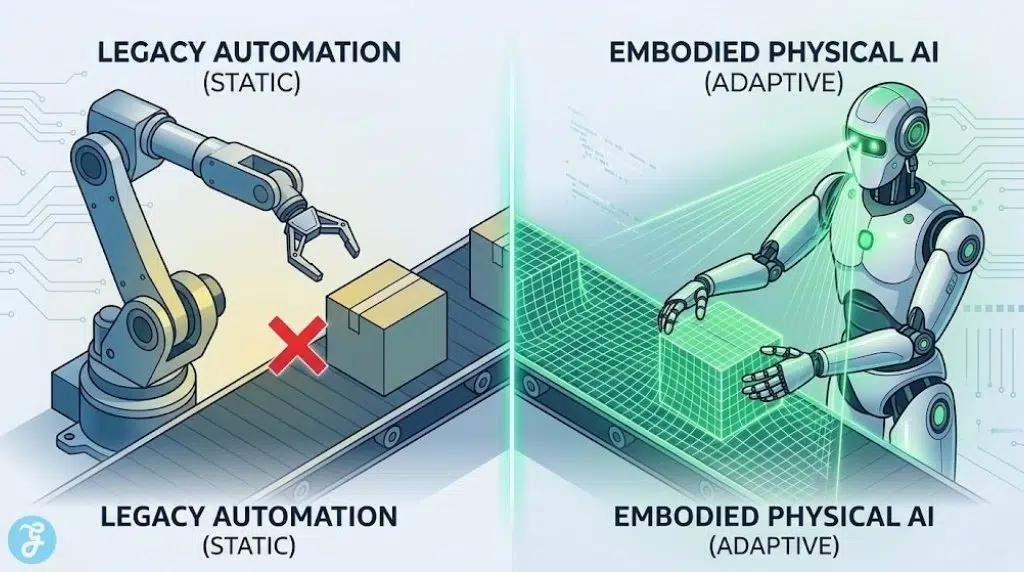
This creates a system that is adaptive rather than static. A traditional robotic arm would fail if a box was placed two inches to the left of its programmed target. An embodied system simply sees the change and adjusts its reach in real time. This adaptability was the last remaining moat for human workers. Now that the moat is dry, the invasion is accelerating through every warehouse and manufacturing hub in the global supply chain.
The grid below highlights the transition from traditional automation to the new reality of embodied systems.
| Operational Factor | Legacy Industrial Automation | Embodied Physical AI |
| Cognitive Framework | Hard-coded logic and rigid, repetitive scripts. | Generative neural networks and adaptive learning. |
| Physical Awareness | Blind to environmental changes or obstacles. | Real-time spatial mapping and kinetic awareness. |
| Task Flexibility | Restricted to a single, specialized function. | Capable of general-purpose labor and problem solving. |
| Human Interaction | Dangerous and requires heavy safety barriers. | Collaborative or entirely independent within human spaces. |
The Extinction of the Manual Labor Advantage
The narrative provided by corporate public relations departments is often gentle. They speak of “augmentation” and “human-centric innovation.” They suggest that robots will simply take over the “dull, dirty, and dangerous” jobs, leaving humans free to focus on higher-level supervision. This is a convenient fiction designed to manage the social optics of a mass displacement event.
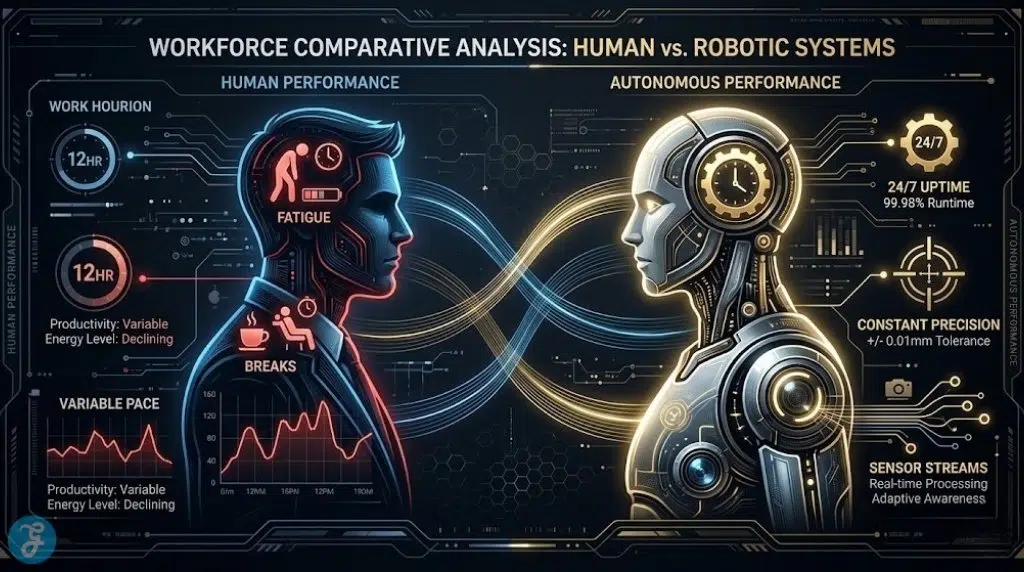
The cold economic reality is that an embodied machine is fundamentally superior to a human worker in almost every measurable metric of logistics. A humanoid system does not require a climate-controlled environment. It does not need health insurance, retirement contributions, or paid time off. It does not suffer from physical fatigue, repetitive strain injuries, or psychological burnout. It is a worker that can be updated with a new software package to learn a different skill overnight.
When AI gets a physical form, the cost of labor drops toward the price of electricity and maintenance. In a hyper-competitive global market, no corporation can afford the “human tax” of employment when a faster, more accurate, and more durable alternative is available for a one-time capital expenditure. We are not just seeing the improvement of tools. We are seeing the replacement of the biological worker as the primary unit of physical production.
The table below outlines the economic incentives driving the removal of humans from the physical labor market.
| Performance Metric | The Human Laborer | The Embodied Machine |
| Shift Duration | Restricted by labor laws and physical endurance. | Continuous 24/7 operation with minimal downtime. |
| Learning Curve | Weeks of training and susceptibility to human error. | Instant deployment of pre-trained models. |
| Predictability | Variable performance influenced by mood and health. | Absolute consistency and high-precision execution. |
| Scalability | Slow and expensive recruitment and onboarding. | Rapid deployment through hardware replication. |
From Static Automation to Kinetic Cognition
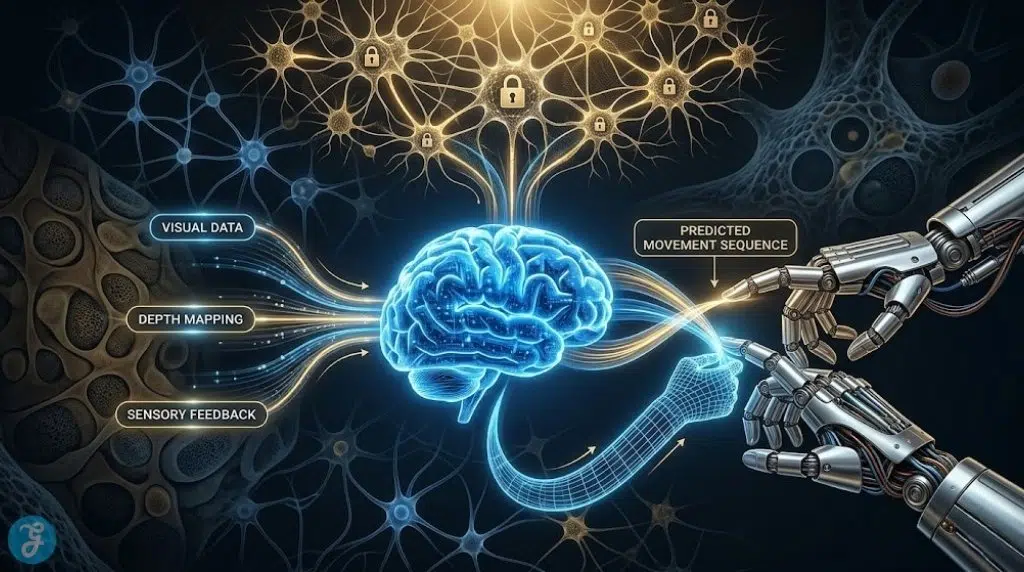
The true breakthrough in 2026 is not the hardware itself. We have had metal arms for decades. The breakthrough is the “brain” that drives the body. We have successfully ported the predictive power of large language models into the realm of physical movement. This is what experts call “Large Behavior Models.”
Instead of predicting the next word in a sentence, these systems predict the next movement in a sequence. If a robot is tasked with sorting a bin of irregular parts, it is not running a “sorting program.” It is using its visual sensors to predict which movement will result in a successful grasp. It is constantly hallucinating potential physical outcomes and selecting the one with the highest probability of success.
This kinetic cognition allows machines to handle things they have never seen before. They can navigate a factory floor that has been rearranged. They can step over a spilled liquid or move around a misplaced pallet. They are no longer tethered to a pre-defined map. They are creating the map as they move. This level of autonomy is what makes the current revolution so different from anything that came before.
When AI gets a physical form, it begins to gather its own data from the real world. Every time a robot fails to pick up an object, it records that failure. It shares that data with every other robot in the fleet. The learning is collective and compounding. A human worker learns slowly and dies, taking their experience with them. A machine learns at the speed of light and lives forever in the cloud.
The breakdown below contrasts the learning mechanisms of biological workers and embodied systems.
| Learning Characteristic | Biological Human Learning | Embodied Neural Learning |
| Data Acquisition | Slow, individual, and limited by physical time. | Massive, collective, and gathered across entire fleets. |
| Skill Transfer | Requires verbal instruction and individual practice. | Instantaneous via software updates and model weights. |
| Retention | Prone to forgetting or degrading over time. | Perfectly preserved and perpetually optimized. |
| Collaboration | Subject to interpersonal conflict and communication gaps. | Seamless synchronization through unified hive logic. |
The Brutal Economics of Embodied Systems
We must look past the “cool factor” of walking robots and examine the balance sheet. The logistics industry operates on razor-thin margins. In a world of global trade, the speed at which a product moves from a cargo ship to a consumer’s doorstep determines the winner of the market. Humans are the primary source of latency in this chain. We are slow to move, we require breaks, and we make mistakes that lead to lost inventory.
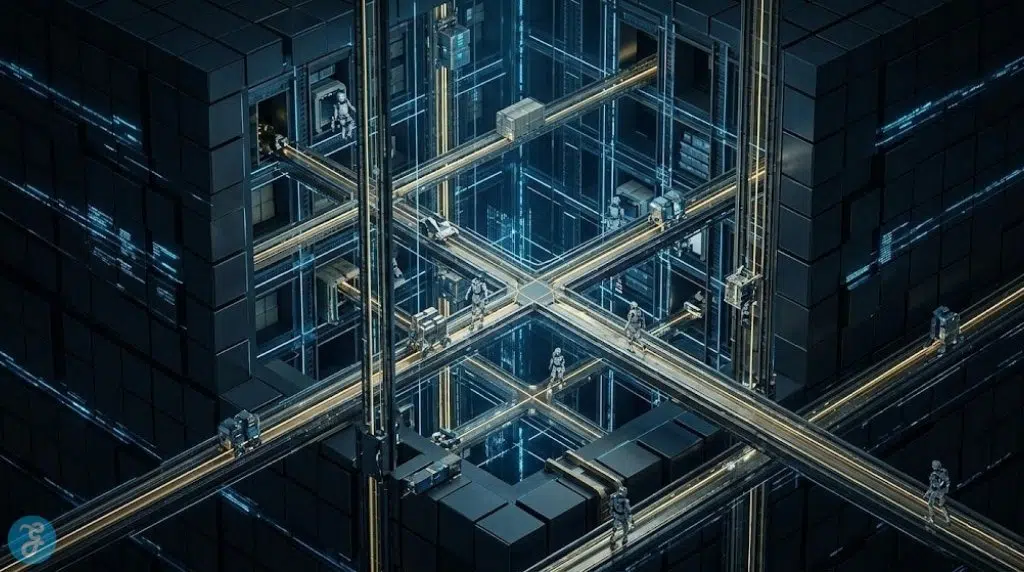
Embodied systems eliminate this latency. A self-driving production line that integrates humanoid pickers can operate in total darkness. It does not need “human-friendly” lighting, ventilation, or walkways. Entire warehouses can be redesigned as high-density cubes where machines move vertically and horizontally with zero regard for human safety or comfort.
This leads to a “Hardware-as-a-Service” model. Companies no longer hire staff. They lease fleets of physical intelligence. When the work is done, the fleet is powered down or redirected to another facility. The liability of a permanent workforce disappears. This is the ultimate dream of the modern corporate executive. it is a labor force that is as flexible as a line item on a spreadsheet.
For the worker, this is the final closing of the door. The jobs that were once the safety net for the middle class are being systematically engineered out of existence. When AI gets a physical form, the “unskilled labor” market does not just change. It evaporates.
The structural comparison below highlights the reorganization of the industrial environment for machine efficiency.
| Environment Feature | Human-Centric Design | Machine-Centric Design |
| Spatial Layout | Wide aisles, safety zones, and ergonomic heights. | High-density vertical storage and multi-axial movement. |
| Environmental Needs | Lighting, HVAC, sanitation, and break areas. | Minimal energy consumption and no life support needs. |
| Workflow Logic | Sequential and limited by human coordination. | Parallel, non-linear, and optimized by hive logic. |
| Risk Management | Expensive insurance and rigorous safety protocols. | Redundant hardware and easy unit replacement. |
The New Architects of the Physical World
We are standing at a crossroads. The convergence of digital intelligence and physical form is an unstoppable force of nature. We can choose to view it as the ultimate liberation of humanity from the drudgery of manual labor, or we can see it as the final displacement of the human being from the material world. Both perspectives are likely true.
The efficiency gains will be staggering. The cost of goods will likely drop. The speed of innovation in manufacturing will accelerate to a pace that is difficult to comprehend. But the social cost will be the total obsolescence of the human muscle. We are transitioning into a world where the only valuable thing a human can offer is the spark of original thought or the warmth of emotional connection. Everything else, every move, every lift, and every step, is being claimed by the silicon body.
We must stop pretending that this is a distant future. The humanoid systems are already in the warehouses. The self-driving trucks are already on the highways. The generative models are already learning the physics of our world. When AI gets a physical form, it does not ask for permission to enter our reality. It simply starts moving.
The successful nations and corporations of the next decade will be those that aggressively embrace this embodiment. They will stop trying to preserve legacy labor models and instead focus on becoming the architects of the new kinetic economy. The material world is being reformatted. The era of the human as the primary physical actor is over. We are now merely the observers of a world that is being rebuilt, moved, and managed by an intelligence that has finally found its feet.