Absence Management Software gives organizations a practical way to track employee leave, manage requests, and keep staffing decisions from turning into a daily administrative headache.
When leave information is scattered across emails, spreadsheets, chat messages, and handwritten notes, even a straightforward vacation request can create unnecessary work for employees, managers, and HR teams.
A centralized absence management software solution brings these moving pieces together so leave information is easier to record, review, and manage.
The result is not simply a cleaner calendar but a more reliable process for handling time away from work.
Why Leave Tracking Becomes Complicated So Quickly
Tracking leave sounds simple when a business has ten employees and everyone works in the same office.
The situation changes when the organization grows, teams work across different locations, and employees qualify for different types of leave.
Imagine a manager overseeing 25 people across two departments.
One employee requests vacation for Thursday and Friday, another reports sick leave on Wednesday morning, and a third needs several weeks away for a qualifying medical or family reason.
If those requests arrive through different channels, the manager has to piece together the staffing picture manually.
HR may then have to check balances, confirm policies, update payroll records, and make sure the appropriate documentation is collected.
A leave management system reduces this fragmentation by creating a consistent process for everyone involved.
One Place for Employee Leave Information
One of the biggest advantages of digital leave tracking is centralization.
Instead of searching through inboxes or opening several spreadsheets, authorized users can view relevant absence information in one system.
That can include vacation requests, sick days, personal leave, extended absences, approval status, available balances, and supporting documentation.
For example, suppose an employee requests five vacation days in December.
The manager can review the request alongside the team’s existing schedule rather than trying to remember whether someone else already booked the same week.
This makes everyday decisions faster while reducing the chance of overlapping absences creating an unexpected staffing shortage.
Employees Get Better Visibility Too
Leave tracking should not require employees to repeatedly ask HR how much time they have available or whether a request was approved.
A self-service system can give workers access to relevant balances, request status, policies, and other leave information without another email exchange.
Consider an employee planning a family trip three months from now.
Instead of messaging HR, waiting for a response, and then submitting a separate request, the employee may be able to review available time and start the approval process from the same platform.
That small improvement becomes significant when multiplied across hundreds or thousands of employees.
Approvals Become More Consistent
Manual leave approvals often depend heavily on individual managers and their personal workflows.
One manager may approve requests immediately, while another leaves them sitting in an inbox for a week.
Digital workflows create a clearer route from request to decision.
A request can be sent to the appropriate manager, escalated when necessary, and recorded once a decision is made.
This creates an audit trail that helps HR understand when a request was submitted, who reviewed it, and what happened next.
Consistency is especially valuable when multiple departments follow the same organization-wide leave policies.
Fewer Manual Errors in Leave Records
Spreadsheets are flexible, but they depend on people entering and updating information correctly.
A missed cell, outdated formula, duplicate entry, or incorrect balance can cause confusion later.
Imagine an employee has eight vacation days remaining but an older spreadsheet shows ten.
The employee books a trip based on that number, and HR discovers the discrepancy only after the request reaches payroll.
Now a small recordkeeping error has become an employee-relations problem.
Automated tracking can reduce repetitive data entry and keep balances more closely aligned with approved leave activity.
That does not eliminate the need for oversight, but it gives HR teams a stronger foundation for accurate recordkeeping.
Better Planning for Managers and Teams
Employee absences do not happen in isolation because every day away can affect workloads, deadlines, customer service, and shift coverage.
Managers therefore need more than a list of approved requests.
They need visibility into when people will be unavailable and how those absences overlap.
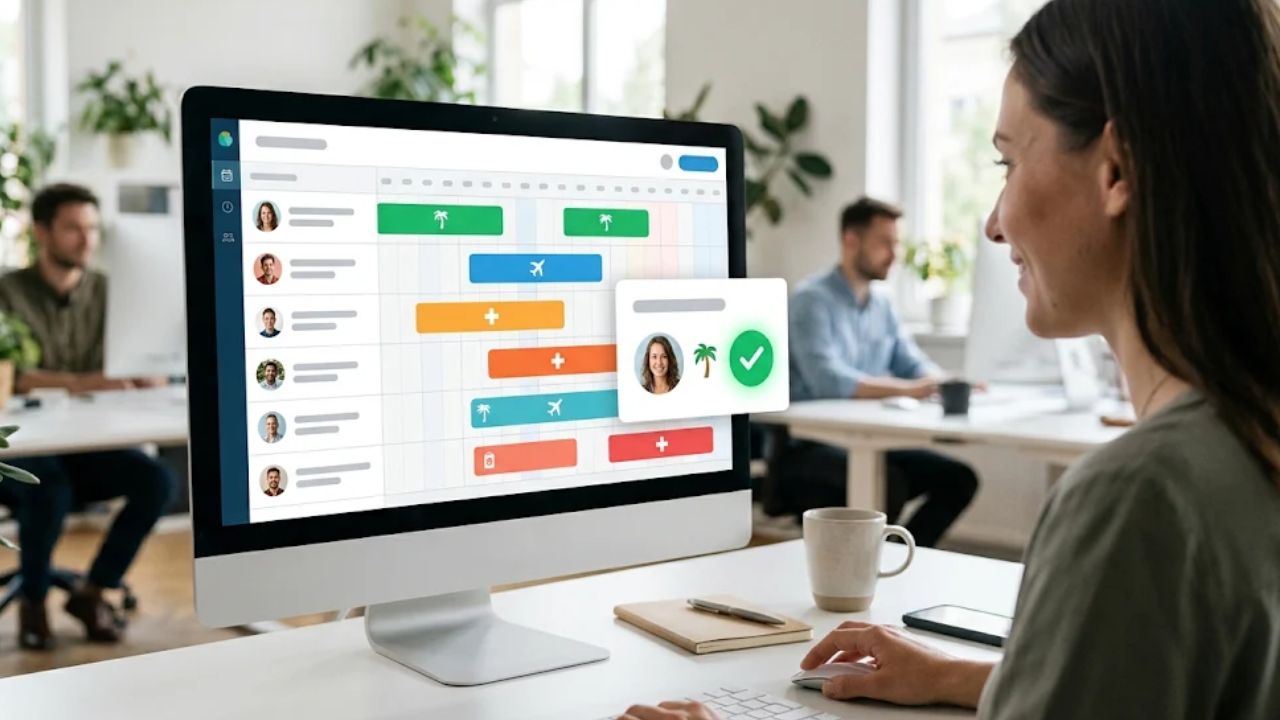
A shared leave calendar can reveal patterns before they become operational problems.
For instance, a retail manager might notice that four experienced employees have requested the same holiday weekend off.
Seeing that conflict early gives the manager time to discuss coverage, adjust schedules, or bring in additional support instead of discovering the shortage two days before the weekend begins.
Patterns Can Reveal Bigger Workforce Issues
Leave data can also provide useful operational insights when viewed over time.
HR teams may notice seasonal increases in absences, recurring staffing gaps, unusually high absenteeism within a department, or periods when vacation requests regularly overlap.
These patterns should not automatically be treated as employee performance problems.
They can instead prompt useful questions about workloads, scheduling, workplace conditions, staffing levels, or policy communication.
Reliable absence reporting gives decision-makers evidence to investigate rather than forcing them to rely on assumptions.
Supporting More Complex Leave Cases
Vacation days are only one part of employee absence management.
Organizations may also need to handle medical leave, parental leave, bereavement, disability-related absences, military leave, and other protected or company-provided leave categories.
These cases can involve different eligibility rules, documentation requirements, deadlines, and approval processes.
A structured system can help HR teams organize those requirements and track where each case stands.
For example, an employee taking an extended medical absence may need to provide documentation at different stages.
Rather than relying on calendar reminders and individual inboxes, HR can use a defined workflow to monitor required actions and maintain a clearer case history.
This becomes increasingly important as the workforce grows and the number of simultaneous leave cases increases.
Connecting Leave Tracking With Everyday HR Operations
Absence information often affects several business functions beyond HR.
Payroll may need to know whether time away is paid or unpaid, managers need accurate schedules, and workforce planning teams may need absence data when forecasting staffing requirements.
When systems operate independently, employees may end up entering the same information several times.
Integrating leave processes with payroll, timekeeping, scheduling, or broader HR systems can reduce duplicate work.
It can also help prevent situations where a leave request is approved in one place but never reflected in another system.
The goal is a smoother flow of reliable information rather than simply replacing one spreadsheet with another digital screen.
What Organizations Should Look for in a Leave Management System
The right system depends on workforce size, organizational structure, existing technology, and the complexity of leave policies.
Ease of use should be a priority because even powerful software creates problems if employees and managers struggle to navigate it.
Organizations should also consider configurable workflows, reporting capabilities, employee self-service, integrations, notifications, security controls, and support for different leave categories.
Scalability matters as well.
A system that works comfortably for 75 employees may become frustrating when the workforce grows to 750 and leave policies become more complicated.
The best choice is one that fits current requirements while leaving enough flexibility for future changes.
Moving From Reactive Administration to Better Leave Management
Absence Management Software can turn leave tracking from a collection of disconnected administrative tasks into a more organized and visible process.
Employees gain a clearer way to request time away, managers can make better-informed staffing decisions, and HR teams spend less time chasing updates or correcting records.
More importantly, structured leave tracking helps organizations prepare for absences instead of constantly reacting to them.
When everyone can see the right information at the right stage of the process, managing employee leave becomes less about paperwork and more about keeping people, policies, and business needs aligned.