Most SaaS products are not built entirely from scratch. Nor should they be. The login system, recurring invoice, password-reset email, file upload, search box, product analytics, and error alert may all depend on different services. Good APIs let a small team deliver these capabilities without spending months rebuilding infrastructure that other companies already maintain.
I have seen this closely through ImagineLab Art, our in-house unified AI creative platform at Editorialge Media LLC. The platform brings 40 AI models across seven creative labs into one workspace. APIs help connect the models, payment services, generation pipelines, storage systems, and other parts of the product.
Yet the APIs are not the product. The unified interface, EDT credit system, model selection, job management, templates, security controls, and creative workflows are what turn those services into a usable SaaS platform.
That distinction matters. An API can save development time, but it also creates another bill, security boundary, failure point, and long-term dependency.
When I evaluate an API for a SaaS product, I ask one central question: Does this service remove difficult infrastructure without taking control of what makes the product valuable?
That question shaped this ranking of the best APIs to build a SaaS product in 2026. Here, “API” includes API-first services accessed through APIs and SDKs. The ranking considers practical value, documentation, security, scalability, pricing, and long-term operational demands.
All prices and plan details were checked on October 11, 2026. Providers may change them at any time.
Best SaaS APIs at a Glance
The right API depends on what a product needs to do. This comparison shows where each service fits and which limitation deserves attention.
| Rank | API | Best for | Main pricing meter | Important limitation |
| 1 | Stripe Billing | Subscriptions and payments | Billing volume and processing fees | Country availability and billing complexity |
| 2 | Clerk | Authentication and team accounts | Active users and organization usage | Organization features have separate limits |
| 3 | Supabase | Database and backend infrastructure | Plan, compute, storage and egress | Security depends on correct configuration |
| 4 | Resend | Transactional email | Emails sent | Deliverability requires active management |
| 5 | PostHog | Product analytics and feature flags | Events, replays and flag requests | Poor event design produces unreliable insights |
| 6 | Sentry | Error and performance monitoring | Event and replay volume | Sampling and privacy controls need attention |
| 7 | Cloudflare R2 | File and object storage | Storage and operations | S3 compatibility is not complete |
| 8 | OpenAI API | AI-powered features | Tokens and tool usage | Cost, latency and output reliability |
| 9 | Algolia | Hosted product search | Search requests and stored records | Indexing adds cost and synchronization work |
| 10 | Twilio Messaging | SMS and multichannel messaging | Messages, segments and carrier fees | Pricing and rules vary by destination |
| 11 | WorkOS | Enterprise identity features | Connections and enterprise services | Can overlap with an existing authentication service |
| 12 | Merge | Customer-facing integrations | Linked customer accounts | Expensive when only a few integrations are needed |
1. Stripe Billing: Best Overall API for SaaS Payments
Best for: Subscription billing, recurring payments and usage-based pricing
Pricing snapshot: Stripe Billing starts at 0.7% of Billing volume, excluding payment-processing fees
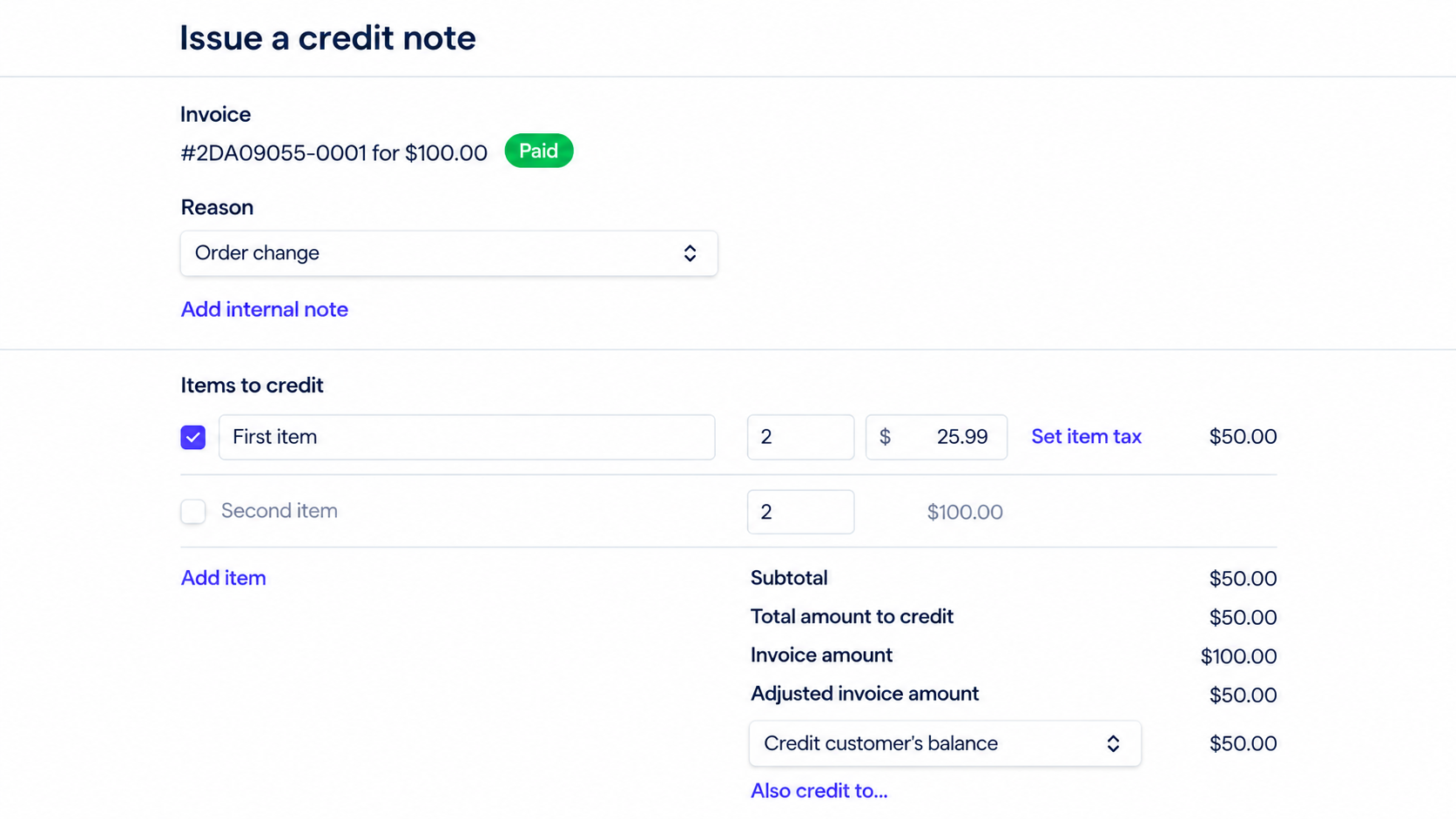
Stripe Billing remains one of the most complete options for managing recurring SaaS revenue. It supports subscriptions, invoices, trials, discounts, usage tracking, customer portals, and several pricing models.
A business can charge a flat monthly fee, bill per user, create tiered packages, or calculate invoices from recorded usage. That flexibility matters because SaaS pricing often becomes more complicated as the product grows.
Stripe can also manage failed-payment retries and provide a hosted portal where customers update payment methods, change plans, or download invoices.
2. Clerk: Best Authentication API for Multi-Tenant SaaS
Best for: User authentication, organization accounts, and polished sign-in flows
Pricing snapshot: Free for up to 50,000 monthly retained users per application; Pro starts at $20 per month when billed annually
Authentication becomes complicated quickly. A modern SaaS product may need password resets, social login, sessions, invitations, multi-factor authentication, role-based access, and organization switching.
Clerk combines these capabilities with APIs, SDKs, and prebuilt interface components. This can save a small team from building and securing every identity flow internally.
Its Organizations feature is particularly useful for B2B SaaS. Users can join multiple organizations, invite colleagues, move between workspaces, and receive different roles or permissions.
3. Supabase: Best Database and Backend API
Best for: Relational applications, SaaS dashboards, and fast MVP development
Pricing snapshot: Free plan available; Pro starts at $25 per month before additional usage
Supabase provides a managed PostgreSQL database and automatically generates a REST API from the database schema. It also offers authentication, file storage, Realtime features, Edge Functions, backups, and developer tools.
This makes it attractive to teams that want to move quickly without giving up SQL or the relational structure of PostgreSQL.
Its generated Data API can work with tables, relationships, views, and PostgreSQL functions. A developer can create a table and expose controlled access without manually writing a complete CRUD layer.
The current free plan includes a dedicated PostgreSQL database, unlimited API requests, 500 MB of database storage, 50,000 monthly active users, 1 GB of file storage, and limited Realtime and Edge Function usage.
4. Resend: Best API for Transactional Email
Best for: Verification messages, password resets, invoices, and product notifications
Pricing snapshot: Free for 3,000 emails per month, subject to a 100-email daily limit; Pro costs $20 per month for 50,000 emails
Nearly every SaaS product needs transactional email. Users expect account confirmations, security warnings, invoices, invitations, and password-reset messages to arrive promptly.
Resend focuses on making these workflows easier for developers. It provides email APIs, SDKs, reusable templates, batch sending, domain management, and delivery information.
Its relatively simple setup makes it suitable for startups that need dependable product email without immediately adopting a large marketing automation platform.
5. PostHog: Best API for Product Analytics and Feature Flags
Best for: Product-led growth, behavior analysis, and controlled feature releases
Pricing snapshot: Free monthly allowances include one million analytics events, 5,000 session recordings, and one million feature-flag requests
PostHog combines several product-development capabilities in one platform. It supports event analytics, funnels, retention reports, user paths, session replay, feature flags, surveys, experiments, error tracking, and data pipelines.
This can reduce the number of separate vendors a team needs to understand user behavior and release features safely.
Feature flags are especially useful. A team can gradually release a redesigned interface, expose a feature to selected organizations, or disable problematic functionality without another full deployment.
6. Sentry: Best API for Error and Performance Monitoring
Best for: Application errors, release monitoring and performance diagnostics
Pricing snapshot: Free tier available; paid costs generally scale with event, transaction and replay volume
Customers rarely submit a detailed technical report when software fails. They refresh the page, abandon the task, or quietly decide that the product is unreliable.
Sentry helps engineering teams detect those failures. Its SDKs collect errors, stack traces, release information, performance data, logs, and session replays. Its platform API also provides programmatic access to projects, issues, events, teams, and releases.
That context is more useful than an isolated server log. A developer can investigate which release introduced a problem, which users were affected, and what happened around the failure.
7. Cloudflare R2: Best API for File and Object Storage
Best for: User uploads, generated files, exports, and media delivery
Pricing snapshot: Standard storage costs $0.015 per GB-month, with a free monthly allowance
A SaaS product may need to store profile images, documents, backups, reports, audio files, videos, or customer exports.
Cloudflare R2 is an object-storage service with an S3-compatible API. It works with many familiar S3 tools and can integrate closely with Cloudflare Workers.
Its biggest attraction is egress pricing. R2 does not impose the usual direct data-transfer charge when stored objects are downloaded.
The current free allowance includes 10 GB-month of storage, one million Class A operations, and ten million Class B operations per month.
8. OpenAI API: Best API for AI-Powered SaaS Features
Best for: Generative features, document intelligence and AI-assisted workflows
Pricing snapshot: Usage-based pricing determined by model, tokens, and optional tools
The OpenAI API can support summarization, document analysis, classification, structured data extraction, conversational interfaces, coding assistance, image understanding, and agent-style workflows.
For new applications, the Responses API is the appropriate starting point. It brings model responses together with capabilities such as file search, web search, code execution, multimodal input, computer use, and remote tool connections.
Older development guides may still recommend the Assistants API. That advice is now outdated. The Assistants API reached its sunset date in August 2026.
9. Algolia: Best Search API for SaaS Products
Best for: Marketplaces, directories, documentation, and search-heavy interfaces
Pricing snapshot: Free for up to 10,000 monthly search requests and 50,000 records
Basic database search may seem adequate until customers start making spelling mistakes, applying several filters, or expecting relevant results instantly.
Algolia is designed for fast, relevance-focused product search. It supports typo tolerance, filters, facets, synonyms, ranking rules, suggestions, and configurable indices.
It becomes particularly valuable in marketplaces, large documentation portals, media archives, directories, and SaaS dashboards where search is part of the main product experience.
10. Twilio Programmable Messaging: Best Communication API
Best for: Alerts, reminders, customer messaging, and international communication
Pricing snapshot: Usage-based pricing varies by channel, destination, sender type, and carrier
Twilio helps applications send and receive messages through SMS, MMS, WhatsApp, RCS, and other supported channels.
Common SaaS uses include appointment reminders, order updates, security warnings, customer support, and two-way conversations. Twilio also provides messaging services, status callbacks, scheduling, and regional endpoints.
Its flexibility comes with pricing complexity. Costs depend on the destination country, channel, sender type, number of message segments, carrier fees, and registration requirements.
A message that appears short on screen can be billed as several segments because of its length or character encoding.
11. WorkOS: Best API for Enterprise SaaS Features
Best for: Enterprise SSO, directory synchronization and corporate identity requirements
Pricing snapshot: AuthKit includes up to one million active users; SSO and Directory Sync start at $125 per production connection for the first 15 connections
Enterprise customers often request capabilities that smaller customers do not need. These can include SAML-based single sign-on, directory synchronization, automated user provisioning, audit logs, and formal access policies.
WorkOS packages these enterprise capabilities behind a consistent set of APIs.
Its connection-based pricing can make business sense when enterprise features are attached to larger contracts. The SaaS company can associate the integration cost with the customer requesting it.
12. Merge: Best Unified API for Customer Integrations
Best for: SaaS products connecting to multiple customer-owned business platforms
Pricing snapshot: Three production-linked accounts are free; Launch starts at $650 per month for up to ten linked accounts
Customer integrations can consume an extraordinary amount of engineering time.
Connecting to one accounting or CRM platform may be manageable. Supporting several accounting, recruiting, HR, ticketing, storage, CRM, chat, and knowledge-management platforms is a much larger commitment.
Merge provides unified APIs with normalized data models across several software categories. Customers connect their accounts through Merge Link, while the SaaS application works with common objects instead of building every provider integration independently.
Build the Smallest Dependable API Stack
The best API stack is not the one with the most recognizable logos. It is the one that helps a team ship safely while keeping costs, responsibilities, and risks understandable.
For many SaaS products, Stripe, Clerk, Supabase, Resend, and Sentry form a practical starting point. PostHog can reveal how customers use the product. OpenAI, Algolia, Twilio, and Cloudflare R2 should be introduced when the underlying feature genuinely requires them. WorkOS and Merge become more compelling as enterprise demands grow.
ImagineLab Art reinforces the broader lesson for me. APIs can make an ambitious platform possible, but connecting them is only the beginning. A real product still needs its own workflow, interface, cost model, security controls, reliability layer, and reason for customers to choose it.
I would resist adding an API simply because it is popular. Begin with a real product requirement. Study the provider’s least convenient billing meter. Test its failure cases. Then decide whether the engineering time saved is worth the dependency created.
Frequently Asked Questions on the Best APIs to Build a SaaS Product
1. What APIs are essential for a SaaS product?
Most SaaS products need authentication, a database, transactional email, error monitoring, and some form of payment system. The exact stack depends on whether the product is consumer-facing, B2B, enterprise-focused, AI-powered, or built around content and search.
2. Can I build an entire SaaS product with third-party APIs?
Most supporting infrastructure can be purchased through APIs. Authentication, billing, storage, email, search, analytics, communication, and AI are all available as managed services.
However, the product’s distinctive business logic should remain under the company’s control. A SaaS business that merely connects interchangeable services may struggle to defend its value or manage its costs.
3. Can one SaaS product use several AI APIs?
Yes. ImagineLab Art is one example of a platform that brings models from several providers into a unified interface.
This approach allows the product to match different models to different tasks. It also requires a strong internal abstraction layer, consistent usage accounting, provider-specific error handling, and careful monitoring.
4. How much do APIs cost for a SaaS MVP?
A small MVP can often operate within free tiers or low-cost entry plans. Expenses grow with active users, messages, storage, analytics events, search records, AI tokens, media generations, and enterprise connections.
Usage patterns usually matter more than the total number of customers.
5. Which API is best for SaaS payments?
Stripe Billing is a strong general choice for subscriptions and usage-based billing where Stripe supports the company’s business location.
A merchant-of-record provider such as Paddle may be more appropriate when the business wants the provider to assume greater responsibility for tax collection and related payment compliance.
6. Is Supabase suitable for a production SaaS product?
Yes. However, production readiness depends on correct architecture and configuration. Row-level security, indexes, backups, connection management, service-role key protection, monitoring, and resource limits all need attention.
7. Should I use Clerk or WorkOS?
Clerk is well suited to general authentication, polished account interfaces, and multi-tenant organizations. WorkOS is more directly focused on enterprise SSO, directory synchronization, provisioning, and audit requirements.
The right choice depends on the customers being served and which identity features are needed first.
8. How can a SaaS company reduce API vendor lock-in?
Keep provider-specific code behind internal service layers. Store essential identifiers in the company’s own database and export important data regularly.
Avoid allowing a vendor’s terminology and data model to spread throughout the entire codebase. For multi-provider products, use normalized internal requests and responses wherever practical.
9. Should a SaaS company offer its own API?
An external API makes sense when customers repeatedly need automation, integrations, bulk operations, or access from their own products.
It should be treated as a product rather than an undocumented shortcut. Authentication, scopes, versioning, rate limits, usage records, error formats, webhooks, documentation, and deprecation policies all matter.
10. Are free API plans suitable for production?
They can be, but a free tier should not be judged by price alone. It may include daily limits, shorter retention, lower support levels, reduced organization capacity, or project-pausing rules.
Review every limit and estimate when ordinary customer growth will exceed it.