Real-time digital payments move money between accounts in seconds, with no batch file and no wait for the next working day. The technologies powering real-time digital payments run from the radio link in a card tap to the messaging standard banks use to settle. Ten of them are listed below, in the order money actually travels.
A shopper taps a phone at the counter, and the receipt prints before the money appears to move. Under the surface, a payment is an instruction sent between banks. Message standards, networks and software check and settle it in seconds.
Each entry says what the technology is, why it made the list, and the catch that comes with it. All ten appear in documented live deployments and in material published by payment schemes and infrastructure providers.
1. NFC and contactless chips: the last inch of the journey
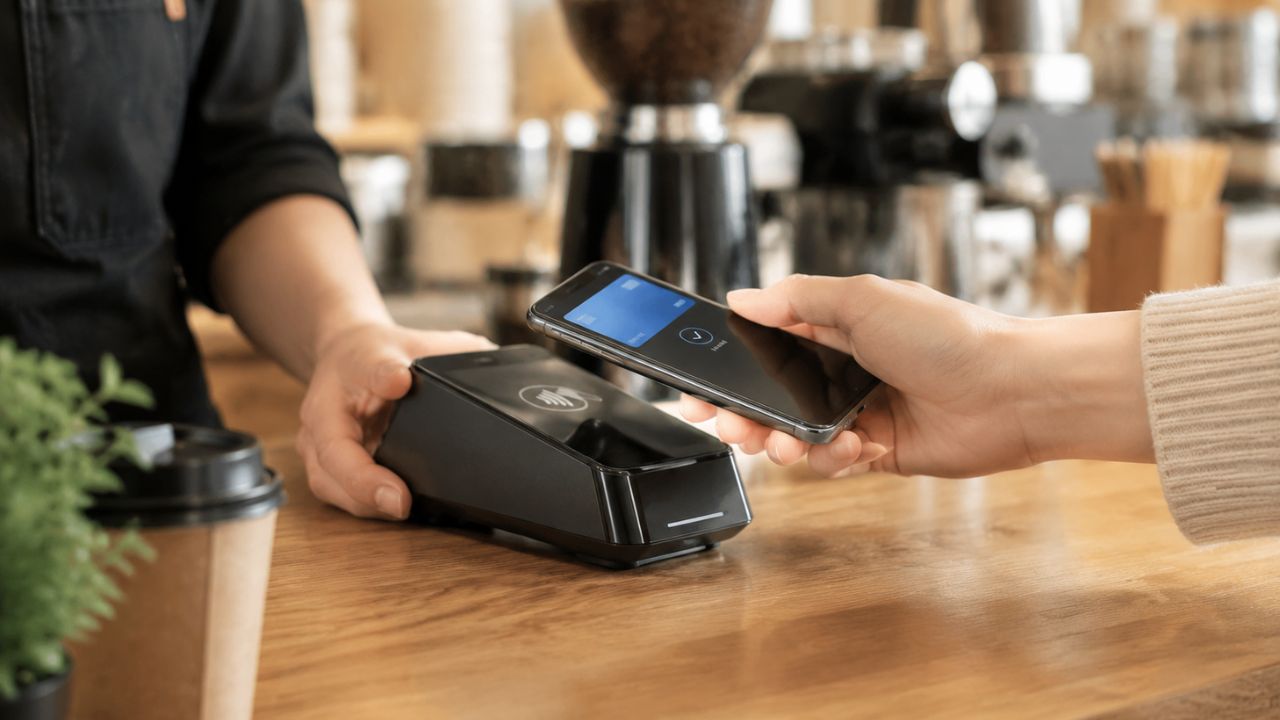
NFC is the short-range radio link that carries payment details from a card or a phone to a terminal a few centimetres away. It is the one item on this list that a customer physically touches. Contactless cards followed magnetic stripes and chips, and arrived just in time for the COVID-19 pandemic to change how people paid.
What happens in the half-second after a tap
The terminal sends out a weak radio field. The chip inside the card or phone draws power from that field and answers with payment data.
The terminal passes the data to the acquirer, the bank that serves the merchant. The NFC Forum, which maintains the standard, published a paper in November 2025 on the role NFC has played in payments technology. Anyone unsure whether a card supports a tap can check for the four curved lines printed on it.
2. Biometrics: proving identity without a password
Face scans and fingerprint readers now stand in for a PIN on many card payments. The biometric itself never leaves the device. A phone compares the scan with a stored template and returns only a yes or no. What crosses the network is a substitute value that stands in for the card number.
Security compliance rules that shape biometric sign-in
Payment rules push banks toward stronger checks. In Europe, many online payments need a second factor. That is why a fingerprint can replace a typed code.
The CFPB published an issue spotlight in September 2023. It looked at Big Tech’s role in contactless payments. Part of that role is control over the NFC chip inside a phone.
A platform that owns the radio decides which wallets can use it. That shapes competition.
Consumer digital wallet security guidance covers much of the same ground. It suggests a device passcode, a remote wipe, and a limit on what a tap can buy.
3. Tokenization: swapping the card number for a stand-in
Tokenization stops the card number from travelling with a payment. It is not free. Each token has to be issued and stored. A business that switches providers has to replace the tokens it already holds, which is why any tokenization plan starts with the exit route. Card use alone no longer defines payment leadership, a shift the industry noted in 2026.
Does tokenization take the card number out of the transaction?
In most wallet and online payments, the merchant never sees the real card number. One explainer describes tokenization as a swap. The card number becomes a “meaningless reference” that cannot be traced back to the original.
Mastercard’s network tokenization white paper came out in April 2026. It covers how tokens travel through e-commerce checkout. What stays behind is a mapping table that links each token back to a real account. It sits inside the bank or the wallet provider, away from the till.
4. 5G: the network layer that removes the wait

Merchants ask one question about a card terminal on a mobile network: is it fast enough to replace a fixed line?
5G is the mobile standard built to cut network delay. Network equipment makers describe that delay in milliseconds, not seconds. It matters most where a fixed line is slow, costly or missing. Market stalls, buses and delivery vans all fit that case.
The catch is coverage. Juniper Research publishes a research suite on private LTE and 5G networks that tracks this market. Out of range, a terminal drops to 4G or Wi-Fi. The wait comes back.
5. APIs: the connective tissue between banks, wallets, and merchants
Falling back to a slower network only matters if the software behind it can still reach the bank. An API is an interface that lets one company’s software call another’s without a person in the middle. Asian infrastructure providers compete on exactly this layer, offering the APIs, switching systems and settlement networks that move money instantly.
How APIs became the connective layer of real-time digital payments
APIs became the connective layer because they let a bank expose one function at a time instead of a whole core system. A merchant can accept a payment without becoming a bank, and a fintech can build on an account it does not own. A survey of Asian real-time payments infrastructure names established fintech and infrastructure players rather than household-name global giants. J.P.Morgan advertises instant transfers across the globe through a single integration, which is the practical shape of an API-led stack. What stays open is who owns that layer, and what a merchant pays when the provider changes its terms.
6. Cloud computing: elastic capacity for peak-hour payments
Cloud computing lets a payment system add capacity when demand spikes, so a payday rush does not slow the queue at the till. The consequence lands on finance teams, who can watch cash move during the day rather than wait for an overnight file. PrimeRevenue describes digital transformation in payments as reshaping how companies manage B2B payments and cash flow.
Treasury data-enabled systems and the cash-flow view they give finance teams
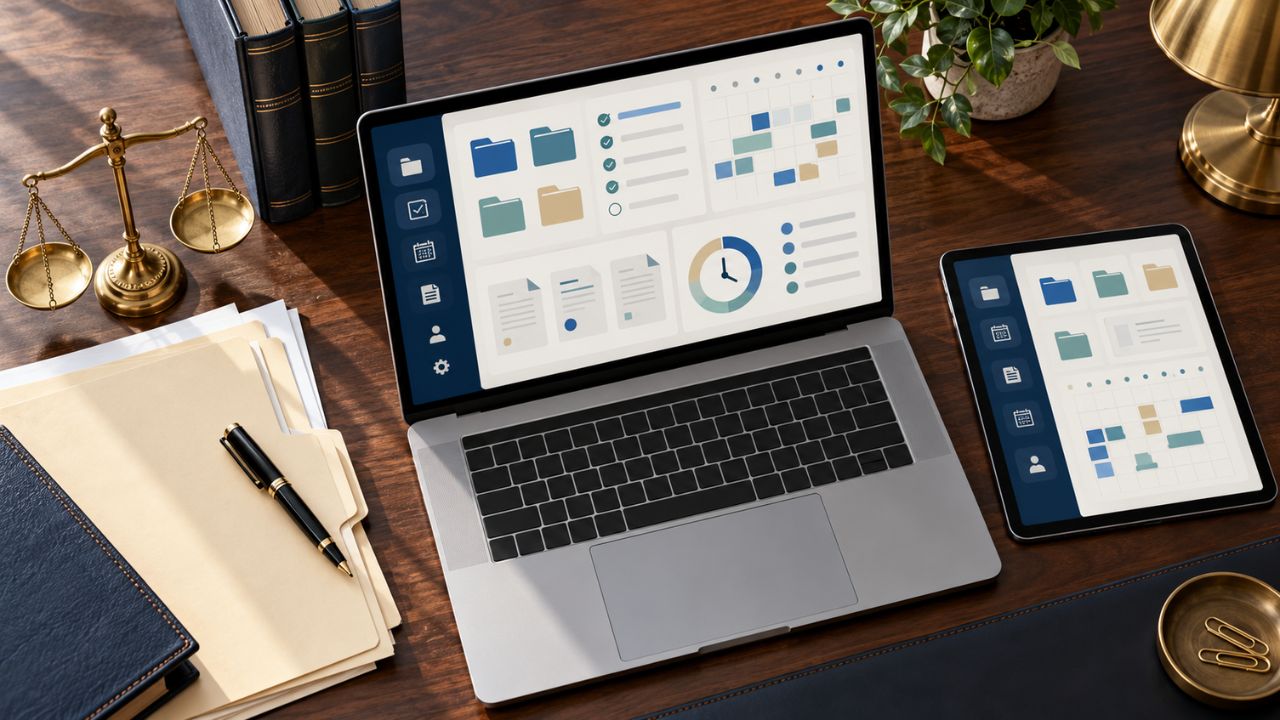
Treasury data-enabled systems pull payment, invoice and bank records into one screen, so a treasurer sees money in and money out as it moves. That changes the working day. A finance team can release a supplier payment on the same day it approves the invoice instead of waiting for a batch run. The limit is data quality, because a dashboard fed by mismatched records gives a wrong answer quickly. Businesses that struggle with late payments see the clearest gain, since the delay shows up in the same view. A finance team can check one thing before buying: whether the system matches each payment back to an invoice on its own.
7. ISO 20022: the data standard underneath instant settlement
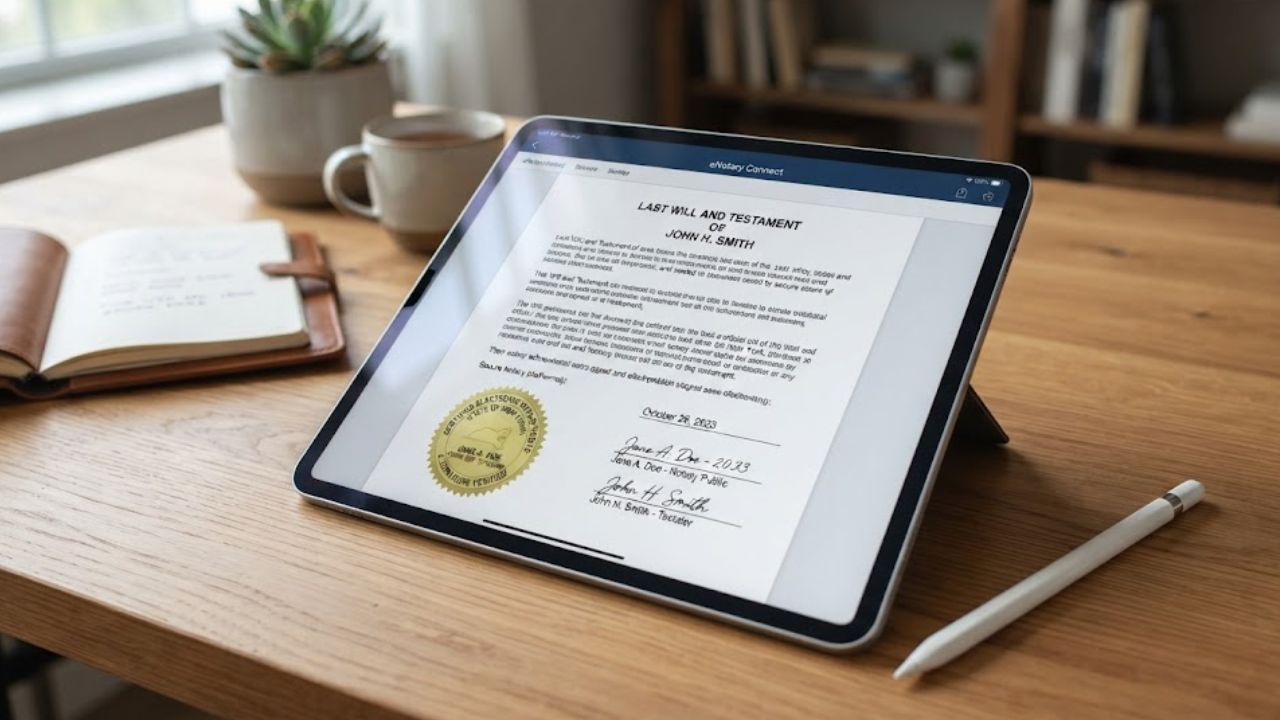
ISO 20022 is a global, open standard for financial messaging. It carries structured data alongside a payment, not just the amount and the account number.
The extra fields can carry:
- Who paid.
- What the payment was for.
- Which invoice it settles.
Swift says the standard carries richer, better structured data from end to end. Mexico’s central bank began rebuilding its settlement system in 2004 and opened it to non-bank financial institutions in 2007.
How ISO 20022 underpins real-time digital payments across borders
A cross-border payment that arrives with unreadable data gets stopped and checked by hand. ISO 20022 gives banks a shared set of fields to avoid that. A January 2025 event at the Peterson Institute for International Economics covered fast payment systems, which settle retail transactions in a few seconds. The speakers were the World Bank’s Harish Natarajan and Banco de México’s Othon Moreno. Natarajan put India’s fast payment growth at 33.5% a year. Stripe reports that India’s UPI has more than 350 million users. Structured data is also easier for software to read than a free-text note.
8. AI and machine learning: decisions made in milliseconds
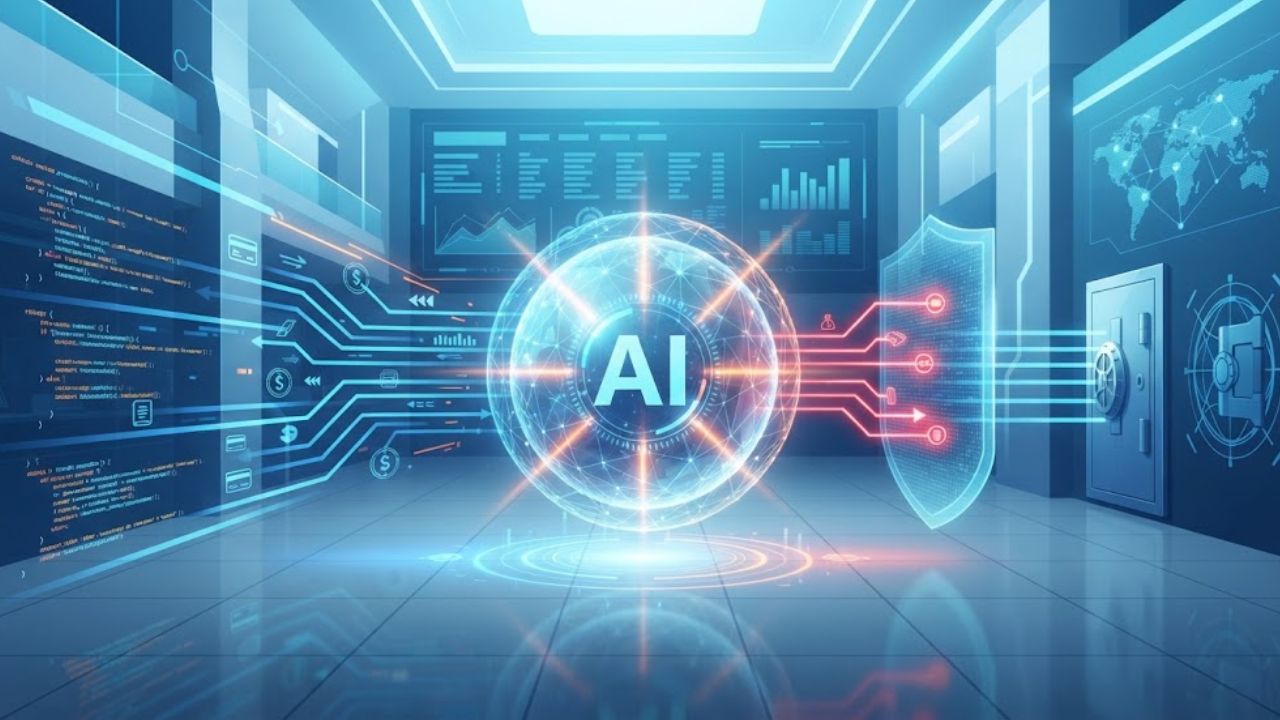
Machine learning scores a payment while it is still moving, and that speed is also the problem. A model that blocks a genuine payment costs a merchant a sale and a customer. Thoughtworks describes global payments as shifting from batch processing to always-on, real-time value exchange. The same report lists the growing role of AI in payments and fraud prevention among five key trends.
The kinds of insights real-time payment data produces
Real-time payment data produces a few kinds of insight: fraud signals, cash-flow forecasts, and customer behaviour. Each has a different shelf life. A fraud score is useful for a second or two, while a cash-flow forecast holds up for a week. The Thoughtworks authors group fraud prevention in instant payments with digital identity, smart data and open banking as key enablers. False positives are the hardest cost to price, because the loss is invisible in the data: the payment simply never happens.
9. Blockchain and distributed ledgers: the most argued-about item on the list
The decision for most payment teams is whether a distributed ledger adds anything a central database cannot. A blockchain records transactions in a shared ledger that many parties can check. In September 2026, The Clearing House selected Quant infrastructure for a US tokenised deposits project. Singapore banks completed their first tokenised Singapore dollar transactions on a Swift blockchain ledger the same month.
Does blockchain fix a problem the other nine already solve?
For domestic instant payments, usually not. Fast payment systems already settle in seconds without a shared ledger. Banks have tested blockchain in banking for years without replacing those rails. The case for a distributed ledger is strongest where several institutions need one record they all trust and no single party owns it. Both 2026 projects involve banks and deposit tokens rather than consumer card taps.
10. IoT: payments triggered by machines, not people
The same shift runs one step further when the payer is a device. Internet of Things payments are transactions started by an object: a car paying for charging, a meter buying credit, a vending machine reordering stock. The trigger is a sensor reading rather than a tap. That removes the human check that catches a mistake. It also raises a question of liability when a device pays twice. BillingPlatform describes a real-time payment as a five-step process that starts with initiation and moves through verification. In B2B settings, real-time rails could also streamline supply chain finance, which is paper-heavy, according to Mastercard. The tension is authority: a machine can be given a spending limit, but it cannot be asked whether a charge was fair.
Questions people ask about technologies powering real-time digital payments
Real-time payments draw the same handful of questions from finance teams and shoppers. The answers below cover how the process runs, when settlement really happens, which technology matters most for a small business, and where these systems are live today.
How do real-time digital payments actually work from tap to settlement?
A payment starts as an instruction, is checked by the payer’s bank, is cleared through a scheme, and is settled between the two banks. BillingPlatform breaks the process into five steps, beginning with initiation and verification.
Do instant payments settle immediately between banks?
Not always. A customer’s balance can update in seconds while the banks behind the payment settle later through a scheme’s netting cycle. Settlement speed is set by the scheme and the country, whatever the app shows.
Which of these technologies matters most for a small business?
APIs and tokenization. APIs let a small business accept payments without building its own bank connection, and tokens keep card numbers out of its systems. NFC matters only when the business takes card taps at a counter.
Which countries run real-time payment schemes on these technologies today?
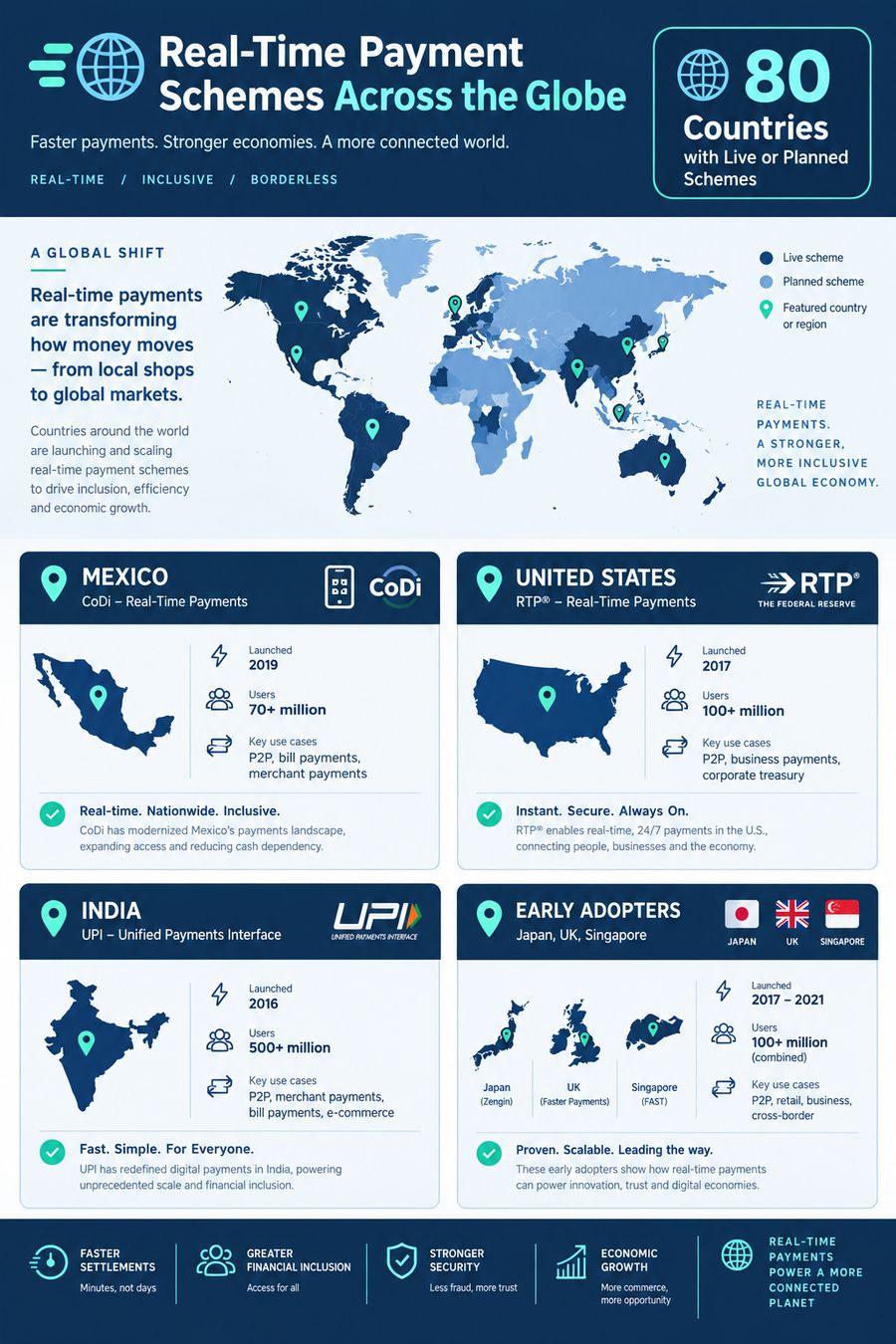
Many countries do. Thunes counted 80 with live or planned real-time payment infrastructure as of 2023. Some schemes are older than others.
- Mexico: live since 2004, and required around the clock for large retail banks from 2017.
- United States: The Clearing House’s Real-Time Payments network, which Stripe calls the first new core US payments infrastructure in more than 40 years.
- India: the Unified Payments Interface, with more than 350 million users.
- Japan, the UK and Singapore: the Zengin system and other early schemes, which the Peterson Institute transcript says launched well before the rest.
Are real-time payments and instant payments the same thing?
Mostly. Kyriba notes that real-time payments, faster payments and instant payments are often used interchangeably. The differences sit in scheme rules: which banks must join, what the transaction limit is, and how the system behaves at weekends. Kyriba also describes real-time payments as designed to be as close to round-the-clock as possible, so money can be sent and received at any time of day or night.
How long does an ISO 20022 migration take?
Migration runs into years, because a bank has to change its message formats, its testing and its counterparties at the same time. The work is staged: new messages run alongside old ones until every partner can read them. Mexico’s central bank gives a long view of a rebuild of that size. It began reworking its settlement system in 2004, added non-bank institutions in 2007, and moved to round-the-clock operation in 2013. Retail banks with more than 100,000 deposit accounts had to operate around the clock from 2017.
Final Thoughts
A customer at a till sees one tap and one receipt. Behind it, the ten technologies powering real-time digital payments turn one instruction into a settled payment in about a second. The consequence is that a small business can now accept money without owning a terminal or a fixed line. It also means failures are quieter.
A blocked payment, a mismatched reference or a token that no longer maps to an account all look like nothing happening. Businesses weighing providers can check three things. The first is whether the provider supports the scheme their bank uses. The second is how it handles token migration on a switch, and the third is what it charges for a real-time transfer.