Auto insurance rates climbed 12 percent in the past year, and drivers feel it the moment the renewal notice arrives. So the choice lands on the driver: accept tracking, or keep paying a rate set by demographics.
Watching behind-the-wheel habits directly, rather than pricing policies on demographics, is how telematics technologies are changing auto insurance. Progressive adopted these tools early, doubling its market share between 2013 and 2024 across its product lines. Several distinct tools now shape how underwriters calculate risk, and each one gives safe drivers a path to lower bills.
1. OBD-II Dongle Monitoring
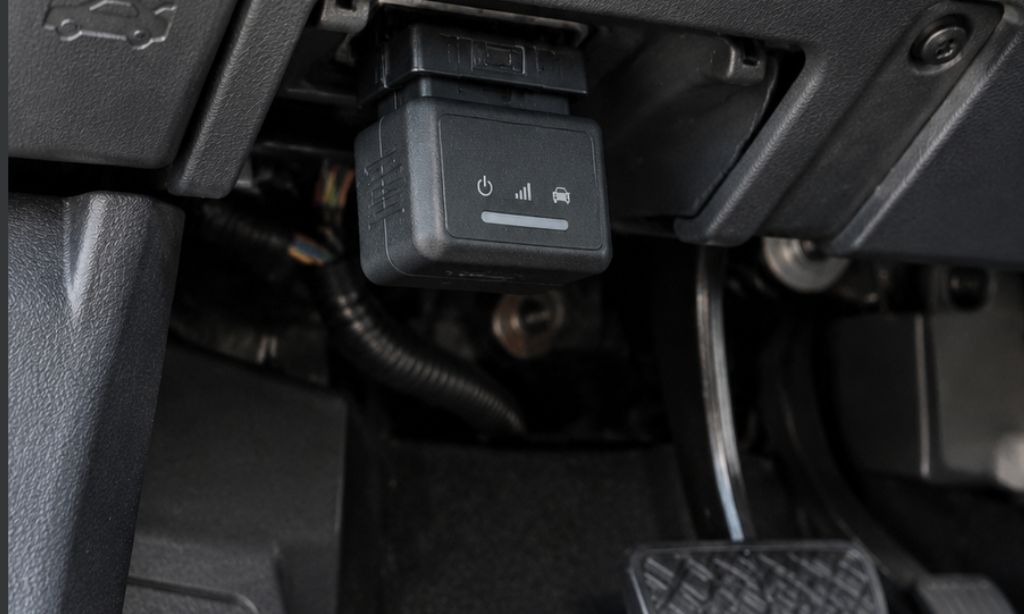
Progressive introduced the first OBD dongle for personal auto insurance. The small adapter plugs into the onboard diagnostic port and sends driving data straight to underwriters. It works without a smartphone, which keeps this hardware common in older cars.
How OBD-II Dongles Measure Driving Behavior
Once plugged in, the unit reads the vehicle computer multiple times every second. Speed and total miles come straight from that feed, and sudden braking shows up there as well.
Rapid acceleration and late-night trips pull driver scores down, and abrupt stops do the same. Insurers then turn those figures into renewal discounts or surcharges. Some carriers monitor driving only during a short introductory trial, while others track activity continuously across the policy term.
Installation and Compatibility Requirements
On gasoline models made since 1996 and diesel cars sold since 2008, the port is easy to find in a standard spot beneath the dashboard, near the steering column. Drivers push the device into place in seconds without tools, and the port powers it continuously, so nothing needs recharging. A few performance or modified models use non-standard port layouts, but basic setups rarely cause trouble.
Pros and Cons for Different Driver Types
Drivers with short daytime commutes gain the quickest rate relief, because predictable routines keep risk scores high. Night-shift workers and motorists stuck in heavy traffic face penalties for late travel hours and frequent sudden stops.
The physical unit stays visible inside the cabin as a reminder of active tracking. Many motorists prefer that dedicated hardware over smartphone monitoring because it never touches personal phone data.
2. Smartphone App Tracking
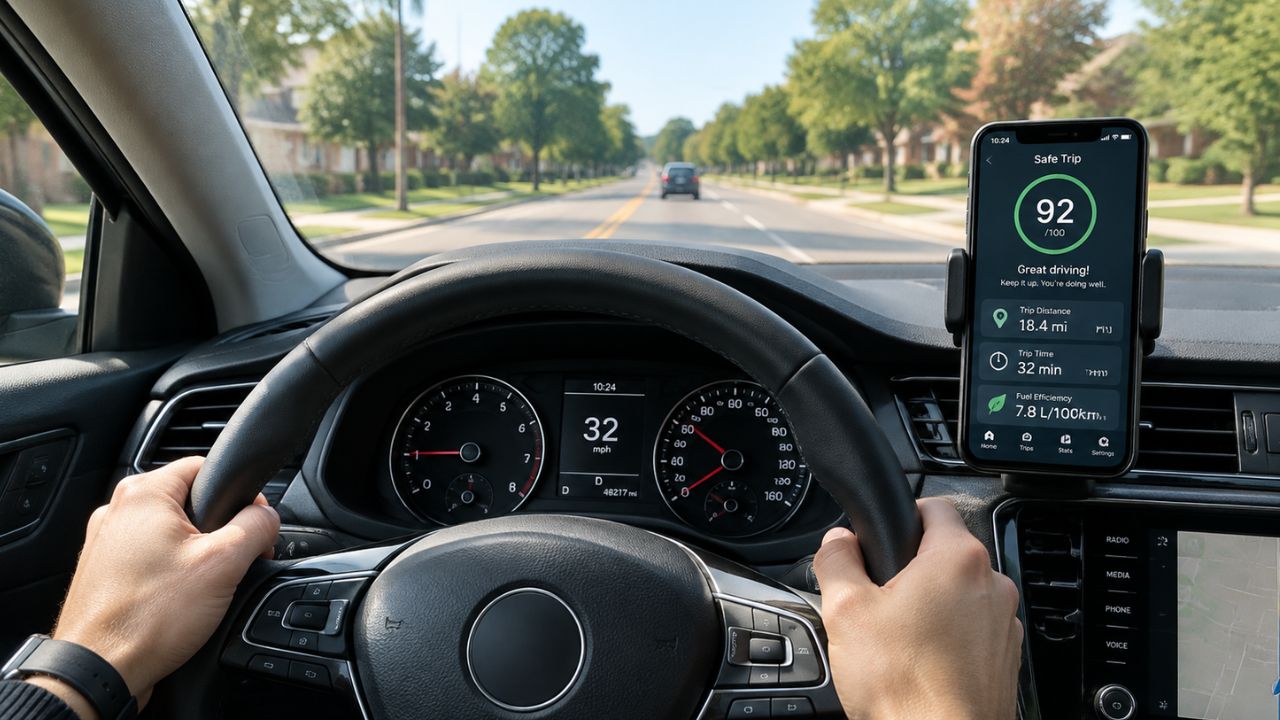
Hardware plugged into a dashboard isn’t the only option. The phone already sitting in your pocket can record the same behavior. Progressive moved early here, launching one of the first smartphone usage-based insurance apps. Built-in handset sensors take every reading the old dongles took, so companies skip the cost of mailing extra gear. Power remains the weak point. Heavy battery draw is still a stubborn drawback, and it keeps slowing driver adoption.
What Smartphone Sensors Track
- Accelerometers detect hard braking and rapid acceleration
- GPS logs vehicle speed alongside total trip distance
- Gyroscopes measure cornering force
- Some apps detect phone handling to identify distracted driving, flagging when a driver touches the screen or makes calls while moving
- The app runs in the background during trips, uploading data when connected to Wi-Fi or cellular networks
Battery Drain and Background Permission Concerns
Run motion chips and satellite tracking together on a long drive and the battery drains fast. Many services answer with low-power settings that poll the sensors less often. Fewer samples, though, mean a less precise overall score.
These programs also ask policyholders to hand over device permissions, background location tracking among them. Some handsets even request access to call logs or address books to spot active screen handling. Drivers who already guard their digital privacy may find that a hard line to cross.
When App-Based Programs Make Sense
Commuters who keep a phone on a charger get the most straightforward value from mobile monitoring. The setup also suits anyone alternating between cars, since one profile follows every trip with no plug-in tool to swap between dashboards. Parents lean on shared family dashboards to review safe habits with newer teen drivers. Even motorists working late shifts can come out ahead when steady road habits outweigh the points lost for midnight travel.
What remains is a choice each driver has to weigh for themselves: a somewhat lower annual rate on one side, a personal phone turned full-time trip monitor on the other.
3. Built-In Connected Car Data Systems
Say no to the data consent screen on a new car’s dashboard, and lower rates can vanish on the spot. These factory setups send trip records straight from the car’s onboard network to insurers. No plug-in dongle, no phone app.
That convenience ties your policy to one car. Native car connectivity is also driving a big expansion in the industry. The global usage-based insurance market is expected to grow from 30.6 billion dollars in 2023 to 80.7 billion dollars by 2028.
How Factory Telematics Integrate With Insurers
Embedded cellular modems send driving data through deals between automakers and auto insurance carriers. You opt in on the insurer’s website or on the dashboard screen itself.
The feed comes from the same built-in sensors that run your lane-keeping assist and automatic emergency braking. That often makes the readings cleaner than aftermarket gear. It all runs in the background, with no hardware to install and no app to maintain.
Which Car Brands Offer Native Telematics Programs
General Motors connects drivers through OnStar insurance programs. Ford and Lincoln share trip info with select carriers through FordPass. Tesla handles this differently. It gathers wide-ranging driving data but shuts outside insurers out, keeping that data for its own insurance brand.
Availability shifts by region, depending on state rules and each insurer. Luxury brands stay more cautious about broad data deals, since owners expect privacy.
Privacy Trade-Offs With Manufacturer Data Sharing
Onboard equipment gathers deeper records than mobile apps. It logs exact GPS routes alongside mechanical diagnostics. Even after you drop a policy, an automaker might still keep those driving files.
Tracking runs through hardwired car parts, so there is no plug to pull and the location logs are hard to shut off. To see which permissions are active, check your automaker’s privacy policy and connected services dashboard.
4. Mileage-Only Usage Tracking

A driver covering 5,000 miles a year pays far less than one logging 15,000 under pay-per-mile auto insurance. The plan bills a fixed base rate plus a few cents for every mile recorded. Distance is all that counts. Driving habits never enter the math. Behavior-based plans still hold most of the market, yet city residents with parked cars are signing up for this setup fast.
How Pay-Per-Mile Programs Work
Keeping coverage active costs a daily or monthly base fee. On top of that, carriers add three to eight cents for each mile logged. An app or plug-in tool tracks the odometer through continuous sync, or drivers send in pictures of the dash. State laws and your driving history also shape what you pay.
Monthly bills rise or fall with road time. Cars that sit still cost less.
Who Benefits Most From Mileage-Based Insurance
The deepest discounts go to retirees and remote staff who stay home. City dwellers who lean on trains and buses save whenever their cars sit idle. A household can put a spare weekend vehicle on a low-mileage plan while keeping standard auto insurance on the family commuter. Long commutes work against you here. Cross-country travelers usually do better with traditional plans.
Verification Methods and Reporting Frequency
Hardware dongles in the diagnostic port read mileage numbers on their own. Some carriers skip the hardware and ask for dashboard photos at set policy intervals. Phones running GPS can estimate total mileage, though that signal lacks the pinpoint accuracy of a direct odometer feed. Reports arrive monthly or once per renewal period, depending on the company.
Unplug the device or miss a photo deadline, and you risk dropped rates or a canceled policy. Self-reported photos also make some insurers uneasy. They have to trust policyholder honesty rather than an automated feed.
5. Telematics Technologies Changing Auto Insurance: AI-Powered Risk Scoring
Your rate can jump after one ordinary week of driving, and nobody explains why. That is what unsettles people most about this technology. Opaque math leaves policyholders guessing why their premium shifted after a few simple trips.
Here is what happens behind the scenes. Carriers feed millions of trips into algorithms, and those systems spot claim-related patterns far faster than human underwriters can. Mobile apps show the score in real time, yet working out how to raise a rating stays hard. Progressive leaned on this kind of data early and doubled its market share.
How Machine Learning Models Analyze Driving Patterns
These automated systems review trip feeds in four ways:
- Population comparison: Individual trips get checked against population-level data to flag outliers
- Pattern recognition: Weeks of aggressive stops carry more weight than one hard-braking event
- Contextual analysis: Time of day and traffic density put a behavior in context
- Continuous learning: Risk estimates update as more data comes in
Carriers say these tools forecast claims risk far better than broad demographic factors such as age or ZIP code.
The Black Box Problem: Understanding Your Score
Most companies hand out a plain number without explaining the math behind it. A driver may see that a sudden stop hurt their standing. The exact penalty, though, stays hidden. Carriers guard these models as trade secrets, so policyholders get limited transparency.
The result is strange. Two people with similar habits can end up with different rates because of hidden variables. Regulators have asked whether that setup breaks consumer protection rules.
Bias Risks and Regulatory Scrutiny
Train a model on past claim records, and older inequities can get baked straight into the math. Where past claim files disproportionately flag certain areas or groups, the software penalizes those drivers. Regulators worry the scores act as quiet proxies for forbidden metrics like race or income.
State insurance departments review whether the tools follow anti-discrimination rules. Critics, meanwhile, point out that access to the programs is rarely equal across communities.
Questions Drivers Ask About Telematics
Most drivers pause right before they enroll. The same two questions come up every time: what leaves the car, and who gets to see it?
What kind of data gets collected?
A telematics device builds its picture from three inputs: speed, braking and acceleration. Mileage gets logged on top of those, and systems note when and where you drive. Some programs go further, watching for phone use behind the wheel or checking that seat belts are fastened.
Factory-connected systems pull in extra vehicle diagnostics. Data usually reaches the insurer daily or weekly, though a few devices upload in real time.
Can telematics data be used against a driver in an accident claim?
Yes, it can happen. Insurers may pull telematics records to work out fault or verify a claim. Data showing speeding or hard braking just before a crash can shape the outcome.
The rules differ by state. Some limit how telematics data can be used in litigation; others allow it as evidence. Check your policy terms to see whether data sharing goes beyond pricing.
How much can safe drivers actually save?
There’s no single number. Insurers set discounts differently, and individual behavior decides where anyone lands. Top scorers can earn substantial discounts, though the average savings is lower.
Initial enrollment often includes a small participation discount, applied before any driving data is collected. Risky habits can wipe out the discount entirely, and some drivers face a surcharge at renewal instead.
Final Thoughts
The seven technologies outlined here don’t ask for the same thing. Each needs different hardware, and each demands its own level of monitoring. Picking between them comes down to how a driver’s habits line up with the scoring models. The payoff is more control over premiums and a shot at savings. The price is some privacy.
Compare the program terms and read the privacy policy before you commit to anything. The usage-based insurance market keeps expanding, so more insurers will offer telematics options. Most programs offer trial periods that let drivers test their scores first.