Competitor analysis for digital marketing means studying the brands you compete with online: how they rank, what they publish, where they advertise, and where AI tools mention them. The goal is to find the gaps they leave open and fill them. You don’t need a big budget. You need a short list of rivals, a few tools, and one sheet to record what you find.
I have worked as an SEO content writer and SEO specialist for more than 10 years. As acting editor at Editorialge, I run this process before we plan any new content cluster. Here is the method I use, step by step.
What Competitor Analysis for Digital Marketing Covers
Most people think it just means “check their keywords.” That is only one part. A full review looks at five channels:
- Search: keywords, top pages, and backlinks
- Content: topics, formats, depth, and how often they update
- Paid ads: Google, YouTube, Facebook, and Instagram creatives
- Social: which posts get real engagement
- AI search: whether ChatGPT, Perplexity, Gemini, or Google AI Overviews name them
You don’t need all five every time. A local service business may care most about search and ads. A SaaS startup may care more about content and AI answers.
How to Do Competitor Analysis for Digital Marketing in 6 Steps
Step 1: Pick the Right Rivals for Competitor Analysis for Digital Marketing
Make three lists:
- Business rivals. Brands that sell the same thing to the same buyer.
- Search rivals. Sites that rank for your main keywords. Google 5 to 10 of your money keywords and note who keeps showing up.
- Stretch rivals. One or two bigger players you want to catch.
Business rivals and search rivals are often different. I see this all the time. The brand a client worries about barely ranks, while a small niche blog holds three of the top five spots. For SEO and content work, study the search rival.
Keep the final list to about five. When I go past that, I end up with a huge sheet and no decisions.
Step 2: Start Competitor Analysis for Digital Marketing With Search Data
Put each rival’s domain into an SEO tool like Semrush or Ahrefs and pull three reports:
- Top pages: which URLs bring them the most organic traffic
- Keyword gap: keywords they rank for and you don’t
- Backlink gap: sites that link to them but not to you
The keyword gap is where I find most quick wins. I filter it to keywords where at least two rivals rank in the top 10 and my site doesn’t rank at all. If two sites can rank for it, the topic is proven.
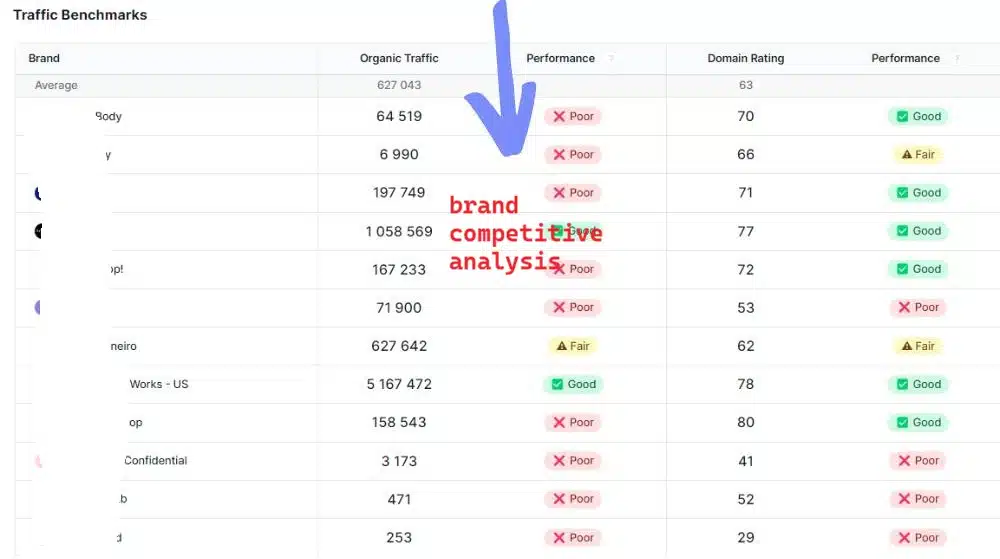
One warning. Traffic numbers in these tools are estimates, not real analytics. Two tools can show very different traffic for the same site. Use them to compare rivals against each other, and stick to one tool so your comparisons stay fair.
Step 3: Use Competitor Analysis for Digital Marketing to Judge Content Quality
Data shows what ranks, not why. For that, open the top pages and read them. I check four things:
- Who wrote it? Does the author show real experience, or is it a faceless post?
- How fresh is it? Look at the update date and any old stats or dead links.
- What format wins? A list, a long guide, a free tool, a video, or a comparison table.
- What is missing? Look for questions people ask in “People also ask,” Reddit threads, or comments that the page skips.
That last point is where most of my content briefs come from. Ranking pages often copy each other. If all five cover the same ten points, the eleventh point a reader truly needs is your opening.
Step 4: Check Paid Ads During Competitor Analysis for Digital Marketing
You can see your rivals’ ads for free:
- Google Ads Transparency Center shows ads from verified advertisers across Search, YouTube, Display, and Gmail. You can filter by region, date, and format. It does not show spend, clicks, or the keywords they bid on.
- Meta Ad Library shows ads running across Facebook, Instagram, and Meta’s other apps. Search by the brand’s page name.
I pay most attention to how long an ad has been running. An ad that stays live for months is probably making money, because brands rarely keep paying for a loser. I also note the offer (free trial, discount, demo) and the landing page the ad sends people to.
Step 5: Add Social and AI Visibility to Competitor Analysis for Digital Marketing
For social media, ignore follower counts. Scroll through the last 20 or so posts on each rival’s main platform. Note which formats get comments and shares, not just likes.
AI search is the newer piece, and many teams still skip it. Ask ChatGPT, Perplexity, and Gemini the questions your buyers ask, such as “best project management tool for small teams.” Write down which brands they name and which pages they cite. Answers change often, so repeat the same prompts every month. For a quick check, Ahrefs also offers a free AI visibility checker.
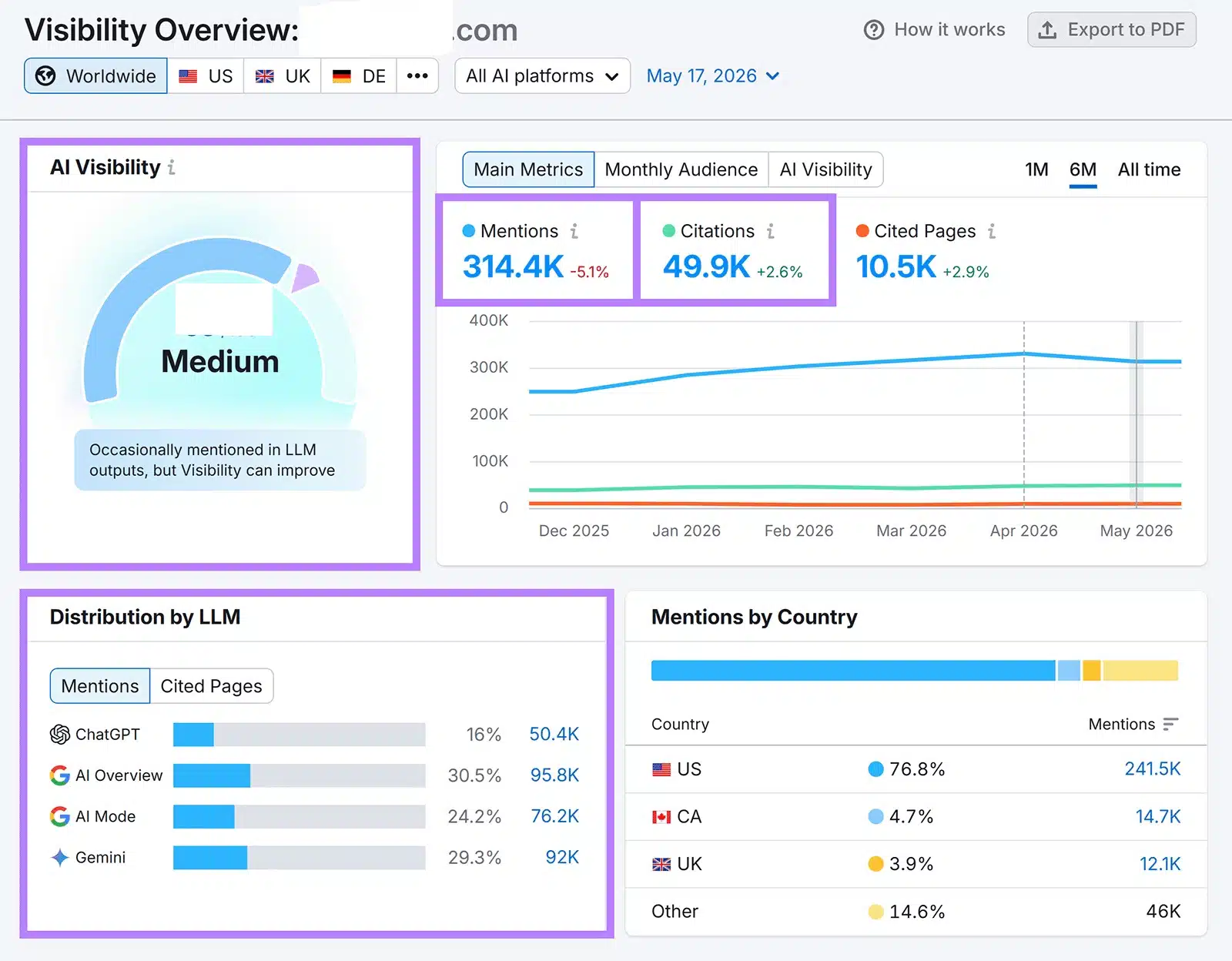
When a rival keeps getting cited and you don’t, open the cited page. From what I’ve seen, those pages usually answer the question in the first few lines, use clear headings, and give specific facts. You can fix all three in your own content.
Step 6: Turn Competitor Analysis for Digital Marketing Into an Action Plan
This is where most reports die. A 40-tab spreadsheet helps no one. I end every review with one short table that lists each gap, what we will do about it, who owns it, and when it is due.
| Gap found | Action | Owner | Due |
|---|---|---|---|
| Rivals rank for 30 “how to” keywords we don’t cover | Publish 10 guides on the top terms | Content team | 90 days |
| One rival gets links from 15 industry blogs | Pitch guest posts to 5 of them | SEO lead | 60 days |
| AI tools cite a rival’s pricing page, not ours | Add a clear pricing summary at the top | Product marketing | 30 days |
Every row has a deadline. That is the point. After that, I track the target keywords in SerpBear, a free open-source rank tracker, and rerun the full review every quarter.
Free and Paid Tools for Competitor Analysis for Digital Marketing
You can do a solid first pass with free tools. Paid tools save time once you track rivals every month. Here is how I split them:
| Tool | What I use it for | Cost |
|---|---|---|
| Google Search | Finding search rivals | Free |
| Google Ads Transparency Center | Rivals’ Google and YouTube ads | Free |
| Meta Ad Library | Facebook and Instagram ads | Free |
| Semrush | Keyword gap and backlink gap | Free plan with daily limits; paid plans |
| Ahrefs | Top pages and backlinks | Limited free access; paid plans |
| SerpBear | Tracking your rankings over time | Free (self-hosted) |
Pricing changes often, so check each tool’s official pricing page before you buy. For a longer list with more options, see our roundup of the 12 best tools for competitor analysis. If you also need tools for email, social scheduling, and design, these digital marketing tools to grow your brand cover the rest of the stack.
Mistakes I See in Competitor Analysis for Digital Marketing
Copying instead of beating. If you rewrite a rival’s top page with the same points, you have no reason to outrank it. Find what they skipped.
Trusting estimates as facts. Tool traffic and ad spend numbers are guesses. Use them for direction, not for reports to your boss.
Studying too many rivals. Ten rivals across five channels is 50 checks. You will run out of time before you act.
Doing it once. Rivals launch new pages, ads, and offers all the time. A review from last year tells you about last year.
This process also works well as a paid service. If you do this kind of work for clients, it is a strong first offer when you start a digital marketing consultancy from scratch.
Final Thoughts
Good competitor analysis for digital marketing should end in a few clear decisions, not a pile of data. Pick five real rivals, check the channels that matter to your business, and write down three to five actions with owners and deadlines.
If you only have one hour this week, run a keyword gap against your top two search rivals. It will show you more than any other single report.