Remember when esports “coaching” just meant your friend screaming at you in Discord to stop rushing solo? Those days are long gone. What started as informal backyard advice has evolved into a massive, multi-tiered infrastructure of analysts, strategists, and sports psychologists.
Today, structured coaching is the definitive line between a casual stack and a serious competitive team. And honestly? It’s no longer just for the pros. Everyone from aspiring academy players to hardstuck ranked grinders is looking for someone to fix their game.
But if you think an esports coach is just a backseat gamer giving generic motivation, you’re missing the bigger picture.
Breaking Down the VODs: What Do Coaches Actually Do?
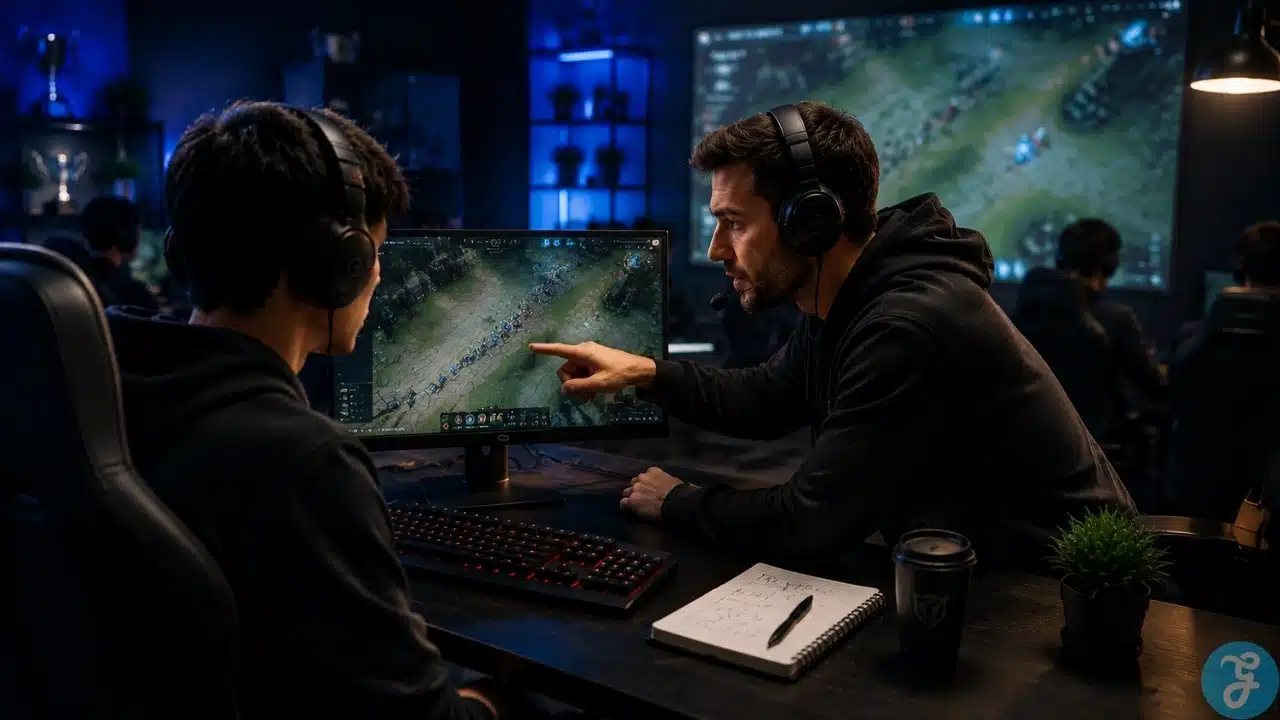
A good coach isn’t there to tell you that you missed a shot; the kill feed already told you that. They are there to diagnose the invisible mistakes you are completely blind to while you’re in the heat of a match.
When a coach sits down to review gameplay, they are hunting for bad habits. They look at your positioning, your utility economy, and how you handle information under pressure.
-
At the lower ranks, this usually means fixing basic execution flaws, like awful crosshair placement or taking fights you have zero business taking.
-
At the pro level, it gets much deeper. It becomes about analyzing “decision chains”—how a single micro-choice made by your entry fragger at the start of a round completely derails your map control three minutes later.
Ultimately, a coach bridges the gap between raw data and actual gameplay. If the feedback doesn’t translate into a concrete shift in how you play your next match, it’s just passive analysis.
The Coaching Staff: It’s Not a One-Man Show
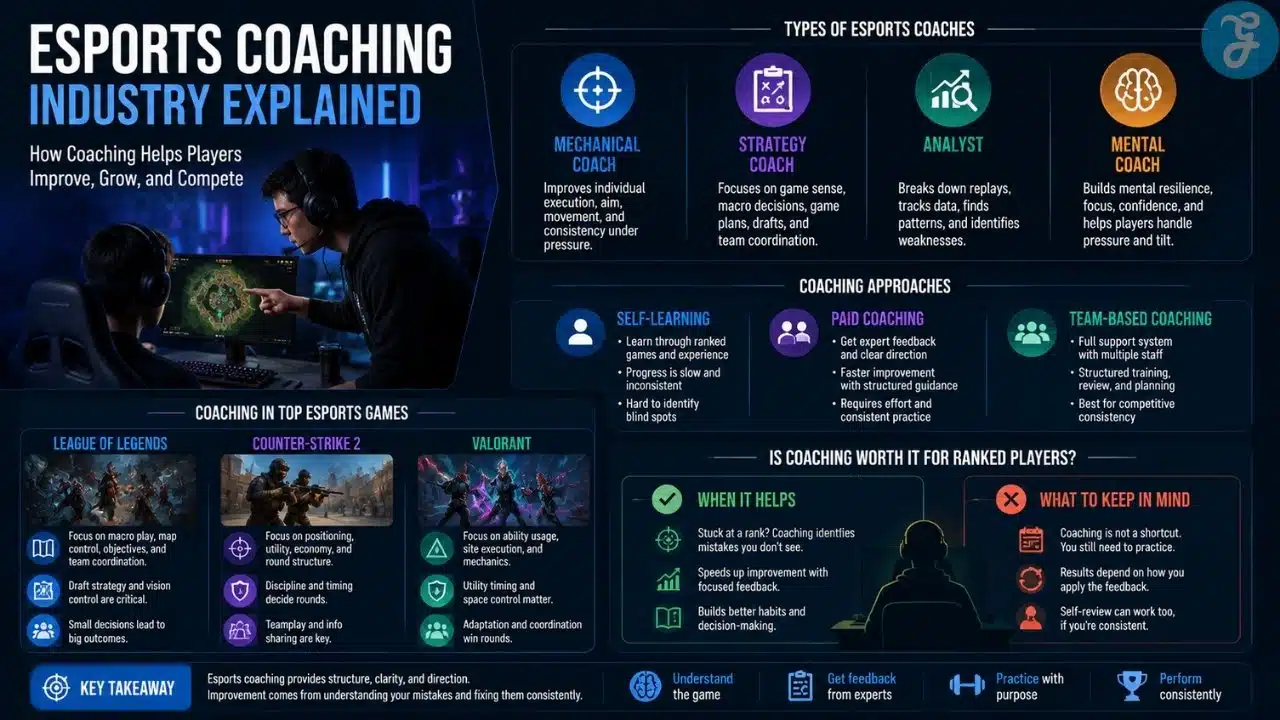
In the modern scene, “coach” is an umbrella term. If you look inside a tier-one organization competing in League of Legends or Valorant, you’ll find a highly specialized ecosystem:
-
The Mechanical Coach: The pure micro specialist. They focus heavily on individual execution—aim routines, movement discipline, click-timing, and making sure your hands don’t shake when you’re forced into a 1v2 clutch situation.
-
The Strategy Coach: The macro mastermind. They map out the big picture. In MOBAs, they dictate the pick-and-ban draft strategy and map control. In tactical shooters, they script the default setups and site executes.
-
The Analyst: The data miner. Analysts spend hours digging through match data and enemy replays to find predictable patterns. They give the strategy coach the exact ammunition they need to counter an opponent’s playstyle.
-
The Mental Coach: The sports psych. Competitive gaming is a psychological meatgrinder. Mental coaches deal with the invisible killers: tilt, burnout, communication breakdowns, and the crushing pressure of playing on a stage in front of thousands of people.
Coaching Focus by Game Title
The following table breaks down where coaches spend the majority of their time when working with players in these three major titles.
| Game | Primary Strategic Focus | Core Coaching Objective |
| League of Legends | Macro, objective control, and drafting. | Optimizing decision chains to secure map advantages and snowball leads. |
| Counter-Strike | Economy management, utility usage, and positioning. | Perfecting spacing, crosshair discipline, and rigid round-by-round structure. |
| Valorant | Ability layering and mid-round adaptation. | Synchronizing agent utility with raw gunplay for cohesive site executes. |
Why These Differences Matter
While the fundamental goal of coaching—identifying and correcting mistakes—remains universal, the “language” of the feedback changes completely depending on the game.
In Counter-Strike, a coach is essentially an efficiency expert, looking for wasted movements or utility. In a MOBA like League of Legends, they act more like a grandmaster, analyzing trade-offs in resource management and team compositions. Understanding which “type” of feedback your game requires is the first step toward getting actual value out of a coaching session.
The Ultimate Reality Check: Is Private Coaching Worth It?
With the rise of freelance coaching platforms, casual players are constantly asking: Should I pay someone to fix my rank?
The short answer? Yes, but only if you actually plan to do the homework.
A coach can point out your blind spots in thirty minutes, but they can’t play the game for you. If you get a VOD review, nod your head, and then immediately go back to autopilot grinding in solo queue, you just threw your money away. Coaching isn’t a magic shortcut; it’s a compass.
Furthermore, you don’t always need a paid guide. If you have the discipline to sit down, swallow your ego, and watch your own losses objectively, you can do a lot of the heavy lifting yourself. The problem is most players would rather blame their teammates or hitreg than analyze their own bad positioning.
Debunking the Biggest Coaching Myths
Myth 1: “The coach needs to be the highest-ranked player in the lobby.” This is a massive misconception. Look at traditional sports—the best coaches in the NFL or NBA weren’t always the MVPs. Coaching requires an analytical brain, deep tactical knowledge, and the ability to communicate concepts clearly. Execution and analysis are two entirely different skill sets.
Myth 2: “Coaching replaces the grind.” Absolutely not. A coach gives you the blueprint, but you still have to build the house. If anything, good coaching makes your practice harder because it forces you to consciously break comfortable, bad habits.
The Shift
The massive growth of the esports coaching industry tells us everything we need to know about where competitive gaming is heading. The days of winning on pure, unadulterated mechanics are dying out. When everyone in the lobby has cracked aim and insane reaction times, the win condition changes.
The teams and players who dominate aren’t the ones clicking faster—they’re the ones with a structured system behind them that makes making the right decision effortless.