

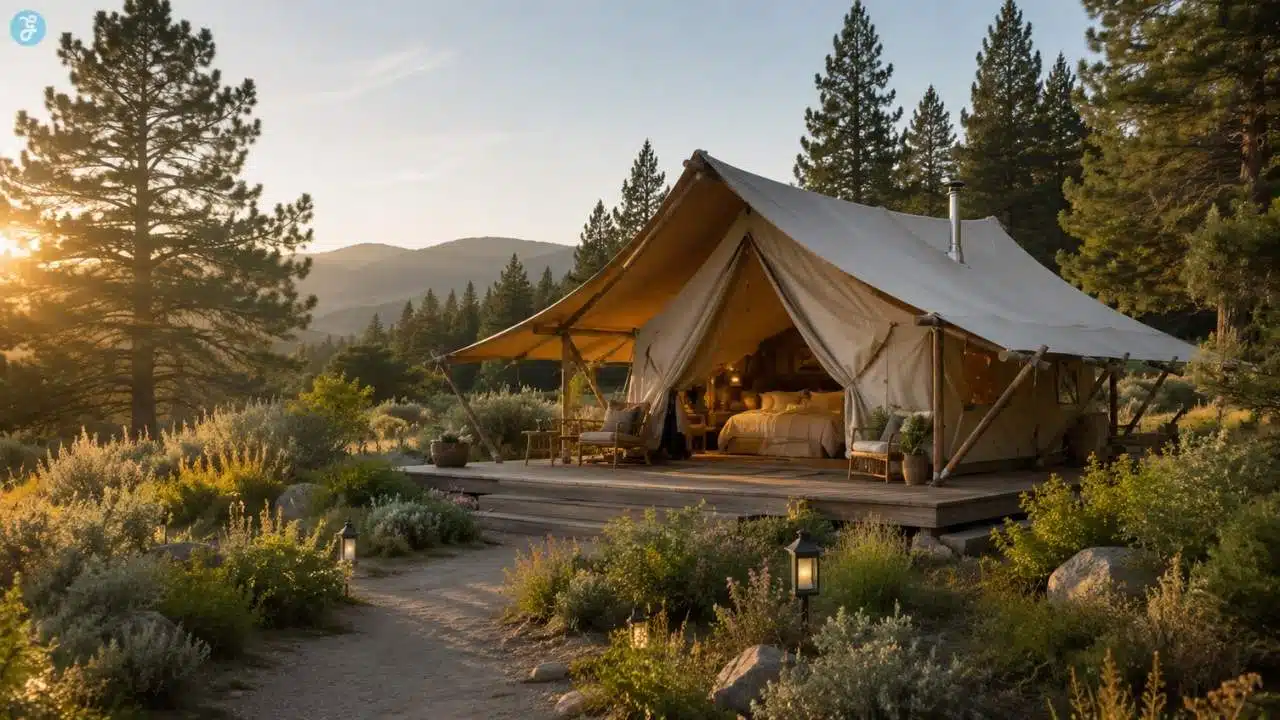
Glamping has grown far beyond canvas tents and pretty firepits. The better operators are now thinking about land, water, dark skies, local food, waste, guest density, and how travelers connect with the places they visit. That shift matters because conscious travelers are getting harder to impress.
They are not only asking, “Is this beautiful?” They are asking, “How was this built? Who benefits? Does this place protect the landscape or just package it?” That is where nature-positive glamping SMEs become interesting.
I used the phrase “nature-positive” in its strongest form, which means a business is helping nature recover or improve, not just reducing harm. Most glamping companies do not prove that level of biodiversity impact yet.
The seven businesses below are not all identical. Some are small, founder-led properties. Some are family-owned eco-resorts. One is a larger private outdoor hospitality brand with verified B Corp status. One has recently been acquired by a bigger outdoor hospitality group. What they share is a visible commitment to nature-first hospitality, low-impact development, stewardship, land connection, or conscious outdoor travel.
This is not a list of random luxury tents. It is a business-focused look at US glamping operators moving the category toward something more responsible.
In this article, I used “nature-positive” carefully. Some businesses show strong stewardship or low-impact practices, while others are better described as nature-first, eco-conscious, or place-based glamping operators.
How I Selected These Glamping SMEs
For this article, a business had to meet several standards.
It needed to have:
- A real, active glamping or outdoor hospitality operation in the US
- Clear public evidence of low-impact design, nature immersion, stewardship, off-grid systems, local sourcing, farm-based hospitality, conservation-minded positioning, or nature-first guest experiences
- A founder-led, family-owned, private-company, SME, or mid-market outdoor hospitality profile
- Enough public information to verify the business model
- A clear fit for conscious travelers
- No fake sustainability claims used just to sound trendy
Some well-known outdoor hospitality brands were excluded because they are now too large, too corporate, or not clearly SME-focused. Others were left out because they looked attractive but did not show enough public proof around sustainability, stewardship, or nature-positive intent.
What “Nature-Positive Glamping” Should Mean
A nature-positive glamping business should do more than place luxury tents in a scenic location.
At a minimum, it should reduce pressure on the land. Stronger examples go further by protecting sensitive landscapes, using light-footprint structures, limiting guest density, supporting local ecosystems, reducing water and energy waste, preserving dark skies, sourcing locally, or helping guests understand the place they are visiting.
The strongest businesses in this space do not treat nature as wallpaper. They treat it as the reason the business exists. That is the difference between outdoor hospitality and extractive tourism.
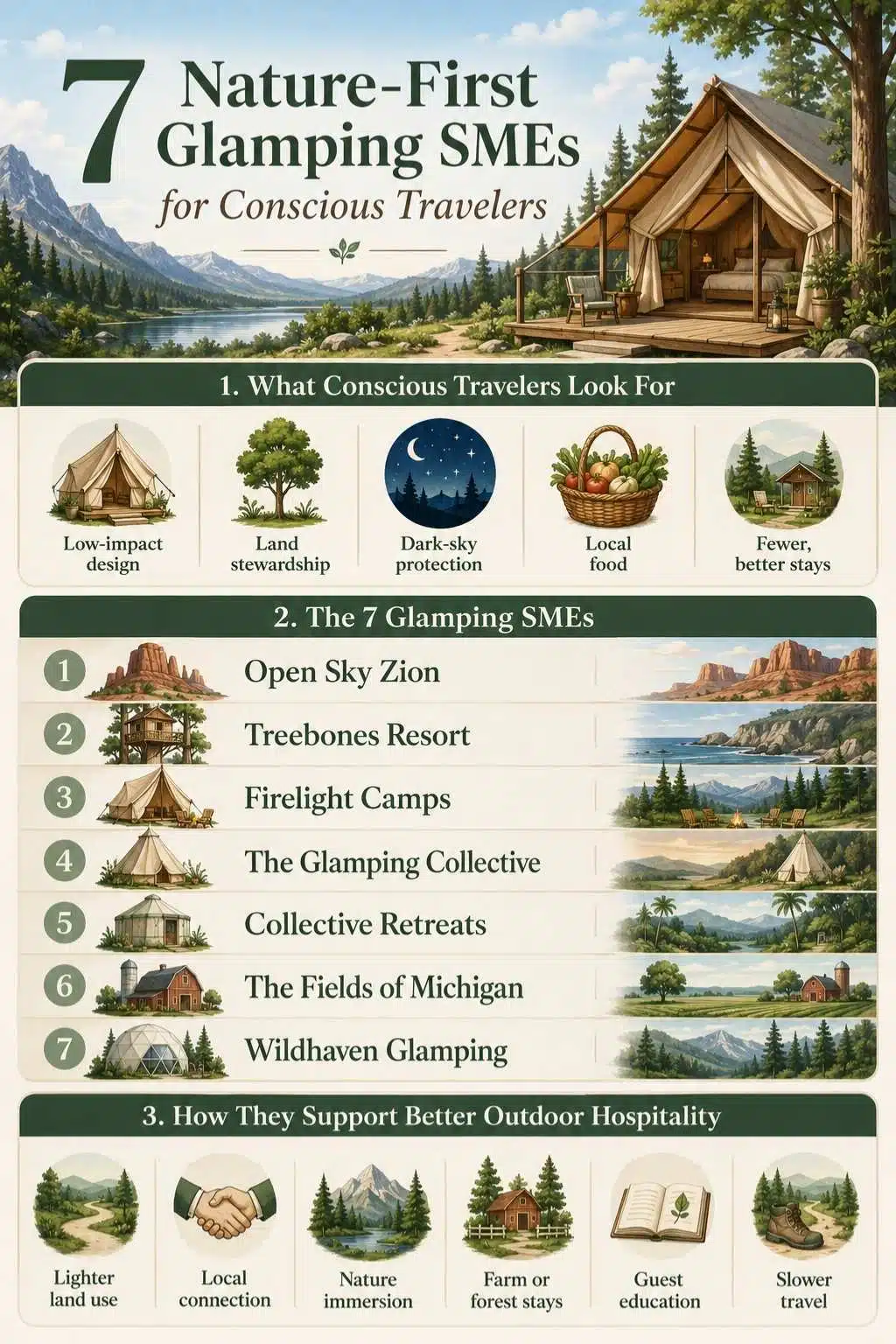
1. Open Sky Zion
Open Sky Zion is one of the strongest fits for this topic. Located near Zion National Park in Utah, the property combines luxury camps with a clear low-impact stewardship philosophy.
The business has a small-scale, destination-specific feel. It is not trying to become a generic national chain. Its appeal comes from design, location, privacy, and a visible effort to keep guests close to the landscape without overwhelming it.
Business Snapshot
| Field | Verified Detail |
| Business Name | Open Sky Zion |
| Location | Virgin, Utah, near Zion National Park |
| Founders | Bygnal Dutson, Nathan Jessop, Nolan Jessop, and Lorin Harker |
| Founded / Launch | Development began in 2017; soft launch in 2021 |
| Business Type | Privately held luxury glamping resort |
| Funding Stage | Public funding stage not clearly verified |
| Main Product / Service | Luxury glamping camps, nature-based hospitality, Black Sage restaurant |
| Target Customers | Conscious travelers, couples, families, Zion visitors, and luxury outdoor travelers |
| B2B or B2C | Mainly B2C hospitality |
| Nature-Positive Angle | Off-grid operations, low-impact philosophy, eco-conscious materials, Dark Sky focus, conservation-minded stewardship |
How the Business Works
Open Sky Zion operates as a premium glamping resort with a limited number of luxury camps. The business sells the experience of staying close to Zion’s desert landscape while keeping the property refined, private, and comfortable.
Its public sustainability language is stronger than many glamping competitors. The company describes a “Low Impact” philosophy supported by off-grid solutions, eco-friendly materials, careful housekeeping practices, and a stewardship approach tied to preserving Zion’s natural beauty.
Why It Belongs Here
Open Sky Zion feels like a serious example of conscious outdoor hospitality. It not only says guests can “escape to nature.” It connects its product to land preservation, low-impact development, and a slower guest experience.
The strongest business lesson here is focus. Open Sky Zion is not selling generic glamping. It is selling a specific relationship with one landscape. That gives the brand more credibility than a resort that could be placed anywhere.
Business Reality Check
Open Sky Zion should be described as low-impact and stewardship-led, not as fully regenerative unless the company publishes measurable restoration or biodiversity results. Still, among US glamping SMEs, it is one of the clearer examples of a nature-first operating model.
2. Treebones Resort
Treebones Resort is a Big Sur classic. It opened in 2004 and has become one of the best-known eco-glamping properties on the California coast.
Its story is different from newer glamping startups. Treebones was built before “glamping” became a mainstream travel category. That gives it an older, more grounded identity. It feels less like a trend and more like a family-built eco-hospitality project that grew with the landscape.
Business Snapshot
| Field | Verified Detail |
| Business Name | Treebones Resort |
| Location | Big Sur, California |
| Founders / Owners | John and Corinne Handy are publicly identified with the founding story |
| Opened | 2004 |
| Business Type | Family-owned eco-glamping resort |
| Funding Stage | Public funding stage not verified |
| Main Product / Service | Yurts, autonomous tents, campsites, treehouse-style stays, off-grid coastal hospitality |
| Target Customers | Big Sur travelers, nature lovers, eco-conscious couples, and outdoor luxury guests |
| B2B or B2C | B2C hospitality |
| Nature-Positive Angle | Off-grid design, solar power, spring water, coastal stewardship, light-on-land hospitality |
Operating Philosophy
Treebones describes itself as being around off-grid living, slow travel, and coastal stewardship. Its official materials highlight solar power, spring water, family ownership, and a long-term commitment to Big Sur’s rugged coast.
The property includes yurts, autonomous tents, campsites, and other unique stays. But the deeper appeal is not only the accommodation type. It is the idea of staying on the edge of the Pacific without turning the place into a conventional resort.
Why It Stands Out
Treebones has something many newer glamping brands still lack: time.
Twenty years of operation in a sensitive place like Big Sur says something about persistence, local understanding, and operational discipline. It is easy to write beautiful copy about light-footprint hospitality. It is harder to run that kind of business for two decades.
Business Reality Check
Treebones is a strong nature-conscious glamping example, but it should still be framed accurately. The business proves off-grid eco-hospitality and stewardship intent more clearly than measurable nature-positive restoration.
For conscious travelers, that distinction matters. Treebones is not a shallow luxury camp. It is a mature eco-resort that has helped shape the US glamping category.
3. Firelight Camps
Firelight Camps brings the nature-positive conversation into a different setting: the Finger Lakes region of New York.
Located in Ithaca near Buttermilk Falls State Park, Firelight Camps is a founder-led glamping business with a strong connection to outdoor access, community hospitality, and local experience. It is not as heavily branded around restoration as some newer eco-resorts, but it has a real SME profile and a clear place-based identity.
Business Snapshot
| Field | Verified Detail |
| Business Name | Firelight Camps |
| Location | Ithaca, New York |
| Founders | Robert “Bobby” Frisch and Emma Frisch |
| Founded / Opened | 2014 |
| Business Type | Founder-led glamping operator |
| Funding Stage | Crowdfunding / public funding documents exist; the current funding stage is not clearly verified |
| Main Product / Service | Safari-style glamping tents, outdoor experiences, group stays, local food, and hospitality |
| Target Customers | Finger Lakes travelers, couples, families, outdoor travelers, wedding, and group guests |
| B2B or B2C | Mainly B2C, with events and group business |
| Nature-Positive Angle | Low-impact outdoor lodging, local hospitality, eco-conscious guest experience, proximity to trails, and state park access |
Service Model
Firelight Camps offers furnished safari-style tents and an elevated camping experience. Its location near trails, waterfalls, and regional outdoor assets makes it a practical choice for travelers who want nature access without a traditional hotel stay.
The Frisch founders also bring hospitality and food credibility into the brand. That matters because conscious glamping is not only about where people sleep. It is also about how food, community, and local culture are built into the stay.
Where It Fits in the Market
Firelight Camps represents the accessible SME side of eco-conscious glamping. It does not feel like a massive resort. It feels like a regional hospitality business that uses glamping to connect people with the outdoors.
Its business value is in place-based experience. Ithaca and the Finger Lakes already attract nature-minded travelers. Firelight Camps gives those visitors a softer landing than traditional camping while still keeping the trip outdoors.
Business Reality Check
Firelight Camps should not be described as a nature-restoration company unless more public proof is provided. Its stronger verified positioning is eco-conscious outdoor hospitality with local flavor and a founder-led operating story.
For this list, that is enough to include it, especially because it fits the SME requirement better than many larger national brands.
4. The Glamping Collective
The Glamping Collective is a newer luxury glamping business with a founder story, a mountain setting, and a social-impact element.
Its main property near Asheville, North Carolina, is built around elevated outdoor spaces, private land, views, design, and disconnection from everyday noise. The brand has also been associated with Chattanooga expansion messaging, which suggests broader regional ambition.
Business Snapshot
| Field | Verified Detail |
| Business Name | The Glamping Collective |
| Location | Near Asheville, North Carolina, with Chattanooga expansion referenced in public materials |
| Founders | Matt Bare and Christina Bare |
| Business Type | Founder-led luxury glamping retreat |
| Funding Stage | Public funding stage not clearly verified |
| Main Product / Service | Luxury glamping domes and cabins, mountaintop retreats, nature-based stays |
| Target Customers | Couples, families, wellness travelers, luxury outdoor travelers, small-group travelers |
| B2B or B2C | Mainly B2C hospitality |
| Nature-Positive Angle | Nature immersion, low-density outdoor retreat model, guest reconnection with place, social-impact partnership through OneWorldHealth |
How the Brand Is Positioned
The Glamping Collective sells an elevated outdoor escape rather than rough camping. Its public story connects the business to the founders’ travel background and their desire to build a retreat where guests can unplug, reconnect, and experience the outdoors with comfort.
The brand also states that every completed reservation provides a OneWorldHealth clinic visit for an underserved patient. That is not an environmental claim, but it does matter in a conscious travel article because it adds a social-impact layer.
Why It Belongs Here
The Glamping Collective belongs because it fits the SME and founder-led profile well. It is not just another big outdoor hospitality brand. It is a more personal business with a clear story, a nature-based setting, and a guest experience designed around slowing down.
Its nature-positive proof is softer than Open Sky Zion or Treebones. So the article should not overstate it. The better framing is “conscious glamping with nature immersion and social impact.”
Business Reality Check
This is a good example of where careful wording matters. The Glamping Collective is not publicly proving biodiversity gain or land restoration in the same way a strict nature-positive framework would require. But it is part of the broader move toward hospitality that feels more connected to land, quieter stays, and intentional outdoor access.
That makes it a valid inclusion, as long as the claim stays measured.
5. Collective Retreats
Collective Retreats is the biggest company on this list, so it needs a caveat. It is not a tiny local SME. It is better described as a private, mid-market outdoor hospitality company.
Still, it belongs here because its sustainability credentials are more publicly verifiable than many smaller operators. It is a Certified B Corporation and has also been described as a Public Benefit Corporation. That gives it a stronger accountability structure than most glamping brands.
Business Snapshot
| Field | Verified Detail |
| Business Name | Collective Retreats |
| Headquarters | Denver, Colorado |
| Founder | Peter Mack |
| Founded | Public sources commonly cite 2015 |
| Business Type | Private outdoor experiential hospitality company |
| Funding Stage | Private, venture-backed; total funding estimates vary by data source |
| Main Product / Service | Luxury outdoor retreats, nature-based hospitality, asset-light hospitality model |
| Target Customers | Luxury outdoor travelers, couples, families, corporate retreat guests, destination partners |
| B2B or B2C | B2C hospitality with B2B partnership and destination-development potential |
| Nature-Positive Angle | Certified B Corp, Public Benefit Corporation positioning, outdoor hospitality with social and environmental impact standards |
Business Model
Collective Retreats is built around outdoor luxury experiences in distinctive locations. The company has positioned itself as a hospitality model that connects guests with places, communities, and nature rather than relying only on traditional hotel construction.
Its B Corp certification is important because it brings external review into the conversation. In a sector full of soft “eco” language, verified certification helps separate serious operators from marketing-only sustainability claims.
Why It Belongs in a Conscious Glamping Article
Collective Retreats is useful because it shows how nature-based hospitality can scale without becoming fully conventional. Its model suggests that outdoor stays can be designed as premium experiences while still carrying social and environmental obligations.
For business readers, this is the most scalable example in the article. It sits between boutique glamping and broader outdoor hospitality investment.
Business Reality Check
Because Collective Retreats is larger than the other businesses here, it should not be framed as a small local glamping SME. The more accurate phrase is “private mid-market outdoor hospitality company.”
That does not weaken its inclusion. It simply makes the business analysis more honest.
6. The Fields of Michigan
The Fields of Michigan is included because of its founder-led origin and farm-based glamping model, even though it is now part of Under Canvas’ Outdoor Collection.
That means it no longer fits perfectly as an independent SME. Still, it deserves a place in the article because its founder-led origin story, blueberry farm setting, and nature-based hospitality model are exactly the kind of business-conscious travelers care about.
Business Snapshot
| Field | Verified Detail |
| Business Name | The Fields of Michigan |
| Location | South Haven, Michigan |
| Founder | Irene Wood |
| Founded / Opening Story | Public sources connect the business to a 2018 glamping inspiration and a 2019 opening period |
| Current Ownership | Acquired by Under Canvas and part of the Outdoor Collection by Under Canvas |
| Business Type | Farm-based luxury glamping retreat |
| Funding Stage | Acquired, no longer independent |
| Main Product / Service | Luxury tents, cottages, farm-based stays, seasonal dining, curated guest experiences |
| Target Customers | Midwest travelers, couples, families, farm-stay guests, conscious luxury travelers |
| B2B or B2C | B2C hospitality |
| Nature-Positive Angle | Blueberry farm setting, local food, open-air experiences, outdoor connection, light-footprint hospitality under new ownership |
What Makes It Different
The Fields is not built around desert drama or national park adjacency. Its appeal is softer: a blueberry farm, tents, cottages, food, slower days, and a sense of returning to simple pleasures.
That makes it important. Nature-positive hospitality does not always need to look wild or remote. It can also happen on working land, in agricultural landscapes, near small towns, and close to regional communities.
Founder Story and Market Fit
Irene Wood’s story gives The Fields a strong business narrative. She saw a gap in Midwest glamping and built a property that made outdoor luxury feel local rather than imported from Western resort culture.
The business, later becoming part of Under Canvas’ Outdoor Collection, also says something about the market. Bigger outdoor hospitality groups are now looking for distinctive local properties with strong founder stories and a clear sense of place.
Business Reality Check
The Fields should be included with a transparent ownership note. It is no longer a fully independent SME. However, its original founder-led model, farm-based setting, and acquisition story make it highly relevant for a business listicle.
For readers, it shows both sides of the market: how small nature-first hospitality brands are built, and how they may become acquisition targets as outdoor travel grows.
7. Wildhaven Glamping
Wildhaven Glamping is the most cautious inclusion on this list. It is included as a nature-connected SME, not as the strongest sustainability operator on this list. Its public materials support outdoor access and small-scale glamping more clearly than formal restoration or biodiversity work.
That does not mean it should be excluded. It means the article should describe it honestly.
Business Snapshot
| Field | Verified Detail |
| Business Name | Wildhaven Glamping |
| Locations | Sonoma County and Yosemite-area operations in California |
| Founder / Ownership | Ken Barber is publicly linked to Wildhaven Sonoma; Brian Lawrence is publicly listed as co-founder on company profiles |
| Founded | Company profile sources list 2020 |
| Business Type | Privately held glamping operator |
| Funding Stage | Public funding stage not clearly verified |
| Main Product / Service | Glamping tents and cabins near natural destinations |
| Target Customers | Couples, families, Bay Area travelers, Yosemite visitors, nature-seeking weekend travelers |
| B2B or B2C | B2C hospitality |
| Nature-Positive Angle | Nature access, small-scale outdoor lodging, river and mountain settings, comfort-focused camping close to regional outdoor assets |
Product Model
Wildhaven offers glamping tents and cabins in nature-connected locations, including Russian River access in Sonoma and mountain-view stays near Yosemite. The model is simple and commercially clear: make outdoor stays easier, cleaner, and more comfortable for travelers who may not want to camp traditionally.
This is important because many conscious travelers are not hardcore campers. They want access to nature, but they also want a real bed, heat, electricity, clean bathrooms, and a smoother guest experience.
Where It Fits
Wildhaven fits the “entry point” side of nature-based travel. It helps more people sleep outdoors without building a full hotel or resort environment.
Its strongest fit is not deep environmental innovation. It is accessibility. It gives families, couples, and weekend travelers a way to choose a nature-based stay instead of another conventional hotel trip.
Business Reality Check
Wildhaven should not be described as strongly nature-positive unless the company publishes more detailed sustainability, restoration, or stewardship data. For now, the safest wording is small-scale, nature-connected, and outdoor-access focused.
That still makes it useful in this list. Not every business needs to be the most advanced sustainability operator. Some help widen the market for lower-impact outdoor hospitality by making nature stays more approachable.
Quick Comparison of the 7 Nature-Positive Glamping SMEs
| Business | Location | Business Type | Verified Founder / Owner Detail | Best Business Fit | Nature-Positive Strength |
| Open Sky Zion | Utah | Private luxury glamping resort | Bygnal Dutson and the founding partners | Low-impact desert glamping near Zion | Strong |
| Treebones Resort | California | Family-owned eco-glamping resort | John and Corinne Handy | Off-grid Big Sur coastal stays | Strong |
| Firelight Camps | New York | Founder-led glamping operator | Bobby and Emma Frisch | Regional eco-conscious glamping | Medium-Strong |
| The Glamping Collective | North Carolina / Tennessee expansion messaging | Founder-led luxury glamping retreat | Matt and Christina Bare | Nature immersion with social impact | Medium |
| Collective Retreats | Colorado-based, multi-location | Private mid-market outdoor hospitality company | Peter Mack | Scalable B Corp outdoor hospitality | Strong |
| The Fields of Michigan | Michigan | Farm-based glamping retreat, now acquired | Irene Wood | Founder-built farm glamping and acquisition story | Medium-Strong |
| Wildhaven Glamping | California | Private glamping operator | Ken Barber and Brian Lawrence publicly linked | Accessible nature-based glamping | Medium |
What These Businesses Tell Us About Conscious Glamping
The US glamping market is maturing fast. A few years ago, a nice tent, a good view, and a fire pit were enough to stand out. That is no longer true. Conscious travelers now want more: lighter land use, local food, meaningful design, better labor practices, dark-sky protection, water awareness, conservation support, and a real connection to place.
The seven businesses above show different versions of that shift:
- Open Sky Zion and Treebones prove that low-impact design can be part of the brand from the start.
- Firelight Camps and Wildhaven show how smaller operators can make outdoor stays more accessible.
- The Glamping Collective adds social impact and a founder-led retreat model.
- Collective Retreats shows how accountability can scale through B Corp certification.
- The Fields of Michigan shows how a farm-based glamping concept can become attractive enough for acquisition.
The market is not perfect. Many glamping businesses still use sustainability language loosely. Some operators talk about nature but publish very little data. Others may reduce one impact while increasing another through luxury infrastructure, traffic, water use, or seasonal labor pressure.
That is why the next stage of the market will need better proof.
How Conscious Travelers Should Choose a Glamping Stay
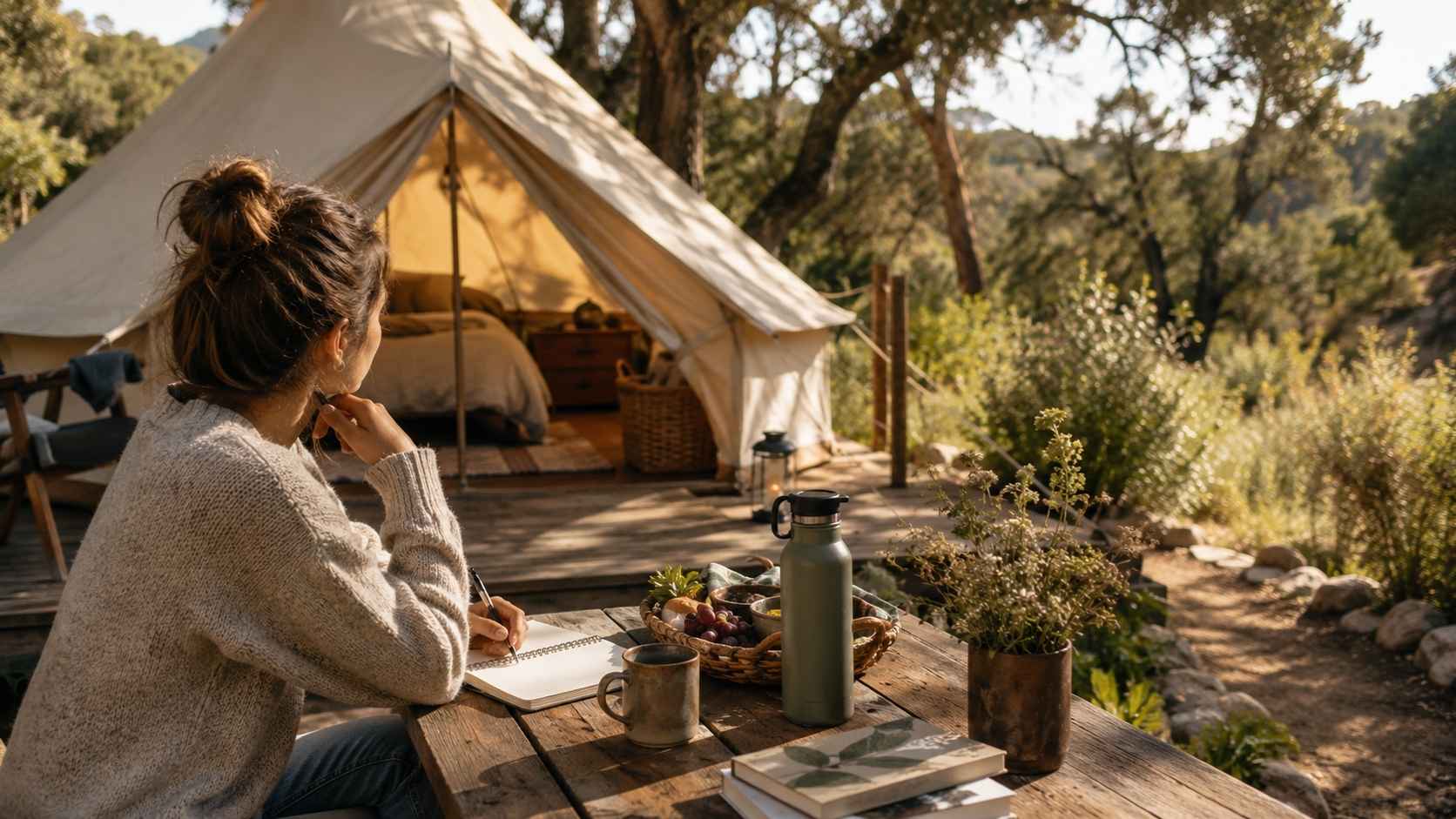
A conscious traveler should look past the photos.
Before booking, ask a few simple questions:
- Is the business clear about how it protects the land?
- Does it limit density or build lightly?
- Does it use solar, off-grid systems, or lower-impact infrastructure where possible?
- Does it protect dark skies and reduce light pollution?
- Does it source food locally?
- Does it support local communities or conservation groups?
- Does it explain waste, water, and housekeeping practices?
- Does it help guests understand the place they are visiting?
A business does not need to be perfect to be worth booking. But it should be honest. The best glamping stays do not just make nature comfortable. They help travelers respect it.
The Business Opportunity Behind Nature-Positive Glamping
Nature-positive glamping sits at the intersection of several growing trends: outdoor hospitality, wellness travel, regenerative tourism, local food, low-impact design, and experience-first lodging.
The business opportunity is real, but it is not easy. Operators must balance guest comfort with environmental limits. They need premium pricing, but they cannot overbuild. They need access roads, bathrooms, kitchens, cleaning systems, staff housing, and booking technology, but they also need to keep the landscape from feeling commercialized.
The best businesses will likely win by doing a few things well:
- Building fewer, better units
- Designing around the land instead of flattening it
- Making sustainability visible without turning it into a gimmick
- Training guests to be better visitors
- Partnering with local farms, guides, and conservation groups
- Publishing clearer impact practices
- Using technology to manage guest flow, energy, water, and maintenance
- Keeping the experience deeply tied to place
The weak version of the market will be luxury tents with green language. The stronger version will be outdoor hospitality that protects the very nature it sells.
A Better Future for Glamping
The best nature-positive glamping SMEs are not trying to make camping fancy for its own sake. They are trying to rebuild the relationship between travel, comfort, and place. That is why this category matters.
Done poorly, glamping can become another form of land consumption. When done well, it can help travelers slow down, support local communities, and experience landscapes without leaving a footprint like a conventional resort.
Open Sky Zion, Treebones Resort, Firelight Camps, The Glamping Collective, Collective Retreats, The Fields of Michigan, and Wildhaven Glamping each represent a different part of that shift.
Some are stronger on verified sustainability. Some are stronger on the founder story. Some are stronger on access, design, or market growth. None should be treated as perfect.
But together, they show where conscious outdoor hospitality is going: lighter, slower, more local, and more aware that nature is not just the backdrop. It is the business.
Frequently Asked Questions About Nature-Positive Glamping SMEs
1. What Are Nature-Positive Glamping SMEs?
Nature-positive glamping SMEs are small, medium, or founder-led outdoor hospitality businesses that aim to reduce harm to landscapes and create more thoughtful nature-based travel experiences. The strongest examples also support land stewardship, conservation, low-impact design, or local ecosystems.
2. Is Nature-Positive the Same as Sustainable?
Not exactly. Sustainable usually means reducing negative impact. Nature-positive should go further by helping nature recover or improve. Many glamping businesses are better described as low-impact or stewardship-led unless they can prove measurable biodiversity or restoration outcomes.
3. Are All Glamping Resorts Eco-Friendly?
No. Some glamping resorts use a lot of water, energy, imported materials, vehicle traffic, and luxury infrastructure. Conscious travelers should look for specific practices, not just beautiful outdoor photos.
4. What Should Travelers Check Before Booking Eco-Glamping?
Travelers should check the property’s land practices, energy use, water systems, waste policies, local sourcing, guest density, community partnerships, and whether the operator publishes real sustainability details rather than vague claims.






















