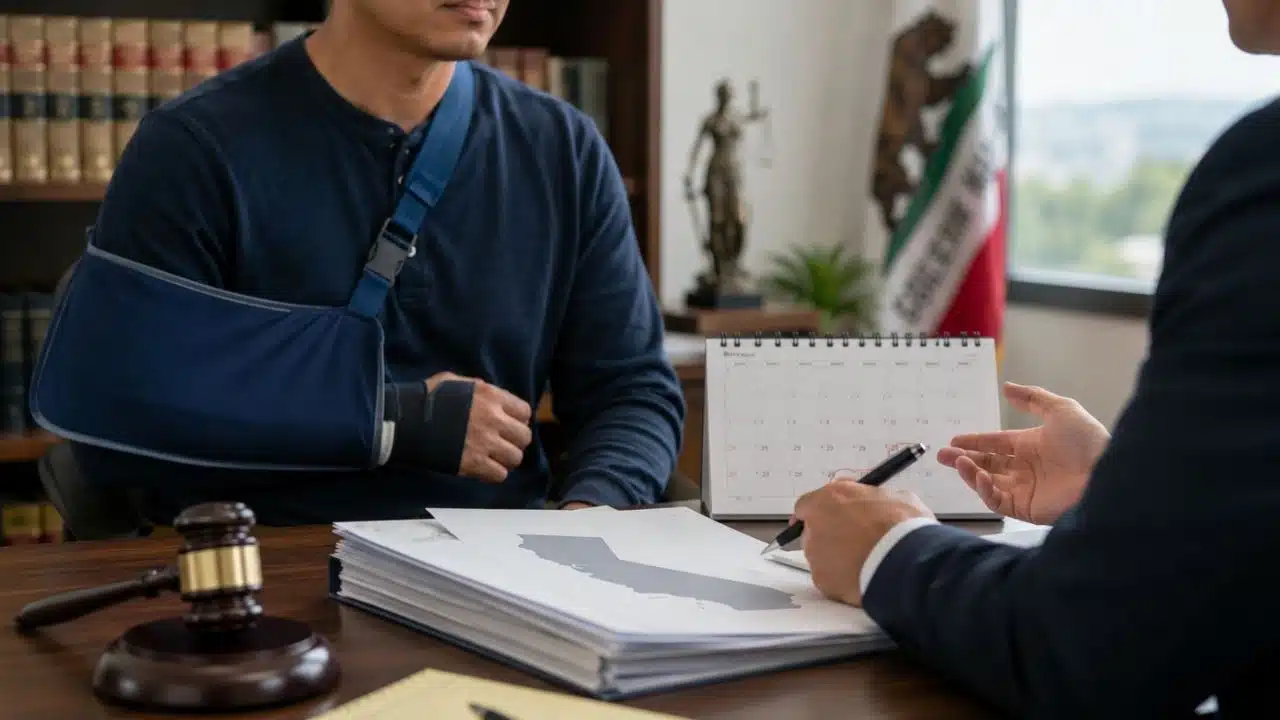
After an accident, injured individuals naturally direct their attention toward medical treatment, physical recovery, and managing the financial strain that serious injuries so often bring. While those priorities are entirely understandable, there is an equally critical legal consideration that demands attention during this period. California law imposes strict time limits on the filing of personal injury claims.
These deadlines, known as statutes of limitations, play a decisive role in determining whether a claim can move forward in court at all. Failing to act within the required timeframe can permanently eliminate the right to pursue compensation, regardless of how compelling the underlying case might otherwise be.
What Is a Statute of Limitations?
A statute of limitations is a law establishing the maximum period of time a person has to file a lawsuit following a specific event. In personal injury matters, this timeframe generally begins on the date the injury occurs or, in certain circumstances, on the date the injured person first becomes aware that harm has been suffered.
These laws serve important purposes within the legal system. As time passes, physical evidence can disappear, witnesses may lose the ability to recall important details with accuracy, and relevant records can become difficult or impossible to obtain. By setting firm deadlines, the law encourages the timely resolution of disputes and helps ensure that cases are decided based on reliable, contemporaneous evidence.
The Standard Deadline for Personal Injury Claims in California
For most personal injury claims in California, the statute of limitations is two years from the date of the injury. This general rule applies to a wide range of common accident types, including automobile collisions, slip and fall incidents, and injuries caused by defective or dangerous products.
When an injured person fails to file a lawsuit within these two years, the court will ordinarily refuse to hear the case. The defendant may raise the statute of limitations as a legal defense, typically resulting in the dismissal of the claim entirely. For this reason, understanding the applicable deadline and taking timely legal action is fundamental to preserving the right to seek compensation.
Special Deadlines for Claims Against Government Entities
Personal injury claims involving a government agency follow a distinct, more demanding process in California. When an injury involves a public entity, such as a city government, county agency, or state department, the injured person must first file a formal administrative claim before initiating a lawsuit.
In most circumstances, this administrative claim must be submitted within six months of the date of the injury. The government agency will then review the claim and issue either an acceptance or a rejection. If the claim is rejected, the injured party may proceed to file a lawsuit, but only within the limited period specified by applicable law. Missing the six-month administrative deadline can foreclose the ability to pursue any further legal action against the government entity.
The Discovery Rule and Delayed Injuries
Not every injury becomes apparent in the immediate aftermath of an accident. Certain conditions, including internal injuries and various medical complications, may develop gradually or remain undetected for a period of time. California law acknowledges this reality through a legal doctrine known as the discovery rule.
Under the discovery rule, the statute of limitations may begin to run not from the date of the accident itself, but from the date on which the injured person discovered, or reasonably should have discovered, the injury and its underlying cause. This doctrine frequently arises in cases involving medical malpractice, prolonged exposure to harmful substances, or injuries that were not immediately apparent at the time they were sustained.
Final Words
The statute of limitations occupies a central and unforgiving role in California personal injury law. Anyone who has suffered injuries from someone else’s actions should seek qualified legal guidance as promptly as possible. “Consulting with an experienced California personal injury attorney ensures that applicable deadlines are identified and met, that any relevant exceptions are properly evaluated, and that the foundation for a strong compensation claim is established from the outset,” says personal injury lawyer Kyle Valero of Valero Law Group Injury Lawyers.