
Grading has always been one of education’s most exhausting jobs. Teachers are expected to score essays, check math steps, review rubrics, write meaningful feedback, track student progress, and still somehow have energy left to teach the next lesson. That is why AI Grading & Assessment has become more than another shiny edtech trend. It is now a serious business category, especially in the United States, where teacher workload, district accountability, higher-ed class sizes, and AI adoption are all pushing schools to rethink how assessment should work.
For this list, the United States was selected after comparing the top three strongest countries in this niche: the United States, India, and China. India and China both have massive education technology markets, but the United States has the clearest concentration of verified SMEs and startups working directly on AI-assisted grading, rubric scoring, formative feedback, student evaluation, and assessment intelligence.
Our Selection Criteria
Before selecting the final companies, we used strict filters to avoid turning this into a random list of general AI education tools. Every company included here had to show a clear connection to grading, assessment, feedback, rubric scoring, student performance review, or teacher-led evaluation workflows.
Here is how the country-level decision was made.
| Rank | Country | Why It Made The Top 3 | Final Decision |
|---|---|---|---|
| 1 | United States | Strongest concentration of verified AI grading startups, major edtech investment, large K-12 and higher-ed markets, and strong public company transparency | Selected |
| 2 | India | Huge edtech market, strong exam-prep culture, and rising AI adoption in schools | Not selected because fewer SME entries were publicly verifiable in this exact niche |
| 3 | China | Strong AI ecosystem and large domestic edtech market | Not selected because public verification and SME-level transparency were more limited |
The final ranking also used company-level filters.
| Selection Filter | What We Looked For |
| Country fit | U.S.-based SME, startup, or privately held edtech company |
| Product relevance | Direct connection to AI grading, assessment, rubric scoring, student feedback, or learning evaluation |
| Market proof | Active product, teacher use, school adoption, funding, customer base, or credible education presence |
| SME/startup profile | Focused specialist company rather than a large legacy corporation |
| Public verification | Website, contact route, headquarters information, privacy page, company profile, or support documentation |
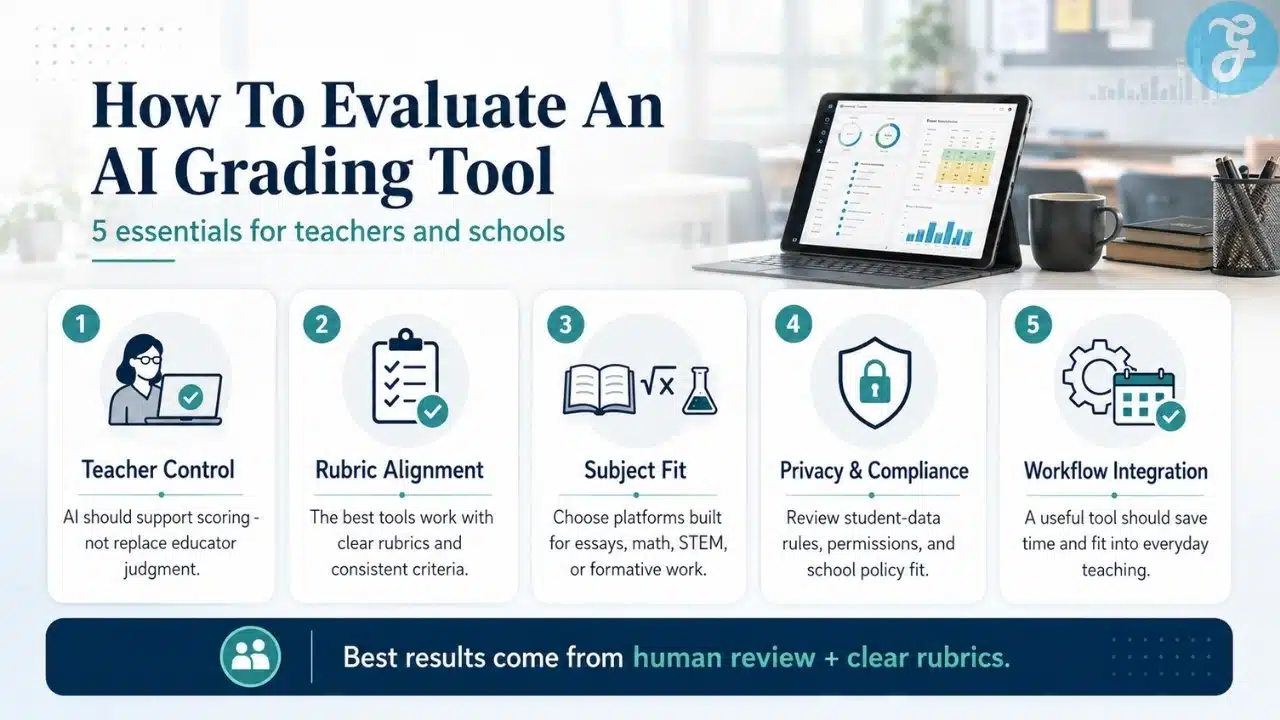
| Teacher control | Preference for tools that support educators instead of fully replacing human judgment |
This approach gives the list a practical angle. The goal is not to celebrate companies just because they use the word AI. The goal is to identify U.S. SMEs and startups that are actually building tools around grading and assessment.
Top 10 AI Grading & Assessment SMEs And Startups In The United States
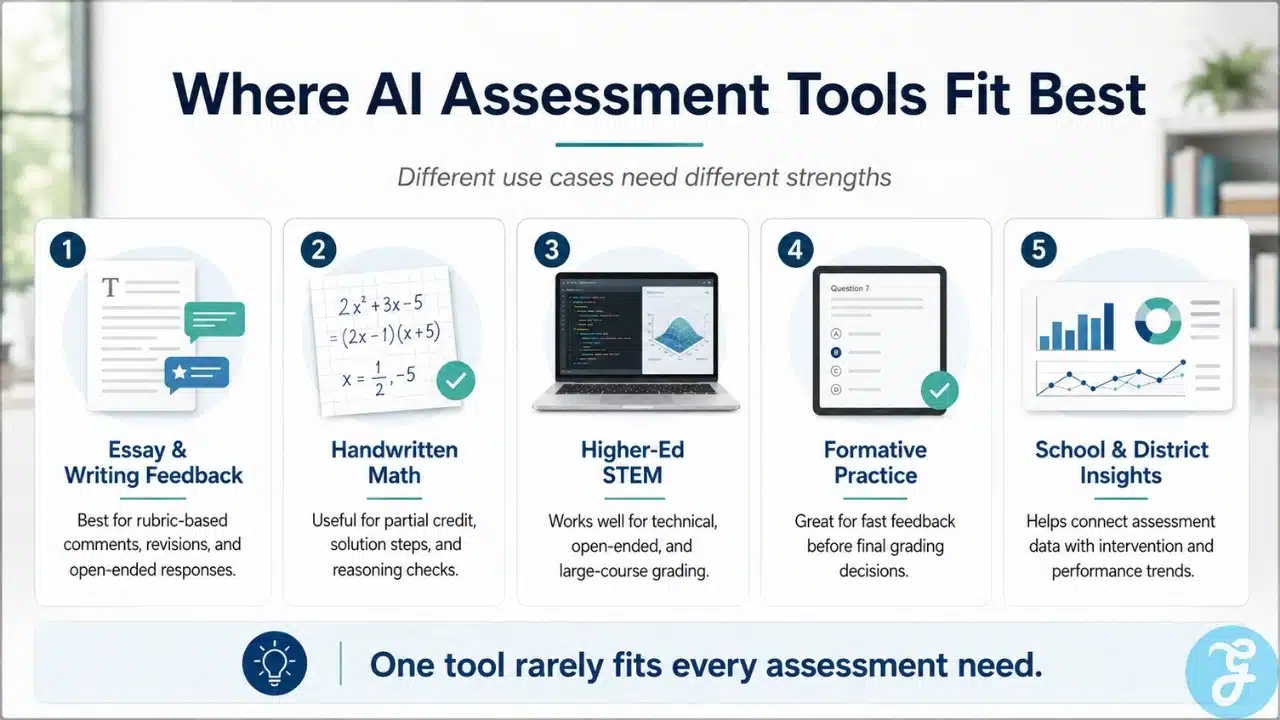
The companies below serve different parts of the assessment market. Some focus on essays, some on handwritten math, some on STEM courses, and others on district-wide analytics or formative feedback. That variety is exactly why the United States currently leads this niche.
1. Pensive
Headquarters: San Francisco, California, United States
Website: https://www.pensive.com
Email: hello@pensive.com
Pensive is one of the strongest U.S.-based startups focused directly on AI-assisted grading for higher education. Its platform supports STEM courses, handwritten work, rubric-aligned scoring, feedback, and instructor review. This makes it highly relevant for universities where large technical classes can create serious grading pressure. Pensive is especially useful because it focuses on the full grading workflow instead of treating assessment as a simple answer-checking task.
Best Feature/For:
- Higher-ed STEM grading
- Open-ended, handwritten, and technical assessment workflows
Why We Chose It:
- Strong fit with AI-assisted grading in colleges and universities
- Clear focus on STEM assessment challenges
- Human-in-the-loop model keeps instructors involved
- Strong startup momentum in a difficult grading category
Things to consider:
- Better suited for higher education than small K-12 classrooms
- Institutions should test how well it fits their existing LMS and grading process
2. Frizzle
Headquarters: New York City, New York, United States
Website: https://www.frizzle.com
Email: Not publicly listed
Frizzle focuses on one of the most painful classroom grading problems: handwritten math assignments. Instead of only checking whether the final answer is right or wrong, Frizzle is designed to read student work, understand multiple solution paths, and support partial-credit grading. That is important because math assessment is often about reasoning, not just the final number. For K-12 math teachers drowning in stacks of paper, Frizzle offers a very focused and practical use case.
Best Feature/For:
- K-12 math teachers
- Handwritten math work, solution steps, and partial-credit grading
Why We Chose It:
- Very clear AI grading use case
- Focused on handwritten math rather than generic classroom AI
- Useful for teachers who need faster feedback on student reasoning
- Strong fit for formative and standards-based math assessment
Things to consider:
- Public email is not clearly listed
- The product is more specialized for math than broad classroom grading
3. CoGrader
Headquarters: New York, New York, United States
Website: https://cograder.com
Email: privacy@cograder.com
CoGrader is an AI essay grading and feedback platform built for teachers who work with essays, open-ended responses, rubrics, and writing-heavy assignments. It helps teachers generate first-pass feedback and suggested scores while keeping the educator in control. This is especially useful in English, social studies, AP writing, and standards-aligned writing instruction. CoGrader stands out because it directly addresses one of the biggest teacher workload problems: giving detailed feedback at scale.
Best Feature/For:
- Essay grading and open-ended written responses
- K-12 teachers using rubrics and standards-based writing feedback
Why We Chose It:
- Strong focus on writing assessment
- Useful for rubric-based grading workflows
- Publicly visible adoption among teachers and schools
- Helps reduce grading time while preserving educator review
Things to consider:
- Best suited for writing-heavy subjects
- Teachers should review AI-suggested feedback before sharing it with students
4. GradingPal
Headquarters: Beverly Hills, California, United States
Website: https://www.gradingpal.com
Email: hello@gradingpal.com
GradingPal is an AI-powered grading assistant built for K-12 teachers. It supports grading across essays, handwritten work, worksheets, exams, quizzes, problem sets, and other classroom submissions. That broad coverage makes it useful for educators who do not want one tool for essays, another for math, and another for worksheets. GradingPal earns its place because it approaches grading as a daily classroom workflow rather than a narrow single-subject feature.
Best Feature/For:
- K-12 teachers who need a broad grading assistant
- Essays, worksheets, quizzes, tests, and handwritten submissions
Why We Chose It:
- Covers multiple assignment types
- Built specifically around teacher workload reduction
- Supports rubric-aligned scoring and feedback
- Clear U.S. business address and public contact email
Things to consider:
- Schools should review privacy and district approval requirements before adoption
- Broad tools still need clear rubrics to produce useful feedback
5. EssayGrader
Headquarters: South Carolina, United States
Website: https://www.essaygrader.ai
Email: hello@essaygrader.ai
EssayGrader is a small U.S.-based AI essay grading platform focused on rubric-based scoring and writing feedback. It is built for teachers who want to grade essays faster while still using their own rubrics and expectations. The platform is especially relevant for middle school, high school, and higher-ed writing assignments. EssayGrader is a good SME pick because it has a clear niche, public contact details, and a focused product around essay assessment.
Best Feature/For:
- Essay grading for teachers and professors
- Rubric-based scoring and writing feedback
Why We Chose It:
- Clear SME profile with a focused AI grading product
- Public company contact details
- Useful for teachers handling large batches of essays
- Strong fit for writing-heavy classrooms
Things to consider:
- It is more focused on written work than broader assessment formats
- Educators should still review scores for nuance, tone, and classroom context
6. Edia
Headquarters: San Francisco, California, United States
Website: https://edia.app
Email: Not publicly listed
Edia is a K-12 AI platform focused on math outcomes, attendance, MTSS, and district-level student support. It is broader than a simple AI grader, but its automatic grading and feedback features make it relevant to assessment workflows. Edia is especially useful for school districts because it connects student work, performance data, intervention, and analytics. That makes it valuable for administrators who want assessment data to lead to action rather than just another score in the system.
Best Feature/For:
- K-12 districts focused on math improvement
- Assessment-driven intervention and student performance tracking
Why We Chose It:
- Strong district-level use case
- Connects grading and feedback with learning outcomes
- Focuses on math, attendance, and intervention
- U.S.-based private edtech company with strong market visibility
Things to consider:
- It is broader than a pure grading tool
- Public email is not clearly listed, so districts may need to use the official demo route
7. Kira Learning
Headquarters: Palo Alto, California, United States
Website: https://www.kira-learning.com
Email: support@kira-learning.com
Kira Learning is an AI education platform that includes grading, feedback, tutoring, curriculum support, and student progress visibility. It is designed more like an AI-powered teaching and learning system than a single grading app. That makes it useful for schools and districts that want grading connected to curriculum, mastery tracking, and classroom support. Kira is especially relevant because assessment does not sit alone in real classrooms; it connects to instruction, intervention, and student growth.
Best Feature/For:
- K-12 schools and districts
- AI-assisted grading, feedback, tutoring, and mastery tracking
Why We Chose It:
- Strong platform-level approach
- Includes grading as part of a wider teaching workflow
- Useful for districts looking beyond single-task AI tools
- Public support email and clear U.S. company presence
Things to consider:
- Maybe more than a single teacher needs
- Districts should plan onboarding carefully because platform adoption requires a workflow change
8. Packback
Headquarters: Chicago, Illinois, United States
Website: https://www.packback.co
Email: help@packback.co
Packback is an instructional AI platform focused on writing, research, discussion, feedback, and student engagement. Its Deep Dives grading assistant uses AI to suggest rubric-based scores while allowing instructors to make the final decision. That human-controlled model is important because writing assessment requires judgment, context, and academic nuance. Packback is especially strong for higher education courses where writing, discussion, and research assignments create heavy grading and feedback demands.
Best Feature/For:
- Higher-ed writing and research assignments
- Rubric-supported feedback and instructor-reviewed grading
Why We Chose It:
- Strong focus on instructional AI and writing assessment
- Keeps instructors in control of final grading
- Clear headquarters and public support email
- Useful for colleges that need scalable feedback without losing academic oversight
Things to consider:
- Less focused on K-12 classroom grading
- Best value appears in writing, research, and discussion-based courses
9. Snorkl
Headquarters: San Diego, California, United States
Website: https://snorkl.app
Email: support@snorkl.app
Snorkl is a multimodal AI feedback platform that helps students explain their thinking through voice, writing, drawing, and uploaded work. It is more formative-assessment focused than traditional gradebook automation. That makes it especially useful in classrooms where teachers want to understand how students think, not just whether they got the answer right. Snorkl stands out because it treats assessment as evidence of reasoning, which is exactly where many standard grading tools fall short.
Best Feature/For:
- Multimodal formative assessment
- Teachers who want students to explain their reasoning
Why We Chose It:
- Strong focus on authentic student thinking
- Supports speech, drawing, writing, and visual explanations
- Useful for math, science, and concept-heavy subjects
- Gives teachers insight into misconceptions and reasoning patterns
Things to consider:
- Not primarily a traditional grading automation tool
- Best suited for formative feedback and reasoning visibility
10. SchoolVision.AI
Headquarters: Salt Lake City, Utah, United States
Website: https://schoolvision.ai
Email: info@schoolvision.ai
SchoolVision.AI offers AI-powered grading, assessment, and campus intelligence for schools. Its platform combines grading support with dashboards, student data, and institutional insights. That makes it different from teacher-first tools because it also speaks to administrators who need visibility across classrooms and schools. SchoolVision.AI earns a place here because it directly positions itself around AI grading and assessment while also connecting those outputs to broader school decision-making.
Best Feature/For:
- Schools needing grading plus administrative insight
- K-12 institutions looking for assessment and campus intelligence
Why We Chose It:
- Clear AI grading and assessment positioning
- Public headquarters and email address
- Useful for school-wide visibility
- Strong fit for institutions that want more than a single classroom tool
Things to consider:
- May be broader than what individual teachers need
- Buyers should confirm the depth of grading features for their exact subject areas
An Overview Of United States AI Grading & Assessment SMEs
The U.S. market is not built around one type of grading tool. It includes essay graders, handwritten math graders, STEM assessment platforms, multimodal feedback tools, and district-level analytics systems. That variety is useful, but it also makes buyer selection more complicated.
Overview Comparison Table
Here is a quick side-by-side view of where each company fits best.
| Company | Best Fit | Core Assessment Use Case | Strongest Differentiator |
| Pensive | Higher education | STEM grading and handwritten technical responses | Strong focus on university STEM assessment |
| Frizzle | K-12 math | Handwritten math grading | Step-level reasoning and partial-credit support |
| CoGrader | K-12 writing | Essays and open-ended responses | Rubric-based essay feedback |
| GradingPal | K-12 classrooms | Multi-format grading | Broad grading coverage across assignments |
| EssayGrader | K-12 and higher-ed writing | Essay scoring and feedback | Small SME focused on writing assessment |
| Edia | K-12 districts | Math assessment and intervention | Connects assessment with district outcomes |
| Kira Learning | K-12 districts | Grading, feedback, tutoring, and mastery | Full AI teaching and learning platform |
| Packback | Higher education | Writing, research, and discussion grading | Instructor-reviewed AI scoring suggestions |
| Snorkl | K-12 classrooms | Multimodal formative feedback | Makes student reasoning visible |
| SchoolVision.AI | Schools and campuses | Grading, assessment, and intelligence | Assessment plus administrative dashboards |
The best choice depends on whether a school wants to reduce grading time, improve feedback quality, understand student reasoning, or connect assessment data to intervention.
Our Top 3 Picks And Why?
1. Pensive
Pensive is the strongest pick for higher-ed STEM grading. It targets one of the hardest assessment problems: open-ended, technical, and handwritten responses in large university courses.
2. Frizzle
Frizzle is the best pick for handwritten K-12 math grading. Its focus on reasoning, multiple solution paths, and partial credit makes it highly practical for math teachers.
3. CoGrader
CoGrader is the strongest pick for K-12 essay grading. It directly addresses the feedback burden that makes writing instruction so time-consuming for teachers.
These three stand out because they do not feel generic. Each one has a sharp use case, a clear audience, and a real classroom pain point.
Why Are AI Grading & Assessment SMEs Booming In The United States?
AI grading tools are booming in the United States because the pressure on educators is painfully obvious. Teachers are overloaded, districts are under pressure to prove outcomes, colleges are managing larger classes, and students expect faster feedback. That creates a market where grading support is not just a convenience. It becomes part of how schools protect teacher time and improve learning feedback loops.
What’s Their Secret Sauce?
The best U.S. companies in this niche are not simply saying, “Let AI grade everything.” Their stronger message is more practical: let AI handle the repetitive first pass, organize evidence, generate draft feedback, surface patterns, and give teachers more time for judgment.
That distinction matters because grading is not only a technical task. It is also a trust task.
Here is what makes these companies special:
- Teacher-controlled workflows: The strongest platforms keep educators involved in the final decision.
- Rubric alignment: Rubrics help AI feedback become more structured, consistent, and explainable.
- Faster feedback cycles: Students can revise while the learning moment is still fresh.
- Support for messy real work: Handwriting, open-ended answers, drawings, speech, and reasoning are harder than multiple-choice grading.
- Better use of assessment data: Districts want grading data that leads to intervention, not just another number.
This is why the U.S. market is moving quickly. The best companies are not trying to remove the teacher. They are trying to remove the weekend grading pile.
The Human Question Behind The Next Grade
The future of AI Grading & Assessment in the United States will not be decided only by accuracy rates, funding rounds, or product demos. It will be decided by trust. Schools will ask whether the scoring is fair, whether the data is protected, whether teachers can override the system, and whether students understand how their work is being evaluated.
Here is the uncomfortable truth: faster grading can also create faster mistakes if schools treat AI output like unquestionable authority. A clean dashboard does not automatically mean the feedback is fair, useful, or context-aware. AI can miss tone, growth, effort, language background, classroom history, and the quiet human details that matter in real learning.
Personally, I think the strongest companies in this space will be the ones that respect the teacher’s role. AI can read faster, sort faster, compare faster, and draft feedback faster. But it should not become the final judge of a student’s ability. The winners will be the SMEs that give teachers back their time without taking away their judgment.
Frequently Asked Questions (FAQs) About AI Grading & Assessment SMEs In The United States
What Makes AI Grading & Assessment Different From Traditional Grading?
AI grading and assessment tools use artificial intelligence to help evaluate student work, suggest scores, generate feedback, and identify performance patterns. Traditional grading depends entirely on manual review, while AI-supported grading can speed up repetitive parts of the process.
Can AI Grading Tools Replace Teachers?
No, they should not replace teachers. The best tools support teachers by saving time and improving feedback consistency, but final grading decisions should remain under educator control.
Why Was The United States Selected For This List?
The United States was selected because it has the strongest visible concentration of verified SMEs and startups working directly in AI grading, assessment, feedback, and education analytics. It also has a large K-12 and higher-ed market where grading workload is a serious problem.
Which Company Is Best For Handwritten Math Grading?
Frizzle is the strongest pick for handwritten K-12 math grading. Pensive is also highly relevant for handwritten STEM assessment in higher education.
Are AI Grading Tools Safe For Student Data?
Safety depends on the vendor, privacy policy, school agreement, and district approval process. Schools should review FERPA, COPPA, data retention, model training policies, teacher control, and whether student information is shared with third-party AI providers.