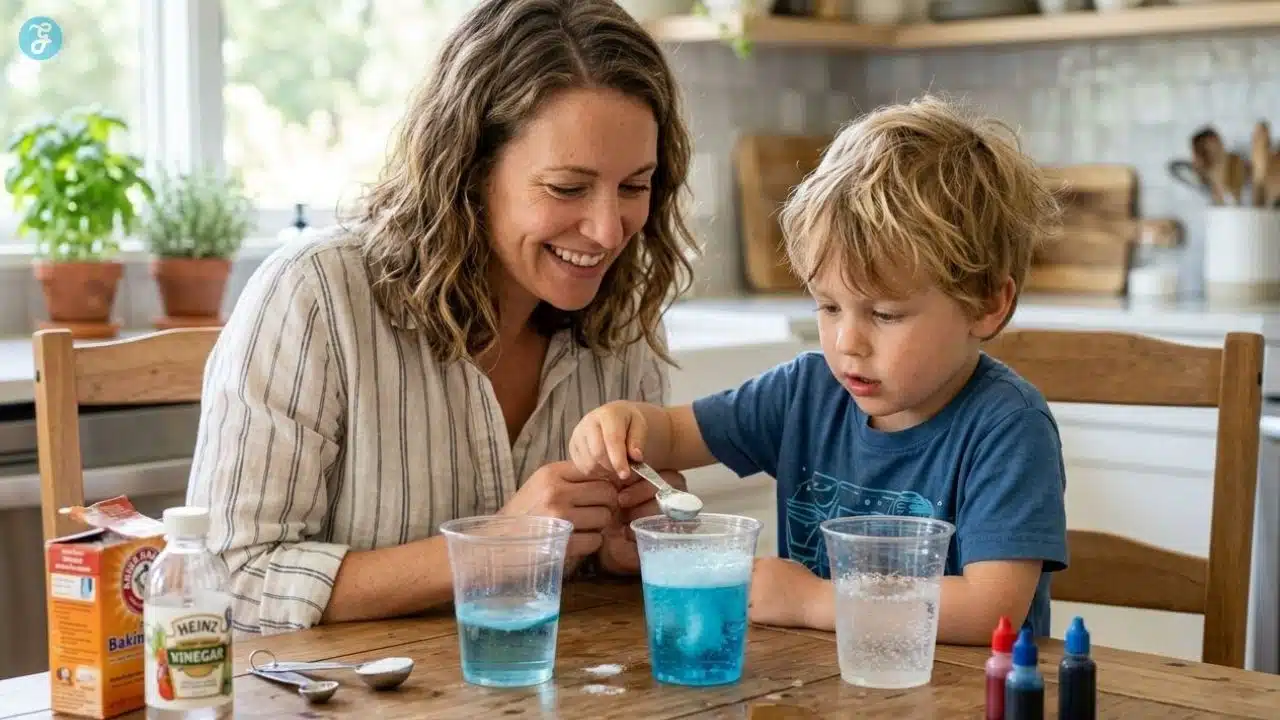
STEM learning for kids should not begin with expensive robotics kits, scary math drills, or parents pretending they understand coding better than they actually do. I have seen this mistake often while working around content, e-learning, kids’ learning games, and digital products. Children do not fall in love with science, technology, engineering, and math because adults throw complicated words at them.
They get interested when they can touch, build, test, break, fix, imagine, and ask, “What happens if I try this?” That is the real starting point. A child who watches ice melt, builds a tower with blocks, counts coins, asks why the moon changes shape, designs a simple image, or plays a logic-based learning game is already entering the STEM world. The job of parents and educators is not to force that curiosity. The job is to protect it, guide it, and give it better tools.
And in 2026, that matters more than ever. OECD’s PISA 2022 results showed that average math performance across OECD countries fell by a record 15 points from 2018 to 2022, while science performance did not change significantly. In the United States, 2024 NAEP results showed that eighth-grade science scores were 4 points lower than in 2019. These numbers are not just statistics. They are a reminder that children need stronger, earlier, and more practical STEM support at home and in school.
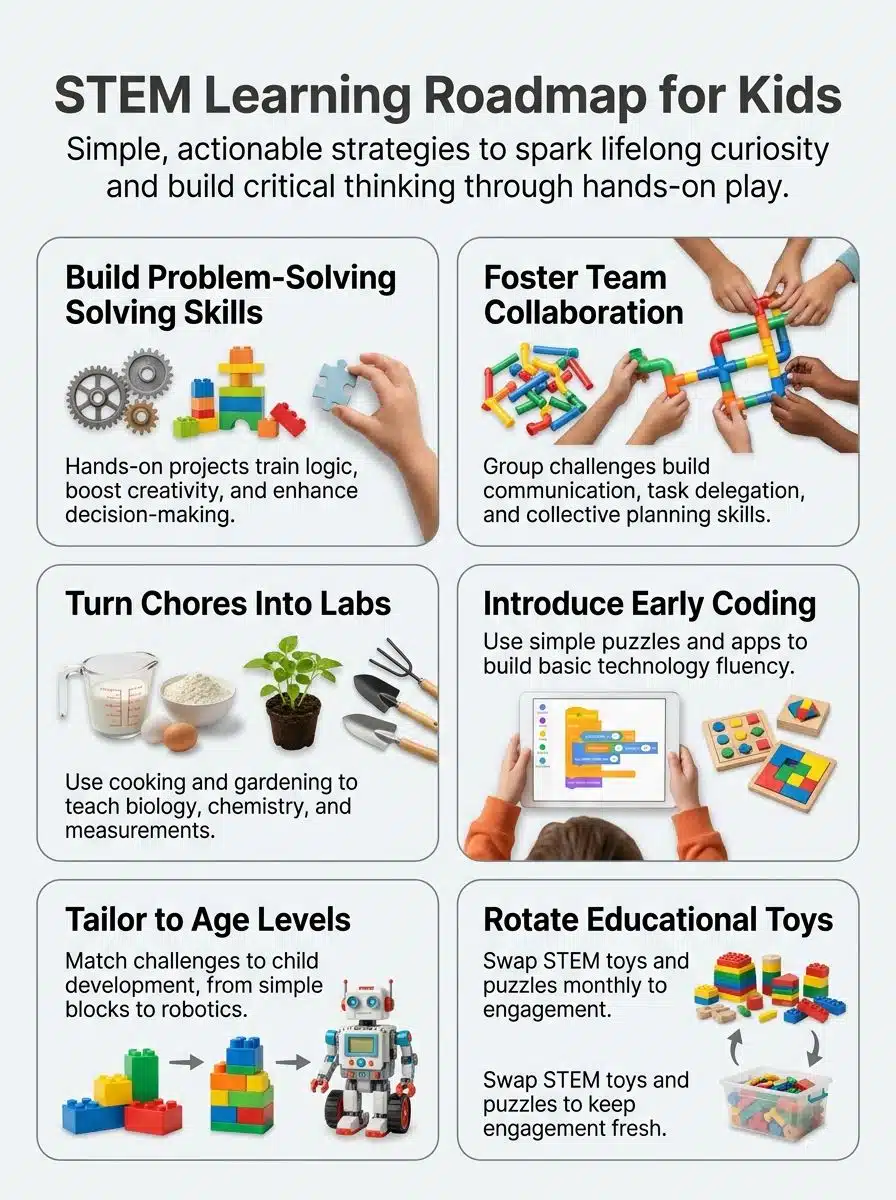
What Is STEM Learning for Kids?
STEM stands for science, technology, engineering, and mathematics. But for children, STEM should not feel like four separate subjects sitting in four separate boxes. The best STEM education children experience usually feels like solving a real problem.
A child plants seeds and watches which one grows faster. That is science. They measure the height every week. That is math. They record photos or make a simple chart. That is technology. They built a small support stick for the plant. That is engineering.
That is why I prefer to explain STEM learning for kids as a thinking system, not just a school subject.
| STEM Area | What It Means for Kids | Simple Example |
| Science | Asking questions and observing | Why does salt melt ice? |
| Technology | Using tools to create or solve | Making a simple digital poster |
| Engineering | Building, testing, and improving | Creating a paper bridge |
| Math | Measuring, counting, comparing | Tracking plant growth weekly |
The National Academies’ work on PK–5 science and engineering also supports this practical view. It emphasizes that young children are naturally curious and can engage meaningfully with science and engineering when learning is designed around their ideas, interests, and observations.
From my experience, this is where many adults go wrong. We try to “teach STEM” before we let children experience STEM. A child does not need to memorize the word “density” before testing which objects float. They can discover the idea first. The vocabulary can come later.

Why STEM Learning for Kids Matters Now
STEM matters because it teaches children how to think when the answer is not obvious. That is the part I care about most.
A good STEM activity teaches a child to ask questions, compare results, test ideas, notice patterns, and try again after failure. These skills matter far beyond science class. They help children become better problem-solvers in school, daily life, future careers, and creative work.
The career side also matters. The U.S. Bureau of Labor Statistics projects data scientist employment to grow 34% from 2024 to 2034, much faster than the average for all occupations. That does not mean every child must become a data scientist. It does mean that future work will keep rewarding people who can understand systems, numbers, technology, and problem-solving.
But I would never sell STEM to a six-year-old by saying, “This will help your career in 2040.” That is adult language.
For kids, STEM should sound more like:
- Can I build this?
- Can I test this?
- Can I make it better?
- Why did it fail?
- What should I try next?
That last question is important. STEM gives children a healthier relationship with failure. A bridge that collapses is not a disaster. It is feedback. A robot that turns the wrong way is not the end. It is a debugging moment. A math mistake is not proof that a child is “bad at math.” It is a place to understand the pattern better.
The Biggest Problem With How We Teach STEM
The biggest problem is not that children dislike STEM. The problem is that adults often make STEM feel lifeless. Too many children meet STEM through worksheets before wonder. They see math as pressure, science as memorization, technology as screen time, and engineering as something only “technical kids” do. That is not how it should work.
In our work around digital media, e-learning, and kids’ learning products at Editorialge Media LLC, I have learned one thing clearly: children engage better when learning feels active. They need stories, games, visuals, questions, small challenges, and visible progress.
This is one reason platforms like Edutorial’s kids’ learning games can support STEM when used properly. The goal is not to replace hands-on learning with screens. The goal is to use digital learning where it helps children practice, explore, and stay curious.
The same applies to creative tools. A child learning about planets, weather, animals, inventions, or future cities can use an AI image creation tool to visualize ideas and then discuss what is realistic, what is creative, and what needs correction. That turns digital creation into thinking, not just decoration.
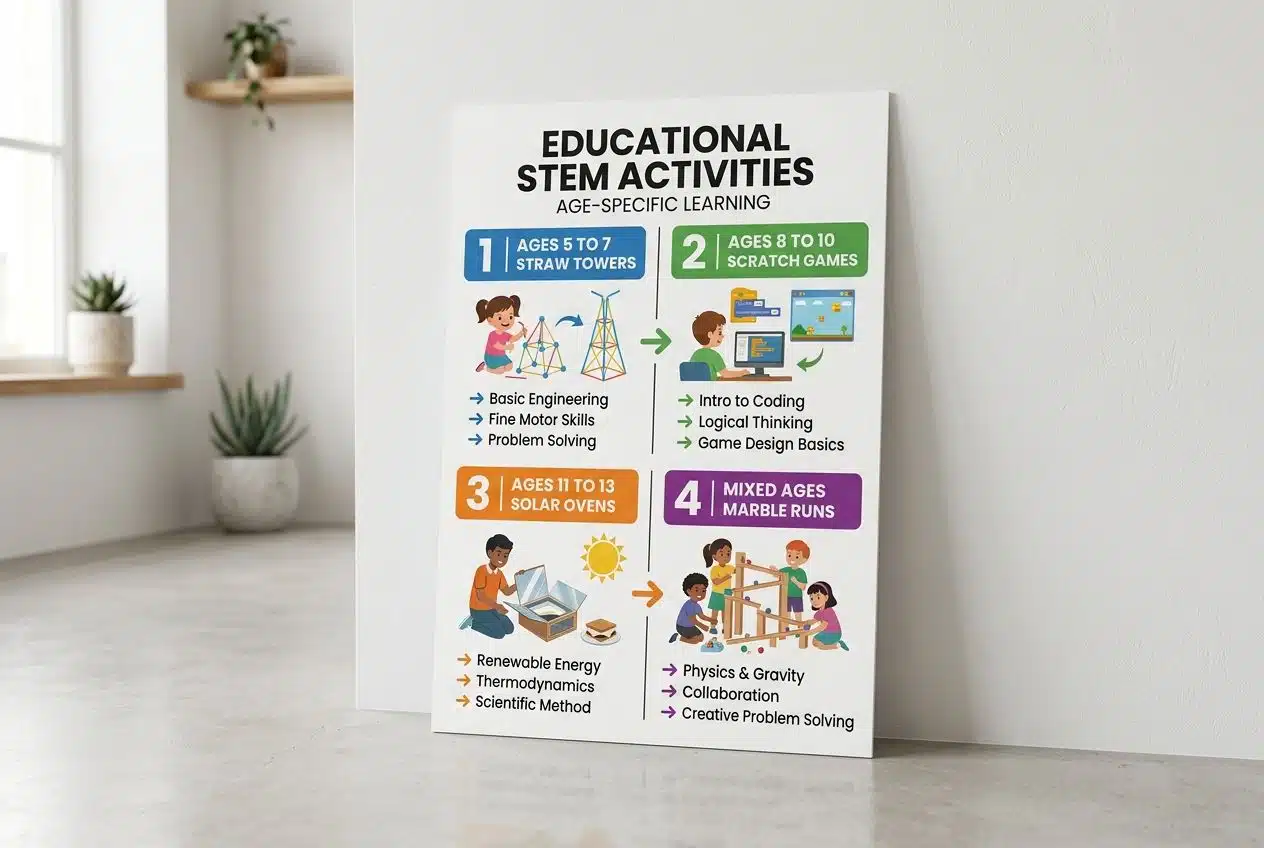
A Practical Age-Wise STEM Learning Roadmap
A strong STEM roadmap should match a child’s age, attention span, confidence level, and learning style. Parents often rush this part. They buy advanced kits too early or push abstract ideas before the child has enough real-world experience. Here is a better age-wise path.
Ages 3–5: Build Curiosity First
At this stage, STEM should be sensory, playful, and simple. Children learn through touching, pouring, stacking, sorting, counting, watching, and asking endless questions. This is not the age for heavy instruction. This is the age for noticing.
Good activities include:
- Sorting toys by size, color, or shape
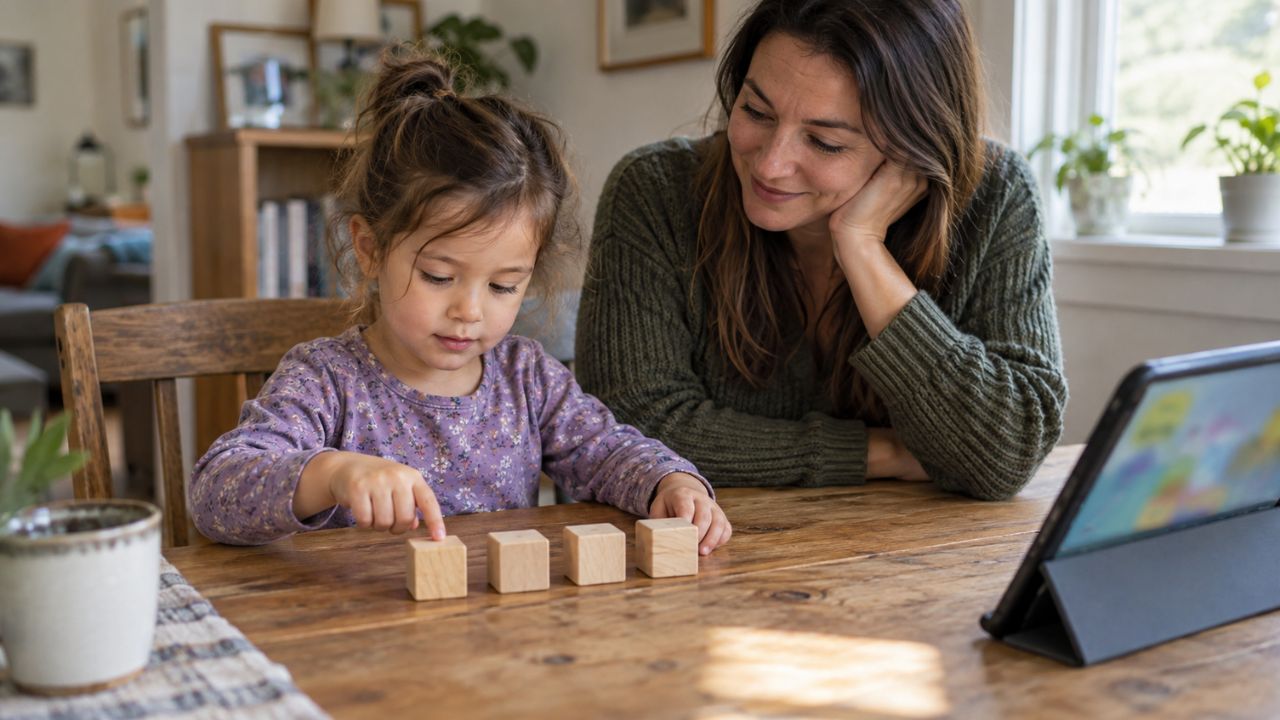
- Counting snacks, steps, blocks, or spoons
- Mixing water and food coloring
- Watching shadows move
- Growing seeds in cotton or soil
- Building towers with blocks
- Comparing heavy and light objects
The What Works Clearinghouse guide on teaching math to young children recommends practical, evidence-based early math activities for preschool and kindergarten children, especially to build a strong foundation for later math learning.
For parents, the best question at this stage is not, “Can you give me the correct answer?” A better question is: “What do you notice?”
That one question can open the door to real STEM thinking.
Ages 6–8: Add Simple Challenges
This is a great age for kids’ STEM activities because children can follow basic steps while still enjoying play.
Good activities include:
- Paper bridge building
- Magnet experiments
- Sink-or-float tests
- Weather charts
- Simple measuring games
- Shape hunts around the house
- Beginner logic puzzles
- Pattern games
At this stage, I like using the “predict, test, talk” method. First, ask the child what they think will happen. Then let them test it. After that, ask them to explain what they saw. For example, before putting objects in water, ask: “Which one do you think will float?”
The child predicts. Then they test. Then they explain. That simple routine builds scientific thinking without making the activity feel like schoolwork.
Ages 9–12: Move Into Projects
This is where children can start connecting ideas. They can compare results, improve designs, use basic tools, and explain cause and effect more clearly. They are also old enough to handle longer projects if the task feels meaningful.
Good activities include:
- Beginner coding games
- Scratch-style animations
- Kitchen chemistry experiments
- DIY weather stations
- Model house building
- Paper airplane testing
- Simple robotics kits
- Budgeting a small project
- Creating diagrams or digital visuals
This is also a strong age for creative STEM. A child can design a future city, create a space habitat concept, make a digital science poster, or visualize an invention. The important thing is reflection.
Do not stop at “That looks nice.”
Ask:
- Why did you design it this way?
- What problem does it solve?
- What part is realistic?
- What would you improve?
That is where creativity becomes STEM thinking.
Ages 13–18: Connect STEM to Real Life
Teenagers need relevance. They do not want adults saying, “You’ll need this someday” without explaining why. This is the age to connect STEM to careers, products, social problems, digital tools, and real-world systems.
Strong learning areas include:
- AI and ethics
- Game development
- Cybersecurity
- Climate science
- Renewable energy
- Robotics
- Data analysis
- App design
- Architecture
- Health technology
- Agricultural technology
- Financial literacy
Teenagers should also start building a simple STEM portfolio. It does not need to be fancy. It can include small coding projects, science fair ideas, digital designs, robotics builds, research slides, data charts, or problem-solving projects.
A portfolio helps teens see proof of growth. That matters because STEM confidence often grows from finished projects, not just good grades.
How to Build STEM Learning at Home
Parents do not need a home laboratory. They do not need to buy every toy with “STEM” printed on the box. They need a repeatable system.
Here is a simple weekly structure:
| Weekly Habit | Time Needed | Example |
| Ask one question | 5 minutes | Why do some objects float? |
| Try one activity | 20–30 minutes | Test floating and sinking |
| Build one thing | 20–40 minutes | Make a foil boat |
| Record one result | 5 minutes | Draw or write what happened |
| Discuss one lesson | 5 minutes | What would you change next time? |
The system is simple: question, prediction, activity, result, reflection. This works because children learn better when they can connect action with explanation.
For example, do not just tell a child that wider boat shapes can hold more weight. Give them foil, coins, and water. Let them build three boats. Let one sink. Let them laugh. Then ask why the best one worked. That moment will stay longer than a definition.
Best Kids STEM Activities by Learning Goal
Not all STEM activities build the same skill. Some are better for curiosity. Some are better for logic. Some build patience. Some build math confidence. Parents should choose activities based on the learning goal, not just because the activity looks impressive online.
| Learning Goal | Best Activity Type | Why It Works |
| Curiosity | Simple science experiments | Encourages observation and questions |
| Math confidence | Games, measuring, counting | Makes numbers feel useful |
| Creativity | Design challenges | Builds flexible thinking |
| Logic | Coding puzzles | Teaches sequence and cause-and-effect |
| Patience | Engineering builds | Normalizes testing and failure |
| Communication | Project explanation | Helps children express ideas clearly |
The best kids STEM activities are usually not the flashiest ones. They are the ones where a child thinks, tries, explains, and improves.
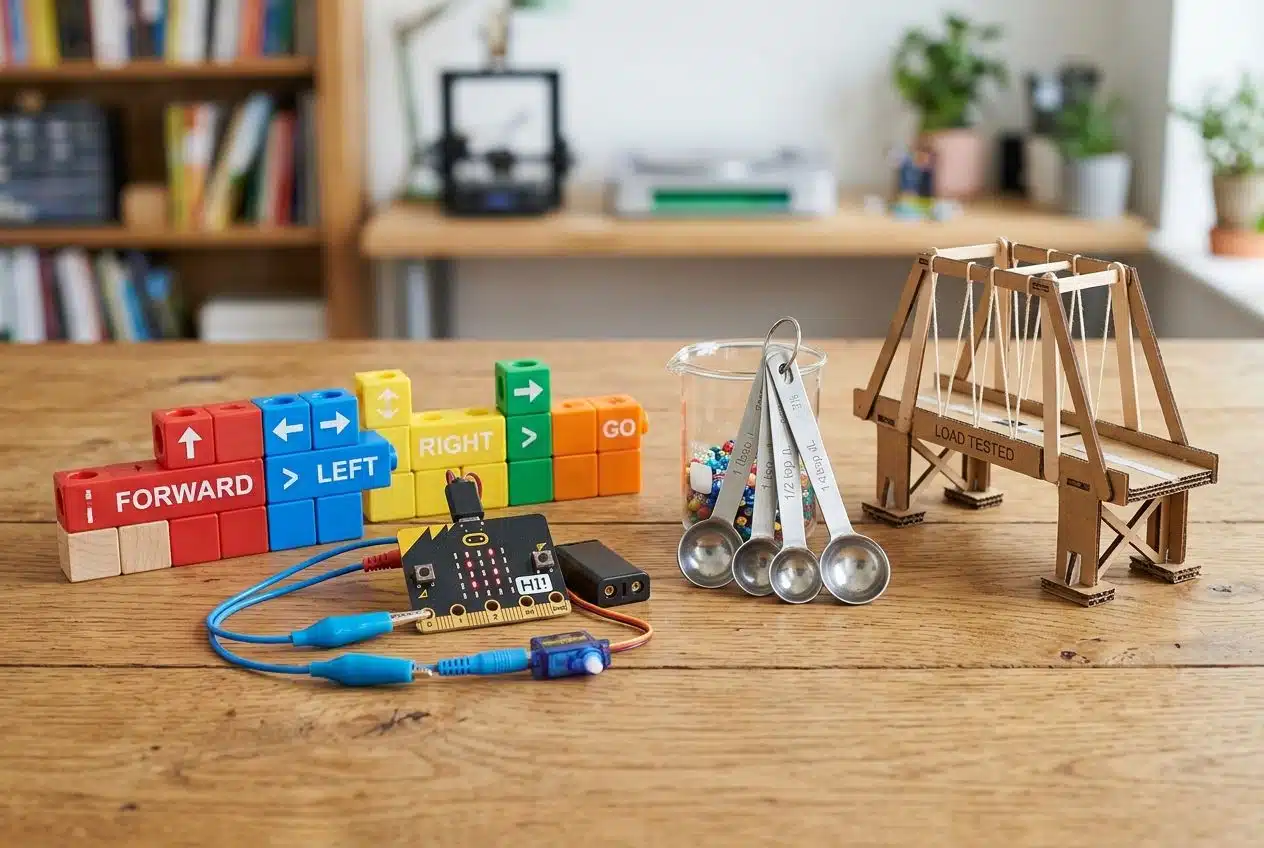
STEM Education Children Can Actually Enjoy
If STEM feels like punishment, children will avoid it. That is why STEM education for children must include play, choice, and visible progress. A child should feel some ownership of the process.
Here are the rules I use when thinking about STEM learning design:
Start With a Question, Not a Lecture
Do not begin with, “Today we are learning about buoyancy.”
Begin with, “Can you make a boat that holds 20 coins?”
Science can come after the child cares about the problem.
Use Real Objects
STEM becomes easier when children can touch the idea. Use paper, water, cups, coins, tape, cardboard, magnets, rubber bands, leaves, toys, blocks, and kitchen tools. Simple materials often create better learning than expensive kits because children feel free to experiment.
Let Children Make Mistakes
A failed tower teaches balance. A broken design teaches structure. A wrong prediction teaches observation. If adults correct everything too quickly, children lose the chance to think.
Ask Children to Explain
This is one of the most underrated parts of STEM learning.
Ask:
- What happened?
- Why do you think it happened?
- What did you change?
- What would you try next?
When children explain, they organize their thinking.
Connect It to Daily Life
STEM is everywhere. Cooking uses chemistry and measurement. Sports use physics. Video games use logic and design. Gardening uses biology. Shopping uses math. Weather uses science. Apps use technology. Once children see that, STEM stops feeling like a school-only subject.
How to Raise Science Tech Kids Without Overusing Screens
Technology is part of modern STEM, but not every screen activity is STEM. A child watching random videos for two hours is not doing STEM just because the video has a robot in it. A child using a tool to build, code, design, research, record, or explain something is much closer to real STEM learning.
For science tech kids, I use three simple rules:
- The child should create more than consume.
- The activity should have a clear learning purpose.
- An adult should discuss the result when possible.
The American Academy of Pediatrics recommends family media plans that include screen-free zones, one-screen-at-a-time habits, and turning off autoplay and notifications. That fits well with STEM learning because digital tools should support thinking, not hijack attention.
A good digital STEM activity might look like this:
- Watch one short video about bridges.
- Build a bridge with paper.
- Take a photo of the result.
- Improve the design.
- Explain what changed.
That is far stronger than passive screen time.
Encouraging Girls in STEM: Strategies That Work
Girls do not need fake encouragement. They need real access, real confidence, and real opportunities to build.
UNESCO reports that women make up only 35% of STEM graduates globally, a figure unchanged in ten years. That tells us the problem is not ability. It is exposure, culture, confidence, and opportunity.
Parents and educators can help by doing practical things:
- Let girls build, code, test, and lead.
- Show women scientists, engineers, founders, doctors, designers, and technologists.
- Avoid saying boys are “naturally better” at technical things.
- Praise persistence and strategy, not just neat work.
- Give girls access to tools early.
- Encourage questions without making them feel embarrassed.
- Let girls see STEM in health, design, climate, gaming, media, space, business, and everyday life.
Math Fluency Building Strategies
Math fluency is not just speed. This is where many parents get confused. A child who answers quickly but does not understand the idea is not truly fluent. Real math fluency means a child can use numbers accurately, flexibly, and confidently.
The National Academies’ work on mathematical proficiency explains that procedural fluency and conceptual understanding should not be treated as enemies. Understanding helps students learn skills more easily and forget them less quickly.
At home, math fluency can grow through simple daily habits:
- Count money while shopping.
- Estimate the total before checkout.
- Double a recipe.
- Measure furniture before moving it.
- Compare prices.
- Count steps or minutes.
- Use dice games.
- Practice skip counting with movement.
Short, regular practice works better than long, stressful worksheets.
Science Experiments for Home Learning
Home science should be safe, simple, and repeatable. Parents often think science experiments need dramatic results. They do not. The best experiments are the ones children can observe, repeat, and explain.
| Experiment | Concept | Simple Question |
| Sink or float | Density | Why do some objects float? |
| Melting ice | Heat transfer | What melts ice faster? |
| Seed growth | Biology | What helps a plant grow? |
| Paper airplane test | Forces | Which design flies farther? |
| Shadow tracking | Earth and light | Why does the shadow move? |
| Homemade ramp | Motion | What makes the toy car go faster? |
The real learning happens after the experiment.
Ask:
- What did you think would happen?
- What happened?
- What surprised you?
- What would you change next time?
Engineering Toys Worth Investing In
Not every toy labeled “STEM” is worth buying. Some toys look impressive but offer very little learning after the first use. A good engineering toy should let children build, rebuild, test, and improve.
Look for toys that offer:
- Open-ended building
- Durable parts
- Multiple design options
- Age-appropriate challenge
- Clear instructions
- Room for creativity
- Problem-solving value
Blocks, magnetic tiles, gear sets, marble runs, construction sets, and simple mechanical kits can be more valuable than flashy one-time gadgets. Before buying, ask one question:
“Can my child use this in more than one way?”
If the answer is no, it may not be worth the money.
Robotics Kits for Kids Explained
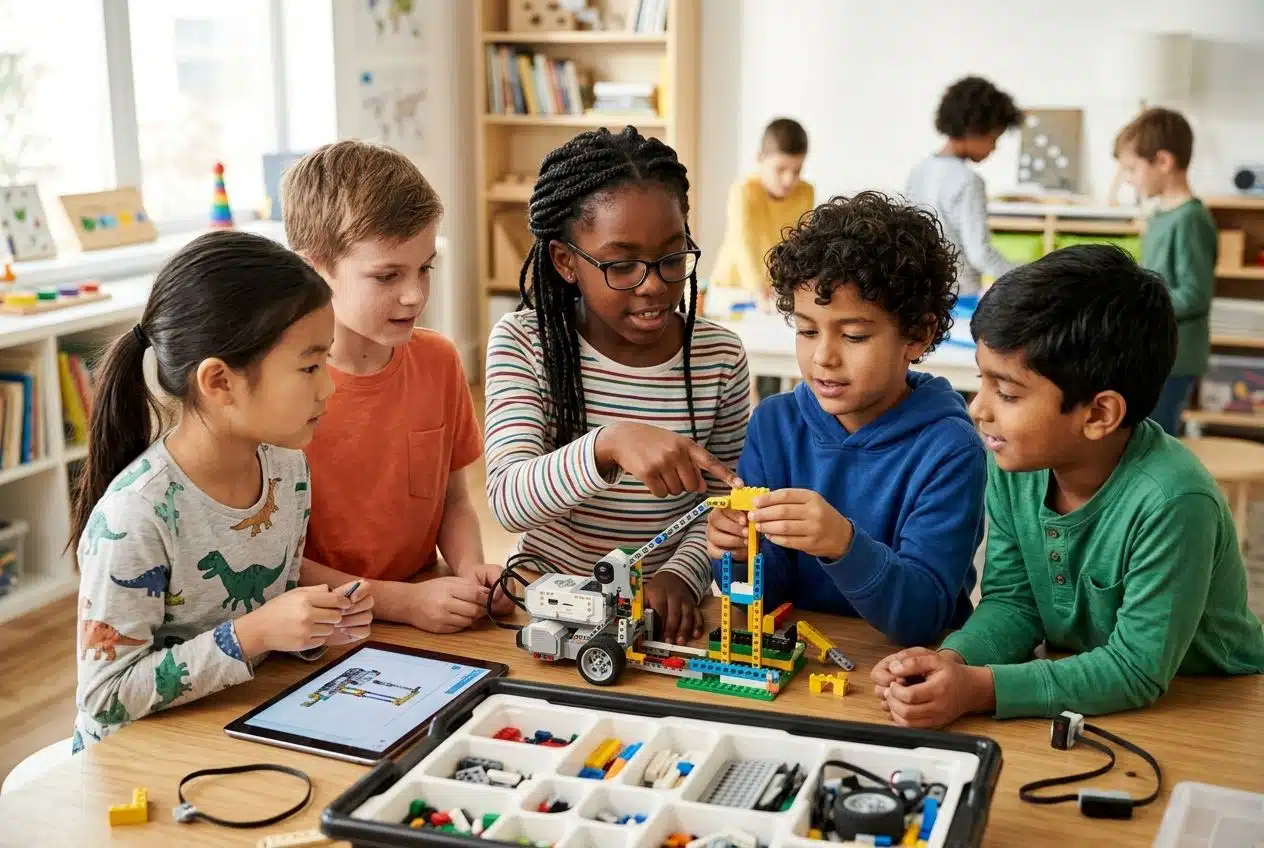
Robotics can be excellent for STEM learning, but only when matched to the child’s age and patience level. For younger children, robotics should focus on direction, sequence, and cause-and-effect thinking. For older children, it can include sensors, motors, loops, coding, and design challenges.
| Age Range | Robotics Focus | Best Learning Outcome |
| 5–7 | Direction commands | Sequencing |
| 8–10 | Simple builds | Cause and effect |
| 10–12 | Sensors and loops | Logic |
| 13+ | Coding and design | Problem-solving |
The biggest mistake is letting the adult do everything. If the parent builds the robot, fixes the robot, codes the robot, and only lets the child press the button, the child is not learning much. The child should make decisions, even small ones.
STEM Career Exploration for Teens
Teenagers need to see where STEM can take them. Career exploration should not begin with pressure. It should begin with interests.
A teen who loves gaming may explore game design, coding, animation, UX, or sound engineering. A teen who likes art may explore digital design, AI visuals, architecture, or creative technology. A teen who likes puzzles may enjoy cybersecurity, robotics, or data. A teen who cares about nature may explore climate science, agricultural technology, or renewable energy.
| Interest | Possible STEM Path |
| Gaming | Game design, coding, 3D art, UX |
| Drawing | Digital design, animation, architecture |
| Animals | Biology, veterinary science, ecology |
| Helping people | Medicine, health tech, biomedical engineering |
| Puzzles | Cybersecurity, robotics, data analysis |
| Environment | Climate science, renewable energy |
| Business | Product analytics, fintech, data strategy |
Free STEM Resources for Families
Families should not feel locked out of STEM because they cannot buy expensive tools. Many strong STEM experiences are free or low-cost.
Useful options include:
- Public library programs
- Museum websites
- Free coding platforms
- Printable math games
- Household science experiments
- School clubs
- Community maker spaces
- Open educational resources
- Parent-guided YouTube lessons
- Free learning games and quizzes
The key is not collecting endless links. The key is choosing resources with a purpose.
A simple free STEM week could look like this:
| Day | Activity |
| Monday | Ask one STEM question |
| Tuesday | Watch or read one short resource |
| Wednesday | Try one hands-on activity |
| Thursday | Draw or record the result |
| Friday | Let the child explain what they learned |
| Weekend | Build or improve the idea |
How Edutorial and ImagineLab Fit Into This STEM Roadmap
For me, the future of STEM learning is not only textbooks, not only apps, and not only toys. It is a blended ecosystem. Children need hands-on activities. They need strong explanations. They need games that make practice enjoyable. They need creative tools that help them visualize ideas. They need parents and teachers who can connect all of this without making learning feel heavy.
Through interactive e-learning and kids’ learning games, Edutorial can support the practice side of STEM. It gives children a more playful way to engage with learning when screen time has a clear purpose.
Through creative AI image generation, ImagineLab can support the visualization side of STEM. Children and teens can use it to create concept visuals, science posters, invention ideas, future city designs, or project graphics. The value becomes stronger when adults ask children to explain their choices.
The tool is not the teacher by itself. The thinking around the tool is what creates learning.
A 30-Day STEM Learning Plan for Kids
Parents often ask where to begin. My answer is simple: begin with one month of small activities. Do not try to fix everything in one week. Build rhythm first.
| Week | Focus | Activities |
| Week 1 | Observation | Nature walk, shadow tracking, kitchen measuring |
| Week 2 | Building | Paper bridge, block tower, foil boat |
| Week 3 | Math and Logic | Estimation games, pattern puzzles, and coding games |
| Week 4 | Creative STEM | Digital poster, mini presentation, invention idea |
By the end of 30 days, the child should have something visible: drawings, notes, photos, a small build, a chart, or a simple presentation. That proof matters. Children enjoy seeing progress. Parents also get a clearer picture of what the child enjoys most.
Common STEM Learning Mistakes Parents Should Avoid
Even well-meaning parents can accidentally make STEM harder than it needs to be.
Mistake 01: Buying Too Much Too Early
More tools do not always mean more learning. Start with simple materials and upgrade when the child shows interest.
Mistake 02: Turning STEM Into Another School Task
If every activity feels like homework, the child may resist. Keep the tone playful.
Mistake 03: Correcting Too Quickly
Give children time to think. A wrong answer can lead to a better discussion.
Mistake 04: Ignoring the Child’s Interests
A child who loves animals can learn biology. A child who loves games can learn logic. A child who loves drawing can learn design and technology.
Mistake 05: Using Screens Without Purpose
Digital learning should have structure. Create, test, explain, or practice. Do not let passive scrolling replace active learning.
Mistake 06: Praising Only Correct Answers
Praise effort, strategy, curiosity, and improvement. STEM confidence grows when children feel safe trying again.
How to Know STEM Learning Is Working
Do not measure STEM success only by grades.
Look for these signs:
- Your child asks more questions.
- They try again after failure.
- They explain ideas in their own words.
- They connect learning to daily life.
- They show interest in building, designing, testing, or measuring.
- They become more confident with numbers and tools.
- They enjoy solving problems instead of avoiding them.
Those signs tell me the child is not just memorizing. They are developing a STEM mindset. That is the real win.
Frequently Asked Questions About STEM Learning for Kids
1. What Is the Best Age to Start STEM Learning for Kids?
Children can start STEM learning in preschool through simple play, sorting, counting, building, observing, and asking questions. The goal at a young age is not formal instruction. It is curiosity, language, and hands-on discovery.
2. Do Kids Need Expensive STEM Toys?
No. Many strong kids STEM activities use paper, cups, water, coins, blocks, cardboard, tape, magnets, and kitchen items. Expensive toys can help later, but they are not required at the beginning.
3. How Can Parents Help If They Are Not Good at Math or Science?
Parents do not need to know every answer. They can ask questions, explore with the child, test ideas, and look things up together. Saying “Let’s find out” is often more powerful than pretending to know everything.
4. Are STEM Apps and Games Good for Children?
They can be helpful when used with purpose. Good STEM apps and learning games should encourage thinking, problem-solving, practice, or creation. Passive screen time is not the same as STEM learning.
5. How Do I Encourage a Child Who Says They Are Bad at Math?
Start with small wins. Use real-life math, games, money, cooking, measuring, and short practice sessions. Avoid labels like “bad at math.” Focus on effort, patterns, and improvement.
6. How Can Teens Explore STEM Careers Without Pressure?
Start with their interests. Connect gaming, art, health, animals, technology, climate, business, or design to possible STEM paths. Encourage small projects, portfolios, clubs, and real-world problem-solving.
Final Thoughts: Build the Habit Before the Hype
STEM learning for kids works best when adults stop treating it like a race. The goal is not to create a seven-year-old coder, a ten-year-old engineer, or a teenager with a forced career plan. The goal is to raise a child who can ask better questions, test ideas, use tools wisely, understand numbers, build with patience, and stay curious when things do not work the first time.
That kind of learning does not happen from one toy, one app, or one weekend project. It happens through habits. Ask questions. Try small experiments. Build simple things. Use digital tools with purpose. Let children explain their thinking. Connect STEM to games, nature, money, cooking, design, media, health, and future careers.
Most importantly, keep the wonder alive. Because the strongest STEM education does not begin with “Here is the answer.”
It begins with, “Let’s find out.”