Running a business in Aotearoa comes with a completely unique set of hurdles that you simply won’t find in global business textbooks. We have a population of just over five million people scattered across two main islands, meaning the local market is incredibly tiny compared to international giants.
This geographic and demographic reality heavily shapes how companies must approach their online presence to survive. You just can’t rely on massive ad budgets or endless pools of potential customers to save a lazy campaign here. Implementing effective New Zealand social media marketing requires a deep understanding of our close-knit culture. It forces brands to be relentlessly creative just to get noticed in the feed.
| Introduction Highlights | Key details |
| Population Constraint | Just over 5 million people locally |
| Market Dynamic | Highly concentrated and competitive |
| Marketing Requirement | Mandatory creativity over high ad spend |
| Strategy Focus | Authentic connection and local relevance |
The Unique Landscape of New Zealand’s Digital Market
The digital landscape across Aotearoa is highly connected but deeply skeptical of traditional, corporate-style advertising. Recent data from 2026 shows that over four million Kiwis actively use social platforms every single month, spending roughly two hours a day scrolling their feeds. Because the audience pool is strictly capped by our population size, businesses find themselves fighting tooth and nail for the exact same local attention every day.
This intense concentration means that standard international playbooks usually fall completely flat when tested on local shores. Mastering New Zealand social media marketing means understanding that you must act like a trusted neighbor rather than a faceless corporate entity pushing products.
| Landscape Factor | Current 2026 Data |
| Total Internet Users | 5.06 million Kiwis |
| Internet Penetration Rate | 96.2 percent of population |
| Active Social Users | 4.24 million users |
| Average Daily Time | Over 2 hours per day |
13 Ways the New Zealand Market Drives Social Media Innovation
When your entire national audience is the size of a single international city, creativity becomes your only real survival mechanism. Brands can no longer dump money into broad awareness campaigns and hope the algorithm does the heavy lifting for them. Every single post, video, and comment needs to work incredibly hard to grab attention in a highly saturated and fast-moving feed. The harsh realities of New Zealand social media marketing force agencies and business owners to ditch the corporate speak and try radically different approaches. I broke down the thirteen exact ways this tiny market forces local companies to innovate on a daily basis.
1. A Limited Population Means Hyper-Targeting is Essential
When your total addressable market is tiny, casting a wide net is a massive waste of your hard-earned cash. In larger countries, a generic awareness campaign might convert enough people simply due to the sheer volume of eyes on the screen. Down here, businesses have to be incredibly precise about who they talk to and exactly where those people live to see any real return. Hyper-local targeting is the absolute only way to avoid burning through your monthly ad spend in two days.
You can’t just target Auckland and call it a day. You need to target specific suburbs like Ponsonby or Newmarket with messaging that matches that exact neighborhood vibe. For example, a boutique clothing store in Christchurch shouldn’t run ads nationwide if their primary draw is in-store custom fittings. They need to run highly targeted campaigns within a tight twenty-kilometer radius.
By doing this, you instantly lower your cost per click and speak directly to people who can actually walk through your front door that same week. Calling out local landmarks or current weather patterns in the ad copy makes the user stop scrolling. If you fail to target properly, you end up showing expensive ads to people who have zero intention or ability to buy from you.
| Targeting Strategy | Best Use Case | Expected Outcome |
| Broad National Targeting | Major e-commerce brands with nationwide shipping | High reach but lower conversion rate and higher cost per acquisition |
| City-Level Targeting | Service businesses operating across a whole region | Moderate conversion with decent brand awareness |
| Hyper-Local Radius | Brick-and-mortar stores and local cafes | High foot traffic and massive conversion rate from local footfall |
2. Authenticity Overpowers High-Budget Aesthetics
Consumers are entirely tired of overly polished content, and this feeling is especially intense among Kiwi buyers. Local culture heavily values keeping things grounded, real, and totally transparent. People want to see the actual humans running the business and the messy behind-the-scenes reality of daily operations. Brands that try to fake a flawless corporate image usually come across as untrustworthy or completely out of touch with reality.
Smart local companies are ditching expensive studio shoots for raw smartphone videos and honest storytelling. Think about the local mechanics shop that posts a gritty, unedited video of a complex engine repair. That raw footage builds massive trust instantly because people see the grease on the mechanic’s hands and know this is a real business doing real hard work.
When you strip away the flashy transitions and focus on genuine human interaction, your audience feels safe opening their wallets. They know exactly who they are buying from and where their money is going. This shift completely levels the playing field because creativity now relies on being relatable instead of having the deepest pockets in the room.
| Content Style | Viewer Perception | Production Cost |
| Highly Polished Studio Video | Feels like a traditional TV commercial | Very high cost requiring crews and gear |
| Overly Filtered Photos | Feels fake or heavily manipulated | Medium cost but high editing time |
| Raw Smartphone Footage | Feels like a friend showing you something cool | Nearly zero cost with instant trust building |
3. The Shift Toward Private Communities and Narrowcasting

Public feeds are currently drowning in sponsored posts, so users are naturally retreating into quieter, more exclusive spaces. We call this narrowcasting, and it is completely changing how brands distribute their messages. Instead of shouting into the void of a public page, innovative local companies are building private communities on platforms like Discord or dedicated Facebook Groups.
In these closed digital rooms, brands can actually have real, two-way conversations with their absolute best customers. For instance, a local fitness supplement company might create an exclusive Discord server just for their most frequent monthly buyers. Inside that server, members get early access to new flavors, direct chat access to the founders, and a safe space to share their workout progress.
This creates a fiercely loyal tribe that will actively defend the brand online and repeatedly buy products without needing to be convinced by expensive retargeting ads. Running a private group takes serious effort because you have to moderate discussions and offer exclusive value every week. But the payoff is massive because a small group of highly engaged fans is deeply profitable.
| Community Type | Brand Control | Engagement Level |
| Public Facebook Page | Low control over algorithmic reach | Generally low unless content goes viral |
| Private Facebook Group | High control over member admission | Very high with deep peer-to-peer discussions |
| VIP Discord Server | Absolute control over channels and rules | Extremely high with real-time text and voice chat |
4. The Rising Influence of Localised Video Feeds
Short-form video has completely taken over how we consume daily information online. Social algorithms are now heavily adapting to show users content created right in their immediate physical area. This gives local businesses a massive organic advantage if they know how to play the algorithm game correctly. You need to signal your location visually by showing local landmarks or talking about neighborhood events directly in your videos.
Imagine a local bakery in Dunedin posting a quick morning video pulling fresh pies out of the oven. If they tag their exact neighborhood and mention a local school event happening that day, the platform algorithms will actively push that video to users sitting in cafes just down the street. It acts as a digital billboard that only shows up for the exact people who can smell the baking pastry from their office window.
This basically turns apps like TikTok and Instagram into a hyper-local search engine for your specific town. It drives actual foot traffic through your doors instead of just collecting random vanity views from overseas users who can never actually buy your food.
| Local Signal | Execution Method | Algorithmic Benefit |
| Explicit Location Tagging | Using the native location sticker on videos | Directly places content in local discovery feeds |
| Visual Landmarks | Filming near recognizable town monuments | Keeps local users watching longer out of familiarity |
| Audio Cues | Verbally mentioning the city or street name | Helps auto-captions index the video for local search |
5. High Social Media Penetration Rates Breed Intense Competition
With roughly eighty percent of Newers logging onto social networks every single day, the digital space is packed to the brim. Every local dairy, tradie, and massive national bank is fighting for the exact same screen time. You are competing against every other business in the country every time a user unlocks their mobile phone. A boring graphic with a generic promotional caption is practically invisible to users today.
You literally have to stop the scroll in the first half-second or you lose them completely. Brands are turning to highly interactive content, like polls that challenge local opinions or quick quizzes about regional trivia, just to break the visual monotony. Marketers are forced to test wild new formats, jump on weird audio trends, and tell stories that actually demand user attention.
If your content looks like a traditional advertisement, the user’s brain automatically filters it out before they even read the first word. You have to provide real entertainment, actionable education, or deep local relevance before you ever have the right to ask someone for a sale.
| Competition Tactic | Why It Works | Effort Required |
| Pattern Interrupts | Visually jarring intros stop the mindless scrolling | High creativity needed for the first 3 seconds |
| Interactive Stories | Polls and sliders force the user to tap the screen | Low effort but requires daily consistency |
| Trend Jacking | Using trending audio makes the content feel current | Medium effort requiring fast execution |
6. Word of Mouth is Digitally Amplified in Close-Knit Communities
New Zealand often operates exactly like one giant small town where everyone knows someone you know. This close-knit dynamic translates perfectly into the digital world and affects your bottom line directly. A glowing review in a local community group can bring a flood of new paying customers overnight. On the flip side, a bad customer experience can ruin your local reputation before you even wake up the next morning.
When a local plumber does an amazing job and the homeowner posts a quick thank-you picture on a community page, that plumber will likely get five new calls the next morning. Because online actions are so incredibly visible, community management has to be your top daily priority. You should actively encourage this word of mouth by sending follow-up messages after a purchase, politely asking happy clients to share their experience online.
You have to empower your happiest buyers to tell your story for you through user-generated content and authentic local shoutouts. Taking care of your neighbors and turning them into vocal advocates is absolutely the most profitable marketing strategy you can deploy here.
| Reputation Factor | Impact on Business | Mitigation Strategy |
| Positive Local Review | High influx of warm leads | Reshare the review and thank the customer publicly |
| Viral Negative Post | Severe drop in immediate sales | Address politely offline and fix the root problem fast |
| Silent Satisfied Buyer | Zero digital impact | Send an automated post-purchase email asking for a tag |
7. Engagement Metrics Evolve Beyond Vanity Likes
We all used to judge marketing campaigns by how many likes they got, but those vanity metrics mean absolutely nothing to a business owner now. What actually matters is how long someone stops to deeply look at your content. Platforms actively reward posts that keep users engaged for longer stretches of time. We now track things like video completion rates, content saves, and direct shares to figure out if a campaign actually worked.
Look at it from a return-on-investment perspective right now. If a landscaping company posts a detailed carousel explaining exactly when to plant specific native trees in the Waikato region, locals will save that post to look at next weekend. That save indicates massive future buying intent.
When those locals realize they need topsoil for their new trees, that specific landscaping company will be the first and only place they call. A practical tutorial video that gets fifty saves is incredibly more valuable than a generic funny meme that gets five hundred passive likes. You have to create stuff that provides real utility to your specific audience.
| Metric Type | Example Data | Business Value |
| Vanity Metric | 500 post likes | Very low; user tapped twice and forgot the brand |
| Retention Metric | 60% video completion rate | High; user is actually absorbing your core message |
| Intent Metric | 40 post saves | Extremely high; user intends to reference this later |
8. The Rise of the Kiwi Micro-Influencer
Global celebrities cost entirely too much and their reach is way too broad to be useful for our small country. That is exactly why local micro-influencers are completely dominating the marketing scene right now. These local creators usually have smaller followings, often between one and ten thousand people, but their audiences trust them completely.
Instead of paying ten thousand dollars for one post from a reality television star, you spend that same budget sending free products to twenty local creators who genuinely align with your core brand values. A surfer from Raglan talking passionately about your organic sunscreen to their three thousand loyal followers will drive far more actual sales than a generic celebrity endorsement ever could.
Partnering with them lets you tap into niche local communities without blowing your entire yearly budget. The trick is letting the creator do their thing naturally instead of forcing them to read a stiff, boring corporate script. It feels like a genuine recommendation from a trusted friend, which is the ultimate conversion trigger in a small market.
| Influencer Tier | Follower Count | Cost per Post | Trust Level |
| Mega-Influencer | 1M+ | Extremely High | Low; feels like a paid commercial |
| Macro-Influencer | 100k – 500k | High | Medium; good for broad awareness |
| Micro-Influencer | 2k – 10k | Very Low / Product trade | Very High; feels like a friend’s advice |
9. Video-First Strategies Are Now Mandatory
Static images and clever text blocks just don’t cut it anymore for local marketing. Moving content is heavily favored by every major social algorithm, and user attention spans have naturally adapted to match this shift. Moving to a video-first approach can feel scary at first, but you really don’t need a professional film crew to pull it off successfully.
You can literally prop your phone against a coffee cup and hit record while you pack daily customer orders. Talk through what you are doing, explain why you use certain sustainable packaging, and thank the customer by their actual name. The best performing stuff is usually shot raw on a phone in the middle of a busy, chaotic workday.
It takes zero extra money and very little time, but it completely transforms how people perceive your local business. They stop seeing a corporate logo and start seeing the hardworking people behind the scenes. You just have to learn how to hook the viewer early in the first three seconds and inject human personality into your brand.
| Video Component | Purpose | Ideal Execution |
| The Hook (0-3s) | Stops the user from scrolling past | Ask a direct question or show a bold visual |
| The Body (3-15s) | Delivers the actual value or story | Keep it fast-paced with jump cuts and text overlays |
| The Call to Action | Tells the user exactly what to do next | Point them to your link in bio or ask for a comment |
10. Social Commerce Merges Entertainment with Shopping
People absolutely don’t want to leave their favorite social app to buy your stuff anymore. Social commerce features let users find a product, read about it, and check out immediately without ever opening a separate web browser. To make this work locally, you have to showcase your items in ways that feel naturally entertaining and completely seamless.
A boring product catalog will get scrolled past instantly by busy users. A small local cosmetics brand might go live on a Friday evening, demonstrating how to apply a new product while directly answering questions from the live chat. If users can tap the screen and buy that exact product without leaving the stream, your impulse buys will go through the roof.
You need to show your products in action through live streams, funny demonstrations, or raw user reviews. You are essentially bringing the interactive, high-touch experience of a physical retail counter directly into the living rooms of your customers. This removes all the annoying friction of a traditional website checkout process.
| Commerce Tactic | How It Works | Conversion Impact |
| Shoppable Tags | Tagging specific products in a standard photo | Moderate; user still has to click through |
| Live Shopping | Selling directly during a live video broadcast | Very High; capitalizes on FOMO and real-time hype |
| Creator Affiliates | Letting micro-influencers sell via commission links | High; leverages the creator’s existing trust |
11. Cultural Humility is the Ultimate Selling Point
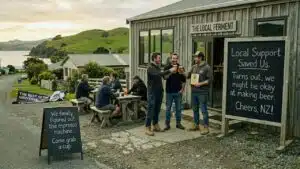
If you start acting superior or bragging too much online, Kiwis will quickly cut you down to size. We call it the tall poppy syndrome, and it dictates exactly how you should talk to your audience every single day. Brands that make massive, arrogant claims face immediate and brutal public backlash.
When a local craft brewery wins an international award, they don’t post a graphic claiming they are the absolute undisputed kings of beer. Instead, they post a picture of the brewers looking completely exhausted and shocked, thanking their local regulars for keeping the lights on during the tough early days. This approach makes the audience feel like they are directly part of the success story.
It builds incredibly deep brand loyalty without triggering any cultural resentment. The best campaigns lean heavily into self-deprecation, understated confidence, and genuine local humility. You can use humor to disarm people while quietly proving you know exactly what you are doing. Position yourself as a helpful mate rather than a corporate overlord.
| Tone of Voice | Example Copy | Local Reaction |
| Arrogant / Boastful | “We are officially the best cafe in the entire country.” | Immediate skepticism and potential mockery |
| Overly Corporate | “Delivering synergistic coffee solutions to the region.” | Ignored completely due to boring jargon |
| Humble / Relatable | “We finally figured out the espresso machine. Come grab a cup.” | High engagement and supportive comments |
12. AI and Answer Engine Optimisation Shape Content Creation
Artificial intelligence is completely changing the game, especially for small marketing teams that need to do way more with less time. The biggest shift happening right now is toward Answer Engine Optimisation. People are using social media search bars and AI chatbots to ask very specific, localized questions instead of using traditional search engines.
Think about the exact questions your customers ask you every single day on the phone or over the counter. Write those exact questions down and turn each one into a short video or a tightly written text post. If you run a local roofing company, you need to post videos explicitly answering how to find a leak in a Wellington winter.
By anticipating what locals are actively searching for, you train the algorithms to view your brand as the ultimate local authority. When an AI tool crawls the web to answer a user’s question, it will pull your exact words and serve them up as the definitive truth. Vague inspirational quotes are dead; you win by being the clearest voice in the room.
| SEO Method | Focus Area | Platform Target |
| Traditional SEO | Optimizing website blogs for keyword density | Google Search |
| Social SEO | Using keywords in captions and hashtags | Instagram and TikTok search bars |
| Answer Engine Optimisation | Structuring direct answers to common queries | AI Chatbots and integrated search tools |
13. Agility Outweighs Massive Budgets
Having a tiny local audience actually gives you a massive tactical advantage because you can pivot your strategy instantly. If a massive global brand wants to change their messaging, it takes six months of corporate approvals and boring focus groups. A local Kiwi business can notice a trend on a Tuesday morning, shoot a quick video responding to it at lunch, and have it driving actual sales by dinner.
If a new style of video completely flops, you don’t have to worry about a global PR disaster. You just learn from the bad metrics and try something else the very next day. You have to absolutely weaponize this speed to beat your larger competitors who are stuck in red tape.
This extreme agility lets local businesses test new platform features the exact second they launch. Don’t be afraid to jump on weird trends or try controversial new formats. Your small size protects you from catastrophic failure while opening the door for massive viral upside that huge corporations can never achieve.
| Marketing Style | Speed to Market | Risk Level |
| Traditional Corporate | 3 to 6 months for approvals | High financial risk if the campaign fails |
| Agency Planned | 1 to 2 months of drafting | Medium risk with moderate flexibility |
| Agile Local Brand | 2 to 4 hours from idea to post | Very low risk with high potential reward |
How Kiwi Brands Can Leverage These Trends for Growth?
Knowing these trends is only half the battle; the real money is made when you actively apply them to your daily business operations. New Zealand social media marketing demands that business owners step completely out of their comfort zones and get their hands dirty. You need to audit your current profiles immediately to see if you sound too corporate or entirely out of touch with the local street level.
Brands that drop the polished facade and start having genuine conversations are the exact ones stealing market share right now. Train your everyday staff to pull out their phones and document the real work happening on your shop floor so your audience feels involved in the journey.
Audit Your Tone and Visuals
Take a hard look at your last ten social media posts right now. If they look like they belong in a printed corporate magazine from ten years ago, you have a massive problem. You need to shift your tone immediately to sound like a real human talking to a friend over a flat white. Stop using boring stock photos entirely because Kiwis spot them instantly. Replace them with unedited pictures of your actual team, your messy desks, and your real happy customers. People buy from people, so make sure your digital storefront actually looks like it is run by living, breathing humans who care about their work.
Combine Social with Search Strategy
Don’t just post content blindly hoping someone will like it; figure out what your local customers are actually trying to solve today. Social platforms are basically fully functioning search engines now, especially for anyone under the age of thirty-five. Use free tools to find out what exact questions people in your city are asking about your specific industry. Then, grab your mobile phone and record a fast one-minute video answering that exact question clearly and honestly. This strategy guarantees that your content remains useful and searchable long after it drops off the main algorithmic feed.
Redefine Your Success Metrics
Stop staring at your total follower count because it is actively lying to you about your actual business health. You need to track metrics that indicate true buying intent from local users. Check how many people are saving your posts for later or forwarding them directly to their friends in private messages. Look at the average watch time on your videos to see if people actually care about what you are saying or if they are just swiping past. Building a dedicated base of five hundred people who save your content is infinitely better than having ten thousand random followers who never interact with your brand.
Final Thoughts
The days of lazy digital marketing in Aotearoa are permanently over. You can’t rely on massive reach to save a bad message or a boring product anymore. Success out here requires moving incredibly fast, speaking honestly to your neighbors, and treating your audience like smart, capable consumers.
If you embrace the strict constraints of New Zealand social media marketing, you will find that intense creativity naturally follows. Stop trying to look like a massive global corporation and start leaning into the gritty, human elements of your local business. The brands that win tomorrow are the absolute ones willing to be radically authentic and helpful today.
Frequently Asked Questions (FAQs) About New Zealand Social Media Marketing
1. How does Answer Engine Optimisation change how I write captions?
You have to entirely stop writing cryptic or purely entertaining captions and start writing directly to AI scrapers and local search bars. Put the most important keywords and the direct answer to a user problem in the first two sentences of your caption. If someone searches for the best coffee in Hamilton, your caption needs to explicitly state your exact street location and why your coffee fits that description without making the user read a massive novel to find out.
2. What is “Social SEO” and why does it matter in Aotearoa?
Social SEO is the practical habit of adding highly relevant keywords, local community hashtags, and specific location tags to your social media profiles and video descriptions. It matters massively here because younger Kiwis now use TikTok and Instagram to find local restaurants, reliable tradies, and services instead of using traditional Google search. If you don’t actively optimize your social posts for local search terms, you are practically invisible to an entire generation of ready-to-buy locals.
Absolutely not; in fact, building an email list is more crucial than ever as your ultimate backup plan. You don’t own your social media audience at all, and a random platform algorithm change can destroy your organic reach overnight. Smart local brands use their private social groups to build hype and community, but they always push those loyal fans to sign up for an email list so they maintain direct, unfiltered access to their best buyers regardless of what the apps do.
4. How do I handle negative local reviews on a public feed?
You have to address them immediately with extreme politeness and a genuine offer to fix the issue offline away from the public eye. In a country this small, other potential customers are watching exactly how you react under intense pressure. Getting defensive or arguing publicly will trigger a massive community backlash against your brand. Treat a public complaint as a golden chance to show the rest of your local community exactly how well you treat your customers when things accidentally go wrong.