Every date on the calendar carries the weight of history, but May 24 stands out as a uniquely transformative day across the globe. When we peel back the layers of the past, this specific date reveals an extraordinary cross-section of human endeavor. It is a day that witnessed the birth of cultural revolutionaries who changed the way we think and the music we listen to. It is a day when architectural marvels first connected cities, and when devastating tragedies reminded us of nature’s formidable power.
From the bustling streets of New York witnessing the opening of a legendary bridge to the quiet corners of the Indian subcontinent nurturing the mind of a “Rebel Poet,” the events of May 24 have left indelible marks on our collective memory. Understanding what happened on this day is not merely an exercise in memorizing dates; it is an exploration of how our modern society was built, piece by piece, through moments of genius, rebellion, and resilience. As we delve into the archives, we will journey through the Bangalee sphere, traverse international observances, and unpack the global milestones that make May 24 a day worth remembering.
The Bangalee Sphere
The Indian subcontinent, with its rich, tumultuous history of colonial resistance, literary brilliance, and scientific inquiry, has seen momentous occasions on May 24. This region’s history is deeply intertwined with movements for linguistic and cultural identity, making the figures born on this day particularly significant.
Historical Events That Shaped the Region
The subcontinent’s geographical vulnerability has often shaped its history just as much as its political movements.
-
1985 Cyclonic Storm: The coastal regions of Bangladesh are historically prone to severe weather, but the tropical cyclone that struck on May 24, 1985, remains one of the most devastating. Generating a massive storm surge, the cyclone swept through the coastal islands and the Ganges Delta. It claimed the lives of an estimated 10,000 to 15,000 people and displaced hundreds of thousands more. This catastrophic event forced a radical rethinking of disaster management and early warning systems in the region, eventually leading to the comprehensive cyclone shelter networks that save thousands of lives in Bangladesh today.
Famous Births of the Subcontinent
The individuals born on this day in the Bangalee sphere and the wider Indian subcontinent have left legacies that continue to inspire generations.
Bachendri Pal (1954)
Breaking physical and societal barriers, Bachendri Pal made history when she became the first Indian woman to reach the summit of Mount Everest. Her achievement in May 1984 shattered glass ceilings for women in extreme sports across the subcontinent. She has since dedicated her life to leading women’s expeditions and promoting outdoor leadership, earning the Padma Shri (1984), Arjuna Award (1986), and Padma Bhushan (2019).
Kartar Singh Sarabha (1896)
A legendary figure in the early armed struggle against British colonial rule, Kartar Singh Sarabha joined the revolutionary Ghadar Party at just 15 years old. His remarkable intellect and fiery dedication made him one of the most active organizers of the movement. Tragically, he was executed by the British at the tender age of 19. His martyrdom deeply inspired a young Bhagat Singh, cementing Sarabha’s place as a foundational figure in India’s fight for freedom.
Famous Deaths in the Region
The losses felt on this day have also marked the end of significant eras in regional culture.
-
Tapen Chatterjee (2010): The world of Bengali cinema lost a beloved icon when Tapen Chatterjee passed away. He was immortalized for his legendary portrayal of Goopy Gyne in Satyajit Ray’s cinematic masterpiece Goopy Gyne Bagha Byne (1969) and its subsequent sequels. His performance blended innocence with profound comedic timing, making the character a staple of Bengali cultural heritage that continues to enchant children and adults alike.
International Observances & Holidays
May 24 is recognized globally through various observances that highlight mental health, religious history, and national sovereignty. These days serve as annual reminders of the ongoing struggles for freedom and the importance of global health initiatives.
Major International Days
-
World Schizophrenia Awareness Day: This crucial global observance is dedicated to breaking down the pervasive stigma surrounding schizophrenia. It aims to educate the public about the realities of this complex mental health condition, advocating for better healthcare access, early intervention, and compassionate community support for the millions affected worldwide.
-
Aldersgate Day (Wesley Day): A significant day of reflection for Methodists globally, commemorating May 24, 1738. On this day, John Wesley attended a meeting in Aldersgate Street, London, where he experienced a profound religious awakening, famously noting that he felt his heart “strangely warmed.” This moment is widely considered the spark that launched the global Methodist movement.
National Independence and Republic Days
-
Eritrea Independence Day: On this day in 1993, Eritrea officially declared its independence from Ethiopia, following a grueling 30-year war for liberation. The day is marked with vibrant parades, traditional dancing, and a deep reflection on the sacrifices made for national sovereignty.
-
Battle of Pichincha Day (Ecuador): This national holiday commemorates the pivotal 1822 battle fought on the slopes of the Pichincha volcano. Forces led by General Antonio José de Sucre defeated the Spanish royalist army, effectively securing the independence of the Presidency of Quito. This victory was a major stepping stone toward the eventual creation of the Republic of Ecuador and is celebrated with military parades and civic pride.
Global History
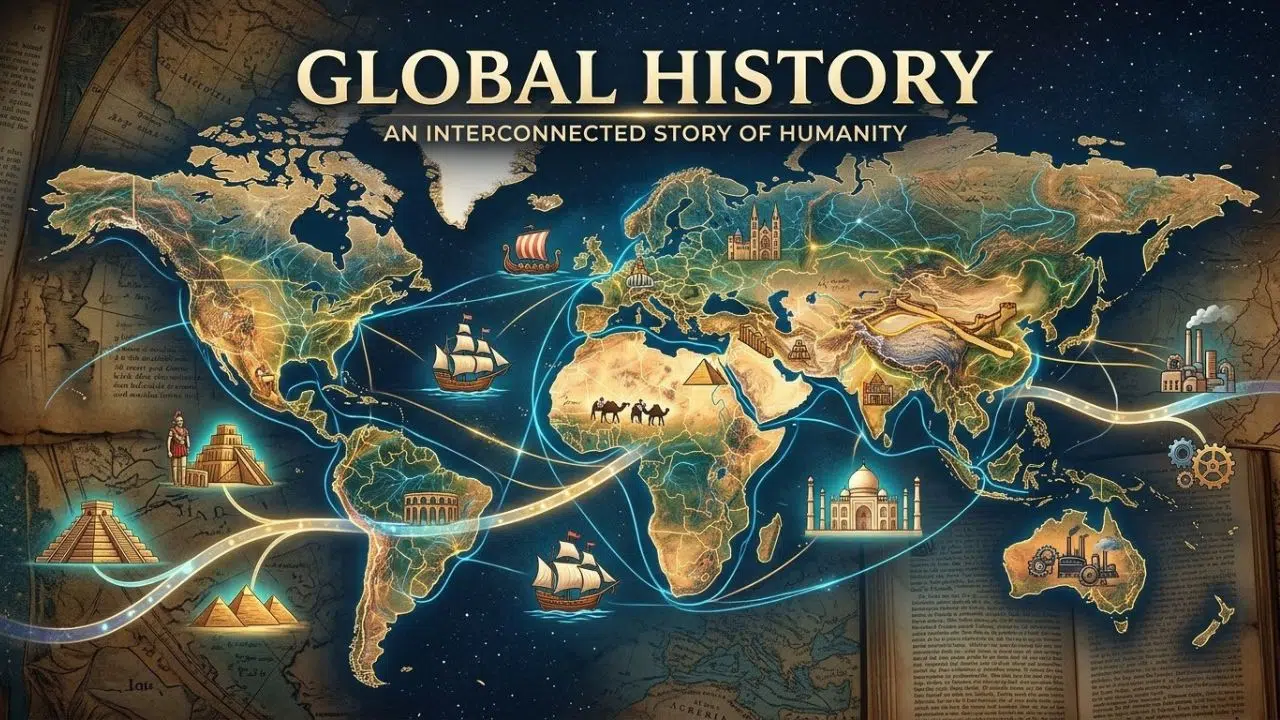
Beyond the subcontinent, May 24 has been a theater for technological breakthroughs, architectural wonders, and devastating conflicts that have rewritten the geopolitical map.
United States
-
1844 – The First Telegraph Message: Communication was forever altered when Samuel F.B. Morse dispatched the world’s first formal electric telegraph message. Sent from the Supreme Court chamber in Washington, D.C., to the B&O Railroad depot in Baltimore, Maryland, the message read, “What hath God wrought?” (Numbers 23:23). This single line proved the viability of long-distance instantaneous communication, laying the foundational groundwork for the modern internet.
-
1883 – The Brooklyn Bridge Opens: After 14 grueling years of construction that cost the lives of over two dozen workers, including its original designer John A. Roebling, the Brooklyn Bridge was officially opened to traffic. Connecting Brooklyn and Manhattan, it was the longest suspension bridge in the world at the time and became an enduring symbol of American engineering prowess and urban expansion.
Russia
-
1970 – The Kola Superdeep Borehole: In a bid to understand the Earth’s crust, Soviet engineers began an unprecedented drilling project on the Kola Peninsula. Over the next two decades, they drilled down to 12,262 meters (40,230 feet), creating the deepest artificial point on Earth. The project yielded massive amounts of geological data—including the discovery of microscopic plankton fossils miles underground—before the drill bits failed due to unexpected subterranean temperatures reaching 180°C.
China
-
2002 – Death of Xi Zhongxun: The passing of Xi Zhongxun, a prominent Chinese communist revolutionary and political leader, marked the end of an era. Known for his political moderation and for pioneering China’s special economic zones in Guangdong, his economic pragmatism helped shape modern China. His legacy carries immense weight today, as he is the father of current Chinese President Xi Jinping.
United Kingdom
-
1941 – The Sinking of HMS Hood: During the tense days of World War II, the Battle of the Denmark Strait saw the pride of the Royal Navy, the battlecruiser HMS Hood, intercepted by the formidable German battleship Bismarck. Within minutes, a plunging shell from the Bismarck struck the Hood’s magazine, causing a catastrophic explosion. The ship sank in three minutes, with only three survivors out of a crew of 1,418. The monumental loss shocked the British public and triggered a relentless, successful hunt to destroy the Bismarck.
-
1689 – The Toleration Act: The English Parliament passed the Act of Toleration, a landmark piece of legislation that granted freedom of worship to Nonconformists (Protestants who dissented from the Church of England). While it specifically excluded Roman Catholics, it was a massive step toward religious pluralism in Britain.
Europe
-
1956 – The First Eurovision Song Contest: In an effort to foster cultural unity in a continent still recovering from the ravages of World War II, the European Broadcasting Union held the very first Eurovision Song Contest in Lugano, Switzerland. Seven nations competed, and Lys Assia won the inaugural competition for the host nation. Today, it remains one of the world’s longest-running and most-watched television programs, famous for its elaborate staging and geopolitical voting dynamics.
-
1543 – Copernicus Publishes His Masterpiece: Polish astronomer Nicolaus Copernicus published De revolutionibus orbium coelestium (On the Revolutions of the Heavenly Spheres). By mathematically placing the Sun, rather than the Earth, at the center of the universe, he triggered the Scientific Revolution. Legend has it he was presented with the final printed pages on the very day he died.
Australia
-
1930 – Amy Johnson’s Historic Flight: English aviatrix Amy Johnson landed her de Havilland Gipsy Moth, named “Jason,” in Darwin, Australia. In doing so, she became the first woman to fly solo from England to Australia. Her grueling 11,000-mile journey took 19 days, braving sandstorms, monsoon rains, and forced landings, turning her into a global feminist icon and aviation pioneer.
Canada
-
1881 – The Victoria Steamboat Disaster: A day of celebration turned into a nightmare on the Thames River in London, Ontario. The Victoria, a small, double-decked stern-wheeler, was dangerously overcrowded with over 600 passengers celebrating Victoria Day. The vessel keeled over and sank in shallow water, resulting in the tragic drowning of 182 people. The disaster led to sweeping changes in Canadian maritime safety regulations and vessel capacity limits.
Rest of World
-
1991 – Operation Solomon (Israel/Ethiopia): As the Ethiopian Civil War threatened the safety of the region’s ancient Jewish population (Beta Israel), the Israeli military and El Al airlines launched a covert, massive airlift operation. In just 36 hours, 34 aircraft safely evacuated over 14,000 Ethiopian Jews to Israel. In one remarkable instance, an El Al Boeing 747 carried over 1,000 passengers on a single flight, a record that remains unbroken.
Notable Births & Deaths (Global)
May 24 has ushered in the lives of monarchs, musical geniuses, and cultural icons, while also bidding farewell to scientists and artists whose work fundamentally altered human history.
Famous Births
-
Queen Victoria (1819): Born in Kensington Palace, she ascended to the throne at just 18 years old. Her 63-year reign, known as the Victorian Era, was defined by the massive expansion of the British Empire, unprecedented industrial and technological progress, and strict cultural moralities. As the “Grandmother of Europe,” her descendants occupied royal houses across the continent, shaping European geopolitics well into the 20th century.
-
Bob Dylan (1941): Born Robert Allen Zimmerman in Duluth, Minnesota, Bob Dylan is widely regarded as one of the greatest songwriters in history. Merging folk traditions with surrealist poetry and rock-and-roll electricity, his songs like “Blowin’ in the Wind” and “The Times They Are a-Changin'” became the definitive anthems of the 1960s civil rights and anti-war movements. In 2016, he became the first musician to be awarded the Nobel Prize in Literature.
-
Priscilla Presley (1945): An American actress and savvy businesswoman. Following the tragic death of her ex-husband, Elvis Presley, she took control of his rapidly depleting estate. By opening Graceland to the public, she turned it into one of the most successful tourist attractions in the United States, preserving the legacy of the “King of Rock and Roll” and securing her family’s financial future.
-
Patti LaBelle (1944): The “Godmother of Soul,” Patti LaBelle is a legendary American singer and actress. With a powerhouse vocal range, she fronted the group LaBelle, famous for the disco anthem “Lady Marmalade,” before launching a wildly successful solo career that earned her multiple Grammy Awards and a place in the Grammy Hall of Fame.
Famous Deaths
-
Nicolaus Copernicus (1543): The Polish mathematician and astronomer died of a stroke at the age of 70. His life’s work completely upended the Ptolemaic view of the universe, removing humanity from the center of the cosmos and laying the critical foundation for future astronomers like Galileo and Kepler.
-
Duke Ellington (1974): Edward Kennedy “Duke” Ellington passed away from lung cancer. As a master composer, pianist, and charismatic bandleader, he is arguably the most significant figure in the history of jazz. He elevated the genre to a complex, respected art form, composing thousands of scores and leading his orchestra for over 50 years.
-
Tina Turner (2023): Born Anna Mae Bullock, the “Queen of Rock ‘n’ Roll” died peacefully at her home in Switzerland after a long illness. Known for her electrifying stage presence, immense vocal power, and extraordinary personal resilience, she overcame an abusive early career to become one of the best-selling recording artists of all time, famous for hits like “What’s Love Got to Do with It” and “Proud Mary.”
“Did You Know?” Trivia
History is often made of small, strange details that fall through the cracks of textbooks. Here are three fascinating pieces of trivia related to May 24.
-
A Poetic Coincidence: The famous children’s nursery rhyme “Mary Had a Little Lamb” was first published on May 24, 1830. The author, Sarah Josepha Hale, was far more than a children’s poet. As a powerful magazine editor, she spent years fiercely lobbying presidents until Abraham Lincoln finally agreed to make Thanksgiving a unified national holiday in the United States.
-
The Telegram’s Ghostwriter: When Samuel Morse sent “What hath God wrought” to prove the telegraph worked, he didn’t pick the phrase himself. He gave the honor of choosing the first message to Annie Ellsworth, the young daughter of the U.S. Patent Commissioner, who had brought Morse the good news that Congress had funded his telegraph line.
-
Earth’s Plastic Rock: When Soviet scientists were drilling the Kola Superdeep Borehole, they didn’t stop because they ran out of things to discover; they stopped because physics beat them. At 12 kilometers down, the temperature hit 180°C (356°F)—drastically hotter than expected. At that heat and pressure, the rock stopped acting like solid stone and began to behave more like pliable plastic, causing the massive drill hole to close up on itself every time they pulled the bit out.
Quote of the Day
“A hero is someone who understands the responsibility that comes with his freedom.”
— Bob Dylan (Born May 24, 1941)
Reflections on the May 24 Time Capsule
Looking back at the events of May 24, we are reminded of the sheer velocity of human progress and the cyclical nature of our history. On the same day that Copernicus fundamentally shifted our understanding of the heavens, centuries later, Morse collapsed the vast distances of the earth with the tap of a telegraph key. It is a day that highlights our relentless drive to connect—whether physically across the East River via the Brooklyn Bridge, or digitally through an undersea cable.
Yet, this date also demands reverence for the fragility of our existence. The tragic loss of the HMS Hood and the devastation of the 1985 Bangladesh cyclone serve as somber counterweights to human ambition, reminding us of the unforgiving forces of human conflict and the natural world. Ultimately, studying May 24 offers a profound perspective: the history we inherit is built equally by monarchs like Queen Victoria, rebels like Kazi Nazrul Islam, and the countless unseen individuals who hammered the rivets, drilled the boreholes, and marched for independence. As we step forward into our own future, the archives of this day teach us that every action, no matter how small, has the potential to echo through the centuries.