

The transition from heavy, static printed materials to dynamic digital reading requires technology built specifically for academic comprehension. For schools and universities seeking to modernize their curriculum delivery, identifying the right SMEs for E-Textbook Platforms is essential. By moving away from the rigid monopolies of legacy publishers, educational institutions can partner with independent American developers who prioritize accessibility, interactive reading features, and fair pricing models over massive corporate margins.
Establishing a reliable digital foundation requires a strict evaluation process to ensure these platforms meet rigorous academic and technical standards.
How We Selected Our 15 Best E-Textbook Platforms
Identifying the most effective digital reading and publishing architecture required strict filtering to separate genuine educational innovators from generic PDF viewers. We focused entirely on independent American studios that adapt rapidly to the changing pedagogical demands of modern classrooms.
-
Geographic Baseline. Operated and headquartered strictly within the United States as independent entities.
-
Independence. Verified as independent SMEs to guarantee transparent data policies and responsive customer support.
-
Pedagogical Interactivity. Proven inclusion of specialized reading aids like collaborative highlighting, embedded quizzes, and multimedia integration.
-
Data Security and Accessibility. Complete adherence to WCAG accessibility guidelines and student privacy regulations, ensuring equitable and secure access for all readers.
Understanding these core requirements helps identify exactly which organizations are equipped to handle the rigorous daily demands of digital learning.
Whom This is for
This guide serves university provosts, district curriculum directors, and instructional designers seeking to replace outdated physical books or clunky proprietary publisher apps with dedicated digital reading environments. It is also an essential resource for independent professors looking to custom-publish their own interactive course materials.
With the audience defined, we can examine the specific developers leading the industry.
Evaluating the Top 15 SMEs for E-Textbook Platforms
The following independent studios and publishers are actively reshaping how academic institutions access and interact with digital texts. Here is our curated breakdown of the standout developers driving the digital reading movement today.
Starting with platforms that seamlessly centralize and distribute materials across an entire campus provides an easy transition for administration.
1. RedShelf
Operating out of Chicago, Illinois, RedShelf provides a massive digital distribution platform and a highly accessible e-reader designed specifically for higher education. They partner with universities to deliver digital course materials on the first day of class at significantly reduced prices. Their proprietary e-reader runs entirely in the browser, allowing students to access their texts instantly without downloading heavy standalone applications.
Best for:
-
Campus-wide inclusive access programs needing a centralized, highly accessible digital textbook distributor.
Why We Chose It:
-
The e-reader includes built-in text-to-speech, study guide generation, and collaborative highlighting tools that vastly outpace standard PDF viewers.
-
It provides universities with deep analytics to track whether students are actually engaging with their assigned readings.
Things to consider:
-
They act primarily as a distributor and reader for existing publisher content rather than an authoring tool for new texts.
The 2026 Edge:
-
Upgraded offline-sync capabilities that allow students to seamlessly transition between online reading and offline studying without losing their annotations.
Fostering deep engagement with difficult texts requires platforms that turn reading into a collaborative social activity.
2. Perusall
Headquartered in Cambridge, Massachusetts, Perusall was born out of Harvard University research and fundamentally changes how students interact with reading assignments. The platform turns the e-textbook into a social environment where students can collaboratively annotate the margins, reply to peers’ questions, and debate concepts directly within the text.
Best for:
-
Humanities and social science departments that want to ensure students complete the reading and arrive prepared for discussion.
Why We Chose It:
-
The platform utilizes AI to automatically grade student engagement based on the quality and frequency of their annotations, saving professors hours of manual review.
-
It completely eliminates the isolation of reading a digital textbook by making it a shared, communal experience.
Things to consider:
-
The interface can become cluttered if a massive lecture class all attempts to annotate the exact same paragraph simultaneously.
The 2026 Edge:
-
Advanced semantic grouping that automatically organizes hundreds of student margin notes into clear, thematic discussion threads.
Replacing predatory pricing models requires independent publishers who build their own affordable digital platforms.
3. FlatWorld
Based in Boston, Massachusetts, FlatWorld operates as both an independent textbook publisher and a digital platform. They directly attack the inflated prices of legacy publishers by offering high-quality, peer-reviewed e-textbooks at a fraction of the standard cost. Their platform allows professors to easily adopt, edit, and reorder chapters to perfectly match their specific syllabus.
Best for:
-
University faculty looking for high-quality, affordable digital textbooks that can be customized without complex software.
Why We Chose It:
-
It empowers professors to remove unnecessary chapters from a text, ensuring students only pay for the material they will actually use.
-
The digital reading platform includes integrated homework systems and quiz banks that rival massive corporate publishers.
Things to consider:
-
The catalog is highly curated, meaning they may not have a niche textbook for highly specialized, upper-level courses.
The 2026 Edge:
-
Enhanced interactive case studies embedded directly into business and economics e-textbooks.
Building entirely custom course materials requires agile digital development teams.
4. Skyepack
Operating from West Lafayette, Indiana, Skyepack takes a highly customized approach to e-textbooks. Instead of forcing faculty to adopt a pre-written text, their instructional design team partners with professors to build custom, interactive “webtexts” from scratch. They curate open educational resources, proprietary professor notes, and multimedia into a cohesive digital app.
Best for:
-
Instructional designers and faculty who want to build a completely custom, interactive e-textbook perfectly aligned to their unique curriculum.
Why We Chose It:
-
They provide the heavy lifting of instructional design, transforming a professor’s raw lecture notes into a polished digital product.
-
The final webtexts are inherently mobile-friendly and highly interactive, completely avoiding the “static PDF” trap.
Things to consider:
-
Building a custom digital text requires a significant time investment and collaboration before the semester begins.
The 2026 Edge:
-
Integrated micro-learning modules that automatically break down complex webtext chapters into bite-sized, mobile-ready flashcards.
Blending traditional publishing rigor with modern web aesthetics creates highly engaging “webtexts.”
5. Soomo Learning
Located in Asheville, North Carolina, Soomo Learning designs interactive digital courseware that replaces traditional textbooks. Their “webtexts” embed videos, interactive data visualizations, and low-stakes assessments directly into the flow of the reading. This prevents students from passively skimming the material.
Best for:
-
Online and hybrid university programs that require highly interactive, self-paced reading assignments.
Why We Chose It:
-
The platform forces active reading by requiring students to answer short comprehension questions before unlocking the next section of the text.
-
It integrates seamlessly with major learning management systems, passing engagement grades directly into the faculty gradebook.
Things to consider:
-
The highly structured nature of the webtexts means students cannot easily jump around or skip sections.
The 2026 Edge:
-
Automated accessibility rendering that instantly adjusts text contrast and sizing based on the specific visual needs of the student’s device profile.
Affordability and interactivity must go hand-in-hand to serve modern student demographics effectively.
6. BVT Publishing
Headquartered in Redding, California, BVT Publishing is an independent SME that provides affordable, highly interactive e-textbooks for the higher education market. Their digital platform, LABBook, combines the core reading material with a massive suite of study tools, including algorithmic practice questions, digital flashcards, and a built-in virtual classroom for professors.
Best for:
-
Community colleges and large state universities seeking comprehensive, interactive digital textbooks that will not bankrupt their students.
Why We Chose It:
-
It offers a massive suite of integrated study tools at a price point that legacy publishers simply cannot match.
-
The platform provides a highly intuitive interface that requires almost zero onboarding for students and faculty.
Things to consider:
-
The primary focus is on introductory and general education courses rather than deep, graduate-level niche subjects.
The 2026 Edge:
-
Upgraded predictive analytics that alert professors when a student consistently fails the embedded reading comprehension checks.
Quantitative subjects require specialized digital platforms capable of handling complex algorithms and notation.
7. Hawkes Learning
Based in Mount Pleasant, South Carolina, Hawkes Learning specializes in digital courseware and e-textbooks for mathematics, English, and science. Their platform utilizes a unique mastery-based learning approach. As students read the digital text, they are funneled into an adaptive practice engine that will not let them progress until they have proven they understand the core concept without penalty.
Best for:
-
Mathematics and quantitative departments needing e-textbooks deeply integrated with mastery-based, algorithmic homework engines.
Why We Chose It:
-
The error-specific feedback algorithm explains exactly why a student got a math problem wrong while they are reading the text.
-
It removes the anxiety of traditional digital homework by offering unlimited, algorithmic practice iterations.
Things to consider:
-
The mastery approach can frustrate students who simply want to skim the reading and guess the homework answers.
The 2026 Edge:
-
Enhanced digital scratchpads that allow students to write out complex equations on their tablets directly alongside the e-textbook margins.
Customizing interactive content for high-enrollment general education courses requires a flexible authoring environment.
8. Great River Learning
Operating out of Dubuque, Iowa, Great River Learning partners with higher education faculty to develop and publish custom, interactive digital textbooks. Their platform focuses heavily on embedding high-quality video, proprietary interactive timelines, and local campus-specific examples directly into the digital reading experience.
Best for:
-
University departments looking to replace generic textbooks with digital materials specifically tailored to their local student population.
Why We Chose It:
-
It allows professors to author content that speaks directly to their local community, making the reading far more relevant to the students.
-
The dedicated digital production team assists faculty in shooting and editing high-quality video to embed in the text.
Things to consider:
-
The custom development cycle means this is not an instant, off-the-shelf solution for a class starting next week.
The 2026 Edge:
-
Automated copyright clearinghouse integrations that allow professors to safely embed external media clips into their custom e-textbooks.
Managing the complex logistics of campus-wide digital textbook delivery requires dedicated virtual bookstore software.
9. Akademos
Located in Shelton, Connecticut, Akademos provides a comprehensive virtual bookstore and digital delivery platform for colleges and universities. They act as the central hub, integrating with the university SIS to automatically deliver the correct e-textbooks to every student on the first day of class, while providing administrators with deep analytics on textbook affordability.
Best for:
-
University administrators seeking to completely replace their physical campus bookstore with a streamlined, digital-first delivery platform.
Why We Chose It:
-
It removes the friction of students hunting for access codes across multiple publisher websites.
-
The platform provides unmatched transparency into exactly how much money a university is saving its students through inclusive access programs.
Things to consider:
-
It is an enterprise-wide logistics platform that requires a major institutional transition to implement successfully.
The 2026 Edge:
-
Advanced personalized dashboards that allow students to easily toggle between their assigned e-textbooks, OER materials, and library reserves in one place.
Providing dynamic digital curriculum to the K-12 sector requires platforms built for younger learners.
10. Kiddom
Headquartered in San Francisco, California, Kiddom provides a digital curriculum platform that transforms static K-12 textbooks into dynamic, interactive teaching environments. They partner with top independent curriculum creators to deliver core subjects digitally, allowing teachers to edit, assign, and grade digital reading materials directly within the app.
Best for:
-
K-12 school districts seeking to replace physical textbooks with an interactive, highly editable digital curriculum hub.
Why We Chose It:
-
It allows teachers to modify the pacing and content of the digital textbook to meet the specific needs of their local classroom.
-
The platform provides beautiful data visualizations showing student mastery of specific state standards based on their interaction with the text.
Things to consider:
-
The platform is highly structured for the K-12 environment and is not designed for independent university-level reading.
The 2026 Edge:
-
Integrated interactive video lessons that automatically pause the digital reading to assess student comprehension.
Career and Technical Education (CTE) requires highly specialized, career-focused digital materials.
11. eDynamic Learning
Based in Southlake, Texas, eDynamic Learning is the largest independent publisher of CTE and elective digital courses in North America. Their e-textbook platform provides highly interactive, career-focused reading materials for subjects ranging from forensic science to culinary arts, complete with built-in literacy support tools.
Best for:
-
High schools expanding their career and technical education pathways with interactive digital courseware.
Why We Chose It:
-
The platform is universally accessible, featuring built-in translation, text-to-speech, and responsive design for mobile devices.
-
It provides schools with turnkey digital textbooks for highly niche subjects that are incredibly difficult to staff.
Things to consider:
-
The content is focused exclusively on electives and CTE, meaning it will not replace core math or English textbooks.
The 2026 Edge:
-
Embedded workplace simulations that allow students to practice career-specific software environments directly inside the e-textbook.
Health sciences and medical training require high-fidelity imagery and specialized digital tools.
12. Caduceus International Publishing
Operating out of Gainesville, Florida, Caduceus International Publishing builds highly specialized e-textbooks and digital courseware exclusively for the health sciences. Their platform delivers immersive, interactive materials for subjects like medical terminology and anatomy, utilizing high-resolution interactive graphics and audio pronunciation guides.
Best for:
-
University nursing programs and pre-med departments requiring highly accurate, multimedia-rich digital medical texts.
Why We Chose It:
-
The digital text integrates perfectly with audio files, allowing students to hear the exact pronunciation of complex medical terms while reading.
-
It provides a highly focused, distraction-free reading environment optimized specifically for dense scientific memorization.
Things to consider:
-
The platform serves a very specific niche and cannot be used for general humanities or business courses.
The 2026 Edge:
-
Upgraded 3D anatomical models embedded directly in the text that students can rotate and dissect using touchscreen gestures.
Business and marketing education requires digital texts that update as fast as the industry itself.
13. Stukent
Located in Idaho Falls, Idaho, Stukent provides digital courseware and e-textbooks specifically for business, marketing, and communication courses. Their platform completely eliminates the problem of outdated marketing textbooks by updating their digital materials continuously. They also pair their e-textbooks with highly realistic, digital workplace simulations.
Best for:
-
Business schools and marketing departments that need digital reading materials that reflect the current state of the industry.
Why We Chose It:
-
They update their digital texts multiple times a year, ensuring students are never reading about outdated social media algorithms.
-
The seamless integration between the digital reading and the practical business simulations ensures high knowledge retention.
Things to consider:
-
The platform is highly specialized for business and marketing curricula.
The 2026 Edge:
-
Live industry data feeds injected directly into the digital textbook, allowing students to analyze real-time market trends while reading.
State-specific social studies require publishers who build localized digital content from the ground up.
14. Gallopade
Headquartered in Peachtree City, Georgia, Gallopade provides 100% state-aligned social studies e-textbooks and digital curriculum for the K-8 market. Their digital platform transforms local history and civics into highly interactive digital experiences, featuring primary source document analysis, click-to-reveal maps, and digital drag-and-drop timelines.
Best for:
-
K-8 public school districts needing highly engaging, strictly state-aligned digital social studies materials.
Why We Chose It:
-
They build their digital texts specifically for individual states, ensuring absolute compliance with hyper-local academic standards.
-
The interface is incredibly engaging for younger readers, breaking up dense historical text with interactive digital artifacts.
Things to consider:
-
The platform is exclusively focused on K-8 social studies and civics.
The 2026 Edge:
-
Integrated digital debate spaces where students can safely discuss civic issues in a highly moderated, reading-adjacent environment.
Visualizing complex biological systems requires moving entirely beyond the concept of a “page.”
15. Visible Body
Based in Newton, Massachusetts, Visible Body provides an interactive 3D digital platform that replaces traditional anatomy and biology textbooks. Their “Courseware” platform embeds reading assignments directly alongside fully dissectible, medically accurate 3D models of the human body. It fundamentally changes how students visualize and learn life sciences.
Best for:
-
University biology departments, medical schools, and physical therapy programs needing immersive 3D digital textbooks.
Why We Chose It:
-
It completely transcends the limitations of a flat PDF, allowing students to interact with the subject matter spatially.
-
The platform includes augmented reality features, allowing students to project 3D models onto their desk while reading the accompanying text.
Things to consider:
-
The heavy graphical requirements mean students must have access to relatively modern tablets or computers to run the 3D models smoothly.
The 2026 Edge:
-
Advanced haptic feedback integration for mobile devices, allowing students to physically “feel” the simulated textures of different tissues as they read.
Reviewing these varied digital environments side-by-side helps administrators clarify their institutional priorities.
An Overview Of SMEs for E-Textbook Platforms
Examining these distinct providers collectively provides a clear perspective on the digital infrastructure available to modern educators. The following data points highlight the primary functional differences between these independent providers.
Overview Comparison Table
Comparing these specific metrics highlights the structural differences between traditional publishing and modern interactive platforms.
| SME Developer | Headquarter Location | Core Focus Area | Primary Function |
| RedShelf | Chicago, IL | Higher Ed Distribution | Inclusive Access E-Reader |
| Perusall | Cambridge, MA | Social Reading | Collaborative Annotation |
| FlatWorld | Boston, MA | Independent Publishing | Affordable E-Textbooks |
| Skyepack | West Lafayette, IN | Custom Webtexts | Instructional Design |
| Soomo Learning | Asheville, NC | Interactive Courseware | Embedded Assessment |
| BVT Publishing | Redding, CA | Affordable Higher Ed | LABBook Platform |
| Hawkes Learning | Mount Pleasant, SC | Mastery-Based Math | Algorithmic E-Textbooks |
| Great River Learning | Dubuque, IA | Custom Academic | Localized Digital Texts |
| Akademos | Shelton, CT | Virtual Bookstores | Campus-Wide Delivery |
| Kiddom | San Francisco, CA | K-12 Curriculum | Digital Teaching Hub |
| eDynamic Learning | Southlake, TX | CTE & Electives | Career-Focused Texts |
| Caduceus Publishing | Gainesville, FL | Health Sciences | Multimedia Medical Texts |
| Stukent | Idaho Falls, ID | Business & Marketing | Continuously Updated Texts |
| Gallopade | Peachtree City, GA | K-8 Social Studies | State-Aligned Civics |
| Visible Body | Newton, MA | Anatomy & Biology | 3D Interactive Courseware |
Evaluating these diverse administrative tools naturally leads to our primary recommendations for specific institutional use cases.
Our Top 3 Picks and Why
Narrowing down the field highlights three developers making exceptional contributions to the digital reading landscape. Perusall stands out by fundamentally shifting reading from an isolated chore into a vibrant, AI-assisted social dialogue, ensuring students actually engage with the text before class. RedShelf provides unmatched utility for massive university systems, delivering millions of highly accessible, affordable e-textbooks flawlessly through the browser. Finally, Visible Body completely redefines the concept of an e-textbook by merging required reading with stunning, manipulatable 3D biological models that static pages simply cannot replicate.
Selecting the right digital infrastructure requires balancing the technical capabilities of the software with the actual needs of the teaching staff.
How to Choose the Right SMEs for E-Textbook Platforms by Yourself
Implementing a new digital reading environment successfully means finding a platform that aligns with your specific pedagogical philosophy and budget constraints.
-
Identify the Authoring Need. Determine if your faculty needs to author their own custom digital materials from scratch, or if they simply need a better e-reader for existing publisher content.
-
Evaluate Accessibility Compliance. Ensure the platform strictly adheres to WCAG 2.1 AA standards, featuring robust text-to-speech, scalable fonts, and screen reader compatibility.
-
Check LMS Integration. Verify that the platform connects seamlessly to your Canvas, Blackboard, or Moodle environment using LTI 1.3 standards to synchronize grading and reading assignments.
-
Analyze the Pricing Model. Require the developer to provide a transparent breakdown of student costs, avoiding predatory subscription traps or hidden access-code fees.
Applying this framework directly to your specific campus needs allows you to match the right developer to your university.
Decision Matrix
Matching your specific institutional priorities with the right developer ensures a seamless digital transformation.
| Choose This SME… | If You Prioritize… |
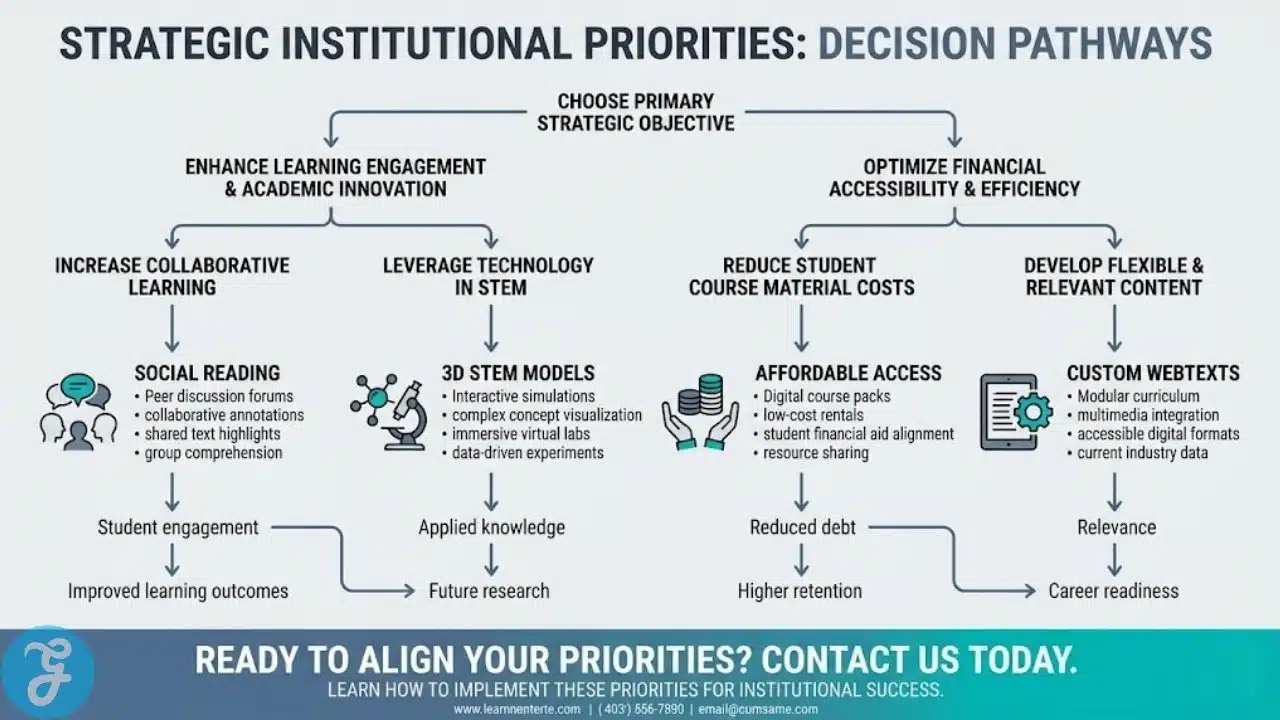
| RedShelf or Akademos | Delivering affordable e-textbooks campus-wide through centralized, inclusive access programs. |
| Perusall or Soomo Learning | Forcing active reading through social annotation or embedded, mandatory comprehension checks. |
| Skyepack or Great River | Partnering with instructional designers to build entirely custom, interactive webtexts from scratch. |
| Visible Body or Hawkes | Providing highly specialized, algorithmic, or 3D interactive texts for STEM and medical departments. |
Before signing a long-term institutional contract, running through a rapid technical verification process is vital.
The Final Checklist
Running through this quick verification process guarantees you are adopting a secure, scalable platform.
-
Verify the developer complies entirely with federal regulations regarding student privacy and data encryption.
-
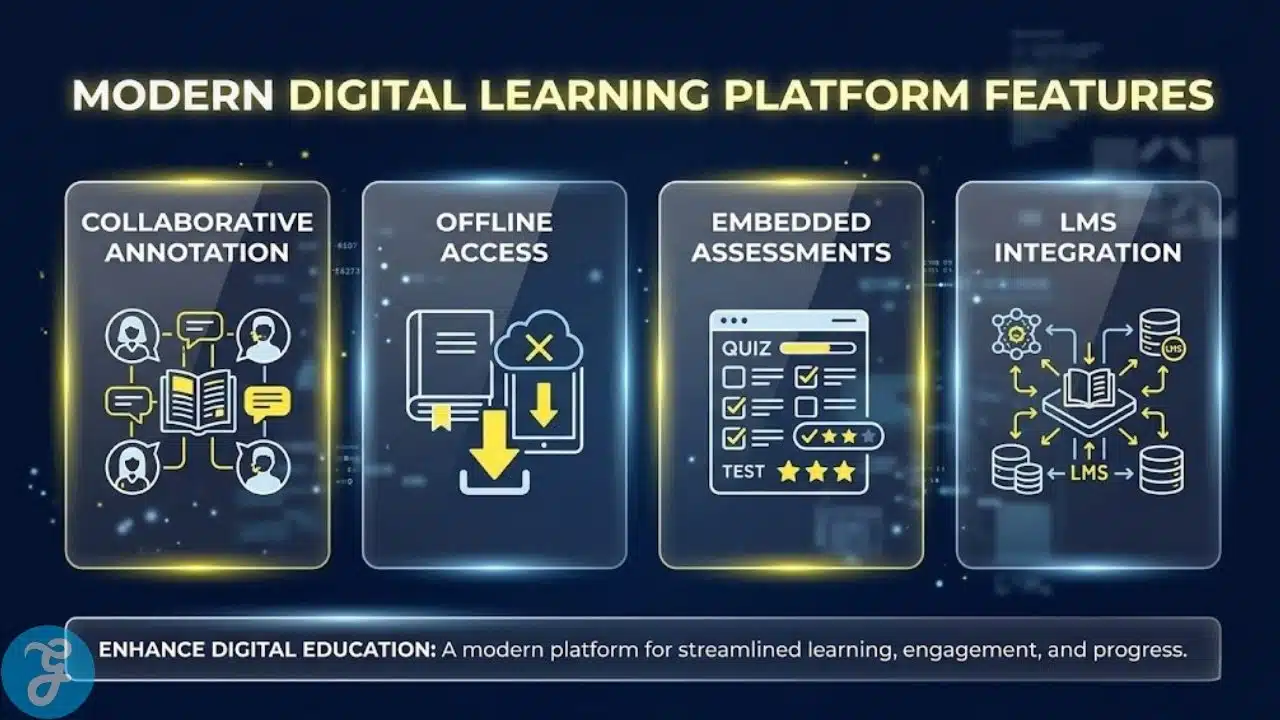
Ensure the platform allows students to download chapters for offline reading if they lack reliable broadband access at home.
-
Test the platform’s mobile rendering to guarantee that complex charts and graphs scale appropriately on a smartphone screen.
-
Confirm the developer provides dedicated onboarding training for faculty members transitioning away from physical books.
-
Check that the software allows students to permanently export their margin notes and highlights after the semester ends.
Implementing these systems successfully requires a deep understanding of how digital reading actually works.
The Shift Beyond Static Digital Pages
The rapid adoption of educational technology has created a false belief that simply turning a physical textbook into a PDF solves the affordability and engagement crisis in modern education. The uncomfortable truth is that many legacy platforms merely replicate the flaws of the physical book on a glowing screen, leading to intense digital fatigue and poor reading comprehension. As universities rush to implement digital-first mandates, they must avoid platforms that treat reading as a passive consumption of data.
The future of educational publishing does not rely on building heavier, more locked-down digital files. It relies on partnering with agile SMEs for E-Textbook Platforms to create deeply interactive, socially connected reading experiences. True digital learning happens when institutions stop paying for flat, outdated pages and start investing in living, responsive courseware that adapts to the needs of the modern student.
To further clarify the implementation of these digital systems, addressing common technical concerns is essential.
Frequently Asked Questions (FAQs) About SMEs for E-Textbook Platforms
Why should a school use specialized SMEs instead of massive textbook publishers?
Independent developers build highly agile, student-focused platforms that bypass the massive overhead and predatory pricing models of legacy publishers. They prioritize seamless LMS integration, interactive web design, and genuine affordability over rigid proprietary access codes.
Do these digital platforms support students with visual impairments?
Yes, reputable independent developers strictly adhere to Web Content Accessibility Guidelines. Their platforms typically feature integrated screen reader support, high-contrast visual modes, native text-to-speech, and responsive text scaling to ensure equal access for all enrolled students.
How do these platforms prevent students from just skimming the reading?
Modern interactive e-textbooks use embedded pedagogical tools. Platforms achieve this by inserting low-stakes quizzes directly into the text, requiring social annotation, or tracking reading time, which passes actionable engagement data directly to the professor’s gradebook.
Can students access these digital textbooks if the campus internet goes down?
Most robust e-textbook platforms offer offline reading capabilities. Students can typically download specific chapters or entire texts directly to their device’s local storage via a progressive web app or dedicated mobile application for use without an active connection.
What happens to a student’s notes when the semester ends?
Unlike physical rental books that must be returned, high-quality digital platforms allow students to permanently export their highlights, annotations, and study guides to PDF or standard text files, ensuring they retain their intellectual labor for future reference.






















