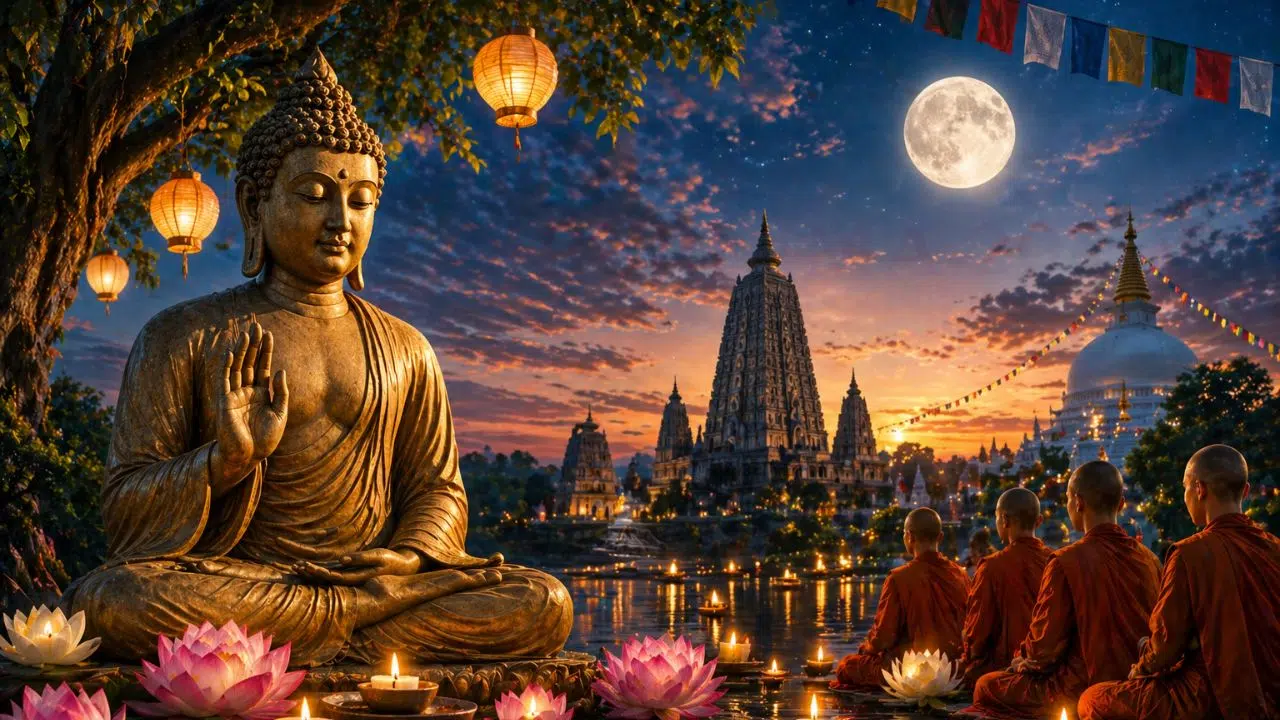
Buddha Purnima is one of the most revered spiritual observances in the world, marking the birth, enlightenment, and Mahaparinirvana of Gautama Buddha. Celebrated on the full moon day of the Vaisakha month, this sacred occasion brings together millions of people across cultures and continents in a shared moment of reflection, devotion, and inner awakening.
More than a religious festival, Buddha Purnima serves as a timeless reminder of the Buddha’s enduring message—one that emphasizes compassion, mindfulness, and the pursuit of wisdom. In today’s fast-moving and often stressful world, the significance of this day goes beyond tradition, offering a path toward peace, balance, and a deeper understanding of life itself.
What Is Buddha Purnima And When Will It Occur In 2026?
The scheduling of this festival relies entirely on ancient lunar tracking systems, meaning the dates shift annually. Because different regions follow slightly varying lunar calendars, the global celebration does not happen on a single universal date.
Understanding The Lunar Schedule Across Different Regions
The festival is traditionally observed on the first full moon day of the Hindu month of Vaisakha. In the Gregorian calendar, this typically lands in late April or May. The variation in exact dates occurs because some countries base their calendars on astronomical full moon calculations while others rely on fixed traditional algorithms.
For the year 2026, the primary observance in countries like India, Nepal, and Bangladesh will fall on the first of May. Other Southeast Asian and East Asian nations follow alternative lunisolar calculations. The following table details the specific dates and local names for the 2026 celebrations across various global regions.
| Region | Date In 2026 | Local Festival Name |
| Bangladesh, India, Nepal | 1 May 2026 | Buddha Purnima |
| Sri Lanka | 1 May and 30 May 2026 | Vesak Full Moon Poya |
| Malaysia, Singapore | 31 May 2026 | Wesak Day |
| Indonesia | 31 May 2026 | Waisak |
Who Was Gautama Buddha And What Is His Historical Background?
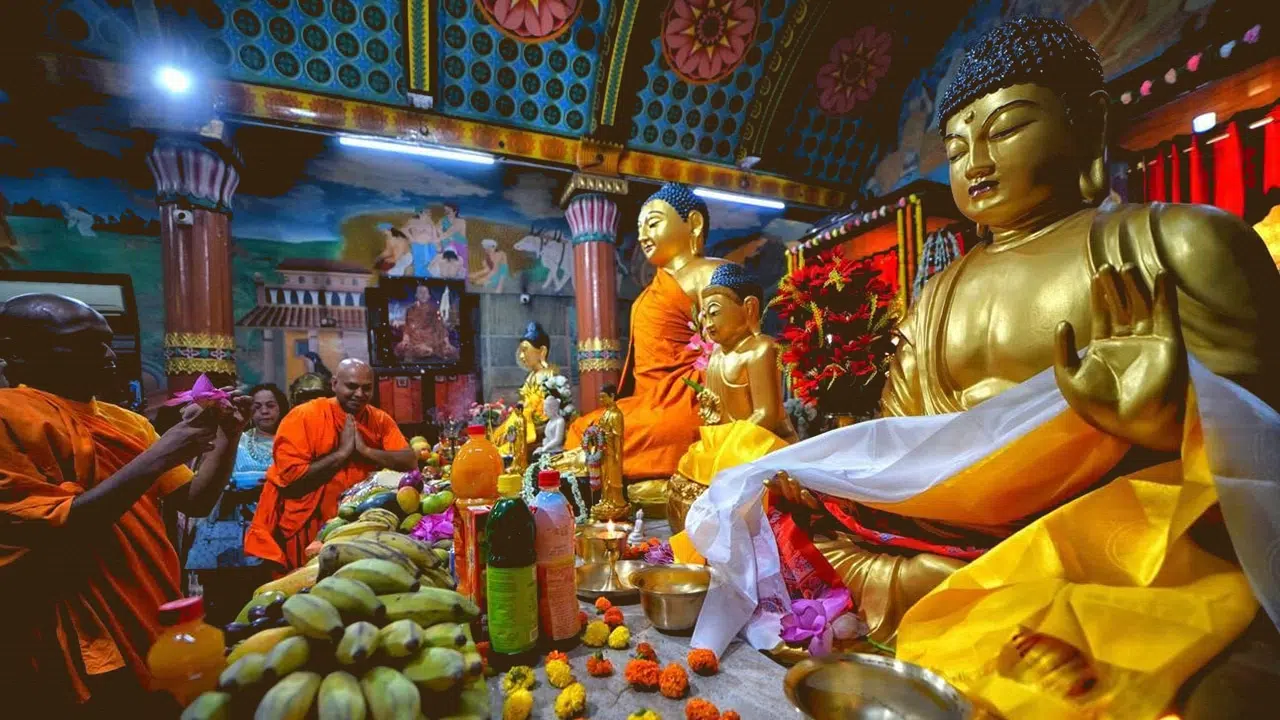
To understand the magnitude of the festival, one must first look at the historical figure at its centre. The story of Siddhartha Gautama is a fascinating journey of a man who willingly abandoned absolute worldly power for the pursuit of universal truth. His early life provides crucial context for his later teachings.
The Transformation From Royal Prince To Ascetic Wanderer
Siddhartha was born into the royal Shakya clan in Lumbini, located in modern Nepal, during the sixth century BCE. According to historical texts, his parents, King Suddhodana and Queen Maya, received prophecies suggesting their son would become either a great ruler or a revered spiritual leader. Hoping for the former, his father sheltered him from the realities of human suffering by confining him to the luxurious palace grounds. This isolated existence shattered when the young prince finally ventured outside the palace walls in his late twenties. During these excursions, he encountered what historians and religious scholars refer to as the four sights. He saw an elderly person, a diseased person, a decaying corpse, and finally a tranquil ascetic.
These encounters profoundly affected his worldview and illuminated the unavoidable realities of physical decline. Realising that extreme wealth could not prevent ageing, sickness, or death, he left his royal life behind at the age of twenty-nine to seek a permanent solution to human suffering.
How Did Siddhartha Attain Supreme Enlightenment?
The journey from a wandering ascetic to an awakened teacher required years of intense physical and mental discipline. Siddhartha experimented with various extreme philosophical practices before discovering his own unique and balanced method to achieve ultimate clarity.
The Discovery Of The Middle Way In Bodh Gaya
Initially, Siddhartha engaged in severe asceticism alongside five companions. He deprived himself of food and basic comforts until he was near physical collapse. He soon realised that physical torment clouded his mind rather than clearing it. After accepting a small bowl of milk rice from a local village woman named Sujata, he regained his strength. Consequently, he developed a new approach known as the Middle Way.
This is a path of moderation that avoids the extremes of sensual indulgence and severe self-mortification. He then sat beneath a sacred fig tree, now famously known as the Bodhi tree, in the Indian town of Bodh Gaya. After a period of deep and unwavering meditation, he successfully confronted internal illusions and completely eradicated all ignorance and desire from his mind. At this pivotal moment, he became the Buddha, meaning the awakened or enlightened one.
Why Is Buddha Purnima Significant In The Modern World?ed
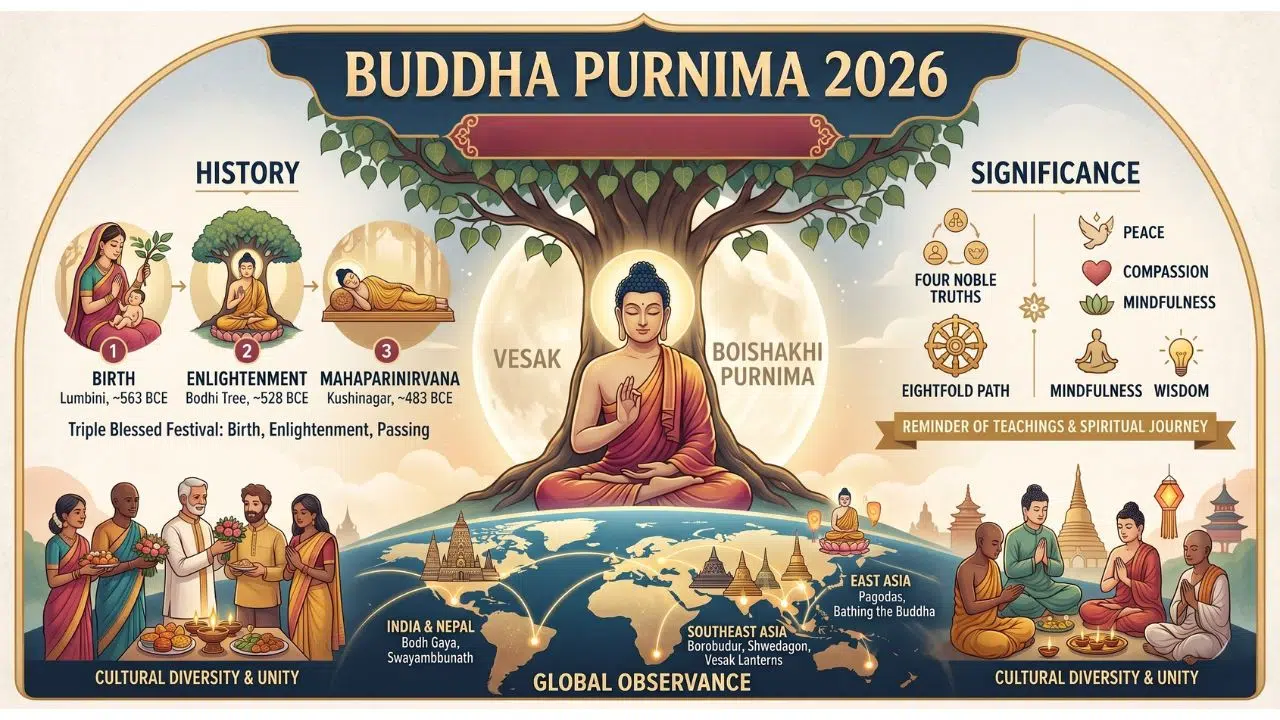
The relevance of this festival extends far beyond historical commemoration. In our highly connected and often chaotic modern era, the underlying principles of the observance offer highly practical solutions for societal harmony and personal mental health.
Core Values And Timeless Teachings For Global Peace
The core message of the festival focuses heavily on compassion, non-violence, and mindfulness. These teachings encourage individuals to look inward and address the root causes of their own discontent rather than blaming external circumstances. By practising empathy and letting go of material attachments, people can foster better relationships within their communities and promote environmental stewardship.
The international community formally acknowledged this profound impact in 1999 when the United Nations General Assembly passed a resolution to officially recognise the Day of Vesak. To better understand this impact, the table below highlights the core Buddhist values and their modern applications.
| Core Buddhist Value | Historical Context | Modern Societal Application |
| Ahimsa (Non-violence) | Avoiding physical harm to living beings | Promoting peace treaties and environmental conservation |
| Karuna (Compassion) | Alleviating the suffering of others | Supporting charitable initiatives and social justice |
| Sati (Mindfulness) | Maintaining clear awareness of the present | Utilising meditation for mental health and stress relief |
Where And How Do Devotees Observe The Festival Globally?
Because Buddhism spread across vast geographical regions over thousands of years, the ways in which people celebrate the festival vary significantly. Each culture has integrated its own local customs into the core spiritual observance to create unique regional traditions.
Diverse Cultural Practices And Regional Customs
In South Asia, devotees flock to major pilgrimage sites like the Mahabodhi Temple to participate in extended prayer sessions. In East Asian countries such as Taiwan and South Korea, devotees participate in the ceremonial bathing of a baby Buddha statue to symbolise the cleansing of inner impurities. In Sri Lanka, the festival is a visual spectacular where neighbourhoods construct massive, brightly lit structures called pandals that depict detailed stories from the previous lives of the Buddha.
Across Southeast Asia, the practice of Dana, or charitable giving, takes centre stage as people distribute food to the poor and offer daily provisions to monastic communities. For those looking to explore the most significant locations for these celebrations, the following table lists the major pilgrimage destinations.
| Pilgrimage Site | Location | Historical Significance |
| Lumbini | Nepal | The verified birth site of Siddhartha Gautama |
| Bodh Gaya | India | The location of the sacred Bodhi tree and enlightenment |
| Sarnath | India | Where the Buddha delivered his first formal teaching |
| Kushinagar | India | The site where the Buddha attained Mahaparinirvana |
Suggested Ways To Observe Buddha Purnima At Home
You do not need to visit a major temple to honour the spirit of the occasion. Incorporating specific mindful practices into your daily routine can provide a highly meaningful way to connect with the historical teachings right from your own living room.
Cultivating A Personal Practice Of Mindfulness
Establishing a quiet period for introspection is the most authentic way to observe the day. This simple approach requires no elaborate preparations and focuses entirely on internal development and mental clarity. By dedicating at least twenty minutes of uninterrupted time in a quiet space, individuals can practise focusing entirely on their breath and observing their thoughts without judgement. Additionally, many choose to observe the day by adhering to a strictly vegetarian diet to honour the principle of non-violence towards all living creatures.
Engaging in acts of quiet generosity, such as donating to a local charity or helping a neighbour, directly aligns with the historical practices of Gautama Buddha and requires absolutely no special equipment or financial investment.
What Are The Foundational Teachings To Reflect Upon?
Rather than simply focusing on the historical events or reciting familiar phrases, it is highly beneficial to examine the underlying philosophical concepts that the Buddha taught. These fundamental concepts form the bedrock of the entire religious and philosophical tradition.
Understanding The Framework Of Human Experience
The most fundamental framework provided by the awakened teacher revolves around the nature of human dissatisfaction, often categorised as the Four Noble Truths. He taught that suffering is an inherent part of existence, primarily caused by our endless desires and our strict attachments to impermanent things. However, he also provided a profound message of hope by explaining that this suffering can be completely overcome by anyone willing to put in the effort.
The method to achieve this liberation is through strict ethical conduct, rigorous mental discipline, and the cultivation of deep wisdom. Reflecting on these principles during the festival encourages a distinct shift away from material greed and guides practitioners towards a more balanced, compassionate, and fulfilling way of living.
Final Thoughts
In conclusion, Buddha Purnima 2026 is far more than a traditional festival—it is a profound spiritual observance with timeless relevance in today’s fast-paced and often divided world. Commemorating the birth, enlightenment, and Mahaparinirvana of Gautama Buddha, this sacred day offers a unique opportunity to pause, reflect, and reconnect with values that transcend cultures and generations.
Rooted in the teachings of Buddhism, Buddha Purnima reminds us of the enduring importance of compassion (karuna), wisdom (prajna), and mindfulness in our everyday lives. In a world often shaped by stress, conflict, and material pursuits, the Buddha’s message encourages a shift inward—toward self-awareness, balance, and ethical living. It teaches that true happiness does not arise from external possessions, but from inner peace, understanding, and the ability to let go of suffering.
The historical and spiritual significance of this day also underscores the lasting impact of the Buddha’s journey—from a life of luxury to one of deep spiritual awakening. His path continues to inspire millions to seek truth, practice non-violence, and cultivate empathy toward all living beings. Whether through meditation, acts of kindness, or quiet reflection, Buddha Purnima invites individuals to embrace a more conscious and meaningful way of life.
Ultimately, Buddha Purnima is not merely a remembrance of the past—it is a living philosophy that continues to guide humanity toward peace, wisdom, and inner freedom in an ever-changing world.
Frequently Asked Questions (FAQs)
1. What is Buddha Purnima?
Buddha Purnima is the most important festival in Buddhism, celebrating the birth, enlightenment, and death (Mahaparinirvana) of Gautama Buddha. It is observed on the full moon day of the Vaisakha month.
2. When is Buddha Purnima in 2026?
In 2026, Buddha Purnima will be observed on 1 May in countries like Bangladesh, India, and Nepal. However, some countries may celebrate it on different dates based on their lunar calendar systems.
3. Why is Buddha Purnima important?
The festival honors the life and teachings of the Buddha, which focus on compassion, non-violence, and mindfulness. It is a time for spiritual reflection and practicing kindness.
4. Where was Gautama Buddha born?
Siddhartha Gautama was born in Lumbini, which is now a UNESCO World Heritage Site in Nepal.
5. How do people celebrate Buddha Purnima?
People celebrate by visiting temples, meditating, offering prayers, reading Buddhist scriptures, and performing acts of charity. Many also follow a vegetarian diet on this day.