Have you ever hired a bright, talented recent grad, only to see them leave just a year later? You sit back and wonder what went wrong. You are definitely not the only leader feeling this way right now. Managing Gen Z employees requires a completely different playbook than what worked in the past. Here is the reality we are looking at. The U.S. Bureau of Labor Statistics notes that Gen Z already makes up about 18 percent of the workforce in 2024, and that number is projected to hit 30 percent by 2030.
We found that understanding their focus on purpose and flexibility changes everything. It turns a frustrating workforce management challenge into a massive opportunity for your company.
So grab a cup of coffee, and let’s go through it together. I will show you exactly what leaders need to know to build a team they actually want to stay on.
Understanding Generation Z in the Workplace
Gen Z workers bring fresh perspectives and different expectations to your office. They grew up with smartphones in their hands, so they see work through a completely different lens than older generations.
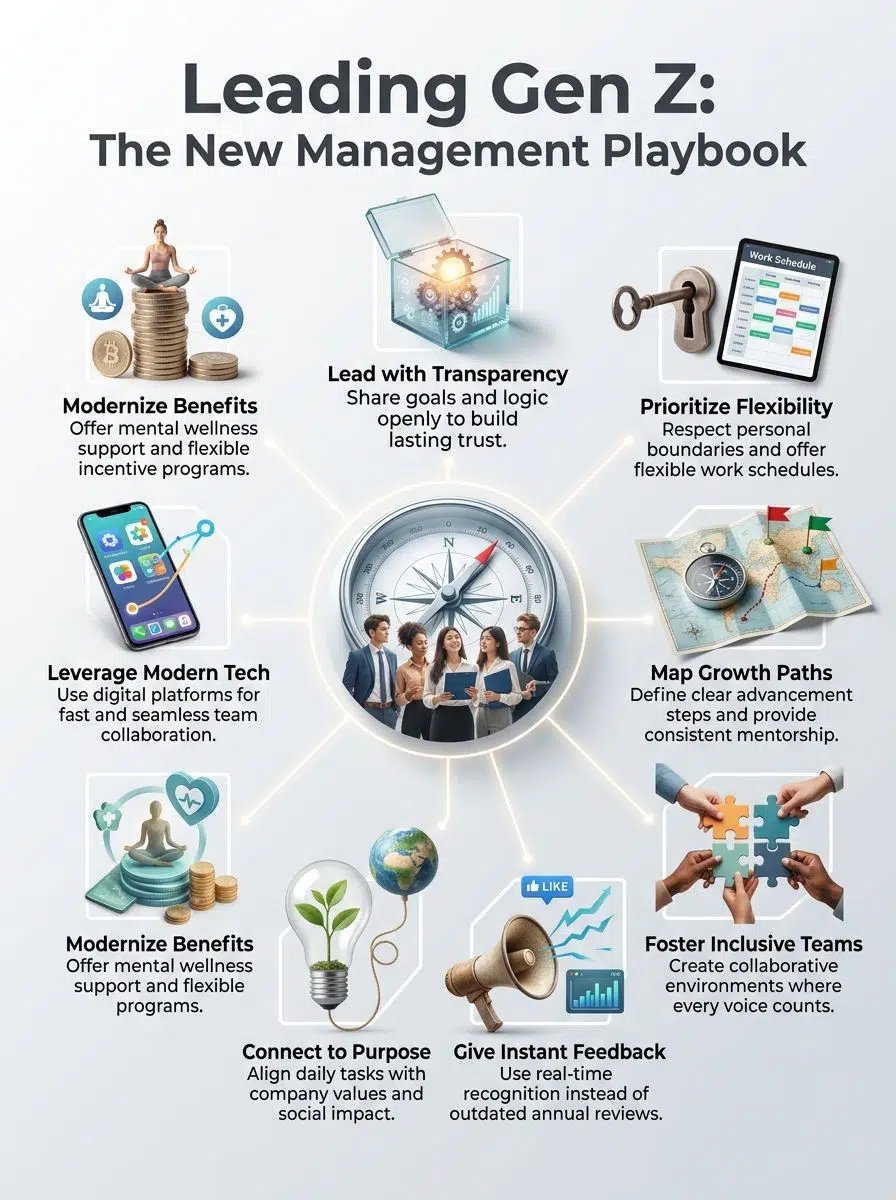
Key characteristics of Gen Z employees
Digital natives define this workforce generation. They expect seamless digital tools at work, and they use platforms like Slack, Microsoft Teams, and Asana to solve problems fast.
This group values authenticity over corporate polish. They spot fake messaging from a mile away.
Purpose matters to them deeply. A 2025 Deloitte survey found that 89 percent of Gen Z consider a sense of purpose essential to their job satisfaction and well-being.
They want to work for companies that stand for something real, not just chase profits.
Flexibility ranks high on their priority list. Traditional nine-to-five schedules feel outdated to them, and they crave true work-life balance.
How they differ from previous generations
Gen Z employees bring a completely different mindset to work compared to their predecessors. They grew up in a fully digital world, which shaped how they communicate, learn, and solve problems.
Here is how they stand apart from Baby Boomers, Gen X, and Millennials:
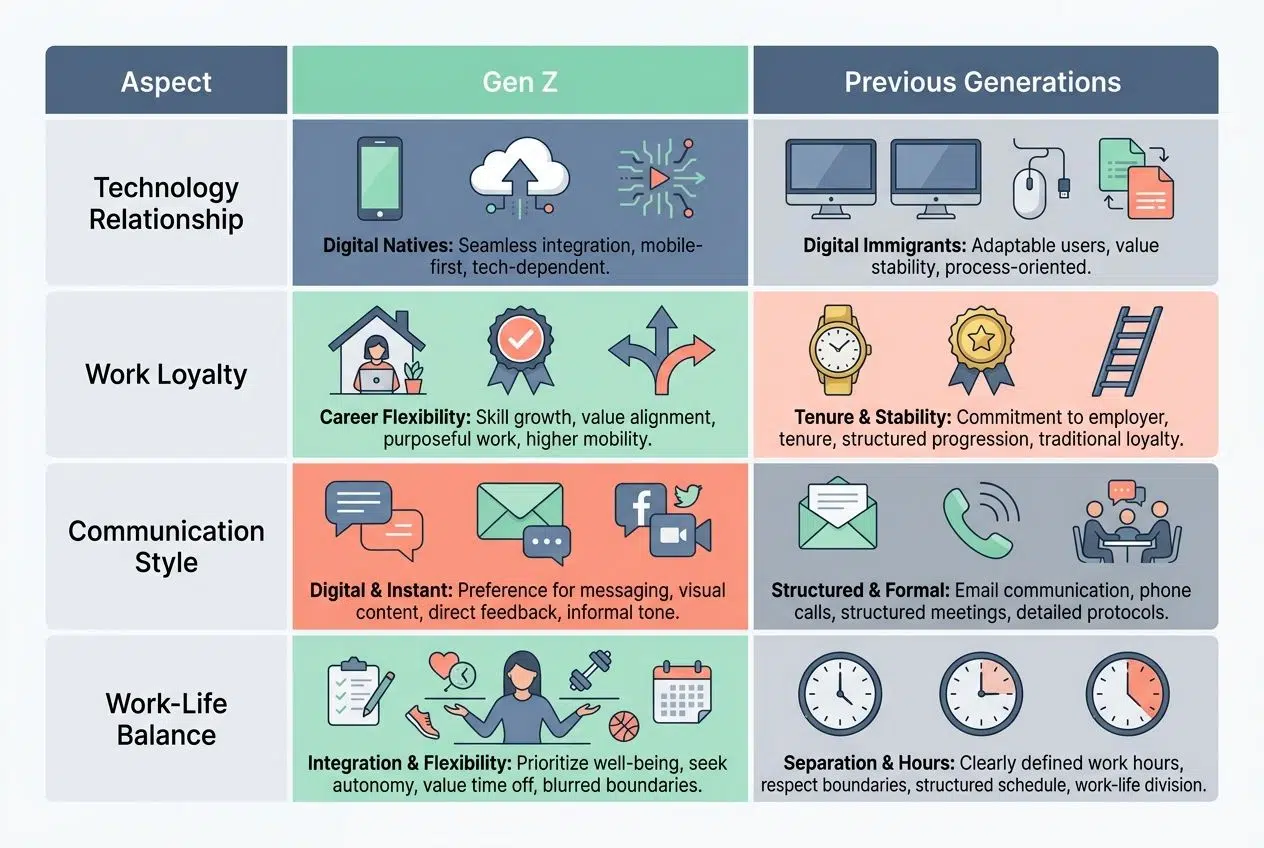
| Aspect | Gen Z | Previous Generations |
|---|---|---|
| Technology Relationship | Sees technology as essential to daily life. They work best with tools integrated into workflows. Expects instant access to information and communication. | Adapted to technology over time. Baby Boomers and Gen X required significant adjustment. Millennials bridged the gap between analog and digital worlds. |
| Work Loyalty | Switches jobs more frequently for better opportunities. Values flexibility and growth over company tenure. Stays only if conditions meet their expectations. | Built careers at single companies for decades. Baby Boomers especially valued long-term employment. Viewed job changes as risky or disloyal. |
| Communication Style | Prefers quick, informal messaging over formal emails. Uses emojis and shorthand naturally. Expects immediate responses to messages. | Relied on phone calls and formal written communication. Gen X and Boomers value structured conversations. Millennials slowly introduced casual communication methods. |
| Work-Life Balance | Demands clear boundaries between work and personal time. Mental health ranks as a top priority. Resists constant availability expectations. | Worked long hours without question. Previous generations normalized overwork as dedication. Work often blended into personal life without separation. |
| Purpose and Values | Wants work aligned with personal beliefs. Seeks companies supporting social causes. Leaves jobs that conflict with their values. | Focused primarily on paycheck and stability. Previous generations separated personal values from work. Social responsibility wasn’t a hiring criterion. |
| Feedback Expectations | Wants frequent, real-time feedback and recognition. Thrives on regular check-ins with managers. Avoids waiting for annual reviews. | Accepted annual or semi-annual feedback cycles. Baby Boomers rarely received praise in workplaces. Constructive criticism was delivered infrequently. |
| Learning Preferences | Learns through videos, online courses, and peer collaboration. Prefers short bursts of information. Uses social media for professional development. | Learned through formal training programs and manuals. Gen X preferred in-person instruction. Millennials introduced online learning but still valued structured programs. |
| Diversity and Inclusion | Expects diverse, inclusive workplaces as standard. Won’t accept discrimination or exclusion. Values representation at all levels. | Diversity initiatives were newer concepts. Baby Boomers and Gen X operated in less inclusive environments. Millennials started pushing for change. |
Gen Z employees operate from a fundamentally different playbook than their older coworkers. They grew up with smartphones, social media, and instant connectivity, making them naturally comfortable with remote work and digital tools.
They question outdated processes and are not afraid to suggest better ways of doing things. Their average job tenure is only 1.1 years, compared to 2.8 years for Gen X, so retaining them takes real effort.
Challenges of Managing Gen Z Employees
Managing Gen Z employees brings real friction points that leaders must address head-on. Your team’s expectations about work style, communication methods, and career growth differ sharply from what you might expect.
In fact, a 2026 Inc report notes that Gen Z now makes up 41 percent of the U.S. shift workforce. This massive shift is reshaping frontline and office jobs alike.
Addressing intergenerational gaps
Older leaders and younger Gen Z workers often speak different languages at work. Boomers and Gen X managers value loyalty, hierarchy, and face-to-face meetings. Gen Z employees crave autonomy, flexibility, and digital communication. These differences create real friction on mixed teams.
A 2025 Gallup study found that 44 percent of Gen Z workers describe their U.S. workplaces as isolated or impersonal.
Leaders who ignore these gaps risk losing top talent fast. The key is to meet your team halfway and ask Gen Z workers what communication styles work best for them.
Overcoming technology dependency
Gen Z workers grew up with smartphones in their hands, so they expect technology at work. Your team members may struggle when systems go down or when face-to-face meetings replace digital communication.
They prefer asynchronous communication tools like Notion, Slack, and Loom to balance autonomy and connection. You can help them build confidence beyond the screen with a few simple steps:
- Encourage your workforce to solve problems through direct conversation instead of just emails.
- Create designated phone-free lunch hours to foster genuine connections.
- Offer training on face-to-face communication and active listening skills.
- Set clear expectations about when employees should use technology and when they should unplug.
Strategies for Managing Gen Z Effectively
Effective leadership of Gen Z workers requires you to shift your management style and meet them where they stand. Smart leaders build trust through open dialogue, respect their need for flexibility, and create spaces where young professionals can thrive.
Lead with transparent communication
Gen Z workers crave honesty from their leaders. Drop the corporate speak and tell them what is really going on behind the scenes. Pay transparency is a massive priority for this group. As of 2026, 16 U.S. states have enacted pay transparency laws, and younger workers expect this openness everywhere.
According to recent workforce data, nearly 40 percent of Gen Z employees openly discuss salaries at work. This is almost double the rate of Gen X.
You must be prepared to have open conversations about compensation. Use goal-tracking platforms like Lattice or 15Five to make performance metrics clear and transparent.
Promote a healthy work-life balance
Transparent communication opens doors, but work-life balance keeps them open. Gen Z employees value flexibility more than previous generations did.
The Hartford’s 2025 Future of Benefits Study found that 40 percent of U.S. Gen Z workers feel depressed or anxious at least a few times per week. You must actively combat burnout to keep them engaged.
Your team members work harder when they know you respect their personal time. Here are a few ways to show your support:
- Set clear boundaries around work hours and model this behavior yourself.
- Encourage team members to take their vacation days without guilt or pressure.
- Support their autonomy by trusting them to manage their own schedules.
- Offer remote or hybrid work options whenever possible to reduce commuting stress.
Encourage growth through structured learning
Once you establish work-life balance, your Gen Z employees gain the energy and focus they need to tackle new challenges. A 2025 Randstad report found that 75 percent of Gen Z workers proactively use AI tools like ChatGPT to learn new skills.
- Offer clear career pathways so your team members see where they can advance within your company.
- Invest in training courses like LinkedIn Learning or Coursera that align with your employees’ career goals.
- Schedule regular one-on-one meetings to discuss development plans and listen to their aspirations.
- Allocate a learning budget for each team member to choose courses or books that fuel their growth.
Encourage growth through experiential opportunities
Growth opportunities become the fuel that keeps them engaged and committed to your organization. Recent data shows that 70 percent of Gen Z workers develop career skills at least once per week.
- Create mentorship programs that pair experienced leaders with younger staff.
- Provide opportunities for cross-functional projects so your Gen Z talent can explore different departments.
- Encourage your employees to lead internal workshops to share their knowledge with colleagues.
- Create stretch assignments that push your Gen Z employees beyond their comfort zones.
Foster a collaborative and inclusive environment
Gen Z workers thrive when they feel heard and valued. Build teams where collaboration flows naturally, and create spaces where employees from different backgrounds share ideas without fear. A 2024 Glassdoor survey found that 77 percent of Gen Z candidates prioritize companies with inclusive cultures. Diversity and inclusion shape how your workforce engages daily.

Diversity is not a buzzword for Gen Z; it is a strict requirement for their participation.
Encourage cross-functional projects that mix departments and skill levels. Let people work together on problems that excite them to build trust fast.
Deliver consistent and real-time feedback
Feedback shapes how your team grows, and recognition fuels their motivation to keep pushing forward. A recent HRO Today study showed that 75 percent of Gen Z employees want recognition from managers a few times a month.
- Schedule monthly one-on-one meetings to discuss performance and create a safe space for dialogue.
- Use real-time feedback tools and apps to capture wins as they happen.
- Ask for feedback from your team members, too, to demonstrate that communication flows both ways.
- Offer constructive criticism in private conversations to protect employee dignity while addressing gaps.
Celebrate wins and recognize growth
Leaders who master recognition build stronger teams and watch retention rates climb. Younger workers value professional development and want to see themselves improving over time.
- Deliver specific praise when your team members accomplish goals so they understand their impact.
- Celebrate both big victories and small wins publicly during team meetings.
- Recognize personal growth and skill development, because continuous improvement matters deeply to them.
- Create peer recognition programs using tools like Bonusly or Kazoo to build collaboration and empowerment.
Motivating Gen Z Employees
Gen Z workers want their jobs to mean something real. They crave work that aligns with their values, not just a paycheck.
Data from Harmony Healthcare IT in 2025 reveals that only 26 percent of Gen Z aspire to reach a traditional manager-level role. They prioritize mental well-being and sustainable success over corporate status.
Align responsibilities with personal values
Your team members care about more than just a paycheck. They want their work to matter, to align with what they believe in, and to reflect their core values.
A staggering 69 percent of Gen Z candidates want to work for companies that share their values. Leaders who match job responsibilities to employee values see real results.
Employees become more engaged, more committed, and more likely to stick around. Talk with your team about what drives them and what causes they support.
A Gen Z worker passionate about sustainability might lead your company’s green initiatives. Another team member who values social justice could champion your diversity efforts.
Emphasize purpose-driven work
Aligning work with personal values forms the foundation. Purpose-driven work takes this concept even further. Leaders who articulate a clear mission inspire deeper commitment from their teams. Mentioning your B-Corp certification or community outreach programs resonates deeply with digital natives.
For Gen Z, work is not just about making a dollar; it is about making a difference.
When you connect daily tasks to broader organizational goals, Gen Z workers feel more engaged and motivated. They perform better when they understand the reason behind their responsibilities.
Utilize modern project and communication tools
Tech tools can transform how your team connects, communicates, and collaborates every single day. Gen Z employees expect digital solutions that make work smoother, faster, and more enjoyable.
A McKinsey study shows that Gen Z employees are 2.5 times more likely than older colleagues to use workplace communication tools. You must equip them for success.
- Use project management platforms like Asana, Monday.com, or Trello to keep your team organized.
- Implement instant messaging apps such as Slack or Microsoft Teams for quick communication.
- Adopt video conferencing tools like Zoom for face-to-face interactions with remote teams.
- Offer mobile-first applications that let your workforce access information from anywhere.
Integrate recognition and learning platforms
Technology solutions directly support your talent retention efforts and strengthen your workforce management approach. Salesforce recently incorporated AI-driven internal messaging tools, which led to a 25 percent increase in workplace satisfaction.
- Use social recognition platforms that celebrate wins publicly and give your team members the feedback they crave.
- Create internal social networks where employees can share wins and ask questions.
- Integrate learning management systems that provide on-demand training and development opportunities.
- Employ automation tools to eliminate repetitive tasks and free up time for meaningful work.
Retaining Gen Z Talent
Keeping Gen Z workers on your team takes real effort, but the payoff matters. You need to show them a clear path forward, pay them fairly, and build a workplace where they actually want to show up every day.
Keep in mind that 57 percent of Gen Z workers plan to change jobs in 2026. Your retention strategies must be proactive and highly targeted.

Offer competitive benefits and incentives
Gen Z workers care about what you offer beyond the paycheck. They want health insurance that covers mental wellness, student loan repayment programs, and flexible spending accounts.
SHRM’s 2025 research finds 61 percent of Gen Z workers would strongly consider leaving their current job for one with significantly better mental health benefits. Companies that offer comprehensive mental health platforms like Spring Health or Lyra Health stand out from the crowd.
You should also look into the U.S. SECURE 2.0 Act. This law allows employers to match student loan payments with 401(k) contributions, which directly addresses their financial anxiety.
Map out clear advancement pathways
Your team members want to climb the ladder, and you need to give them the rungs to step on. Gen Z currently has an attrition rate of 22 percent, nearly double that of Millennials.
- Map out clear career paths so employees understand exactly what skills they need to advance.
- Offer multiple pathways for growth, such as subject matter expert roles, not just traditional management.
- Establish regular check-ins to discuss career aspirations and align individual goals with business needs.
- Promote from within whenever possible to boost morale and retain institutional knowledge.
Invest in continuous employee development
Career progression keeps talented employees engaged, motivated, and committed to your organization’s success. More than 53 percent of Gen Z say learning helps them explore new career paths.
- Create mentorship programs that connect emerging talent with experienced leaders.
- Sponsor skill-building workshops, certifications, and specialized training courses throughout the year.
- Rotate employees through different departments or teams to broaden their experience and build versatility.
- Tie compensation increases directly with skill acquisition and expanded responsibilities.
Build a strong organizational culture
Career progression opens doors, but a strong organizational culture keeps employees walking through them. Gen Z workers crave workplaces where they feel they belong, where values align with their own, and where collaboration thrives at every level.
Leaders build this culture by living out company values every single day, not just posting them on walls. When leaders model integrity, inclusivity, and respect, Gen Z employees notice and follow suit.
Belonging is the new corporate currency, and it is built through daily, intentional actions.
Engagement skyrockets when Gen Z employees see their workplace as a community, not just a paycheck. Leaders strengthen organizational culture by creating spaces where people feel safe to speak up, share ideas, and take risks without fear of failure.
Wrapping Up
Managing Gen Z employees demands that leaders shift their approach, embrace transparency, and invest in their workforce’s growth. Your organization stands to gain tremendous value when you prioritize communication, offer flexibility, and create spaces where your team members feel heard and valued.
Gen Z workers bring fresh perspectives, digital expertise, and strong values to your workplace. Leaders who adapt their strategies, provide meaningful feedback, and build inclusive cultures will attract and keep the best talent.
The investment you make in understanding this generation pays dividends through improved engagement, stronger retention rates, and a more dynamic workplace. Your next move matters. Start small if you need to, test new ideas, and measure what works for your specific team.
Talk directly with your Gen Z employees about what motivates them, what frustrates them, and what they need to do their best work. Listen more than you talk. Adjust your leadership style based on what you learn.
Organizations that take action now will lead the way in building workforces that thrive, collaborate effectively, and stay committed for the long haul.
Frequently Asked Questions (FAQs) on Managing Gen Z Employees
1. How do I keep Gen Z employees motivated at work?
Give them regular feedback and let them share ideas openly. A 2024 Gallup study found that 60% of Gen Z workers say recognition for their contributions is a top factor in job satisfaction, so show them how their work matters.
2. What is the best way to communicate with Gen Z team members?
Get to the point quickly using clear, direct language. Many Gen Z employees prefer tools like Slack or quick check-ins over long emails or formal meetings that waste time.
3. Why does flexibility matter so much for Gen Z staff?
This generation grew up juggling school and side projects from anywhere with Wi-Fi. Research from FlexJobs in 2023 showed that 75% of Gen Z workers consider flexible schedules a must-have, not a perk.
4. How can leaders help Gen Z grow in their roles?
Offer real learning opportunities early instead of making them wait years for training or advancement. Share your own career mistakes too; honesty about your stumbles builds way more trust than pretending you never failed. According to a 2024 LinkedIn report, Gen Z employees are 30% more likely to stay at companies that provide clear paths for skill development.