The first day of May carries a unique weight in the human story. For millennia, it has been a day of transition—from the ancient Celtic bonfires of Beltane welcoming the fertile summer, to the smoke-filled streets of 19th-century Chicago where the modern labor movement forged its most defining milestones. Whether you are a history buff, a trivia enthusiast, or simply curious about the world-shaping moments that happened to fall on this exact date, digging into the archives reveals a fascinating tapestry of human triumph, tragedy, and progress.
To help you navigate this massive historical timeline, we have broken down the most significant events, the visionaries who were born, and the legends we lost.
Top Historical Milestones on May 1
Understanding the history of this date requires looking at a few pivotal moments that fundamentally altered the course of modern society. From the foundation of global workers’ rights to major geopolitical shifts in the Indian subcontinent, these events set the stage for the socio-economic realities we navigate today.
The Launch of the Eight-Hour Workday Movement (1886)
The labor landscape of the late 19th century was grueling, with industrial workers routinely subjected to backbreaking 12-to-16 hour shifts in highly dangerous, unregulated conditions. Child labor was rampant, and workplace fatalities were an accepted cost of doing business. In response to these brutal standards, the Federation of Organized Trades and Labor Unions proclaimed that “eight hours shall constitute a legal day’s labor from and after May 1, 1886.”
When that day arrived, hundreds of thousands of workers across the United States walked off their jobs in a massive, unprecedentedly coordinated strike. In Chicago alone, an estimated 40,000 workers went on strike, bringing the city’s vast industrial machinery to a grinding halt. This monumental action culminated in the infamous Haymarket affair days later, where a peaceful rally turned violent following a bomb explosion. The global outrage and subsequent trials effectively birthed International Workers’ Day, turning May 1 into a permanent global symbol of worker solidarity and anti-capitalist protest, even as the United States and Canada ultimately shifted their own Labor Day observances to September.
The Formation of Maharashtra and Gujarat (1960)
Following the independence of India in 1947, the massive Bombay State became a complex cultural and linguistic battleground. The States Reorganisation Act of 1956 had reorganized many Indian states along linguistic lines, but it controversially left the bilingual Bombay State intact, housing both Marathi and Gujarati speakers. This sparked intense, sometimes violent, grassroots agitations.
The Samyukta Maharashtra Samiti fiercely advocated for a separate Marathi-speaking state with Bombay (now Mumbai) as its capital, while the Mahagujarat Movement demanded their own linguistic territory for Gujarati speakers. After years of protests that deeply tested India’s young democracy, the central government finally conceded. On this day in 1960, the Bombay Reorganisation Act came into effect, officially dividing the territory. This peaceful, democratic reorganization honored the cultural identities of millions of people and established two of India’s most economically powerful and culturally rich states, making May 1 a deeply emotional day of remembrance and regional pride.
The Empire State Building Opens its Doors (1931)
In the midst of the Great Depression, an architectural marvel pierced the New York City skyline, serving as a desperate but towering beacon of American resilience. Designed during the roaring optimism of the 1920s, the Empire State Building’s construction was a marvel of modern engineering and breakneck speed, completed in just 410 days.
On May 1, 1931, President Herbert Hoover pressed a ceremonial button in Washington, D.C., officially turning on the lights of the building in Manhattan. Standing at a staggering 1,250 feet tall, it shattered previous records and claimed the title of the world’s tallest building—a record it would hold for nearly 40 years. However, because it opened during the darkest days of America’s economic collapse, much of its office space initially sat completely empty, earning it the temporary, mocking nickname “The Empty State Building.” Despite its rocky start, it survived the Depression to become an instantly recognizable global icon of ambition.
The Massive Expansion of the European Union (2004)
In the single largest expansion in the history of the European Union, ten new member states officially joined the bloc, effectively rewriting the geopolitical map of the continent. The inclusion of Cyprus, the Czech Republic, Estonia, Hungary, Latvia, Lithuania, Malta, Poland, Slovakia, and Slovenia was an act of profound historical significance.
This expansion effectively reunited a continent that had been fractured by the Iron Curtain since the end of World War II. For the former Soviet bloc nations, joining the EU was the culmination of more than a decade of grueling economic, legal, and democratic reforms. It shifted the economic and political center of gravity in Europe eastward, integrating over 70 million new citizens into a unified market. While it represented a monumental triumph for liberal democracy, integrating these diverse economies required massive structural adjustments and set the stage for the complex contemporary debates surrounding EU borders, labor migration, and national sovereignty that dominate European politics today.
Moving beyond these highlighted moments, the broader historical record of this date is packed with fascinating treaties, cultural milestones, and sudden geopolitical shifts.
Here is a comprehensive look at the major global events that took place on this day.
At a Glance: Global Historical Events on May 1
| Year | Event Description | Region |
| 305 AD | Diocletian and Maximian unexpectedly retire from the office of Roman Emperor, the first time in history a Roman emperor voluntarily abdicated. | Roman Empire |
| 1707 | The Act of Union joins the Kingdom of England and the Kingdom of Scotland to form the unified Kingdom of Great Britain. | United Kingdom |
| 1776 | The secretive Illuminati order is founded by Adam Weishaupt in Ingolstadt, Bavaria. | Germany |
| 1840 | The “Penny Black,” the world’s very first adhesive postage stamp, is issued in the UK. | United Kingdom |
| 1925 | The All-China Federation of Trade Unions is founded. Today it is the largest trade union in the world. | China |
| 1931 | The Empire State Building is officially dedicated in New York City. | United States |
| 1941 | Citizen Kane, directed by and starring Orson Welles, premieres in New York. It is widely considered one of the greatest films ever made. | United States |
| 1945 | Following the suicide of Adolf Hitler the day prior, a Soviet flag is raised over the Reich Chancellery by the Red Army. | Germany / USSR |
| 1950 | Gwendolyn Brooks becomes the first African American to win the Pulitzer Prize for Poetry. | United States |
| 1960 | The Indian states of Maharashtra and Gujarat are officially formed. | India |
| 1961 | Fidel Castro publicly declares Cuba a socialist nation and abolishes democratic elections. | Cuba |
| 1971 | The Battle of Bogadiya takes place during the Bangladesh Liberation War, an important localized victory for freedom fighters. | Bangladesh |
| 1997 | The Labour Party, led by Tony Blair, wins a landslide victory, ending 18 years of Conservative rule in the UK. | United Kingdom |
| 2004 | The European Union expands by ten new member states, heavily incorporating Eastern Europe. | European Union |
| 2009 | Same-sex marriage becomes officially legal in Sweden. | Sweden |
| 2011 | US President Barack Obama announces that Al-Qaeda leader Osama bin Laden was killed by US Navy SEALs in Pakistan (Note: May 2 local Pakistan time, but May 1 in the US). | United States / Pakistan |
Iconic Figures Born on May 1
| Year | Name | Nationality | Profession / Claim to Fame |
| 1769 | Arthur Wellesley | Irish / British | Military Commander (Duke of Wellington) and Prime Minister |
| 1852 | Calamity Jane | American | Frontierswoman, scout, and Wild West legend |
| 1881 | Pierre Teilhard de Chardin | French | Jesuit priest, paleontologist, and philosopher |
| 1919 | Manna Dey | Indian | Legendary playback singer for Bengali and Hindi cinema |
| 1923 | Joseph Heller | American | Satirical author best known for Catch-22 |
| 1924 | Terry Southern | American | Screenwriter (Dr. Strangelove, Easy Rider) |
| 1939 | Judy Collins | American | Influential folk singer and songwriter |
| 1946 | John Woo | Chinese / Hong Kong | Highly influential action film director |
| 1968 | D’arcy Wretzky | American | Original bass player for The Smashing Pumpkins |
| 1969 | Wes Anderson | American | Critically acclaimed, visually distinct film director |
| 1982 | Jamie Dornan | Northern Irish | Actor (The Fall, Fifty Shades of Grey) |
| 1988 | Anushka Sharma | Indian | Leading Bollywood actress and film producer |
History is ultimately driven by human ambition, creativity, and intellect. The people born on this date reflect a wide spectrum of human achievement, spanning across different continents, artistic movements, and eras of conflict.
Arthur Wellesley, 1st Duke of Wellington (1769)
Born in Dublin, Ireland, into an aristocratic Anglo-Irish family, Arthur Wellesley rose through the ranks to become one of the most celebrated and studied military commanders in British history. His legendary tactical brilliance was honed during campaigns in India and the Peninsular War, but it reached its absolute zenith in 1815.
At the historic Battle of Waterloo, Wellington commanded the allied army that finally defeated Napoleon Bonaparte, effectively ending the French emperor’s reign and halting a generation of devastating European conflict. Wellington was a master of defensive warfare, famously utilizing the reverse slopes of hills to protect his infantry from artillery fire. Beyond his military prowess, his status as a national hero propelled him into politics, where he served twice as the Prime Minister of the United Kingdom. However, his political career was far more turbulent and controversial than his military one, as he staunchly opposed the Great Reform Act, earning him the nickname “The Iron Duke” for his rigid, unyielding conservatism.
Joseph Heller (1923)
Growing up in Coney Island, New York, Joseph Heller’s life was profoundly altered when he enlisted in the U.S. Army Air Corps during World War II, flying 60 combat missions as a bombardier over the Italian Front. The sheer terror, sheer boredom, and paralyzing bureaucracy of his military experience became the fertile ground for his literary masterpiece.
In 1961, Heller published Catch-22, a blistering, nonlinear, satirical novel that aggressively deconstructed the mythos of noble warfare. The book introduced a profound critique of military and corporate bureaucracy, centering on the fictional Captain Yossarian, who is desperate to survive a war run by madmen. Heller’s work didn’t just entertain; it altered the global lexicon. The title of his book is now a universally recognized idiom for a paradoxical situation from which an individual cannot escape because of contradictory rules. While initially met with mixed reviews, the novel gained explosive popularity a decade later, as its anti-authoritarian themes resonated deeply with a new generation protesting the Vietnam War.
Manna Dey (1919)
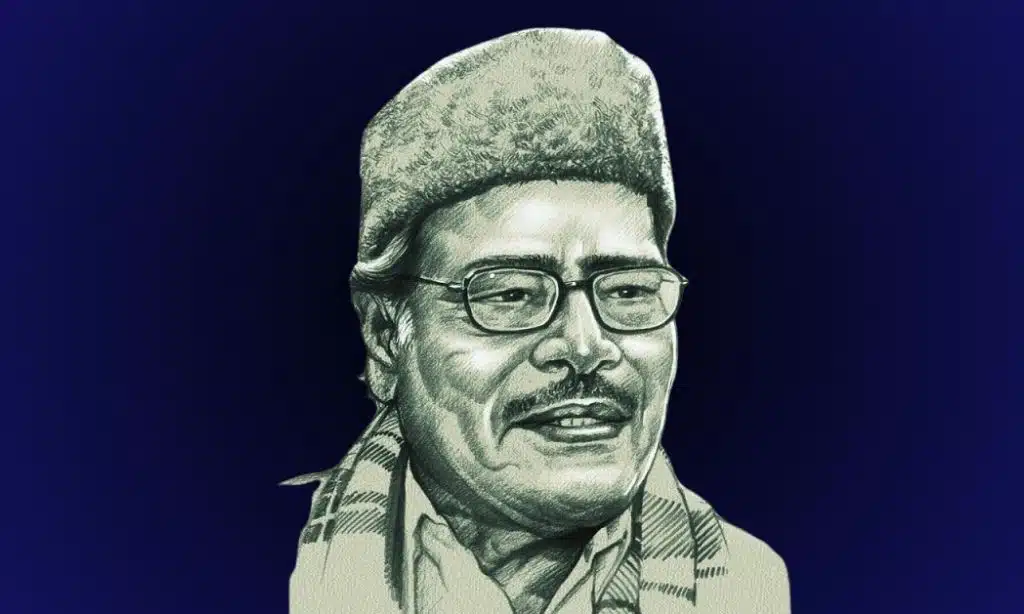
Born Prabodh Chandra Dey in the culturally vibrant city of Calcutta, he evolved into one of the most celebrated, versatile, and technically gifted playback singers in the history of Indian cinema. Initiated into music by his uncle, the visually impaired classical vocalist Krishna Chandra Dey, Manna underwent rigorous training in Hindustani classical music before moving to Bombay in 1942.
What set Manna Dey apart from his contemporaries in the Golden Era of Bollywood was his unparalleled ability to infuse complex, traditional Indian ragas into highly accessible pop and film music. Whether he was singing a deeply spiritual bhajan, a lighthearted romantic duet, or a complex classical piece, his vocal control was immaculate. With a career spanning over five decades and thousands of recorded songs in Bengali, Hindi, Marathi, and several other languages, Dey’s voice is intrinsically woven into the cultural identity of the Indian subcontinent. He was rightfully honored with the Padma Bhushan and the Dadasaheb Phalke Award, the highest award in Indian cinema, cementing his legacy as an undisputed musical titan.
Notable Figures Who Passed Away on May 1
| Year | Name | Nationality | Legacy / Cause of Death |
| 1555 | Pope Marcellus II | Italian | Head of the Catholic Church; his papacy lasted only 22 days before he died of illness. |
| 1873 | David Livingstone | Scottish | Legendary explorer of Africa and medical missionary; died of malaria and dysentery. |
| 1904 | Antonín Dvořák | Czech | Romantic-era composer; died of an undiagnosed cause, likely heart failure, at age 62. |
| 1945 | Joseph & Magda Goebbels | German | Nazi propaganda minister and his wife; committed suicide in the Führerbunker. |
| 1949 | Sri Kaibalyanath | Indian / Bengali | Revered Hindu spiritual guru (Ram Thakur); attained Mahasamadhi. |
| 1965 | Spike Jones | American | Musician and bandleader known for spoofing popular music; died of emphysema. |
| 1994 | Ayrton Senna | Brazilian | Three-time Formula One World Champion; died in a tragic racing crash. |
| 1998 | Eldridge Cleaver | American | Writer and early leader of the Black Panther Party; died of prostate cancer. |
| 2021 | Olympia Dukakis | American | Academy Award-winning actress (Moonstruck); died after months of failing health. |
| 2023 | Gordon Lightfoot | Canadian | Iconic folk-rock singer-songwriter; died of natural causes at age 84. |
Ayrton Senna (1994)
Ayrton Senna was not merely a racing driver; for millions of Brazilians and motorsport fans globally, he was an icon of unmatched skill, fierce dedication, and deep spirituality. Holding three World Drivers’ Championships and 41 Grand Prix victories, his qualifying speed and prowess in the rain remain legendary.
Tragically, during the 1994 San Marino Grand Prix at the Imola circuit—a weekend already marred by the death of rookie driver Roland Ratzenberger the day prior—Senna’s Williams car left the track at the high-speed Tamburello corner and crashed violently into a concrete barrier. His sudden death at the age of 34 sent shockwaves around the world and prompted three days of national mourning in Brazil. Senna’s fatal crash served as a massive catalyst for sweeping, permanent safety reforms within Formula One. The implementation of higher crash test standards, improved barriers, and enhanced head and neck protection are all direct results of the tragic events of that May 1 weekend, saving countless drivers’ lives in the decades since.
Antonín Dvořák (1904)
Born in a small village near Prague, Antonín Dvořák rose from humble beginnings to become one of the most vital composers of the Romantic era. Dvořák had a unique and masterful gift for taking the rustic, rhythmic folk melodies of his native Bohemia and Moravia and transforming them into sweeping, globally celebrated orchestral symphonies.
His international fame eventually brought him to the United States, where he served as the director of the National Conservatory of Music of America in New York City. During his time there, he became deeply fascinated by African American spirituals and Native American musical traditions, boldly declaring that these indigenous melodies should be the foundation of a true American school of music. These influences culminated in his spectacular Symphony No. 9 (“From the New World”), which remains one of the most frequently performed and universally beloved symphonies globally. Dvořák passed away from an undiagnosed cause, likely heart failure, on May 1, 1904, leaving behind a massive repertoire of chamber music, operas, and symphonic poems that bridge the gap between European classicism and the folk soul of his homeland.
International Observances & Holidays on May 1
Depending on where you are standing in the world on May 1, the streets might be filled with labor union rallies protesting for fair wages, indigenous flower festivals celebrating island culture, or joyous statehood parades honoring local history.
To give you a clear picture of what is being celebrated today around the globe, review the international observances below.
| Holiday / Observance | Countries | Cultural Significance |
| International Workers’ Day | Global (Over 80 countries) | Also known as May Day, it champions laborers and the working class, originating from the 1886 Chicago strikes for the eight-hour workday. |
| Maharashtra Day | India (Maharashtra) | A state holiday commemorating the formation of the Marathi-speaking state of Maharashtra from the division of the Bombay State in 1960. |
| Gujarat Day | India (Gujarat) | A parallel state holiday celebrating the linguistic formation of the state of Gujarat on the same day in 1960. |
| Beltane | Ireland, Scotland, UK | An ancient Gaelic May Day festival celebrating the beginning of summer, historically marked by large bonfires to protect cattle and crops. |
| Lei Day | United States (Hawaii) | A statewide celebration of Hawaiian culture, spirit, and the traditional crafting and giving of the flower garland (lei). |
| Loyalty Day | United States | Established during the Cold War to reaffirm loyalty to the United States and counteract the socialist associations of May Day. |
| Constitution Day | Argentina, Latvia, Marshall Islands | Celebrates the adoption of democratic constitutions in these respective nations, serving as a reminder of the rule of law. |
The Historical Imprint and Resonance of May 1st
When we pull back and look at the vast, interwoven timeline of May 1, a beautiful and incredibly complex picture emerges. This is a day fundamentally defined by profound transitions and paradigm shifts. It is the day the ancient agrarian world welcomed the warmth and fertility of summer, and it is the exact same day the modern industrial world drew a firm line in the sand for human dignity and fair labor.
From the smoke-cleared battlefields of Waterloo to the architectural heights of the Empire State Building, and the deeply rooted cultural pride seen on the streets of Maharashtra and Gujarat, this date serves as a powerful reminder of our shared, constantly evolving history. Every time the calendar turns to May 1, we are not just turning a page; we are remembering the immense strides, struggles, and triumphs humanity has experienced to get to where we are today.