We remember the era well. From 2018 to 2024, we lived through the gilded age of biohacking. We tracked our deep sleep phases. We swallowed obscure supplements. We measured our heart rate variability while sitting in morning traffic. We had all the data in the world. Yet, as a society, we had never felt more anxious. The relentless pursuit of peak performance pushed millions into a state of chronic high alert. Today, the conversation has permanently changed. Nervous System Regulation is no longer a fringe clinical concept. It has become the defining wellness standard for 2026.
Think about the stark absurdity of our recent past. You could wake up to a flawless sleep score on your expensive wearable device. You could drink a perfectly calibrated greens powder. Then you would sit at your desk and feel like an apex predator was hunting you. Your body did not care about your digital metrics. Your autonomic nervous system was simply stuck in overdrive.
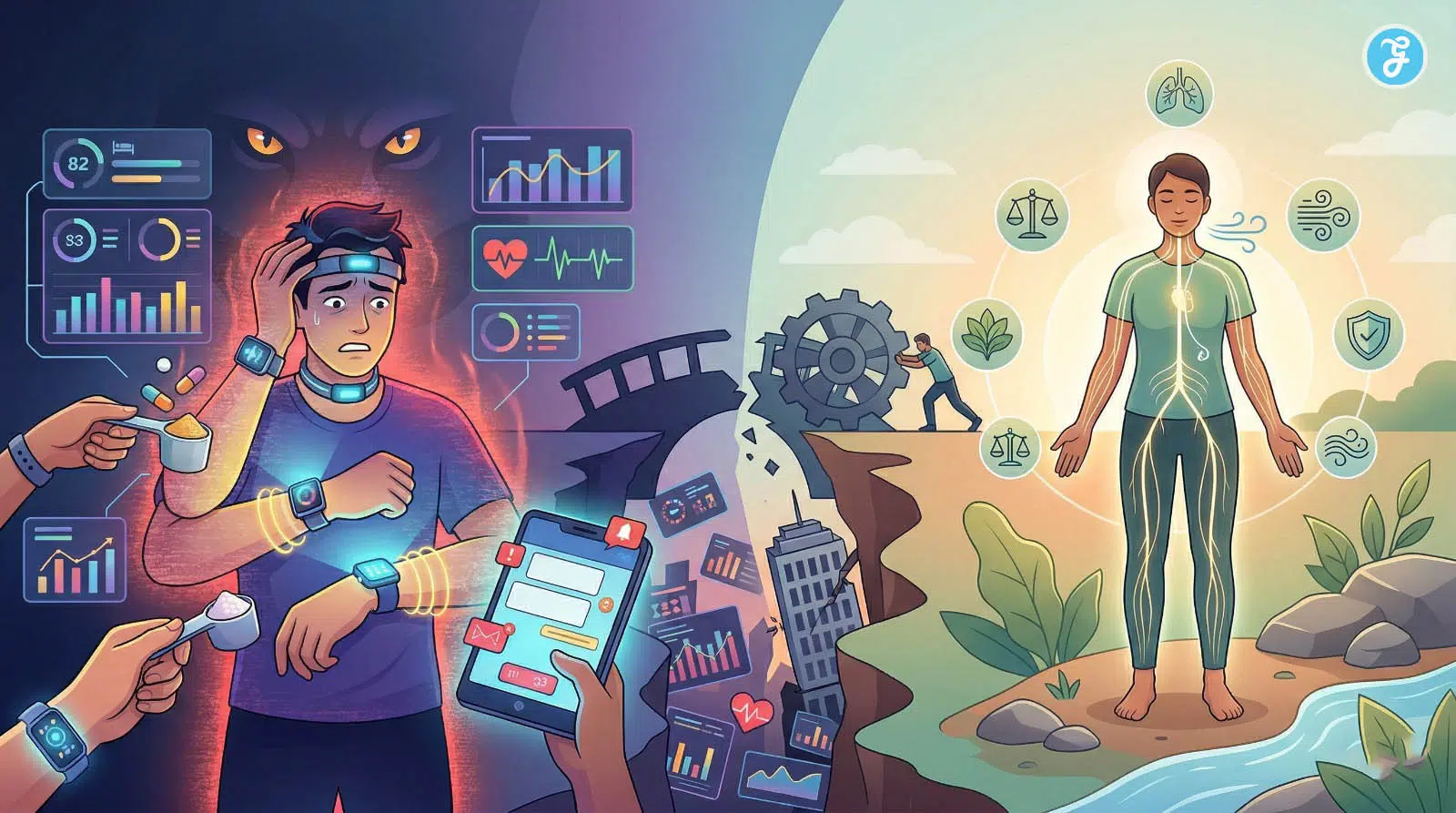
Endless notifications, artificial light, and aggressive productivity goals tricked our brains into survival mode. We tried to optimize our way out of exhaustion. We pushed harder. The results were disastrous. Recent industry data from the Global Wellness Institute confirms what many of us felt. The constant pressure to be better actually made us biologically fragile. We built up our cognitive discipline but entirely lost our physiological resilience.
We are now facing a collective reckoning. You can see it in the climbing corporate burnout rates. You can feel it in your own heavy shoulders at the end of a long workday. The old model of doing more has failed completely. True wellness in 2026 is no longer about how much stress you can physically endure. It is about the physiological conviction that you are safe.
This shift represents a profound return to our humanity. We are looking past the screens to understand our own internal warning systems. We are recognizing that a calm body is the absolute foundation of a clear mind. Feeling safe within your own skin is the ultimate, nonnegotiable metric of health.
The High Cost of Biological Friction
Your body is constantly scanning for danger. This process happens behind the scenes in your autonomic nervous system. It never stops. It never takes a day off. Most of us spend our lives alternating between feeling wired and feeling totally spent. This internal friction is the root cause of the modern health crisis. Understanding the mechanics of your biology is the first step toward genuine recovery.
The Survival Switch
Most people are familiar with the sympathetic nervous system. It is our internal accelerator. When you face a looming deadline or a sharp email, your heart rate climbs. Your breath becomes shallow. Blood flows away from your digestive organs and toward your muscles. Evolution designed this state to help us escape physical threats. We were meant to use this energy and then return to a state of rest.
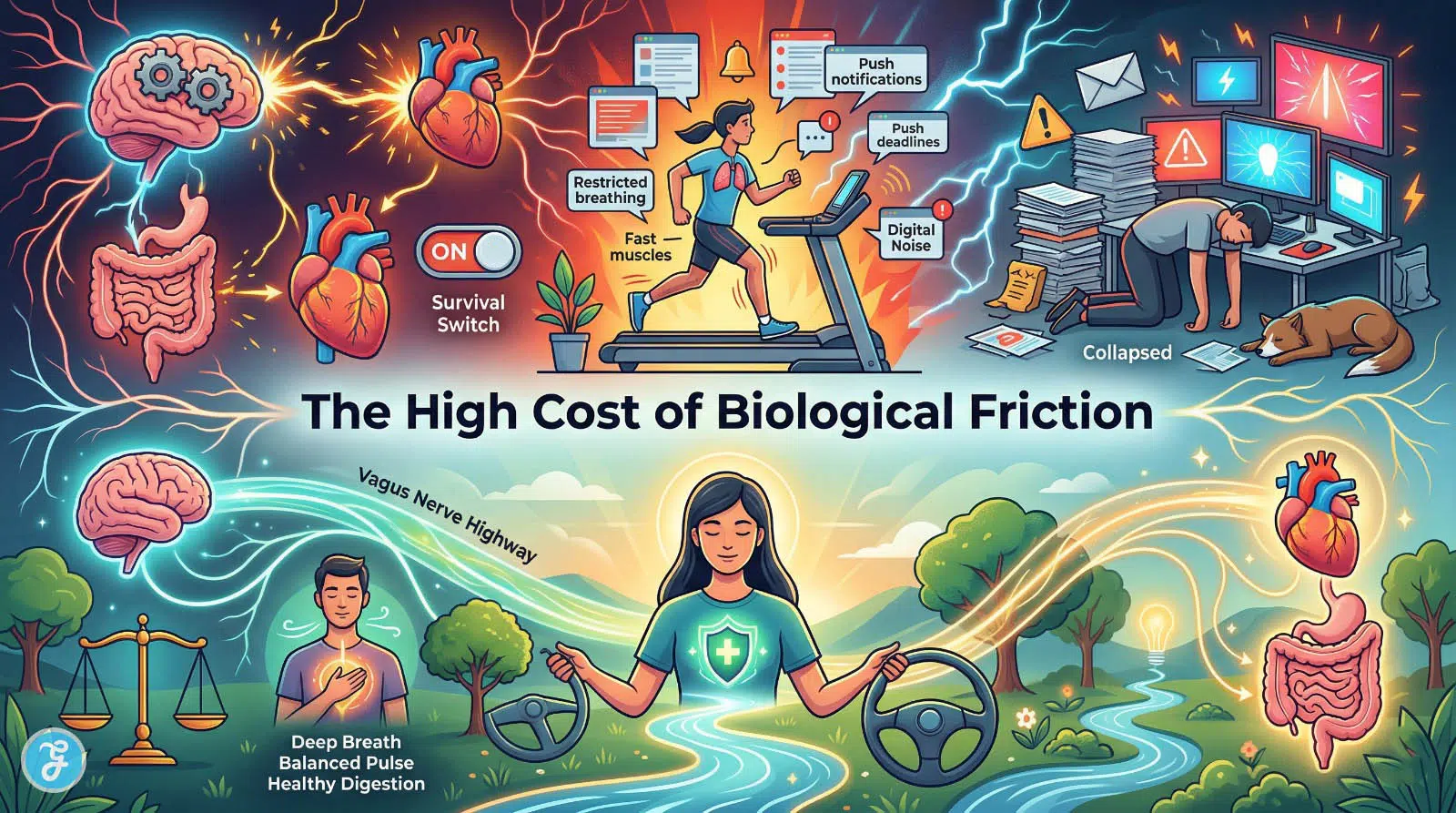
The problem in 2026 is that the switch is stuck. We live in a world of constant digital noise. Our bodies cannot distinguish between a predator and a push notification. We stay in a state of mild, chronic fight or flight for sixteen hours a day. This drains our resources. It erodes our ability to think clearly. It leaves us physically exhausted but mentally racing.
The Hidden Third State
We often talk about the parasympathetic nervous system as the only alternative to stress. We call it the rest and digest mode. But there is a third state that many of us inhabit without knowing it. This is the dorsal vagal response. In the wild, animals use this to play dead when a threat is too great to outrun or outfight. It is a total system shutdown.
In our modern lives, we experience this as profound burnout. It is that heavy, numb feeling where you cannot even decide what to eat for dinner. You aren’t just tired. Your body has initiated a biological protective mechanism. It has decided that the environment is too overwhelming to handle. So it pulls the metaphorical plug to save what little energy you have left. This isn’t a character flaw or a lack of willpower. It is a primal survival tactic.
The Vagus Nerve Highway
The bridge between these states is the vagus nerve. This is the longest cranial nerve in your body. It acts as a massive communication highway between your brain and your vital organs. It carries signals that tell your heart to slow down and your lungs to expand. It is the physical manifestation of your internal safety system.
True Nervous System Regulation is the active management of these internal states. It is the skill of using the vagus nerve to steer your body back to center. When you practice regulation, you are teaching your biology how to shift out of survival mode. You are showing your heart and your gut that the immediate danger has passed. This isn’t about ignoring stress. It is about building the capacity to move through it without getting stuck in a permanent state of high alert. By mastering this nerve, you reclaim control over your own physical reality.
Performance Without the Price Tag
We used to view peace as a luxury. We treated it like a prize to be won at the end of a grueling career or a frantic week. We told ourselves that if we just pushed through the discomfort, we would eventually earn the right to relax. In 2026, we are finally realizing that this logic was exactly backward. You cannot build a sustainable life on a foundation of constant internal alarm.
The Broken Promise of the Hustle
For decades, performance culture sold us a specific myth. It suggested that safety was the result of high productivity. We believed that enough money, enough status, or enough accolades would finally allow our bodies to calm down. We treated vacations and retirement as the only acceptable times to exit survival mode. This created a cycle where we were always chasing a sense of security that stayed just out of reach. The reality of the modern workplace has exposed the flaw in this thinking. When you work from a place of chronic stress, you are not actually performing at your best.
You are merely surviving. You are making decisions from a narrowed perspective. Your creativity is limited because your brain is focused on immediate threats rather than long term solutions. The old way did not make us more successful. It only made us more tired.
The New Prerequisite
The shift toward Nervous System Regulation has flipped the script. We now understand that physiological safety is the prerequisite for any high level achievement. You cannot think clearly if your heart is racing in your chest. You cannot lead a team effectively if your own system is on the verge of a shutdown. Safety is the fuel, not the reward.
When your body feels secure, your prefrontal cortex can actually do its job. This is the part of your brain responsible for complex problem solving and empathy. By prioritizing a calm internal state, you unlock a different kind of power. This is the power of steady focus and clear intuition. It is the ability to stay present when things get difficult. We are learning that the most effective people are not the ones who push the hardest. They are the ones who know how to stay regulated.
The Fragility of Optimization
Recent data from the 2026 Gallup State of the Global Workplace report provides a sobering look at our progress. The numbers show that traditional optimization has hit a ceiling. Workers who focused solely on productivity metrics are now reporting the highest levels of burnout. They are statistically the most fragile members of the workforce. They break easily because they have no internal buffer.
In contrast, the report highlights a new group of resilient professionals. These are the individuals who prioritize regulation over raw output. They have better health outcomes and higher job satisfaction. More importantly, they are the ones who stay steady when the market fluctuates. They are not just surviving the workday. They are thriving within it because their bodies are not constantly fighting a perceived war. Resilience is no longer about how much pressure you can take. It is about how well you can maintain your internal balance.
The New Biological Software Updates
We are witnessing a quiet revolution in the tools we use to stay well. For years, our technology focused on the outside. We wore devices that counted our steps and judged our sleep quality. They gave us data but very little agency. In 2026, the focus has shifted from tracking our lives to tuning our bodies. We are no longer interested in just knowing we are stressed. We want to know how to fix it in real time.
From Surveillance to Regulation
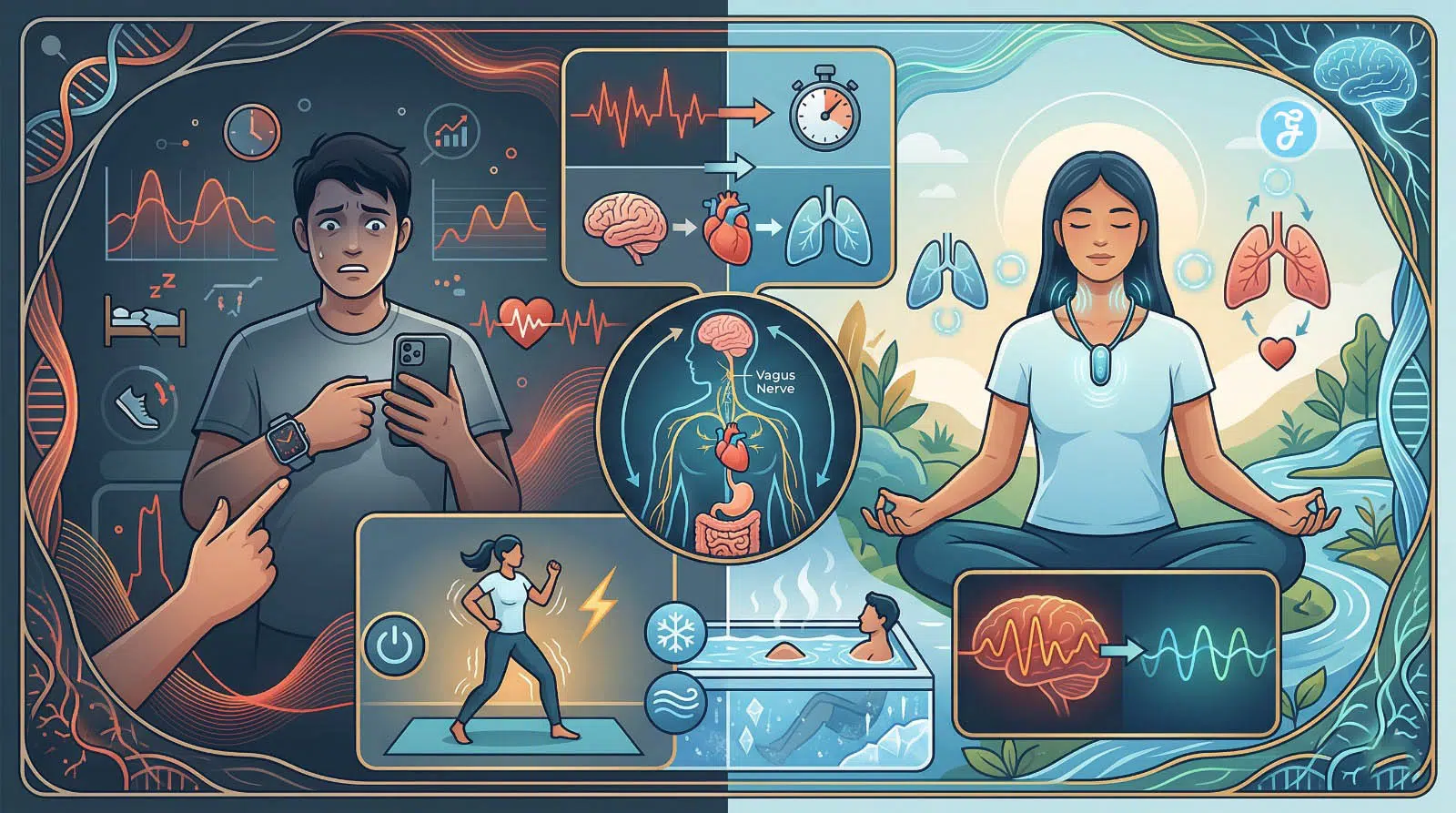
The era of passive tracking is over. Many of us realized that staring at a low recovery score on a screen often made our stress worse. It was a form of constant self-surveillance that kept our nervous systems in a state of evaluation. Today, we are choosing “tuning” over “tracking.” This means using tools that actively change our physiological state rather than just reporting on it.
Instead of looking at a graph of your heart rate, you might now use a specific breathing rhythm to actually lower it. This is a move from being a spectator of your health to being an active participant. We are learning to use our own biology as a control panel. By shifting our internal state, we change how we experience the world around us. This is the difference between measuring a storm and learning how to calm the winds.
The Rise of the Somatic Toolkit
Somatic practices have moved from the fringe of yoga studios into the center of mainstream health. These are physical “software updates” for your nervous system. One of the most popular techniques in 2026 is somatic shaking. It looks strange to the uninitiated, but it is a primal way to discharge pent-up survival energy. Animals do it after a hunt to reset their systems. We are finally learning to do the same after a high pressure meeting.
We are also seeing the broad adoption of Coherent Breathing. This is a specific pace of five to six breaths per minute that synchronizes your heart, lungs, and brain. It is a biological cheat code for calm. Combined with cold water immersion, these tools act as a manual override for the stress response. They take the body out of a “freeze” state and move it back into a state of flow. These aren’t just exercises. They are intentional interventions that prove we are not helpless victims of our environment.
Wearables That Feel Like a Hug
The most significant shift in 2026 technology is the rise of nVNS devices. These non-invasive Vagus Nerve Stimulators have largely replaced the traditional smartwatch as the “must-have” accessory. Devices like the Nuropod or Pulsetto don’t just tell you that you are anxious. They use gentle electrical pulses or infrasonic vibrations to stimulate the vagus nerve directly.
These wearables work like a physical “nudge” toward safety. They help the body exit fight or flight mode by signaling to the brain that the threat is gone. In the same way we once checked our notifications, we now check our regulation levels. We use these tools to maintain a steady baseline throughout the day. This is the new tech stack. It is less about digital connectivity and more about biological harmony. We are finally using our machines to help us feel more human.
The Collective Calm
Nervous system regulation is not a solitary act. It spreads through our homes and offices like a quiet wave. When one person finds their center, they help everyone around them do the same. This is the new social contract for a healthier and more connected society. Our internal states are contagious. By taking care of ourselves, we are actually taking care of each other.
The Power of Co-Regulation
In 2026, we understand that a leader’s most important tool is not their strategy. It is their nervous system. If a manager is in a state of high alert, the entire office will feel the tension. This is known as co-regulation. It is the biological process where one person’s calm state helps stabilize another. We see this in parenting as well. A regulated parent can soothe a child without saying a single word. Our relationships are now being redefined by this mutual support.
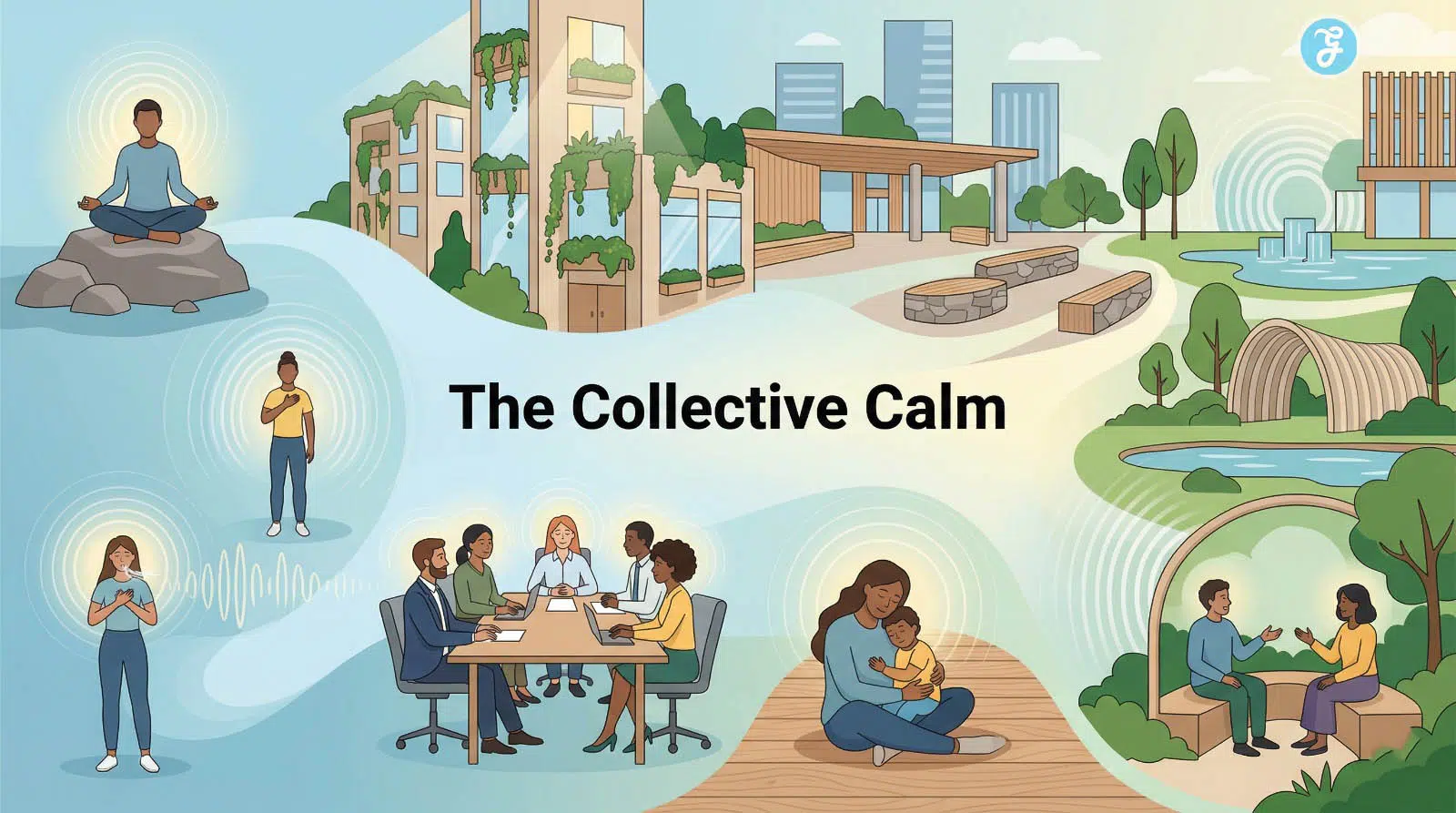
We are learning that being a good partner or a good boss means managing our own stress first. Recent studies from Taylor and Francis show that teachers who practice regulation have students with better emotional focus. This isn’t just about being nice. It is about creating a social engagement system where everyone feels safe enough to participate. When we prioritize regulation, we stop reacting and start connecting. It is the most effective way to prevent group burnout and build lasting trust.
Designing for Sensory Safety
Our environment is also changing to reflect this need for safety. The Global Wellness Institute highlights a shift toward what they call primal design. This approach places the human nervous system at the center of how we build our world. Urban planning is moving toward a standard of sensory safety. This means reducing the constant roar of traffic and the glare of harsh lighting. We are moving away from sterile, plastic interiors. Instead, we are choosing materials like wood, stone, and wool that ground our senses.
New developments are incorporating natural elements to bring the outside in. Research shows that access to green space directly lowers cortisol levels. We are seeing the rise of quiet zones and shielded parks in major cities like New York and London. These spaces are not just parks. They are biological recovery rooms for the modern citizen. They offer relief from the digital noise that keeps us in a state of vigilance. By designing our cities for our nervous systems, we are lowering the baseline of collective stress. We are building a world that finally respects our biological limits.
The New Human Standard
The race for more has reached its logical end. We can no longer afford to treat our bodies like machines that never cool down. Rejecting the peak performance metric is not an act of surrender. It is an act of intelligence. We are finally admitting that the constant pursuit of optimization has made us less effective and more exhausted.
The Future is Regulated
In 2026, we are valuing a different kind of excellence. The most respected person in the room is no longer the one who stayed up all night to finish a project. It is the person who is the most at home in their own skin. This individual carries a steady presence that grounds everyone else. They have mastered the art of being present without being overwhelmed. This quiet confidence is the new social currency. It cannot be faked with caffeine or digital hacks.
Consistent Nervous System Regulation is the foundation of this new authority. It allows us to face the challenges of a complex world without losing our humanity. Recent data from Mental Health UK suggests that millions of workers are now prioritizing their biological health over traditional career milestones. This shift is not just a trend. It is a necessary response to the extreme pressures of the modern age. We are learning that a calm body is a creative body.

We are moving toward a standard that honors our biology. We are trading the frantic chase for a sustainable rhythm. True resilience is the ability to return to peace after a storm. It is not the ability to live in the storm forever. We are choosing to build lives that feel good on the inside rather than just looking good on a spreadsheet. We are finally giving ourselves permission to slow down.
The future belongs to those who know how to find their way back to center. We are learning to trust our own internal signals again. We are recognizing that a regulated body is the ultimate form of wealth. Our priorities have shifted because our survival depended on it. We did not need to be faster. We needed to be safe.