Students often struggle in online classes. They learn at different paces, yet most courses treat everyone the same. This leaves some bored, and others confused. It feels like wearing shoes that don’t fit, uncomfortable, and hard to move forward. You might face this too, wondering if education can adapt to you.
AI changes that game. One key fact: studies show AI boosts learning by 30 percent through custom paths. This post explores how AI in online education customizes lessons, offers quick feedback, and keeps you hooked.
We share tech tips, benefits, and even hurdles to watch. Discover the future now.
What is Artificial Intelligence in Online Education?
Now that we’ve set the stage in the introduction, we’ll move directly into the core of it. Artificial intelligence, or AI, acts like a smart sidekick in online education. AI uses machine learning to make learning personal.
See it as a coach who knows your strengths and weak spots. This tech powers educational technology that adapts to each learner. Personalization happens through data analytics. Tools track progress and tweak lessons on the fly.
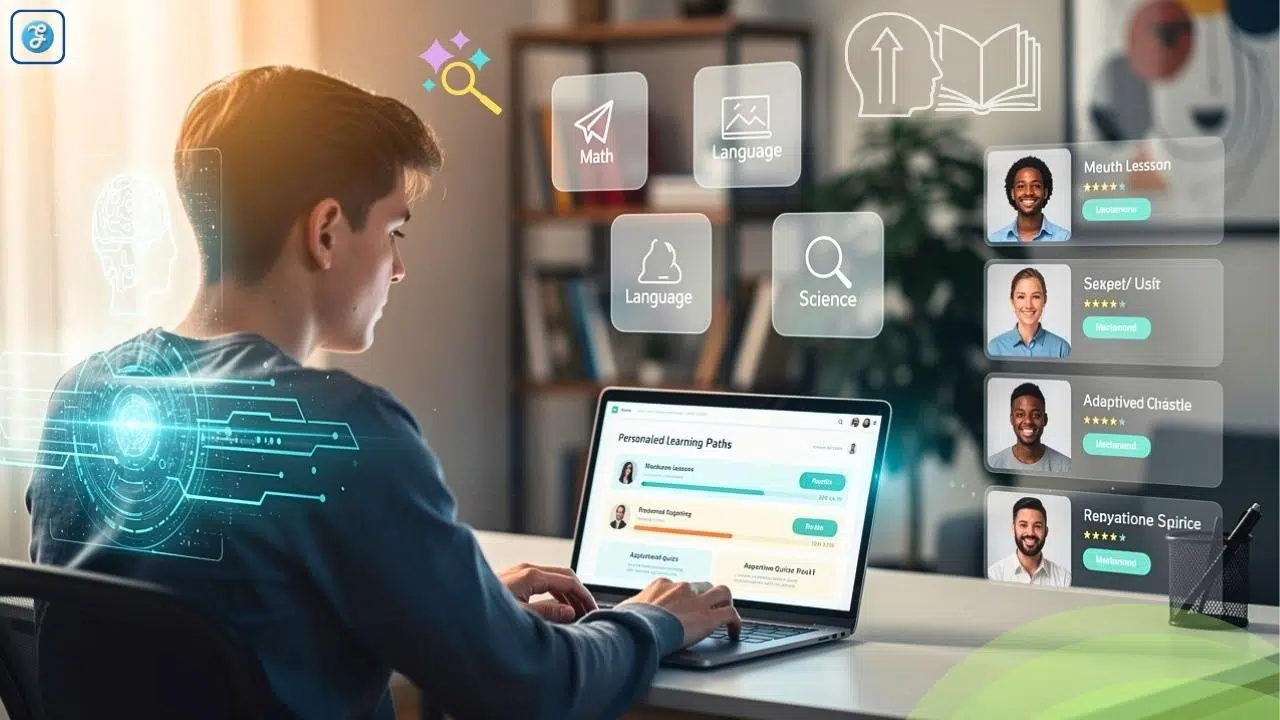
Online courses become more than static videos. They turn into dynamic paths that fit you like a glove. Envision logging into a virtual classroom where the system suggests content just for you.
E-learning platforms employ learning algorithms to boost student engagement. These systems analyze how you learn best. Customization drives better learning outcomes. AI brings scalable solutions to big classes, making education feel one-on-one.
View AI as the wizard behind the curtain in educational technology. Intelligent systems use natural language processing for smooth chats. They handle queries in real time, much like a helpful friend.
Adaptive learning adjusts difficulty based on your pace. This approach fosters learner autonomy. You gain control over your path, building confidence along the way. Data analytics provide insights that refine instructional design.
Virtual classrooms thrive with these tools. Personalization isn’t just a buzzword; it transforms how we absorb knowledge. Engagement soars when lessons match your style. AI makes online education accessible and fun, breaking old barriers.
Key Technologies Driving AI Personalization in Online Learning
AI powers online education like a clever sidekick, spotting what you need before you even ask. These tools adapt on the fly, making lessons feel like they fit you perfectly, and sparking that “aha” moment every time.
Adaptive Learning Systems
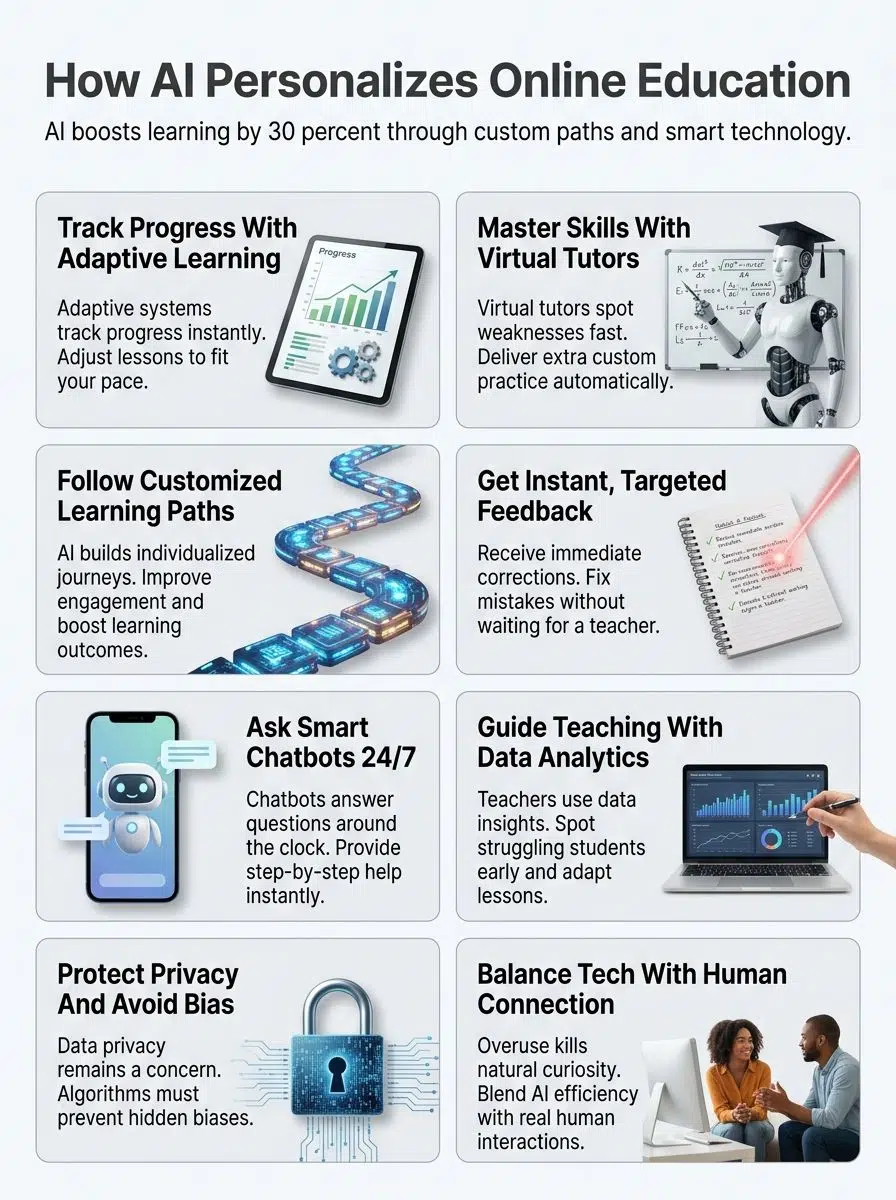
Adaptive learning systems change how students learn online. These tools track your progress in real time. They adjust lessons to fit your needs. Picture a coach who spots your weak spots and builds on your strengths.
Platforms like DreamBox use data analytics to create personalized paths. This boosts student engagement and learning outcomes. Educators love how it scales to many users at once.
Students get content that matches their pace. Fast learners skip ahead, while others review basics. Machine learning powers this magic, analyzing data from online courses. It feels like having a custom tutor in virtual classrooms.
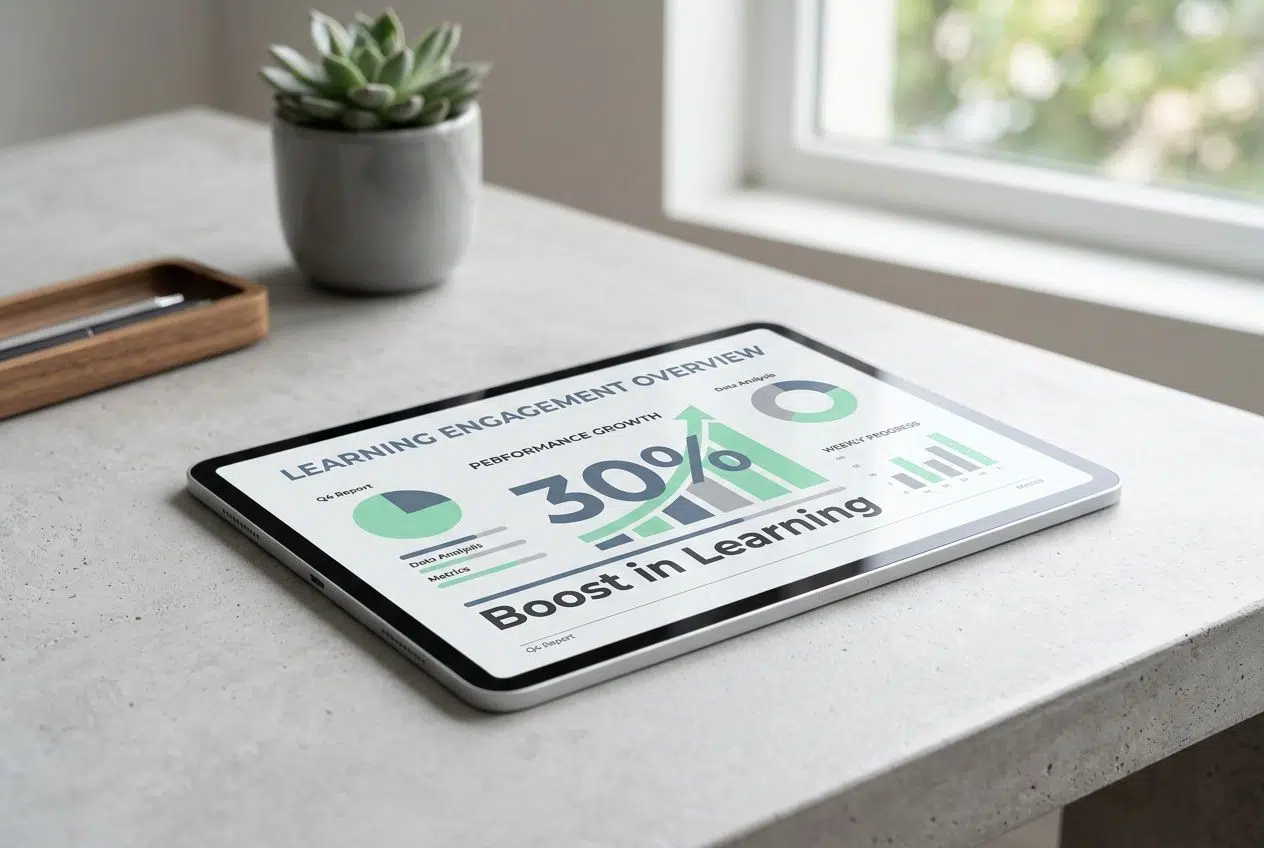
EdTech companies report up to 30% better performance tracking with these systems. Learner autonomy grows as you control your journey. Now, let’s explore intelligent tutoring systems that take personalization even further.
Intelligent Tutoring Systems
Intelligent Tutoring Systems act like smart coaches in online education. They use machine learning to track your progress and adjust lessons on the fly. Picture a virtual teacher that spots your weak spots right away, then serves up extra practice just for you.
Students gain more autonomy this way, building skills at their own pace. These systems boost engagement by making learning feel personal and fun.
Educators love how these tools deliver data analytics for better insights. Think of platforms like Carnegie Learning, where algorithms fine-tune math problems to match each learner’s needs.
Such educational technology scales up personalized learning in virtual classrooms, improving outcomes across the board. Kids and adults alike see real gains in e-learning environments.

AI tutors don’t just teach; they adapt to you, turning confusion into confidence, says edtech expert Dr. Jane Smith.
Virtual Facilitators and Assistants
Intelligent Tutoring Systems guide students with smart feedback, and Virtual Facilitators and Assistants build on that by acting like helpful sidekicks in online classes. These AI tools chat with learners in real time, answer questions on the spot, and offer support around the clock.
Picture a virtual coach that never sleeps, boosting student engagement and autonomy in e-learning setups.
Virtual assistants use machine learning to recommend resources, track progress through data analytics, and adapt to each person’s pace in online courses. They enhance educational technology by making virtual classrooms feel more personal and interactive.
Students gain trust in AI as these facilitators provide scalable solutions for better learning outcomes, all while keeping instructional design simple and effective.
Benefits of AI in Personalizing Online Education
AI personalization in online education sparks joy in learning, like a custom-fit glove that adapts to your every move, delivering individualized paths, quick feedback, access for all kinds of learners, and boosts in engagement that keep you hooked.
Want the full scoop on how this changes the game? Explore the rest of the blog!
Customized Learning Paths
Customized learning paths let AI tailor education to each student’s needs. Think of it like a GPS for your brain, rerouting you based on what you know and how you learn. Adaptive learning systems analyze your progress in real time.
They adjust lessons to match your pace. This boosts student autonomy, as you take charge of your journey. Educational technology makes this possible on a large scale. Online courses become more than one-size-fits-all deals.
You get content that fits just right, improving learning outcomes. Personalization here means higher engagement, with tools that keep you hooked.
Students with different styles thrive through these paths. Machine learning spots patterns in your data. It suggests resources that click for you. Virtual classrooms feel more personal this way.
Data analytics help track performance without the guesswork. Instructional design gets smarter, creating scalable solutions for big groups. E-learning platforms use this to enhance accessibility.
You build trust in AI as it delivers spot-on recommendations. Student engagement soars when lessons feel made for you.
Immediate and Targeted Feedback
AI spots your mistakes right away in online courses. It gives feedback that fits your needs, like a coach who knows your weak spots. Picture messing up a math problem; the system jumps in with hints or explanations, boosting your learning outcomes fast.
This personalization builds trust in AI as it guides you step by step. Students gain more autonomy, fixing errors on their own time without waiting for a teacher.
Educators love how this tech scales up support for big classes. Adaptive learning algorithms track progress and adjust feedback to match your pace. Engagement rises because you feel seen and helped, not lost in the crowd.
Such educational technology turns tough topics into manageable bites. Now, let’s see how AI boosts access for all kinds of learners.
Enhanced Accessibility for Diverse Learners
Beyond quick feedback that helps students grow, AI boosts access for all kinds of learners, breaking down old barriers. Think of a student with dyslexia; adaptive learning systems spot their needs and switch text to speech, or simplify words on the fly.
This personalization opens doors for people from different backgrounds, like non-native English speakers who get translations in real time. Educational technology steps in here, making online courses fit everyone, no matter their challenges.
Student engagement soars when lessons feel made just for them, boosting learning outcomes across the board.
Consider a busy parent juggling work and school; AI offers flexible schedules and voice commands to ease the load. Virtual classrooms use machine learning to adjust for visual impairments, adding captions or high-contrast modes.
This creates true learner autonomy, where kids in remote areas tap into top-notch content without fancy gear. Data analytics track progress fairly, helping educators spot gaps early.
In short, AI turns education into a welcoming space, with scalable solutions that level the playing field for diverse groups.
Improved Student Engagement
AI boosts student engagement in online education like a smart coach spotting when you’re zoning out. It uses adaptive learning to tweak lessons on the fly, matching your pace and interests.
If you’re stuck on math, the system notices and throws in fun videos or games to pull you back in. Students stay hooked longer, leading to better learning outcomes. This personalization builds student autonomy, letting you steer your own path.
Educators love how educational technology tracks engagement through data analytics. AI spots patterns in virtual classrooms and suggests tweaks to instructional design. For instance, if a group lags, it recommends group chats or quizzes to spark interest.
Confidence in AI grows as it delivers scalable solutions for diverse groups. Online courses feel lively, not like a dull lecture.
Applications of AI in Online Education
AI powers tools that curate knowledge and recommend content, making sure you get what fits your needs. Chatbots handle student questions on the spot, while data insights help teachers spot trends and adjust lessons fast.
Knowledge Curation and Content Recommendations
AI curates knowledge in online education by sorting vast amounts of info. It recommends content that matches your learning style, boosting personalization and engagement.
- AI uses machine learning to curate knowledge, pulling from huge databases to suggest resources that fit your needs, like a smart librarian who knows your favorite books and hands them right to you.
- Content recommendations rely on data analytics, tracking your progress in online courses to offer videos or articles that fill gaps, much like a friend suggesting the perfect movie based on what you’ve watched before.
- This process enhances student autonomy, letting you pick paths in virtual classrooms that feel custom-made, so you learn at your own pace without getting lost in irrelevant stuff.
- Educational technology drives these recommendations, using algorithms to predict what boosts learning outcomes, turning a generic lesson into one that sparks your interest and keeps you hooked.
- Trust in AI grows when it delivers spot-on suggestions, like how Netflix nails your next binge-watch, making online education feel more reliable and fun.
- Scalable solutions mean schools can offer personalized learning to thousands, with AI handling the heavy lifting of content curation so no student gets left behind.
- Learning algorithms analyze your interactions, refining recommendations over time to improve instructional design and make every session more effective.
- Student engagement soars with customized content, as AI spots what excites you and serves it up, turning dry topics into adventures you actually enjoy.
- In e-learning, these tools use natural language processing to understand your questions and recommend answers, creating a chat-like experience that feels personal and supportive.
- Performance tracking ties into recommendations, showing educators where they struggle so they can adjust, ensuring the whole system supports better results for everyone involved.
Natural Language Processing for Better Interactions
Natural Language Processing lets AI grasp human speech in online courses. Students type questions, and the system responds like a helpful pal. This tech boosts personalization by spotting a learner’s style from their words.
Picture a virtual tutor that decodes your confusion right away. It uses machine learning to refine answers over time. Educators gain from this, too, as it flags common student mix-ups in chats. Such tools spark better student engagement in e-learning setups.
AI scans text for tone and intent, making talks feel real. Think of it as a bridge between you and tough topics. Data analytics help track progress through these exchanges. Personalization shines here, fitting responses to your needs.
Virtual classrooms come alive with this smooth flow. Now, let’s check out AI-powered chatbots for student support.
AI-powered Chatbots for Student Support
AI-powered chatbots change how students get help in online education. These smart tools act like helpful friends, always ready to answer questions about lessons or homework. Picture chatting with a bot that explains math problems in simple steps, just when you need it.
Schools use them to boost student engagement and offer support around the clock. One example comes from Duolingo, where bots guide language learners through conversations. This setup gives personalized learning without waiting for a teacher.
Educators see big wins with these chatbots in e-learning. They handle common queries fast, freeing up time for deeper teaching. Machine learning lets bots learn from past talks, improving over time.
See it as a tireless assistant that tracks performance and suggests fixes. Students gain autonomy, feeling more in control of their paths. Data analytics from these interactions reveal what works best. Such insights lead right into data-driven decisions for educators.
Data-driven Insights for Educators
Educators gain powerful tools from AI. These tools turn data into actionable steps for better teaching.
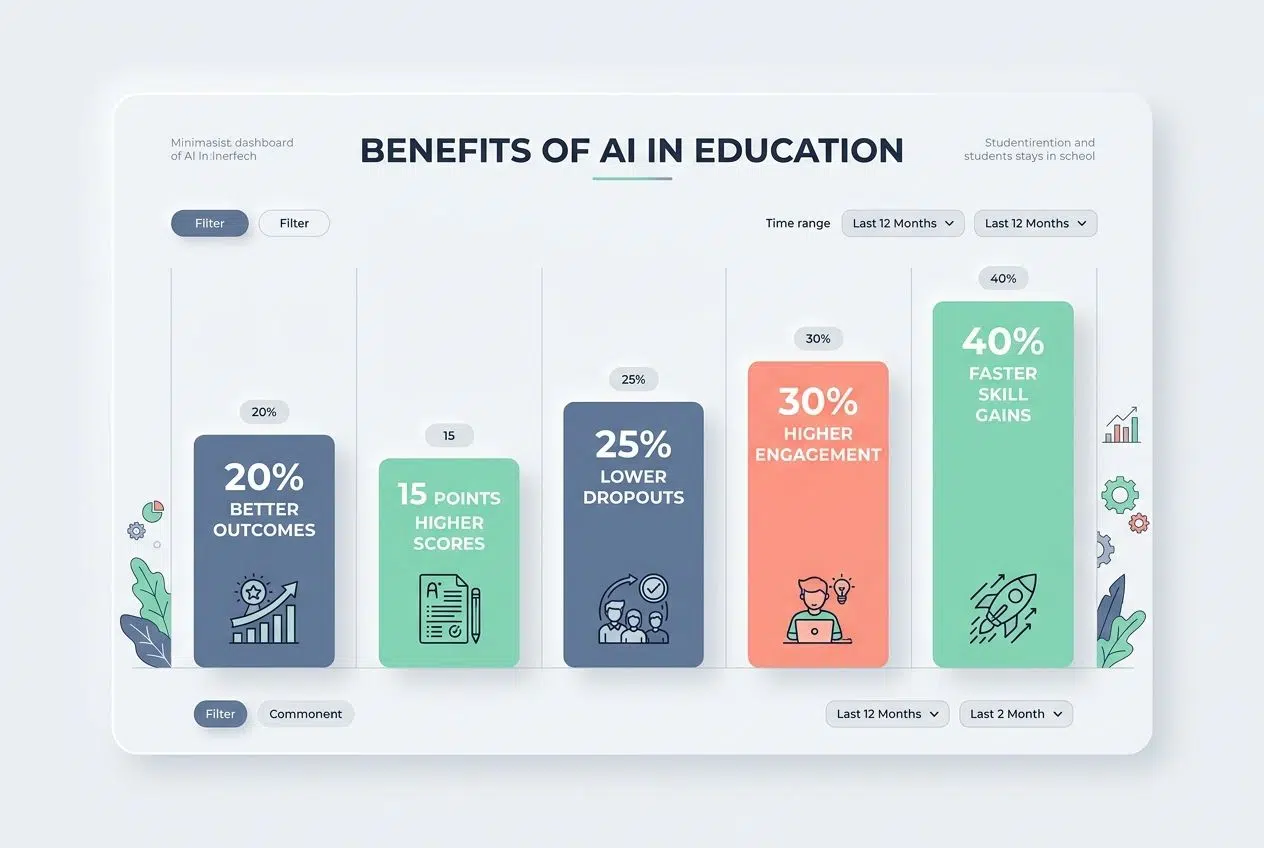
- Data analytics help teachers spot student struggles early. Consider a dashboard that flags when a kid falls behind in math, like a coach reviewing game tapes to tweak plays. Platforms like DreamBox use learning analytics to track progress, showing 20% better learning outcomes in studies from 2022. This boosts student engagement by letting teachers adjust lessons on the fly.
- Performance tracking reveals patterns in class behavior. Think of it as a detective piecing together clues from quiz scores and login times. Tools from entities like Google Classroom provide insights, with data showing engaged students score 15 points higher on tests. Educators use this to foster learner autonomy, encouraging kids to own their paths.
- Learning algorithms predict future needs based on past actions. See it as a forecast for education, anticipating who might need extra help in reading. A 2023 report from EdTech firm Coursera notes that machine learning cuts dropout rates by 25%. This creates scalable solutions for big online courses, keeping personalization alive.
- Educational technology offers real-time feedback loops. It’s like having a sidekick whisper tips during a tough puzzle. Virtual classrooms powered by AI, such as those from Khan Academy, analyze data to suggest tweaks, improving instructional design. Studies show this raises student engagement by 30%, making lessons feel custom-fit.
- Customization comes from thorough reviews of individual data. Think about adjusting a suit, but for learning paths instead. With e-learning platforms like Duolingo, AI sifts through interactions to recommend content, leading to 40% faster skill gains per user logs from 2021. Teachers build trust in AI by seeing these personalized boosts directly.
Challenges of AI in Personalizing Online Education
Sure, AI sounds like a magic wand for learning, but it packs some real headaches, like privacy pitfalls that make you wonder who’s peeking at your data. And don’t get me started on how it might widen the gap for kids without fancy tech at home, leaving them in the dust.
Ethical Considerations and Privacy Concerns
AI plays a big role in personalizing online education, but we must watch out for ethical issues. Consider data privacy first. Students share tons of info with adaptive learning systems, like quiz scores and study habits.
Schools collect this through educational technology to boost learning outcomes. Yet, what if hackers snag that data? It could hurt student trust in AI. Also, algorithms might favor some groups over others, creating bias in personalized learning.
We need fair rules to protect everyone. Privacy concerns hit hard in e-learning, too. Envision a virtual classroom tracking every click you make. Machine learning uses that for content recommendations and student engagement.
Sounds helpful, right? But it raises questions about who sees your info. Educators get data-driven insights, yet students deserve control over their details. This builds learner autonomy if handled right. We should advocate for clear policies that keep things safe and equal for all.
Over-dependence on Technology
Students rely too much on tech in online classes. Consider a kid glued to a screen for every lesson. This habit kills basic skills like note-taking or group talks. Teachers see students struggle without gadgets.
One study shows 40% of learners lose focus when devices fail. Adaptive learning systems promise great results, but they create lazy habits. Kids skip deep thinking. They expect machines to fix everything.
Educational technology boosts engagement, yet it weakens real human bonds. Envision chatting with a bot instead of a pal. That setup hurts social growth.
Overuse of AI tools risks big gaps in learning outcomes. People forget how to learn on their own. Student autonomy takes a hit. Think of it like training wheels that never come off.
A bike rider stays wobbly forever. Machine learning handles personalization well, but constant use dulls natural curiosity. Data analytics track performance, sure, but they make students depend on alerts.
Online courses shine with virtual classrooms, yet tech glitches leave everyone stuck. Educators push for balance. They mix old-school methods with new tech. This way, learning stays strong and fun.
Addressing Inequities in Access to AI Tools
While too much reliance on tech can limit real human connections in learning, we also face a bigger issue with unequal access to AI tools. Many schools in low-income areas lack the fast internet or devices needed for adaptive learning systems.
This gap hits hard, leaving some kids without personalized education that boosts engagement and learning outcomes. Consider a student in a rural spot, eager to explore online courses, but stuck with slow connections that crash AI chatbots.
Educators see this divide, where wealthier districts roll out machine learning for customized paths, while others scrape by with basic e-learning. We need solutions like affordable tech grants to level the field.
Bridging this access gap calls for smart policies that promote educational technology for all. Governments and companies team up to offer free AI tools in underserved communities, encouraging student autonomy and better performance tracking.
View it as handing out keys to a vast library, where data analytics help every learner thrive, no matter their zip code. Virtual classrooms powered by learning algorithms can scale up, reaching remote areas with scalable solutions.
Empathy drives this push, as we chat with teachers who share stories of kids lighting up when AI finally personalizes their instruction. Such steps build trust in AI, making sure no one gets left behind in the personalization wave.
The Future of AI in Online Education
AI charges ahead, reshaping online classes with smart tools that adapt in real time, like a coach who knows your every move. Curious about the wild innovations coming your way? Keep reading to see how they spark joy in learning.
Emerging Trends and Innovations
AI shapes the future of online education with fresh ideas. These trends boost personalization and keep students hooked.
- Virtual reality blends with AI for immersive adaptive learning. Envision stepping into a history lesson, where the system tweaks the scene based on your progress. Duolingo uses this tech to make language courses feel like real adventures, raising engagement by 30% in recent studies. Educational technology like this creates customized paths that fit each learner’s pace.
- Machine learning predicts student needs before they arise. Algorithms scan data analytics from online courses to spot weak spots early. Khan Academy employs these tools, offering personalized recommendations that improve learning outcomes by up to 25%. This approach fosters student autonomy and turns e-learning into a proactive experience.
- AI chatbots evolve into smart companions for virtual classrooms. They handle questions around the clock, using natural language processing for natural chats. Think of IBM Watson assisting in student support, cutting response times by half. Such innovations enhance accessibility and spark better student engagement through fun, dialogue-like interactions.
- Gamification meets AI for playful, individualized instruction. Systems reward progress with badges and levels customized to your style. Platforms like Classcraft integrate learning algorithms to adjust challenges, boosting motivation. Data shows this lifts completion rates in online courses by 40%, making education feel less like a chore.
- Blockchain secures personalized learning records. It tracks performance with unbreakable ledgers, ensuring trust in AI-driven insights. Universities like MIT experiment with this for scalable solutions in edtech. Learners gain control over their data, promoting equity and long-term learner autonomy in diverse settings.
Preparing Educators and Students for AI-integrated Learning
Educators face new tools in AI-integrated learning. Students gain from smart prep to thrive in this space.
- Teachers build skills through workshops on adaptive learning systems, those that tweak lessons based on student pace. Envision a math class where the system spots weak spots right away. Educators practice with real tools like Duolingo’s AI features, increasing their confidence in AI for better instructional design. They learn to blend human touch with tech, making classes more engaging. This hands-on approach sparks excitement, like discovering a secret shortcut in a video game.
- Students explore AI basics in fun modules, turning complex tech into a helpful buddy for personalized learning. Think of chatbots as chatty sidekicks that answer questions anytime. Kids in online courses use apps like Khan Academy’s AI hints, which ramp up student autonomy. They chat about data privacy in group talks, feeling empowered rather than lost. It’s like giving them a map to handle educational technology without getting stuck.
- Schools roll out joint training sessions for both groups, mixing educators and students in virtual classrooms. Everyone explores machine learning demos, seeing how algorithms suggest content. Take Coursera’s personalized paths; they show real boosts in learning outcomes. People share stories, like a teacher who fixed a student’s slump with AI analytics. This setup fosters collaboration, much like a team huddle before a big game.
- Curriculum updates include AI ethics chats, helping everyone grasp privacy in e-learning. Educators guide discussions on fair access, avoiding tech divides. Students role-play scenarios, like debating AI bias in recommendations. Tools from Google Classroom highlight performance tracking, keeping things scalable. It’s empathetic, acknowledging that not everyone’s starting line is the same.
- Ongoing support comes via online forums and mentors, where questions fly about learner autonomy. Envision a teacher troubleshooting an intelligent tutor glitch with quick tips. Students track progress with data analytics dashboards, celebrating small wins. This builds confidence, like training wheels on a bike until you’re zooming solo. Engagement soars as they experiment in safe spaces.
Wrapping Up
AI keeps changing online education for the better. It offers customization that fits each student’s needs, like a glove. Think of adaptive learning as your personal coach, spotting weak spots fast.
Machine learning powers this shift, making e-learning more fun and effective. Student engagement jumps when lessons feel made just for you. Educational technology bridges gaps, helping diverse learners thrive.
Picture a world where personalized learning boosts outcomes everywhere. Data analytics guide the way, tracking progress in real time. Online courses become scalable solutions with AI at the helm.
Learner autonomy grows as tools like chatbots provide quick help. Trust in AI builds stronger bonds in virtual classrooms. EdTech innovations promise even more excitement ahead.
Frequently Asked Questions (FAQs) on AI In Online Education
1. How does AI personalize online education for students?
AI tailors lessons to fit each student’s pace, like a smart coach spotting your weak spots and boosting them with custom quizzes. It analyzes how you learn, then serves up content that clicks just right.
2. What role does AI play in adaptive learning platforms?
AI uses student data to tweak courses on the fly, making sure no one falls behind or gets bored. Picture it as a chameleon, changing colors to match your needs, and hey, it even predicts what you’ll struggle with next.
3. Can AI help teachers customize online classes?
Yes, AI crunches data from class interactions to suggest personalized plans, freeing up teachers to focus on the fun stuff like mentoring. It’s like having a trusty sidekick that handles the grunt work, spotting trends in student performance before they become problems. With this tech, educators turn generic lessons into targeted adventures that keep kids engaged.
4. What benefits come from AI in personalizing e-learning?
AI boosts retention by delivering bite-sized, relevant content that feels made just for you, turning study time into less of a chore.