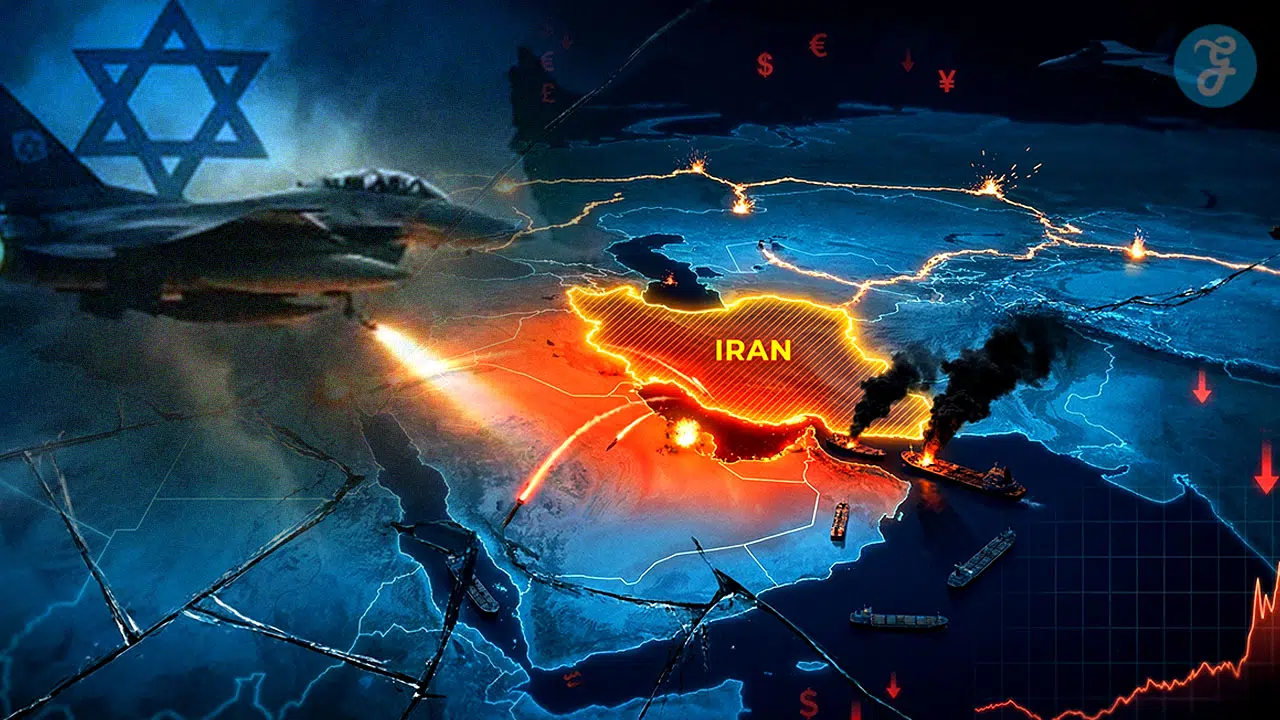
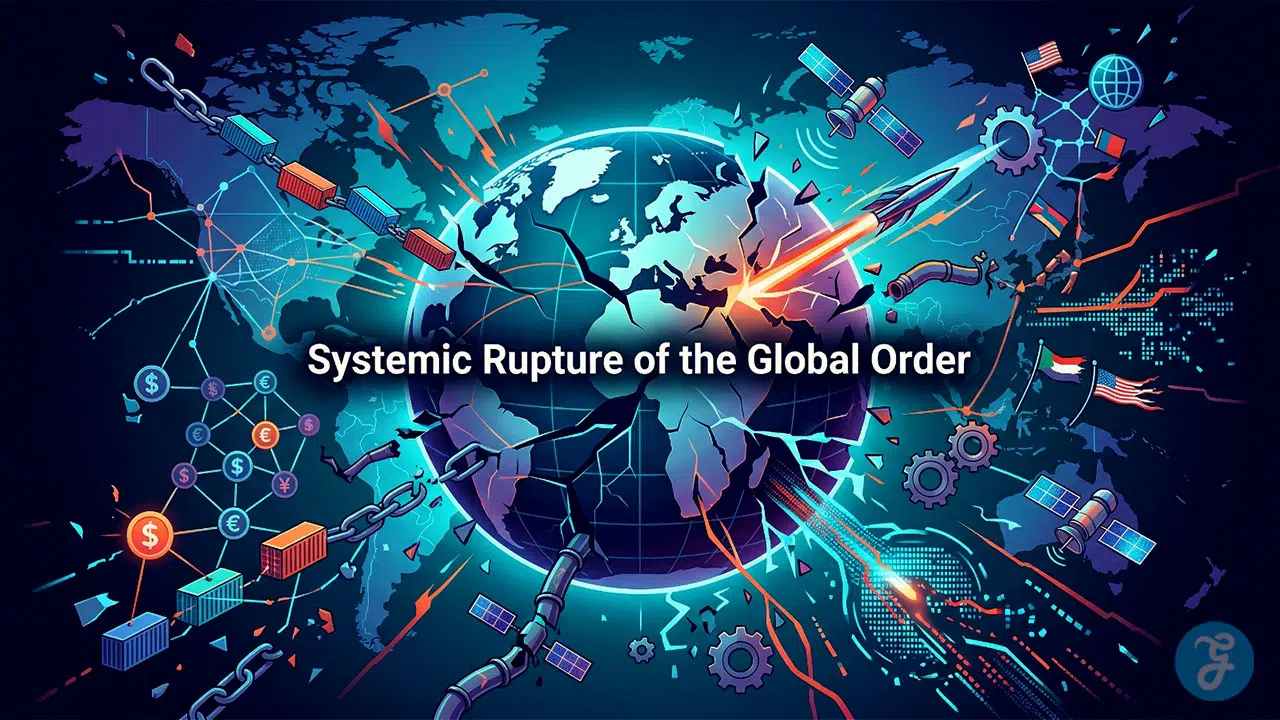
The morning of February 28, 2026, felt like any other until the first reports of Operation Epic Fury escalation broke across global news feeds. This was no longer just a legal dispute over sanctions or a hidden cyberattack. It was a total break from forty years of shadow boxing. The United States and Israel launched a massive kinetic assault that ended the era of proxy warfare forever. In those first few hours, the world watched as a localized tension transformed into a systemic rupture of the global order.
The Macro Environment
The opening wave of the conflict hit with a speed that defied traditional diplomatic cycles. Precision strikes targeted the heart of Tehran. The primary objective was a decapitation strike. It succeeded. The reported death of Supreme Leader Ali Khamenei and his inner security circle left the Iranian regime without its ideological and operational anchor. The power structure that had held since 1979 vanished in a single afternoon.
Iran did not wait to count its losses. Its retaliation was swift and brutal. Hundreds of ballistic missiles rained down on Israeli cities and U.S. bases in Qatar and Bahrain. Reports confirmed the use of cluster munitions in residential areas. But the most devastating move was not a missile. It was the closure of the Strait of Hormuz. By mining the world’s most vital waterway, Iran held the global economy hostage.
The Thesis
The shift from a covert shadow war to an overt conventional war has permanently fractured our global economic and diplomatic systems. It proves that in a hyper-connected world, localized strikes now cause systemic collapses. This piece explores the death of asymmetric warfare, the weaponization of trade, the risks of Western overextension, and the inevitable redrawing of global alliances.
When the Shadow War Became an Open War
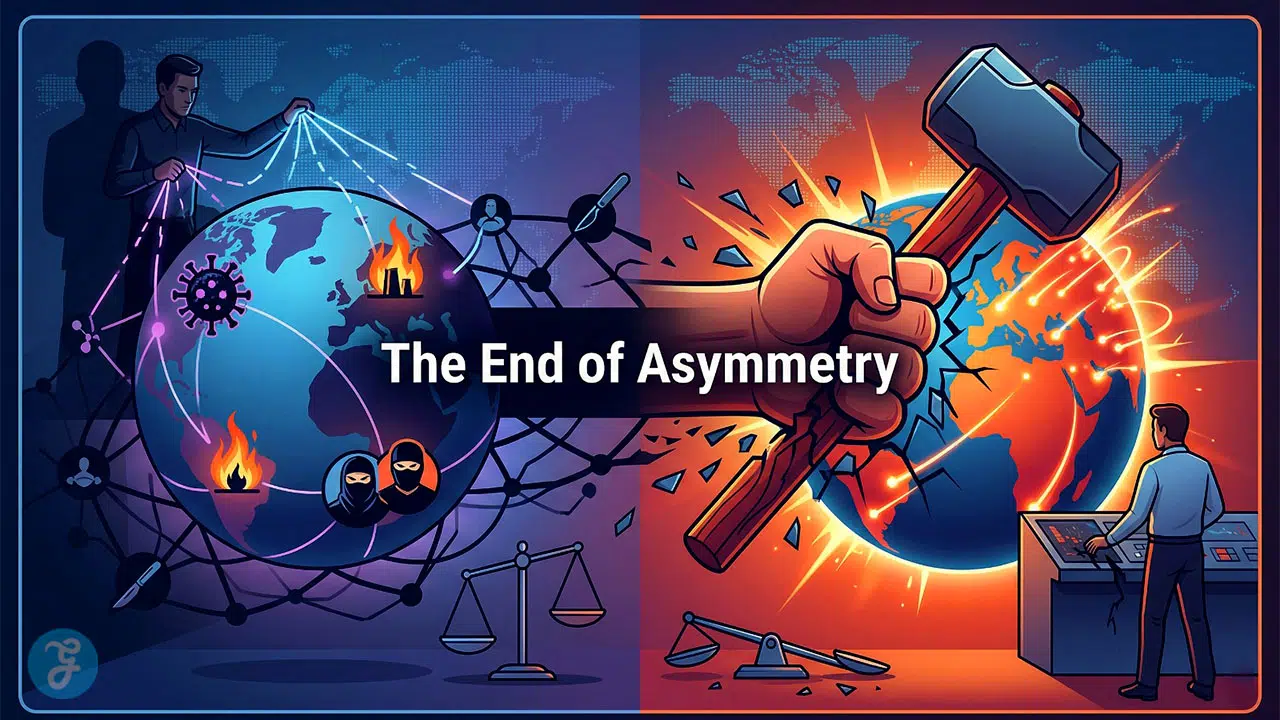
For decades, the U.S. and Iran played a dangerous game of hide-and-seek. It was an era of deniable actions. Think of the Stuxnet virus or the mysterious fires at nuclear facilities. It was the age of proxy groups like Hezbollah and the Houthis. Both sides could trade blows without starting a world war.
Operation Epic Fury escalation changed that. In the first few hours, over 900 joint U.S. and Israeli strikes lit up the Iranian sky. There was no room for denial. This was blunt-force reality. The paradigm shift was total. The West traded the scalpel for a sledgehammer.
By killing the Supreme Leader, the U.S. and Israel shut down any easy path to talks. Usually, a leader is left in place so there is someone who can step in and agree to peace later. Now, there is no clear authority to make that call. Both sides are stuck, because stepping back would look like a complete loss. By bringing everything out into the open, this conflict has turned into a direct fight for survival.
The Digital Front Line: Striking the Cloud
While the kinetic strikes were loud, a new kind of physical warfare targeted the invisible backbone of the modern world. By March 1, 2026, Iranian drones achieved something never seen in modern combat. They struck commercial data centers in the UAE and Bahrain. These were not military bunkers. They were the server farms for Amazon Web Services and Oracle.
This is the evolution of the “shadow war.” Iran realized it could not win a dogfight against F-35s. Instead, it targeted the digital infrastructure that runs global AI and finance. These strikes prove that in 2026, a “local” war can instantly delete the data of a company in New York or London. The cloud is no longer a safe haven. It is a target of opportunity. This transition from hacking code to dropping bombs on servers is a final goodbye to the old rules of engagement.
The Economic Chokehold on Global Veins
The Strait of Hormuz is more than a narrow stretch of water. It is the primary artery of the global energy market. When tensions rise in this region, the entire world feels the pulse.
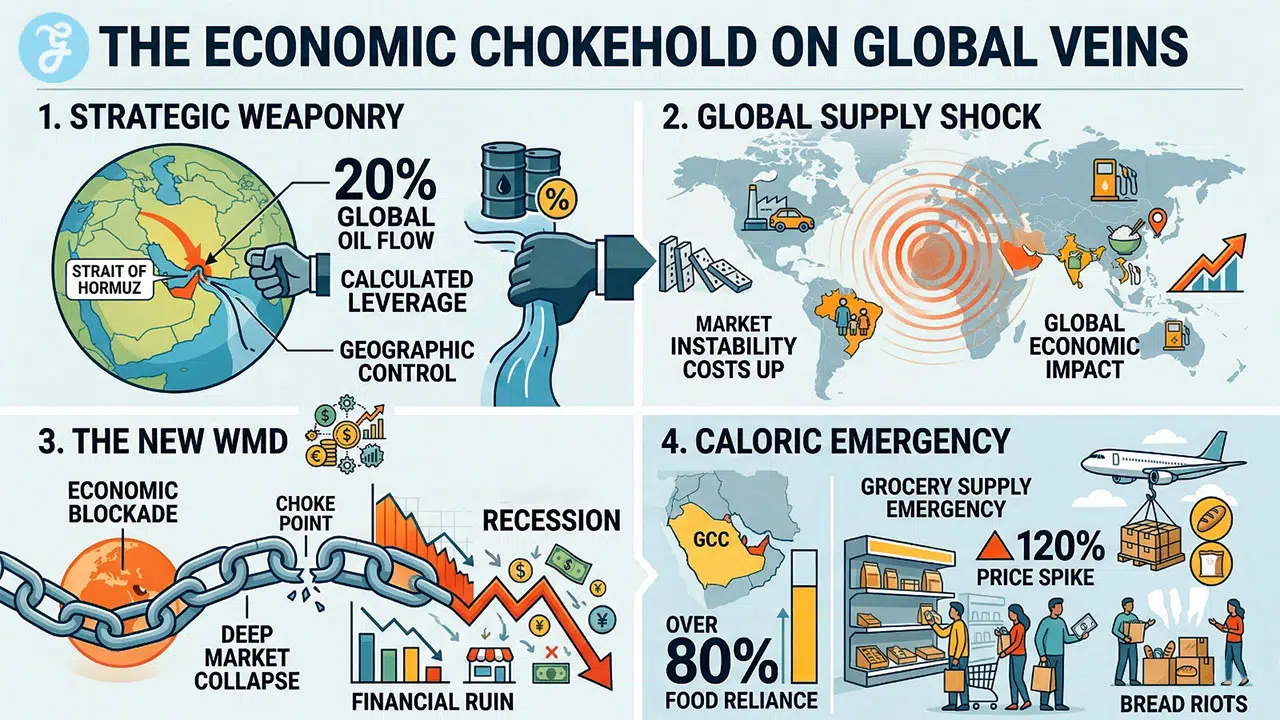
A single threat to this passage can send shockwaves through every stock exchange and gas station on the planet.
The Strait of Hormuz as a Strategic Weapon
Iran treats the Strait of Hormuz as an offensive tool of global logistics. It is not just about moving ships. It is about controlling the world’s access to twenty percent of its total oil consumption. By threatening to close this gateway, a nation can hold the global economy hostage without firing a single shot. This is a calculated use of geography to exert pressure on world powers. The mere mention of a blockade causes insurance rates for tankers to skyrocket instantly.
The Global Supply Chain Shock
Disrupting the flow of oil and gas through this corridor creates a massive financial burden. Neutral nations often pay the highest price for a conflict they did not start. When energy costs spike, the price of food and manufacturing follows. A factory in South Korea or a family in Brazil suffers because of a standoff thousands of miles away. This creates a ripple effect that destabilizes global markets and hurts the most vulnerable populations.
The New Weapon of Mass Destruction
In our hyper-connected world, economic chokeholds are the new weapons of mass destruction. You do not need a nuclear blast to topple a distant economy. A sustained blockade of a primary transit point can trigger a deep recession or even a total market collapse. These logistical bottlenecks allow a regional actor to cause devastation across entire continents. Financial ruin becomes a silent killer that travels faster than any conventional missile.
The GCC Collapse: A Caloric Emergency
The closure of the Strait of Hormuz did more than just spike gas prices. It triggered what the International Energy Agency calls the “greatest energy security challenge in history.” By March 10, the oil production of the Gulf states dropped by 10 million barrels per day. But for the people living in the region, the crisis was more basic. It was about food.
The Gulf Cooperation Council states rely on the Strait for over 80% of their food. Within two weeks of the blockade, a “grocery supply emergency” took hold. Retailers like Lulu were forced to airlift basic staples, sending food prices up by 120% in some cities. Neutral nations like Vietnam and India saw panic buying at petrol stations as fuel shortages hit the Indo-Pacific. This is the reality of the 2026 Iran War. It is a conflict where a maritime mine in the Persian Gulf can cause a bread riot in a city thousands of miles away.
The Gamble of Strategic Overextension
Military planners often fall in love with their own maps. Operation Epic Fury escalation achieved its immediate tactical goals with stunning efficiency. In just a few weeks, the combined strength of the U.S. and Israel dismantled the physical infrastructure of Iran’s nuclear program. They crippled the missile launch sites that had threatened the region for decades. However, winning a battle is not the same as winning a peace. History is a harsh teacher when it comes to intervening in the Middle East.
The Epic Fury Trap
The stated mission was clear. The West wanted to degrade Iran’s nuclear capabilities and break the back of a hostile regime. On paper, they succeeded. But this success brings a familiar set of ghosts. We have seen this play out in Iraq and Libya. A high tech military can destroy a government in days. Rebuilding a society takes decades.
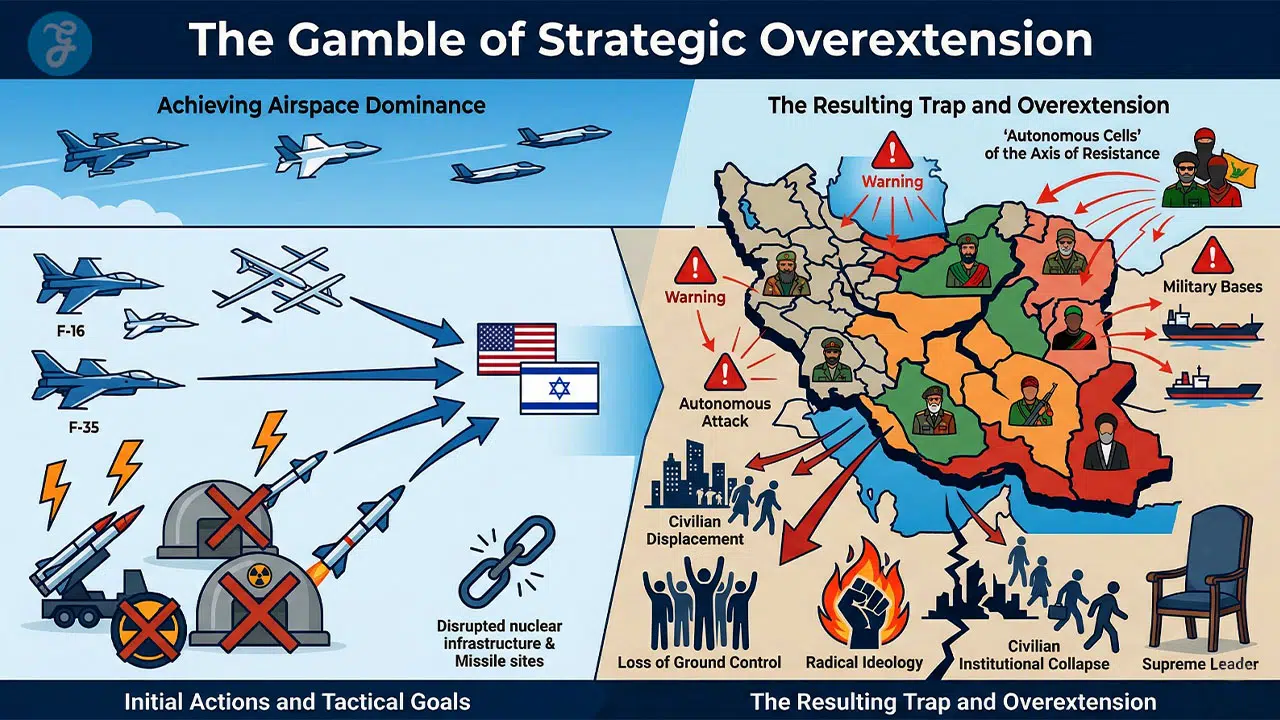
The U.S. and Israel are now facing the reality of the “Epic Fury” trap. By focusing solely on military degradation, they may have overlooked the social and political fallout. Conventional bombs can destroy concrete bunkers. They cannot destroy the ideology that fills the void once the bunkers are gone. The risk here is that the West has traded a known, centralized threat for an unknown, fragmented one.
The Power Vacuum
Does killing the head of a state actually bring stability? Recent weeks suggest the opposite. Decapitating the Iranian leadership has not led to a sudden surge in democratic fervor. Instead, it has bred decentralized chaos. Without a central authority in Tehran, the country is splintering. Local warlords and radicalized factions of the Revolutionary Guard are taking control of their own provinces.
The West currently wins the airspace every single day. No one can challenge their jets or their drones. Yet they are rapidly losing control of the ground. Radicalization is spreading among a population that feels cornered. Civilian displacement is reaching crisis levels as people flee the institutional collapse of their cities. The result is a landscape of instability that no amount of precision bombing can fix. Winning the war is proving to be the easy part. Managing the vacuum is where the true danger lies.
The Fragile Succession: Mojtaba’s Inheritance
The decapitation strike of February 28 left a void that no one was truly prepared to fill. The swift appointment of Mojtaba Khamenei as Supreme Leader was an attempt to project strength. But the reality is far more fractured. Intelligence reports suggest that the military and clerical structures are not collapsing as quickly as Western planners hoped. Instead, they are hardening.
The “Axis of Resistance” is no longer a coordinated network. It has become a collection of angry, autonomous cells. Groups like the Houthis and splinter factions of the IRGC are now operating without central oversight. They are making their own calls on which tankers to strike and which bases to target. The West has removed the “head” of the snake, but the body is now thrashing in a way that is far more unpredictable. Winning the airspace was a tactical success. But as the institutional collapse of Iran accelerates, the West is finding that there is no one left to negotiate a surrender with.
A World Split in Two
The fires of Operation Epic Fury escalation are doing more than just burning through military targets. They are melting the old maps of global power. We are watching the permanent fracture of a system that lasted for nearly eighty years. This is not a temporary dip in relations. It is a complete divorce from the previous international order.
New Geopolitical Blocs
Neutrality is a luxury few can afford now. The world is splitting into two distinct camps. On one side, the West and its traditional partners are doubling down on security and containment. On the other, a new group of nations is emerging. These countries are not necessarily fans of Tehran. They are simply pragmatic. They are building a world that bypasses Western banks and Western rules to keep their own lights on.
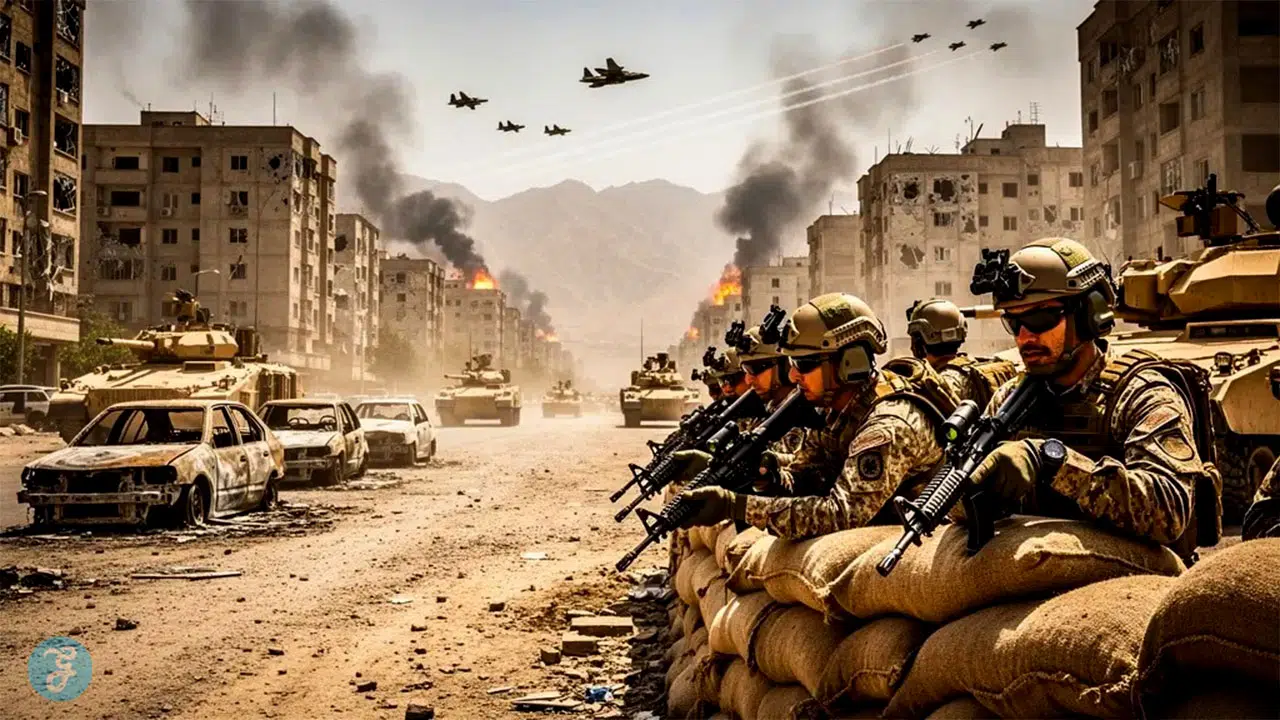
Adversarial powers are already moving into the gap. While the United States is tied down in the Persian Gulf, other giants are making their moves. They see a distracted superpower and an isolated Iran ripe for influence. They are using this moment to lock in long term energy deals and military footprints that were unthinkable a few years ago. Every day the U.S. remains fixated on the Middle East is a day its rivals grow stronger in their own backyards.
The Petro-Yuan and the New Trade Bloc
As this conflict continues to escalate, a different kind of shift is already happening in the world of finance. Isolated and under fire, the heavily sanctioned regime has made desperate but strategic moves. We are already seeing them leverage the closure of chokepoints like the Strait of Hormuz to control global energy flows, demanding transit tolls and oil payments exclusively in non-Western currencies and stablecoins to bypass Western financial systems.
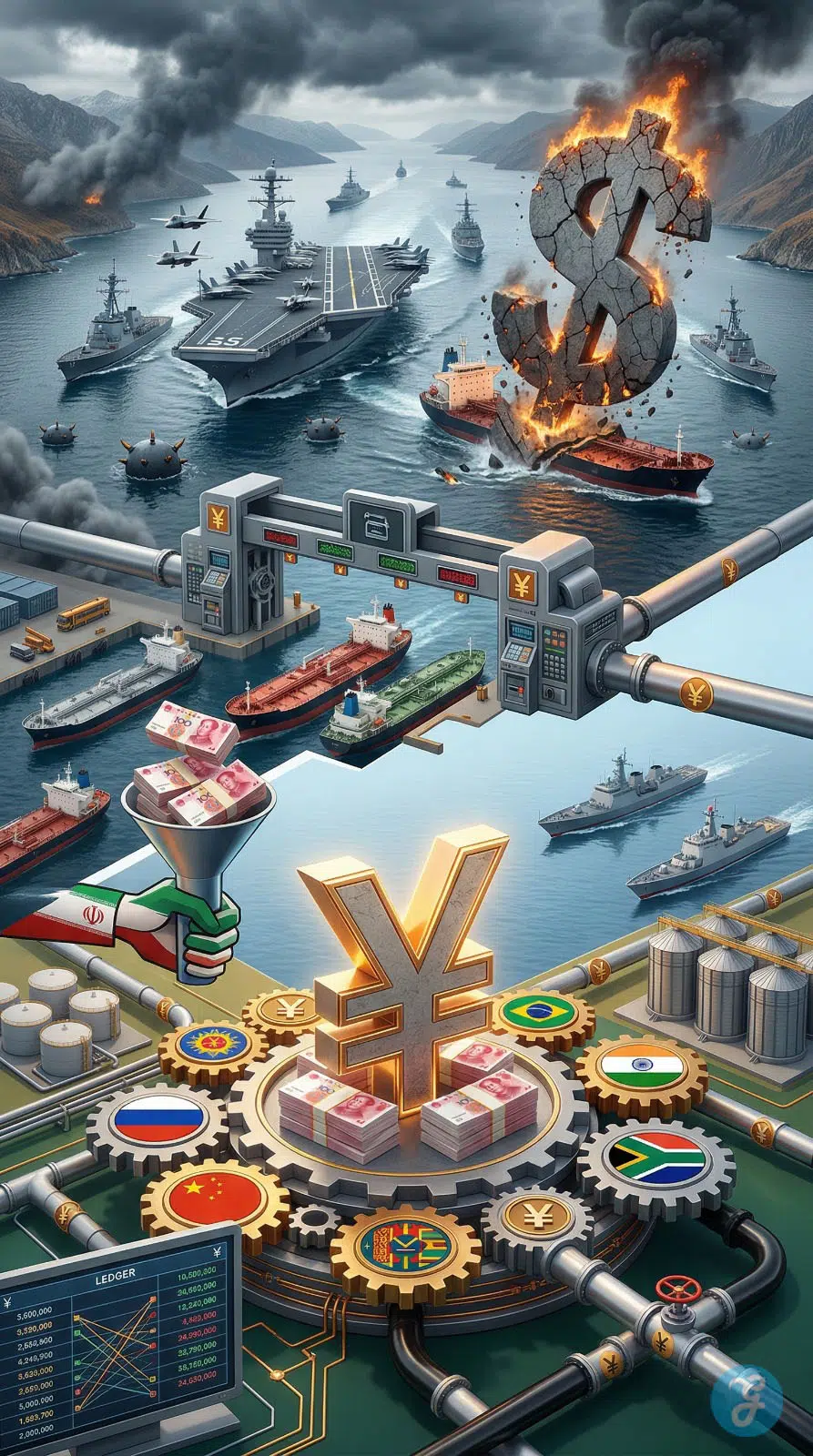
This is the active exploitation of a “distracted superpower.” While Washington pours billions into munitions and carrier strikes for a prolonged kinetic engagement, its strategic rivals are using the distraction to accelerate the building of a parallel economy. They are currently locking in long-term deals that bypass the U.S. dollar entirely.
This major regional war has accelerated a trend that was supposed to take decades. China and other BRICS members have effectively secured a captive energy market, moving trade into non-dollar systems like the Petro-Yuan to create a financial loop immune to Western sanctions. The result is a scenario where the West holds the military high ground but rapidly loses its grip on the global ledger. Operation Epic Fury hasn’t just broken a regime; it has fractured the monopoly of Western financial influence.
The Erosion of the Petrodollar
The forced pivot to settle oil trades in the Yuan or other alternative currencies is a direct hit to the heart of the old order. For fifty years, the global demand for dollars has been anchored by the oil trade. That anchor is already weakening. By pushing buyers to use the Renminbi, an isolated state is providing a real-world test case for a post-dollar economy.
This isn’t just about one nation’s survival; it is about a broader regional pivot. Other Gulf producers are watching closely. If a targeted nation can successfully manage its exports under the pressure of a massive military operation by using alternative currencies, the incentive for others to follow suit becomes overwhelming. We are seeing the acceleration of a trade bloc that does not need a New York bank to function. The “uncontainable consequences” of such an escalation are now being felt in the very foundations of global capitalism.
The Collapse of the Old Guard
The aftershocks of Operation Epic Fury escalation have created a new set of baseline realities for every nation on earth. These are not just temporary hurdles. They are the new foundations of the global order. Consider these critical shifts:
- The Death of Neutrality: Countries are being forced to choose between Western security umbrellas and new, non-Western economic life rafts.
- Aviation in Limbo: Major travel hubs like Dubai and Doha face persistent no-fly zones as GPS jamming becomes a permanent feature of regional security.
- The Fertilizer Crisis: Nitrogen and urea prices have jumped 28% in three weeks, threatening the 2026 spring planting season for farmers across the Americas and Asia.
- Digital Sovereignty: Nations are racing to build localized data centers to protect their banking systems from the physical destruction of the cloud.
The Modern World War
We need to redefine what a world war looks like in the 21st century. It does not need massive tank battles on European plains to qualify. The 2026 Iran War is a global war of a different sort, a war of logistics and energy. It is a fight over who controls the flow of grain and gas. The front lines are not just in the desert; they are in the stock markets of Tokyo and the grocery stores of London.
This conflict is rewriting the rules of the game, proving that a localized strike can economically starve a city ten thousand miles away. We are standing on the edge of a logistical and diplomatic earthquake. If the dust eventually settles, the landscape will never look the same. The 21st-century order is no longer just being written in ink at summit meetings; it is being forged in the heat of geopolitical flashpoints that could change everything.
Disclaimer: Editorialge maintains a steadfast commitment to responsible reporting on the evolving conflicts in West Asia involving Israel, Iran, U.S., Gulf nations and non-state actors like Hezbollah, Hamas, Houthis, Islamic State, and others. In an environment where digital disinformation is widespread, we cannot independently verify every social media post or claim involving national and non-state actors. Our priority remains factual accuracy and the exercise of extreme caution when documenting all regional media.