Fishing has always been part of the American rhythm. Early mornings, coffee in a thermos, the low hum of a boat motor cutting across still water. For decades it lived mostly in family traditions and quiet local communities. Lately, though, something interesting has happened. Fishing has started pulling in a much wider crowd, from young professionals looking to unplug to families searching for something that gets everyone outside and moving.
Part of the draw is simple. Fishing asks very little from people at the beginning. You don’t need years of training, elite gear, or a complicated playbook. You need patience, a bit of curiosity, and the willingness to spend time outdoors. Once that hook sets, though, many anglers find themselves diving deeper into the culture, the equipment, and the quiet satisfaction that comes from learning the water.
The Rise Of Modern Recreational Fishing
Recreational fishing has been on a steady upswing across the United States, fueled in part by people rediscovering outdoor hobbies that feel accessible and restorative. The appeal goes beyond the act of catching fish. It’s the environment surrounding it. Lakes at sunrise, coastal marshes at dusk, rivers that wind through quiet stretches of forest.
Social media has played an unexpected role in that revival. Anglers now share catches, gear setups, and location tips with audiences that would have been unimaginable twenty years ago. A weekend trip to a lake can quickly turn into a learning experience after scrolling through a few videos showing casting techniques or lure strategies.
Yet despite the digital attention, the activity itself remains refreshingly analog. Standing on a dock or boat, feeling the line tighten slightly before a strike, creates a kind of focus that’s hard to replicate elsewhere. For many people, fishing becomes one of the few activities where the phone stays tucked away for hours.
Gear That Makes Time On The Water Better
Serious anglers often say equipment matters less than patience. That may be true at the beginning, but over time most people discover that comfort and durability can make a long day outdoors far more enjoyable. Weather shifts quickly on the water, and sun exposure can be relentless.
That’s one reason experienced anglers often emphasize that high-quality fishing clothing is key. Breathable long sleeve shirts protect against sunburn without trapping heat, while lightweight rain layers keep anglers comfortable during sudden summer storms. Quick drying fabrics and UV protection are now standard features in many fishing apparel lines.
Footwear also plays a role, particularly for anglers who spend hours standing in boats or along rocky shorelines. Non slip soles and lightweight materials reduce fatigue over the course of a long outing. These small details may sound mundane, yet anyone who has spent eight hours casting a line understands how much they matter by the end of the day.
Technology Quietly Changes The Fishing Experience
Fishing may feel timeless, but technology has quietly reshaped the experience. Modern fish finders now deliver detailed underwater mapping that once belonged only to professional guides. GPS enabled trolling motors allow boats to maintain position even in windy conditions. For anglers learning unfamiliar lakes, these tools remove some of the guesswork.
Even rod and reel design has evolved. Carbon fiber rods provide sensitivity that allows anglers to detect subtle movements along the line, while precision reel systems deliver smoother casting and retrieval. The result is gear that performs better without becoming overly complicated for beginners.
At the same time, experienced anglers still emphasize skill over gadgets. Understanding water temperature, seasonal fish behavior, and the subtle structure of lake beds remains essential. Technology can assist, but it cannot replace the instincts that develop after years spent watching how fish respond to changing conditions.
Bass Fishing Continues To Dominate American Lakes
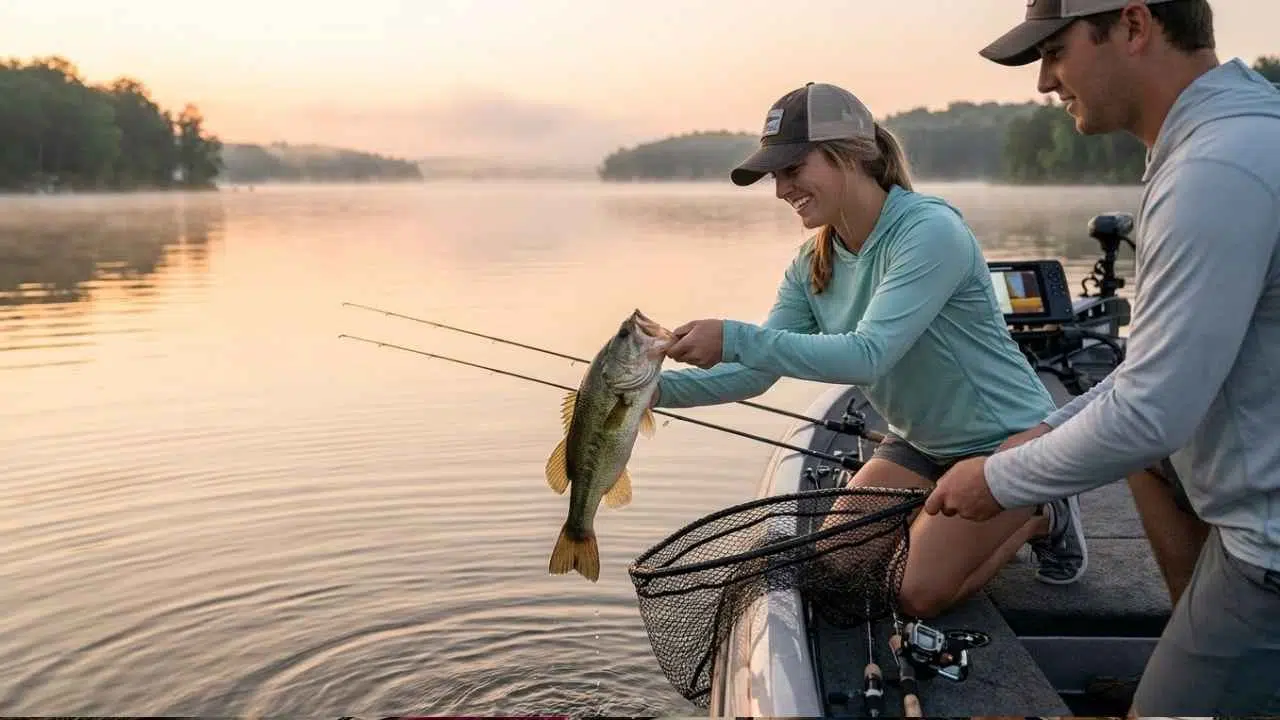
Across the country, one species stands out as the clear favorite among recreational anglers. The largemouth bass has become almost synonymous with American freshwater fishing. Lakes in the South and Midwest in particular attract thousands of anglers each year who focus almost exclusively on bass fishing.
Part of the attraction comes from the fish itself. Bass are aggressive predators, which means strikes can be sudden and dramatic. That excitement keeps anglers coming back again and again, experimenting with new lures, colors, and techniques to trigger that next hit.
Tournament culture has also elevated the sport. Professional bass competitions draw national audiences, and the visibility of those events encourages newcomers to try their hand at the same techniques used by seasoned competitors. Weekend anglers may not be chasing prize money, but the influence of tournament strategies shows up everywhere from tackle shops to online fishing forums.
A Hobby That Encourages Patience
Fishing has never been about constant action. In fact, much of its appeal comes from the opposite. Time slows down on the water. Casts stretch into quiet minutes while ripples move across the surface and birds circle overhead.
For people accustomed to constant digital stimulation, that slower pace can feel unfamiliar at first. After a while, though, it starts to feel like a reset. Conversations happen more easily, distractions fade, and attention settles into the moment.
Families often discover that fishing creates space for connection without forcing it. Parents and kids share a boat or dock, sometimes talking, sometimes sitting in companionable silence while waiting for the next tug on the line.
The Water Still Wins
Fishing continues to evolve with new technology, new anglers, and new ways of sharing the experience. Yet the core attraction hasn’t changed. People return to lakes, rivers, and coastlines for the same reason they always have. The water offers something simple and steady, a place where time stretches out and the outside world fades for a while. For many anglers, that quiet reward matters just as much as whatever ends up on the line.