The morning rush at a supermarket in London’s Greenwich or India’s Greater Noida in 2026 feels different than it did five years ago. Shoppers no longer squint at tiny black text on white labels. Instead, they glide through aisles with sleek handheld scanners or smartphones. They are looking for a single number. This number dictates what ends up in the basket and what stays on the shelf. We have entered the era of Nutrient Density Scoring. This is the new metric for human vitality. It has turned the traditional grocery trip into a data-led mission for biological wealth.
From Weight to Wealth: The Transition to the Verification Era
For decades, we bought food by weight. We paid for the mass of a potato or the heavy water content of a cucumber. Then came the Organic Era. We paid a premium for a promise of “no chemicals.” But 2026 has brought a sharper clarity. We now know that two organic carrots can be worlds apart in actual value. One might be packed with beta-carotene while the other is little more than orange-coloured fibre. This is where Nutrient Density Scoring changes the game. It calculates the exact concentration of micronutrients, phytochemicals, and antioxidants relative to the calories provided.
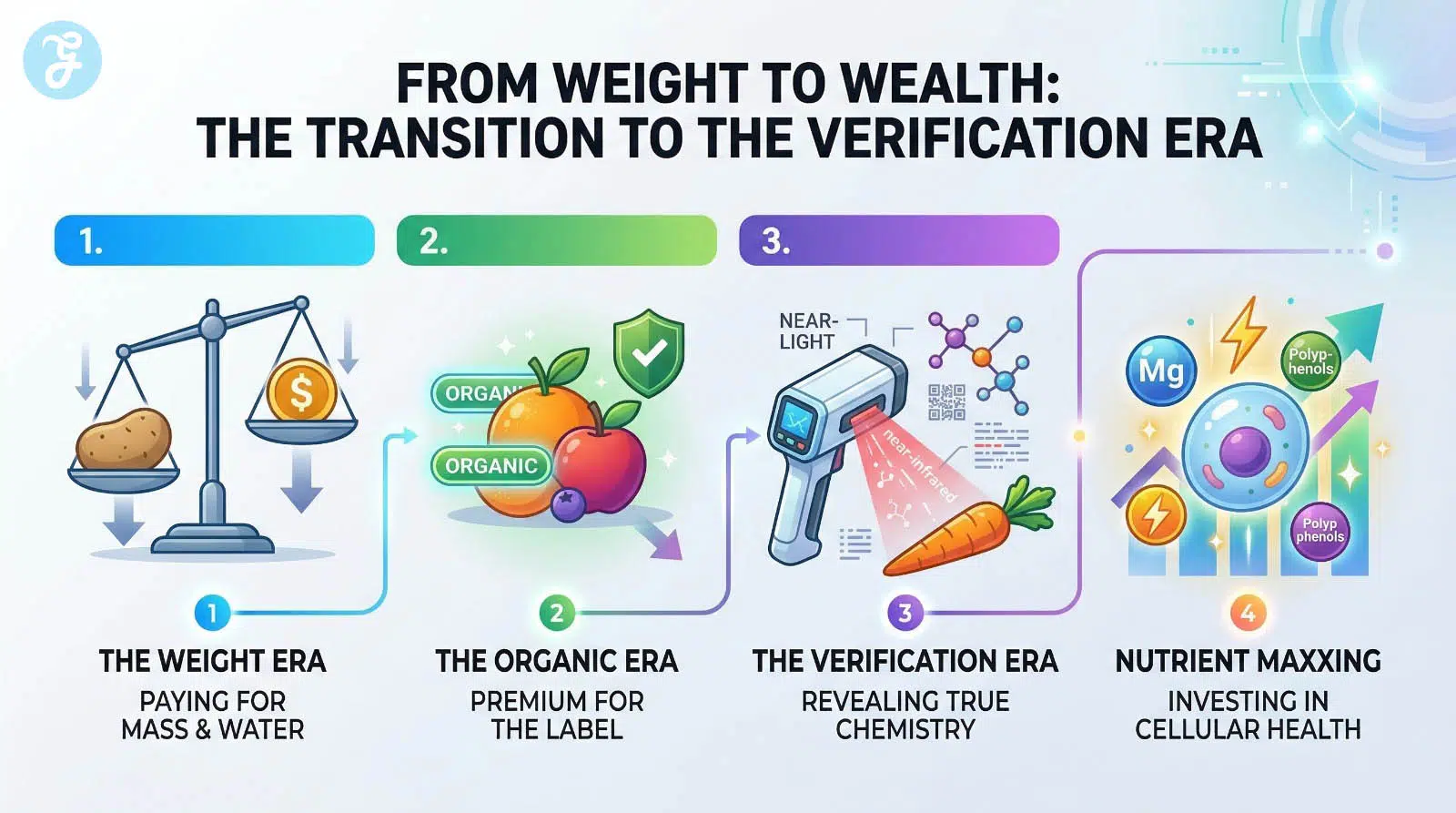
Digital scanners, now backed by third-party laboratory validation, have empowered us to look past glossy marketing and vague health claims. These devices use standardised near-infrared light to read the internal chemistry of produce in seconds. They reveal the measurable biological value of every calorie. It is a brutal reality check for big-name brands. In this new landscape, transparency is the only way to build trust. If a brand cannot prove its “Superfood” status with a high score, it simply does not sell.
This shift marks the end of the “Calories In, Calories Out” obsession. We are no longer just counting energy. We are measuring the quality of that energy. Nutrient Density Scoring prioritises the “invisible” workers in our food. We are talking about the magnesium that regulates our heartbeat and the polyphenols that protect our DNA. By focusing on these densest sources of life, we are effectively “nutrient maxxing” our grocery spend. We have moved from the “Organic Era” to the “Verification Era.” Every penny spent is now an investment in verified cellular health.
Precision Shopping in the Arizona Sun: The Rini and Thomas Story
In the sun-bleached suburbs of Scottsdale, Arizona, the environment demands a high physical price. For Rini, a freelance graphic designer, and Thomas, a high school football coach, the local climate makes metabolic efficiency a non-negotiable part of life. Their home is a hub of active living. Yet, by the middle of 2025, something felt fundamentally broken. Despite filling their kitchen with expensive “Premium Organic” produce, they were both struggling. Thomas found himself hitting a wall during afternoon practice sessions. Rini battled a persistent mental fatigue that no amount of specialty coffee could clear. They were following every traditional health rule. They shopped at high-end markets. They bought the glossy, perfectly shaped vegetables. They paid the “organic tax” at every checkout. Still, the energy they expected from their food simply was not there.
The turning point came on a Wednesday afternoon at a local market. Thomas had recently invested in a handheld NIR scanner, a device that was quickly becoming a staple for data-conscious households. They decided to put their usual “Gold Standard” kale to the test. Rini scanned a beautifully packaged bag of organic kale that had been shipped across three states. The Nutrient Density Scoring app flashed a mediocre 40. For a vegetable widely considered a superfood, the score was an indictment of its long journey and depleted soil. Just a few stalls away, a local farmer was selling bunches of kale that looked smaller and less uniform. Thomas held the scanner over a leaf that had been harvested just hours earlier. The result was instantaneous. The Nutrient Density Scoring hit 88. This “budget” kale was twice as potent as the premium brand. It was a moment of profound clarity for the couple. They realised that a label is just a marketing claim. A score is a biological fact.
The Shift from Marketing Labels to Biological Facts
Their lifestyle transformation was rapid. They stopped chasing brands and started chasing scores. Rini began to see her brain fog lift as she prioritised foods with high mineral bioavailability. Thomas found that his recovery times improved when he focused on the specific magnesium and potassium levels revealed by the scanner.
The financial impact was equally surprising. By focusing on Nutrient Density Scoring, they moved away from over-hyped imported products. They started buying local, seasonal, and regeneratively farmed items that often cost less but worked harder for their bodies. Their monthly grocery bill dropped by 15%. They were no longer paying for the logistics of food. They were paying for the fuel within it. For Rini and Thomas, the scanner turned the grocery aisle from a place of guesswork into a precise tool for human performance.
The Science of the Score: Decoding Nutrient Density
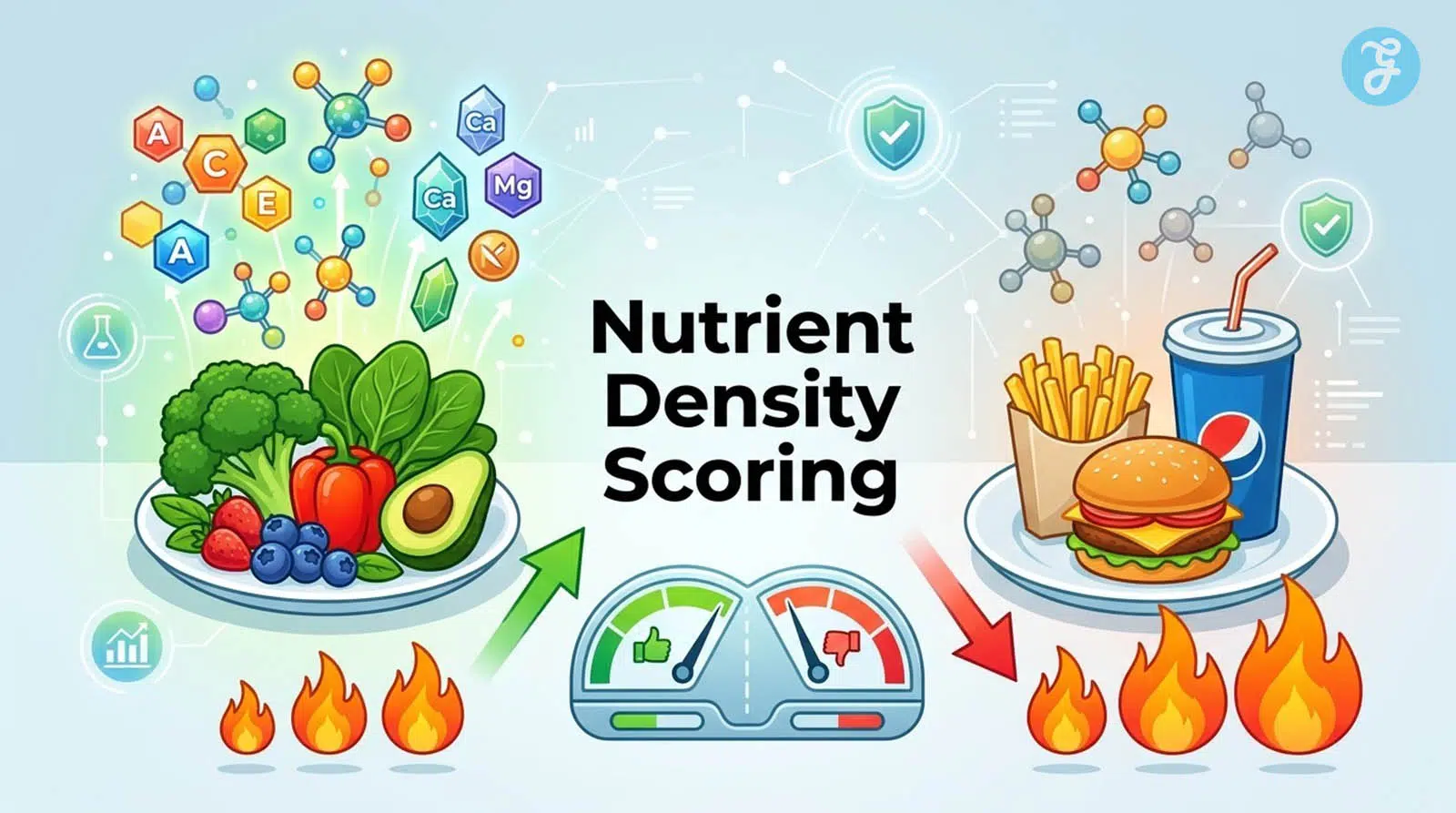
At its core, Nutrient Density Scoring is a mathematical approach to nutrition. While traditional labelling tells you how much fat or sugar is in a product, it rarely accounts for the invisible workers. We are talking about the magnesium that powers your heart or the lutein that protects your eyes. In the 2026 marketplace, foods are ranked on a scale that weighs these essential nutrients against discretionary components like added sugars. A high score indicates a powerhouse food where the vitamins and minerals far outweigh the caloric cost.
Near-Infrared Spectroscopy in Your Pocket
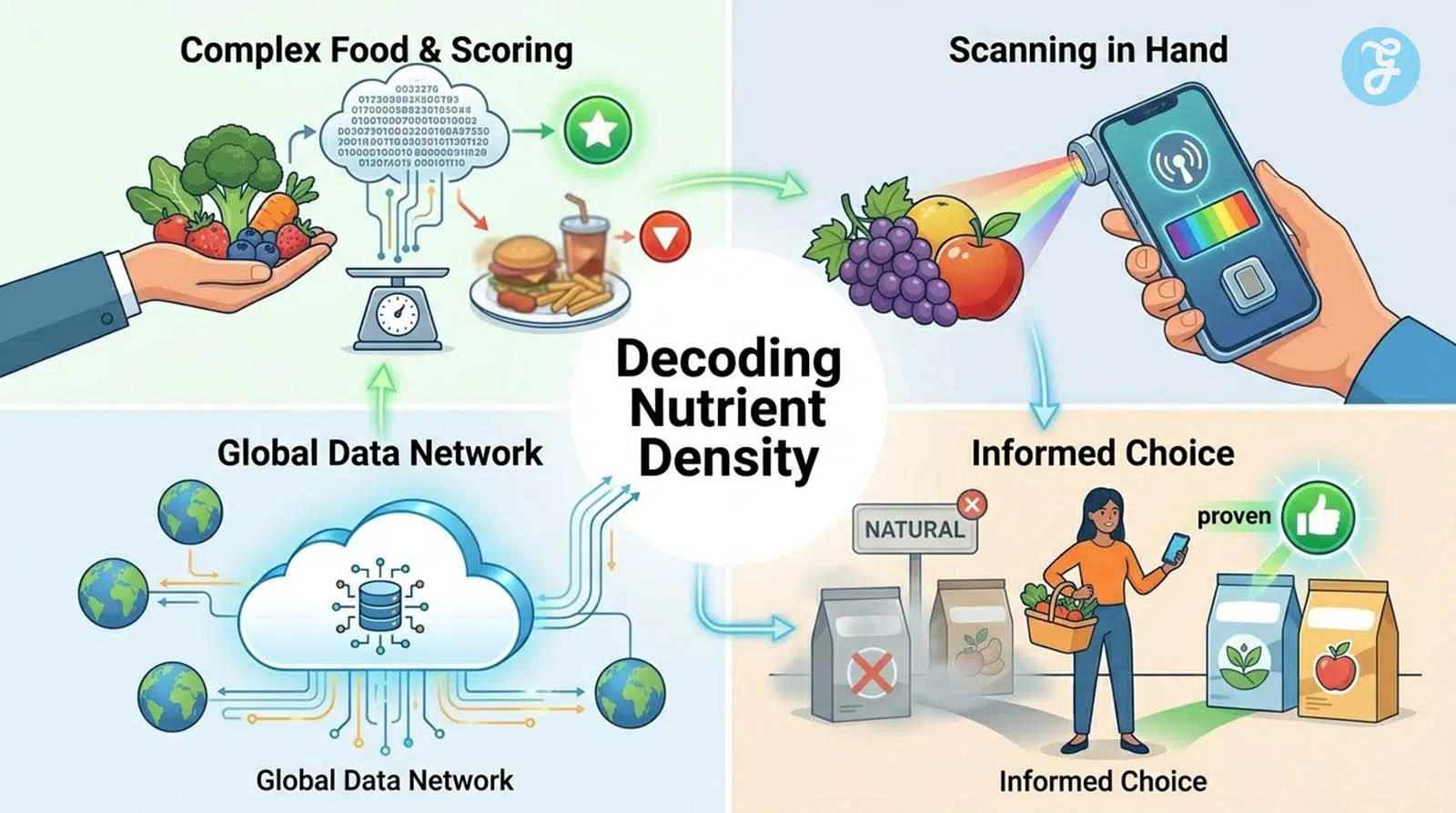
Near-Infrared (NIR) Spectroscopy has shrunk from a bulky machine to a sensor small enough to fit inside a mobile phone. These sensors emit a specific wavelength of light that penetrates the surface of a fruit or vegetable. By measuring how that light bounces back, the device can read the internal molecular signature of the food. It identifies the presence of specific vitamins and minerals without ever breaking the skin of the produce. It is like having a digital laboratory in the palm of your hand that tells you exactly what is happening beneath the peel.
The Global Bio-Nutrition Index
This raw data is instantly cross-referenced against the Global Bio-Nutrition Index. This open-source, cloud-based database, pioneered by institutions like the Bionutrient Institute, holds the benchmark nutritional profiles for thousands of crop varieties from around the world. Within seconds, the consumer receives a Nutrient Density Scoring result. It is an objective truth that bypasses clever copywriting or heritage-style packaging. This connection to a global data network ensures that whether you are in London or Greater Noida, the standard for a high score is scientifically calibrated. The system even accounts for regional soil variances, such as the specific zinc and iron deficiencies common in South Asian topsoil, providing a precision-matched result for every local harvest.
The End of Marketing Myths
This level of data-driven transparency has effectively ended the era of blind shopping. We are now able to see exactly how much the nutritional value of a tomato drops for every day it sits in a warehouse or a shipping container. In 2026, it is impossible for brands to hide behind vague natural or healthy claims. If the minerals are not in the soil, they will not be in the score. Even the most expensive organic produce can fail the test if it has been grown in depleted earth or stored for too long.
The Bio-Nutrition Leaderboard: 2026’s Nutrient Density Hall of Fame
The 2026 Bio-Nutrition Index has finally given us a definitive list of the most efficient foods on the planet. This is not about being trendy or expensive. It is about the cold hard data of biological value. Every item on this list has been vetted through rigorous Nutrient Density Scoring to ensure it delivers a maximum payload of health per calorie. When we look at these numbers we are seeing a map of how to fuel a human life with precision.
The math behind this list is simple but transformative. We take the sum of essential vitamins, minerals, and phytonutrients and divide them by the total energy provided. The higher the number, the more your body gets for its metabolic effort. This approach has elevated some humble ingredients to legendary status. It has also forced us to rethink what we consider a staple in a modern kitchen.
The Unbeaten Champion
Watercress remains the only food in the world to maintain a perfect 100/100 on the Nutrient Density Scoring index. It is the gold standard for a reason. This peppery green is a concentrated source of Vitamin K, Vitamin C, and Vitamin A. It contains significant amounts of calcium and manganese. What makes it a miracle is that it achieves this with almost zero caloric cost. In a world where we are trying to do more with less, watercress is the ultimate high performance fuel.
The Underdogs of the Vegetable Patch
Behind the champion we find a group of foods that were once considered scraps or side dishes. Chinese cabbage takes the second spot with a score of 91. It is a powerhouse of iron and calcium that is incredibly easy for the body to absorb. Swiss chard follows closely with a score of 89. It is rich in magnesium and potassium which are essential for heart health and nerve function.
Perhaps the most surprising entry is beet greens. For years we focused on the root and threw away the leaves. But micronutrient concentration profiling has revealed that the leaves are actually the treasure chest. They are packed with Zinc and Vitamin A. They offer a mineral profile that puts most expensive supplements to shame. These are the underdogs that are now dominating the shopping baskets of the health conscious.
Modern Staples Re-evaluated
The 2026 tech has also cast a new light on traditional staples. We now look at almonds not just as a snack but as a specific delivery system for Vitamin E and healthy fats. Fatty fish like ocean perch have risen in the rankings because of their high selenium and B12 content. Even pasture-raised fats have seen a resurgence. When the animal is raised on healthy soil the resulting fat is rich in Vitamin D and oleic acid.
These foods rank high because they respect the fundamental logic of nutrition. They provide the body with the building blocks of life without the metabolic baggage of empty energy. Every bite is an investment. By following this leaderboard we are no longer just eating. We are optimizing our existence.
The Earth Beneath Your Feet: The Regenerative Connection
The score on your smartphone screen is a direct reflection of the earth beneath your feet. In 2026, we have finally accepted that we cannot have healthy humans on a sick planet. High Nutrient Density Scoring is effectively a report card for the farm. It tells us if the soil is alive with the microbial diversity needed to transfer minerals into the plant. This connection has turned every grocery purchase into a vote for environmental restoration. We are no longer just buying food. We are investing in the health of the topsoil.
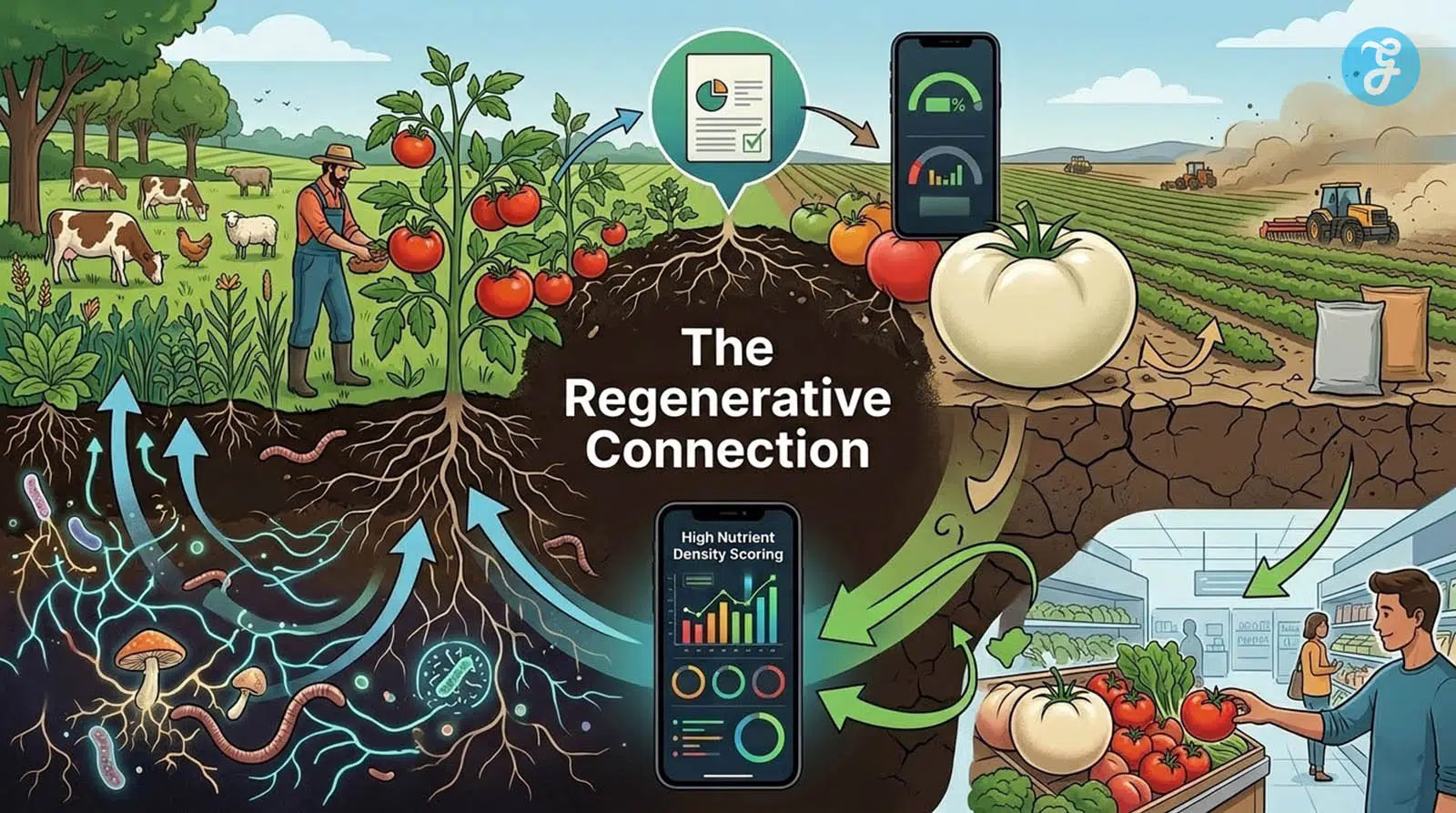
For nearly a century, industrial farming prioritised bulk yield and cosmetic appearance over biological integrity. While we produced larger crops that looked perfect, they remained biologically hollow, a trend now being reversed by regenerative pilots from global food leaders focused on soil-to-nutrient density. Today, the data has exposed this flaw. We now see that a plant grown in dead soil supplemented by synthetic fertilisers cannot produce the same complex phytonutrients as one grown in a regenerative system. This is why the Nutrient Density Scoring of a heritage tomato often dwarfs that of a mass produced alternative. The plant can only give what the soil provides.
Brand Trust in the Era of Transparency
This transparency has forced a massive shift in how food companies operate. Brands can no longer survive on glossy imagery of green fields. They must provide the data to back up their claims. Many forward thinking producers now print a Live Score on their packaging. This links back to the latest soil test and harvest data. It is a new form of brand trust that is earned through measurable quality rather than expensive advertising campaigns. If the minerals are missing, the marketing cannot save the product.
The Economic Ripple Effect
As consumers like Rini and Thomas shift their spending toward high scoring produce, the market is responding. Industrial farms are being forced to pivot towards cover cropping and reduced tillage to stay competitive. They are learning that soil restoration is not just good for the planet. It is a financial necessity. In 2026, the most profitable farms are those that can produce the highest Nutrient Density Scoring per hectare. We are finally aligning our economic incentives with our biological needs.
Fundamental Differences Between “Organic Era” and the 2026 “Verification Era”
The transition to Nutrient Density Scoring represents a fundamental shift in how we calculate food value, moving from visual and brand-based assumptions to data-driven biological facts.
| Feature | The Organic Era (2010–2025) | The Verification Era (2026+) |
| Primary Metric | Physical Weight & Mass | Nutrient Density Score (NDS) |
| Purchasing Driver | Brand Trust & Labels | Live Biological Data |
| Technology | Eye-balling & Marketing | NIR Handheld Spectroscopy |
| Core Value | “No Chemicals” (Absence) | Micronutrient Payload (Presence) |
| Economic Impact | Premium “Organic Tax” | 15% Average Budget Savings |
| Soil Connection | Assumptions of Quality | Verified Regenerative Data |
The Future of Food Literacy
We are standing at the threshold of a nutritional literacy revolution. By the year 2030, the traditional Nutrition Facts panel will likely seem like a relic of a primitive past. The binary measurements of fats and sugars are being replaced by the dynamic precision of Nutrient Density Scoring. This is not a passing trend. It is a permanent shift in how we perceive the value of what we put into our bodies. We are moving away from the guesswork of the twentieth century toward a future where every calorie must justify its existence.
For families like Rini and Thomas in the Arizona heat, this shift has already happened. Their fridge is no longer just a storage unit for groceries. It is a repository of biological data that fuels their specific physical and mental needs. They have stopped being passive recipients of corporate marketing. They have become active participants in their own metabolic health. By choosing a high score over a high price tag, they have reclaimed their energy and their budget. They are living proof that when you change the metric, you change the life.
From Passive Consumer to Nutrient Hunter
The power to choose now rests firmly in your hands. You no longer need to wonder if that expensive organic apple is worth the extra pound or rupee; you can see the truth for yourself. This technology has stripped away the smoke and mirrors of the global food industry, leaving a simple, undeniable reality: the quality of the food is the quality of the soil. The quality of the internal nutrient profile is the quality of your health.
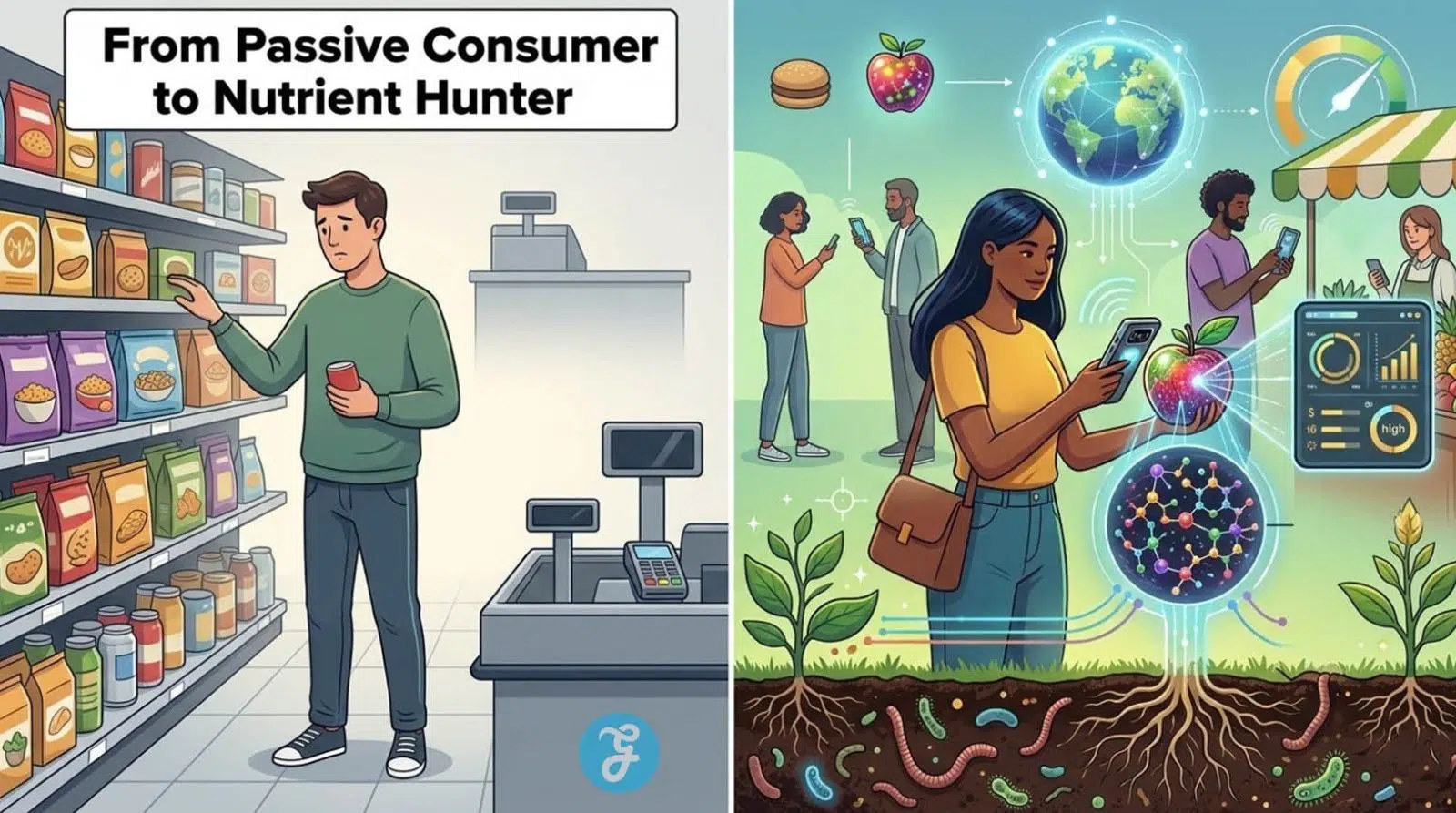
The days of being a passive consumer are over. It is time to step into the role of the nutrient hunter. Every trip to the supermarket is an opportunity to optimise your cellular potential. Do not just settle for what looks good on the shelf; demand to see the data. Look for the Nutrient Density Scoring to find true value. Whether you shop at Greater Noida, Greenwich, or Scottsdale, you are a global citizen armed with a universal metric for vitality. You are part of a borderless movement that prioritises biological integrity over commercial convenience. Your body knows the difference between a filler and a fuel. In 2026, we are finally speaking the true language of food.
Disclaimer: Names in this Arizona case study have been changed to protect the privacy of individuals.