The financial landscape of 2026 has been permanently altered by the integration of digital assets into the traditional banking system. After the historic approvals of early 2024, the market for exchange-traded funds has matured into a multi-billion-dollar ecosystem that influences global price discovery every single day. Investors who once viewed crypto as a fringe experiment are now seeing it sitting alongside gold and treasury bonds in regulated brokerage accounts. Let us explore the most unexpected developments in this high velocity sector.
How We Selected Our 12 Best Bitcoin ETF Facts
To bring you the most relevant data for 2026 we had to filter through a massive amount of on-chain data and regulatory filings.
We focused our selection criteria on three specific pillars of the market. First we analyzed the shifting demographics of the largest institutional holders to see who is actually buying these funds. Second we looked at the impact of recent federal legislation like the GENIUS Act on fund structures. Finally we prioritized facts that demonstrate the long term structural shift in how Wall Street treats digital scarcity versus traditional assets.
12 Surprising Facts About Bitcoin ETFs in America This Year
The growth of these regulated vehicles has provided a transparent window into how the worlds largest money managers interact with crypto. Here are the twelve most surprising facts about the current state of the market.
1. Institutional Inflows Are Topping One Billion Weekly
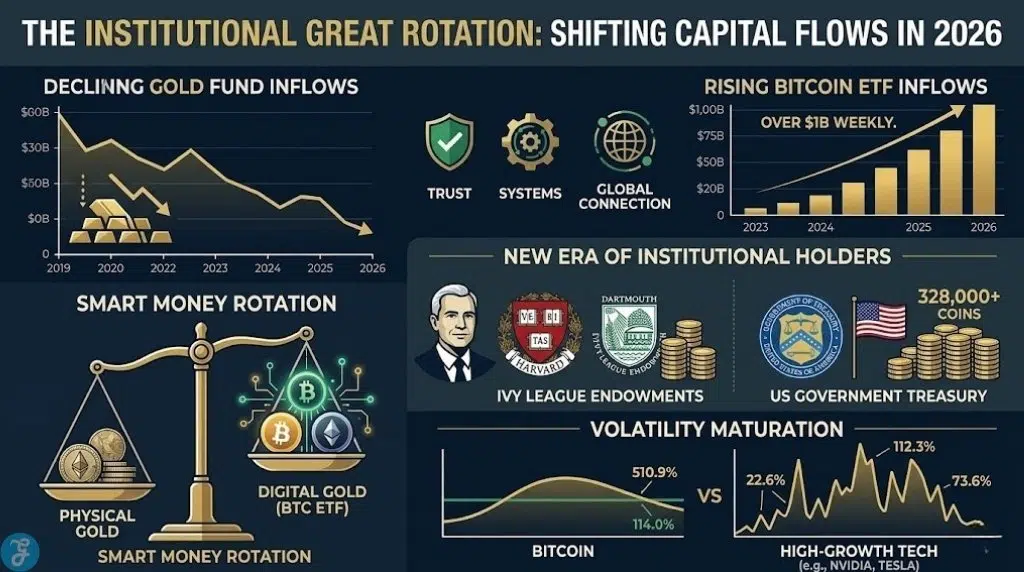
Despite the market volatility seen at the start of 2026 institutional demand for these products has hit a record breaking pace. Recent data shows that net inflows into spot funds reached nearly one billion dollars in a single week during the March rally. This suggests that professional investors are no longer just testing the waters but are instead making aggressive allocations during price dips. It represents a massive shift in confidence from the speculative retail driven runs of previous years.
Best Feature/For:
-
Large scale asset managers looking for deep liquidity
Why We Chose It:
-
Demonstrates that the “smart money” is actively buying the current price floor
-
Shows that Bitcoin ETFs in America have become the primary demand signal for the asset
-
Highlights the speed at which traditional capital can enter the market
Things to consider:
-
High inflow weeks are often followed by tactical profit taking from hedge funds
Transitioning from flows to ownership we can see some very surprising names on the list of holders.
2. Ivy League Endowments are Major Stakeholders
It is not just tech savvy retail investors holding these funds anymore. Recent SEC filings show that half of the Ivy League endowments including Harvard and Dartmouth have significant positions in spot products. These institutions are known for having the longest investment horizons in the financial world. Their presence in the market signals that Bitcoin is now viewed as a legitimate multi generational asset for preserving university wealth.
Best Feature/For:
-
Conservative long term portfolios focused on capital preservation
Why We Chose It:
-
Provides a huge amount of institutional credibility to the digital asset space
-
Proves that academia has moved past the skeptical phase of crypto adoption
-
Suggests that Bitcoin is fulfilling its role as digital gold for endowment funds
Things to consider:
-
Endowments often trim their positions based on annual rebalancing rules
The shift in who holds the coins is also changing how countries view their reserves.
3. The US Government is the Worlds Largest Bitcoin Holder
While many people think of private whales as the biggest players the United States government actually holds the top spot globally. With a treasury stack of over 328,000 coins the US has a larger position than any other nation by a massive margin. This stash is increasingly being discussed in the context of a strategic national reserve. It creates a fascinating dynamic where the regulator of the market is also its most significant participant.
Best Feature/For:
-
Geopolitical analysts tracking national compute sovereignty
Why We Chose It:
-
Highlights the strategic importance of Bitcoin at the federal level
-
Creates a potential floor for the market if a strategic reserve is formalized
-
Shows the scale of the US footprint in the global crypto ecosystem
Things to consider:
-
Future political changes could lead to large scale auctions that impact prices
Policy shifts like this are often supported by new legislation.
4. The GENIUS Act Has Unlocked New Yield Products
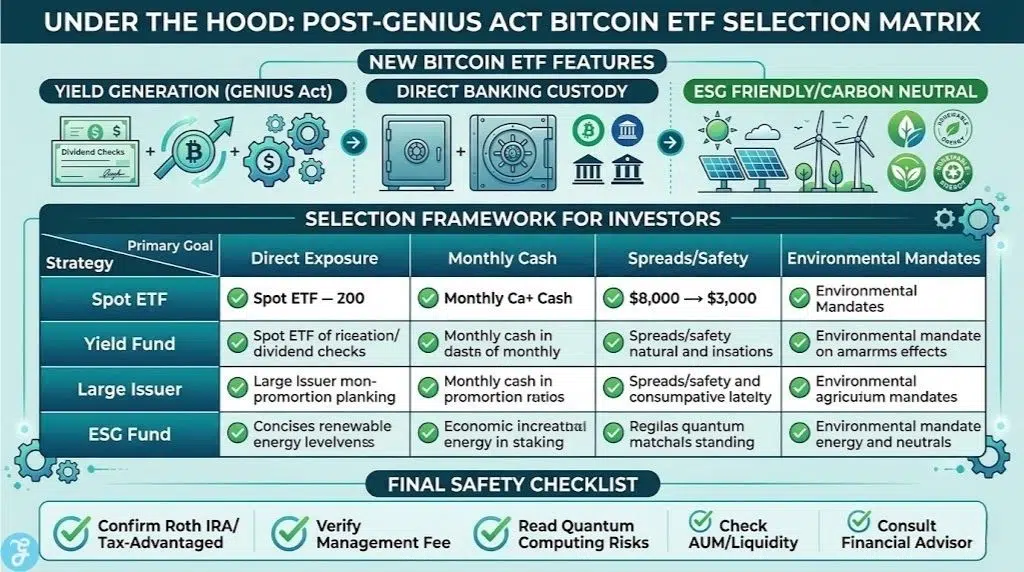
The passing of the GENIUS Act in July 2025 was a watershed moment for the crypto industry in the United States. This federal framework cleared the way for yield generating products that were previously blocked by regulatory uncertainty. As a result we are now seeing the first wave of “Staked” funds that pay investors a monthly distribution. It has transformed the simple “buy and hold” model into a productive asset class that competes with dividend paying stocks.
Best Feature/For:
-
Income focused investors who want to earn yield while holding crypto
Why We Chose It:
-
Represents the most significant piece of crypto legislation in a decade
-
Allowed firms like BlackRock to launch the first staked yield ETFs
-
Provides a regulated way for investors to participate in network rewards
Things to consider:
-
Staking rewards are variable and subject to network performance fluctuations
This new yield potential has led to a massive concentration of power in one firm.
5. BlackRock Now Controls Over Ninety Percent of Net Volume
The dominance of BlackRock in the crypto ETF space is difficult to overstate. Their flagship IBIT fund has become the anchor of the entire industry and often accounts for nearly all of the daily net inflows. This concentration means that the risk decisions of a single firm can move the entire market. While it provides immense liquidity it also creates a centralized point of failure for institutional sentiment.
Best Feature/For:
-
High volume traders who need the tightest bid ask spreads
Why We Chose It:
-
Demonstrates the sheer scale of the worlds largest asset manager
-
Shows how IBIT has become the primary gateway for Bitcoin ETFs in America
-
Highlights the competitive gap between BlackRock and smaller issuers
Things to consider:
-
Excessive concentration can lead to increased systemic risk during market crashes
While BlackRock dominates one sector the banking world is finally opening its own doors.
6. Major Custody Banks Are Offering Direct Storage
For the first two years of the ETF era most funds relied on a single crypto native exchange for storage. In 2026 we have seen a major shift as global custody banks have begun offering direct Bitcoin storage for institutional clients. This diversification of custody is a critical step for risk management. It allows massive retirement funds to spread their assets across multiple highly regulated banking giants rather than one or two specialized firms.
Best Feature/For:
-
Risk averse institutions requiring traditional banking grade security
Why We Chose It:
-
Breaks the monopoly that crypto exchanges had on institutional storage
-
Provides a more familiar security model for old school fund managers
-
Increases the overall resilience of the Bitcoin ETFs in America ecosystem
Things to consider:
-
Traditional banks often charge higher custody fees than crypto native firms
This banking support is making its way into the most common investment accounts.
7. Retirement Providers Have Integrated Crypto Allocations
One of the most surprising shifts this year is the widespread adoption of Bitcoin ETFs by major 401k and IRA providers. Millions of Americans can now allocate a small percentage of their retirement savings to crypto with a single click. This has moved Bitcoin from a “speculative side bet” to a core component of the average workers long term savings plan. It provides a steady stream of passive buying pressure that was completely absent just a few years ago.
Best Feature/For:
-
Everyday workers looking for tax advantaged ways to hold Bitcoin
Why We Chose It:
-
Opens up trillions of dollars in retirement capital to the crypto market
-
Automates the process of recurring investment for millions of people
-
Lowers the barrier to entry for the non technical general public
Things to consider:
-
Many plans still cap crypto allocations at one to five percent of the total portfolio
As capital moves into crypto it is clearly coming from other traditional safe havens.
8. Capital is Rotating from Gold Into Bitcoin ETFs
A major structural shift is occurring in how the “smart money” views safe haven assets. Over the past year we have seen record outflows from traditional gold funds while Bitcoin ETFs have seen consistent growth. Large institutional desks are increasingly treating Bitcoin as a higher conviction long term play than physical gold. This “digital gold” narrative is no longer just a meme but is now a visible data trend in quarterly investment filings.
Best Feature/For:
-
Macro investors looking for a modern alternative to gold
Why We Chose It:
-
Proves the rotation narrative with cold hard inflow and outflow data
-
Shows that Bitcoin is winning the battle for institutional “store of value” status
-
Highlights the superior portability and divisibility of digital assets
Things to consider:
-
Gold still maintains a much higher total market cap and historical track record
Even with this success the market is going through a period of intense consolidation.
9. Over One Hundred Crypto Linked Funds Are Launching
While the spot Bitcoin products get the most headlines the market is being flooded with variety. We are seeing everything from inverse Bitcoin funds to specialized products for tokens like Solana and XRP. However analysts expect that many of these smaller niche funds will eventually close due to a lack of demand. This “ETF boom” is creating a hyper competitive environment where only the largest and most efficient issuers will survive the next few years.
Best Feature/For:
-
Speculative traders looking for targeted exposure to specific coins
Why We Chose It:
-
Illustrates the explosive growth in the diversity of Bitcoin ETFs in America
-
Warns of the inevitable “shakeout” where low volume funds will be liquidated
-
Shows how aggressive the race is for dominant market share in the crypto space
Things to consider:
-
Low volume ETFs can have high spreads and poor execution prices
Technology is also posing new and surprising challenges to the funds.
10. Quantum Computing is the New Long Term Risk
As we move further into 2026 the threat of quantum computing has become a legitimate topic in fund prospectuses. While it is not an immediate danger experts worry that advancing quantum power could eventually crack the old cryptography securing early Bitcoin wallets. Fund managers are now being forced to explain their plans for migrating assets to quantum resistant addresses. It is a fascinating example of how cutting edge tech risks are now being priced into mainstream financial products.
Best Feature/For:
-
Technical researchers and ultra long term wealth managers
Why We Chose It:
-
Highlights a unique technological risk that traditional assets do not face
-
Shows the level of transparency required by modern SEC filings
-
Proves that the Bitcoin network must continue to evolve to stay secure
Things to consider:
-
Most experts believe the network can be upgraded before a real threat emerges
Surprisingly the price of Bitcoin is now less volatile than some tech giants.
11. Bitcoin is Becoming Less Volatile Than Nvidia
In a shocking turn for market historians the volatility of Bitcoin has stabilized significantly while high growth tech stocks have become wilder. During several windows in late 2025 and early 2026 the daily price swings of Bitcoin were actually smaller than those of Nvidia or Tesla. This “maturation” of the asset is a direct result of the deep liquidity provided by the ETF market. It makes the asset much more attractive to traditional pension funds that are allergic to extreme price swings.
Best Feature/For:
-
Balanced portfolio managers who avoid high volatility assets
Why We Chose It:
-
Destroys the old narrative that Bitcoin is too volatile for serious investing
-
Shows the calming effect of massive institutional liquidity on an asset class
-
Compares Bitcoin favorably to the leaders of the AI stock boom
Things to consider:
-
Low volatility periods are often followed by explosive moves in either direction
Finally the environmental impact of these funds is a major focus for issuers.
12. Zero Fee Carbon Neutral Funds are the New Standard
To attract ESG conscious investors many issuers have moved toward carbon neutral fund structures. They achieve this by purchasing high quality carbon offsets or by partnering with Bitcoin miners who use one hundred percent renewable energy. Several of the most popular Bitcoin ETFs in America now carry an “ESG Friendly” label to satisfy the requirements of large European and American corporate investors. This has largely neutralized the environmental criticism that used to plague the industry.
Best Feature/For:
-
Socially responsible investment funds and green energy proponents
Why We Chose It:
-
Addresses the single biggest PR challenge facing the crypto industry
-
Makes the asset accessible to funds with strict environmental mandates
-
Encourages the growth of renewable energy infrastructure in the mining sector
Things to consider:
-
Carbon offsets are still a controversial way to measure true environmental impact
Now that we have covered the key facts let us look at how the entire market stacks up.
An Overview Of 12 Bitcoin ETFs in America Trends
Understanding the big picture is essential for navigating this market as it continues to evolve. We have broken down the primary sectors of the industry for a quick comparison.
Overview Comparison Table
Below is a direct comparison of the different ways institutions are interacting with digital assets in 2026.
| Trend Category | Primary Impact | Dominant Player | Market Maturity |
| Spot Fund Inflows | Direct price pressure | BlackRock (IBIT) | High |
| Yield Generation | Monthly income for holders | iShares (ETHB) | Emerging |
| Institutional Holders | Long term stability | Ivy League Endowments | Medium |
| Regulatory Framework | Legal clarity and yield | Federal GENIUS Act | High |
| Asset Rotation | Replacing gold in portfolios | Institutional Desks | Medium |
While every data point is important a few specific facts are driving the majority of the market movement.
Our Top 3 Picks and Why?
If you are trying to understand where the money is moving these three facts are the most critical.
-
BlackRock Market Dominance: We picked this first because IBIT has become the “Sun” that every other crypto asset revolves around in the American market.
-
The GENIUS Act Passage: This is our second top pick because it represents the legal death of the “crypto is a scam” narrative at the highest levels of government.
-
Gold to Bitcoin Rotation: We ranked this third as it signals a permanent psychological shift in how the worlds wealthiest people preserve their capital.
Now that you know the landscape you need to know how to navigate it yourself.
Buyer’s Guide: How to Choose the Right Bitcoin ETFs in America by Yourself?
Picking a fund is not as simple as just looking at the ticker symbol. You need to look under the hood to see how the fund is managed and protected.
Here is the core selection framework you should use to evaluate your ETF options:
-
Expense Ratio: Check if the fund has a permanent fee or a temporary waiver that will expire soon.
-
Custody Diversification: Look for funds that use multiple banks for storage rather than just a single crypto exchange.
-
Tracking Error: Compare the funds performance against the spot price of Bitcoin to ensure they are managing the gap effectively.
-
Secondary Market Liquidity: Ensure the fund has high daily volume so you can buy and sell large amounts without moving the price.
To make this practical we have built a quick matrix to help you match your needs to the right product.
Below is a decision matrix to help you figure out which type of fund matches your investment style.
| Choose this strategy… | If your primary financial goal is… |
| Choose a Spot ETF if… | You want the most direct and simple exposure to the price of Bitcoin. |
| Choose a Yield Fund if… | You want to hold crypto while receiving a regular monthly cash distribution. |
| Choose a Large Issuer if… | You prioritize the tightest spreads and the highest level of institutional safety. |
| Choose an ESG Fund if… | You have strict environmental mandates for your investment portfolio. |
Before you make your first purchase make sure you run through our final safety check.
The Final Checklist:
-
Confirm if the fund is held in a tax advantaged account like a Roth IRA for maximum benefit.
-
Verify the current management fee and see if it is competitive with the rest of the market.
-
Read the latest prospectus to understand the funds plan for technological risks like quantum computing.
-
Check the total assets under management to ensure the fund is large enough to avoid liquidation risk.
-
Consult with a financial advisor to see how a crypto allocation fits into your overall wealth plan.
The New Era of Digital Finance
The arrival of institutional grade vehicles has turned the crypto world from a wild west into a regulated neighborhood. By understanding the dominance of players like BlackRock and the power of new laws like the GENIUS Act you can make much smarter decisions for your portfolio. The American market is now the global leader in digital asset innovation and staying informed is the only way to capitalize on these surprising shifts.