

You know that feeling when you pour your heart into building a website, but the sales just aren’t rolling in? It’s frustrating. You watch the traffic numbers tick up, yet people click around for a minute and leave without buying a thing. It feels like your hard-earned visitors are slipping through your fingers right at the finish line.
Here is the good news: you don’t have to guess why they are leaving anymore. Using AI to fine-tune your site can boost conversions much faster than old-school manual testing. In this post, I’ll show you how smart tools and data can help you test ideas quickly, make every visit feel personal, and keep users interested long enough to hit that “buy” button.
Grab a coffee and let’s walk through the exact steps to turn those casual browsers into loyal customers.
What is Conversion Rate Optimization (CRO)?
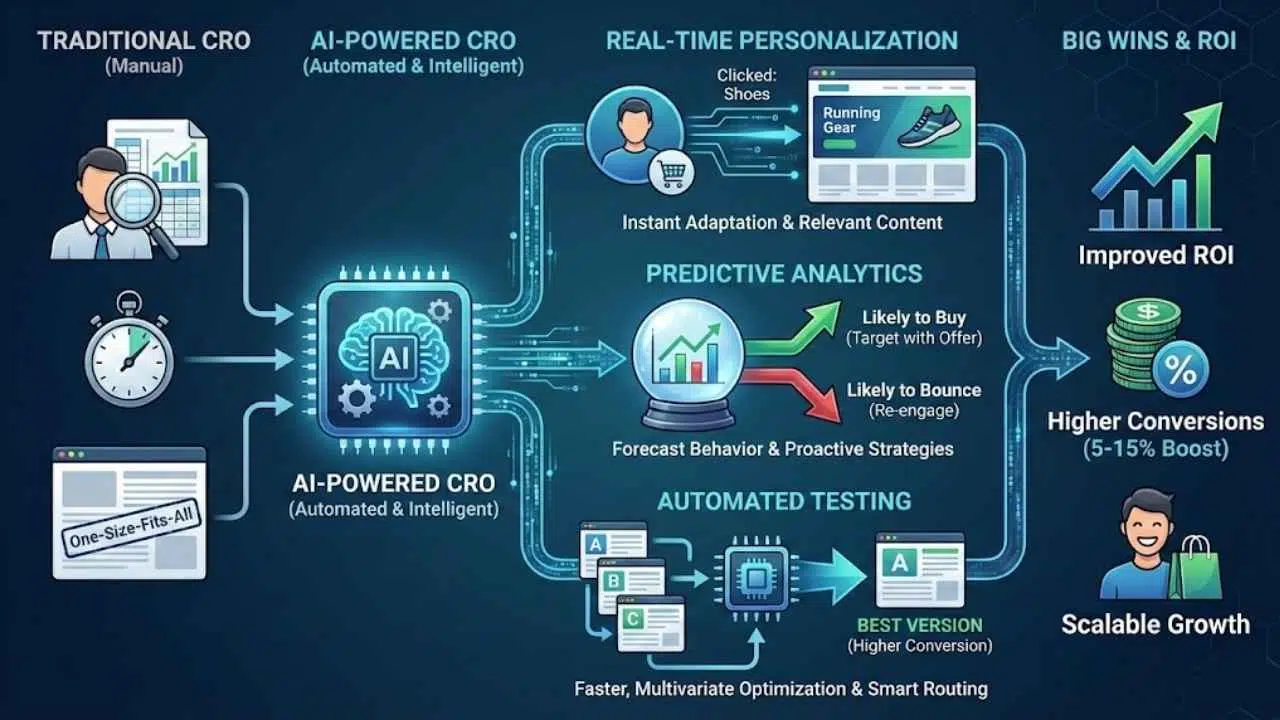
Conversion Rate Optimization, or CRO, is simply the process of making your website more effective at getting visitors to take action. That action could be clicking a button, signing up for a newsletter, or making a purchase.
Marketers traditionally run A/B tests and dig through analytics to find weak spots in their sales funnel. The goal is to get better results from the traffic you already have, rather than spending more money to attract new visitors. In fact, businesses that use CRO tools effectively often see an average return on investment (ROI) of 223%, according to data from VWO.
Today, AI-powered tools have completely changed how this works. Instead of manually looking for trends, these tools crunch huge piles of user data to find patterns instantly. For example, AI might notice that mobile users abandon their carts because the checkout button is too hard to find on a small screen.
Small tweaks often lead to big wins. Studies show that even minor adjustments to page layout or copy can boost conversions by 5% to 15%. By using automation, you can improve the user experience and raise profits without increasing your ad budget.
The Role of AI in CRO
AI works like a 24/7 analyst behind the scenes. It watches how visitors interact with your site and shifts its approach in real time to help you get more sales.
Real-Time Personalization
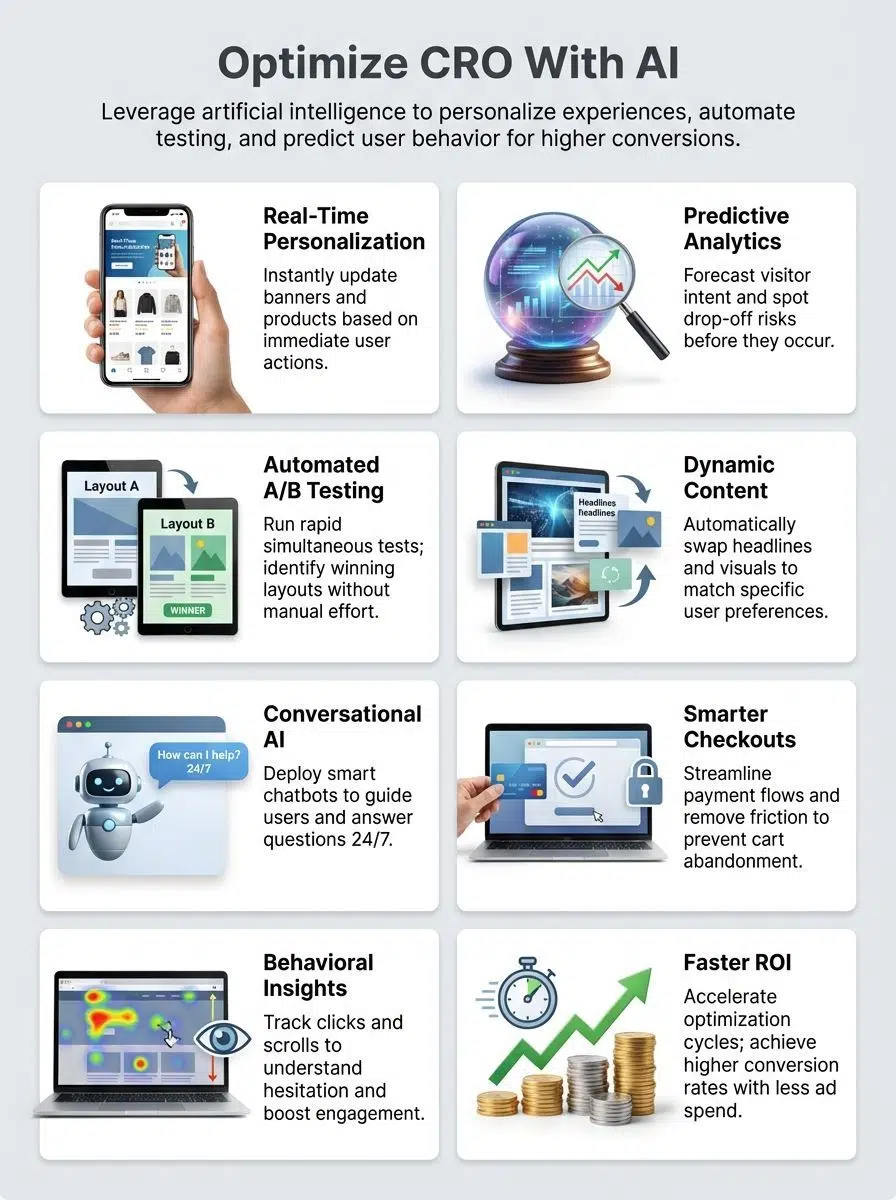
Real-time personalization reacts instantly to what a user does. AI-powered tools scan every click, scroll, and pause on your site in seconds. If a visitor looks at running shoes but ignores the kids’ section, the AI will immediately update banners to show adult sports gear or running accessories.
This is a major upgrade from the old “one-size-fits-all” approach. A report by McKinsey found that companies excelling at personalization generate 40% more revenue from those activities than average players. By using data from past visits and segmenting traffic sources, businesses can change landing pages on the fly to match exactly what the user is looking for.
When people find what they want faster, they buy more. This allows websites and apps to outperform competitors who are still showing the same static homepage to everyone.
Predictive Analytics for User Behavior
Predictive analytics uses AI to spot trends before they happen. These systems analyze traffic data, conversion funnel actions, and engagement metrics to forecast which visitors are most likely to buy or bounce. A 2025 report from Top Analytics Tools notes that companies using predictive AI for CRO have reported conversion increases of up to 25%.
Instead of guessing, you can lean on machine learning to sift through millions of sessions. For example, Google Analytics 4 (GA4) uses predictive metrics to identify “churn probability,” alerting you to users who are likely to stop visiting so you can re-engage them with a special offer.
This process automates suggestions for content changes. You stop playing guessing games and start making decisions based on likely future outcomes. Brands using these strategies often see improved ROI within weeks rather than waiting months for quarterly reports.
Automated A/B and Multivariate Testing
AI-powered tools run A/B and multivariate tests much faster than a human team ever could. They sort through massive amounts of data to find the best page layouts, headlines, or calls-to-action in real time.
Tools like Unbounce Smart Traffic don’t just test two versions of a page; they automatically route visitors to the version most likely to convert them based on their specific attributes. This approach removes the “wait and see” period typical of manual testing.
These smart systems use past test results and new user actions to make quick choices. For digital marketers, this saves hours of manual work each week while keeping engagement high. You can scale up testing without burning out, watching tiny tweaks turn into significant jumps in revenue.
Key Benefits of AI-Driven CRO
Smart AI tools can make your website feel faster, smoother, and much more fun for your visitors. Here is why that matters for your bottom line.
Faster Optimization Cycles
AI-powered CRO tools work at incredible speeds. These systems can study website analytics, dig through user behavior data, and review past A/B test results in seconds. You no longer have to wait weeks for a human analyst to finish a report.
AI predicts user actions and automates adjustments to content almost instantly. This means you can run more tests in less time. For example, rather than testing one headline per month, you could test five different variations in a single week to see which one drives the most demand generation.
This speed helps companies grow their ROI at a pace that keeps them ahead of the competition. You get fresh ideas for improving engagement metrics every day, allowing you to pivot quickly when market trends change.
Enhanced User Experiences
Smart personalization greets each visitor with content that fits their interests. Pages change based on user behavior data, making them feel more useful and friendly. A regular shopper might see a “Buy Again” button for their favorite items, while a new guest gets a discount code for their first order.
AI analyzes engagement metrics to predict what visitors want next. Automated testing runs in the background to pick top-performing layouts. Users stay engaged because everything feels smoother. Slow-loading forms and confusing buttons get replaced by quick flows and clear calls-to-action.
Visitors notice these small details. When they feel valued and understood, they are far less likely to leave your site for a competitor.
Increased Conversion Rates
At the end of the day, the main goal is more sales. AI-driven tools sift through massive user data to uncover valuable patterns that predict what drives clicks. By using automation for testing, specialists can spot winning web page variations fast.
Personalization powered by artificial intelligence lights up the path for users. Chatbots answer questions instantly, and customized banners greet past shoppers by name. According to a study by Amra & Elma, websites using AI chatbots saw a 23% increase in conversion rates compared to those without.
Companies see better performance numbers without waiting months for results. It turns the daunting task of optimization into a manageable, automated process that consistently delivers value.
AI-Powered CRO Strategies
AI shakes up the way websites connect with their visitors. Here is how you can use these smart tools to boost clicks, signups, and sales.
Behavioral Analysis and Insights
AI-powered tools sort through user data like a detective following clues. Platforms like Hotjar or Microsoft Clarity track clicks, scrolls, and even mouse pauses to spot what makes visitors hesitate. The system crunches these results to tell you exactly where people are getting stuck.
Think of it as having a sharp-eyed assistant watching every visitor on your landing page. If users consistently ignore a call-to-action button during checkout, the AI can suggest new colors or placements based on real-time analytics.
Every insight comes straight from performance metrics. Businesses using these insights report faster optimization cycles because they aren’t guessing what to fix. They know exactly which broken link or confusing paragraph is costing them money.
Dynamic Content and Visual Optimization
Websites can now change in real time thanks to AI. A landing page can show different headlines or images depending on what users have clicked before. Tools like Instapage or Yieldify study traffic data to swap out content like product photos based on the user’s past actions.
This dynamic approach drives more clicks without bringing in new visitors. CRO platforms also run constant A/B testing of visuals. Automation lets teams test hundreds of versions faster than any person could manage by hand.
By crunching numbers from analytics tools, these systems spot high-engagement layouts quickly. Even slight changes can sometimes boost conversions by 20 percent or more. Smart visual tweaks mean happier users who are more likely to become buyers.
Conversational AI and Chatbots
Conversational AI and chatbots are powerful tools for keeping visitors moving through the funnel. These smart assistants answer questions and guide users day or night. For example, if a visitor stalls at checkout, a chatbot can pop up to offer help or share a discount code.
Modern chatbots, like those from Drift or Intercom, use automation to handle large volumes of requests. They track past chats to spot patterns and shape smarter responses over time. This isn’t just about answering FAQs; it’s about closing sales.
Businesses see more conversions because chatbots tailor their answers based on real user history. Every conversation becomes another chance to boost performance optimization across your entire site.
Best Practices for Integrating AI with CRO
Blending AI ideas with proven CRO steps creates a powerful strategy. You need to set clear goals, test often, and combine human creativity with machine speed.
Combining AI Insights with Traditional CRO Methods
AI-powered tools sort through vast amounts of data that would make most heads spin. They spot hidden patterns in traffic that you might miss. However, classic CRO strategies like funnel analysis and hands-on UX tweaks add a human touch that computers can’t match.
You should use a “one-two punch” approach. Let the AI flag that users are dropping off at the checkout page. Then, have your digital marketing team run traditional multivariate testing to try different visual cues or text based on those findings.
This approach leads to faster optimization cycles while ensuring the content still feels human and relatable. It helps site visitors become customers without relying solely on algorithms.
Testing and Iterating for Continuous Improvement
Testing drives growth in CRO for AI traffic. Automated A/B testing puts different ideas head-to-head to see which version wins. You might swap a button’s color or try a new headline to see which one gets more clicks.
The key is to view this as a cycle, not a one-time fix. Tools study how visitors move across your pages and suggest new changes constantly. Each tweak is another shot at better performance. You can fail fast and learn quicker than ever.
Even small businesses can score quick wins this way. By turning simple experiments into real improvements, you increase your ROI day after day, click after click.
Top AI Tools for CRO
Fresh tech hits the market every day. If you are ready to make your site work harder for you, these are some of the top tools to consider.
Personalization Engines
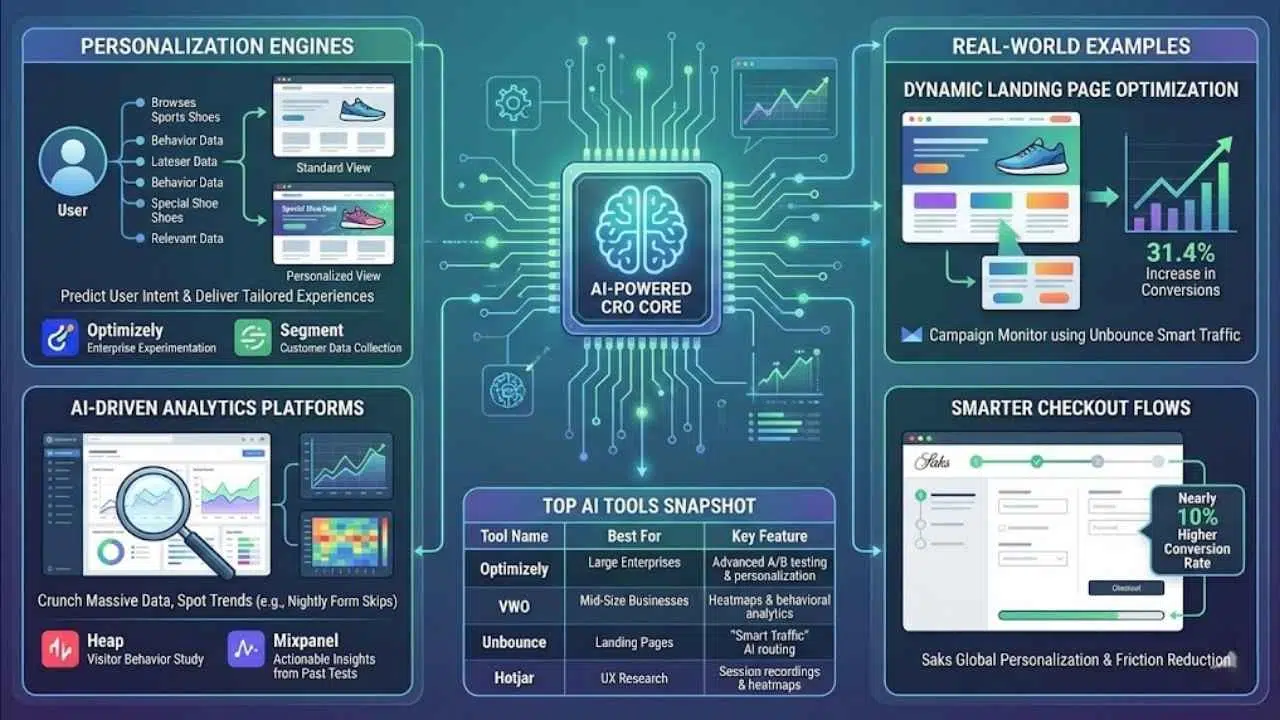
Personalization engines use AI to study each user’s behavior and interests. They track data from past visits to predict what a person wants next. For instance, if someone often browses sports shoes but never buys, the engine might show them a special shoe deal.
Optimizely is a leader in this space, offering robust experimentation features for enterprise businesses. For smaller teams, Segment helps collect customer data to deliver personalized messages across different channels.
With more than 4 out of 5 users saying they want experiences made just for them, using these engines makes sense. Brands like Amazon have been using this tech for years, and now smaller companies can do the same to improve their conversion funnels.
AI-Driven Analytics Platforms
AI-driven analytics platforms crunch massive amounts of user data fast. They spot trends in checkout flows and drop-offs that would take a human analyst days to find. Tools like Heap or Mixpanel study visitor behavior to highlight exactly what grabs people’s attention.
For example, if more users skip a form on your landing page at night but not during the day, the AI will flag it. These platforms pull info from past tests to suggest actions backed by numbers. If you want faster optimization cycles, these systems are essential for testing ideas quickly.
| Tool Name | Best For | Key Feature |
|---|---|---|
| Optimizely | Large Enterprises | Advanced A/B testing & personalization |
| VWO | Mid-Size Businesses | Heatmaps & behavioral analytics |
| Unbounce | Landing Pages | “Smart Traffic” AI routing |
| Hotjar | UX Research | Session recordings & heatmaps |
Real-World Examples of AI in CRO
It helps to see how this works in practice. Here are a few examples of how smart tools use AI to boost sales and keep visitors happy.
Dynamic Landing Page Optimization
AI-powered tools now scan landing pages and spot what works best in real time. They track clicks, scrolls, and bounces to suggest changes on the fly. A button might change color at noon if data shows it helps with lunch-hour conversions.
A great example is Campaign Monitor, an email marketing company. By using Unbounce’s AI-powered “Smart Traffic” feature, they were able to route visitors to the landing page variant that best matched their needs. This strategy resulted in a 31.4% increase in conversions.
AI saves marketers from guesswork. It brings facts and faster cycles of change to the table. Businesses see conversion rates rise while keeping users happy with a smoother user experience.
Smarter Checkout Flows
Checkouts can make or break your sale. AI-driven CRO tools watch how people move through the checkout page to find friction points. For example, Saks Global used AI to personalize their homepage and checkout flow, which led to a nearly 10% higher conversion rate.
Many brands now cut steps from their forms using predictive analytics. This makes each click feel smoother for shoppers. Automated A/B tests on these pages mean only the best versions stay live.
The result is higher conversion rates and fewer abandoned carts. You don’t have to guess what works best; the data tells you exactly how to fix your funnel.
Final Thoughts
AI-driven CRO helps you turn more visitors into happy customers by using real data, smart tests, and quick changes. Tools like automated A/B testing and chatbots make it simple to boost performance without extra headaches or wasted time.
Making tweaks based on analytics can lift your results fast. Even small steps create big wins in user experience and sales. If you want to keep learning or need help picking tools, loads of online guides and free trials are just a click away. Take the plunge and start optimizing today. Your next site visitor could be your newest fan!






















