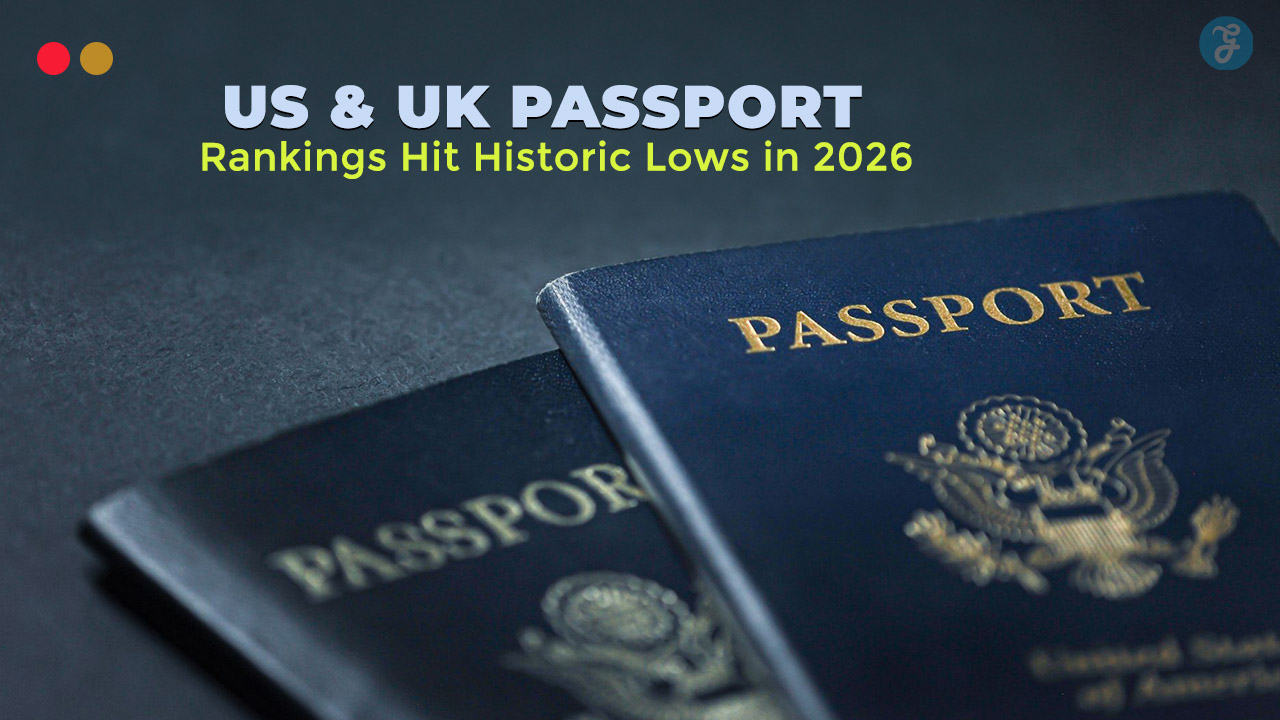
If you’re holding a US or UK passport, the numbers tell a concerning story. For decades, these documents were the “gold standard” of travel—open doors, zero paperwork, and fast lanes. But if you’ve traveled recently, you’ve likely noticed the friction of the passport power gap is increasing.
We are seeing a measurable shift in 2026. The Henley Passport Index confirms that both nations have slipped from their former top spots, with the US falling to 10th place and the UK to 7th. This isn’t just bad luck; it’s a data-driven trend rooted in reciprocity.
As an engineer turned editor, I look for the root cause of system failures, and this is a clear case of “input matching output.” Because the US and UK have tightened their own borders, other countries are responding with new entry fees and digital barriers for American and British travelers.
We’re going to break down exactly why your passport has lost some of its power, the specific new costs you need to budget for in 2026, and the practical steps to keep your travel plans on track.
Why Are US and UK Passport Rankings Falling in 2026?

The decline is sharp and quantifiable. In 2026, UK passport holders have visa-free access to 182 destinations, a drop of eight from the previous year. The US sits even lower, with access to only 179 locations.
This puts the US behind thirty-seven other countries in global mobility. The primary driver is a lack of visa reciprocity. When the US or UK imposes complex visa requirements on other nations, those nations are now retaliating with their own barriers.
For example, Brazil reinstated visa requirements for US citizens in April 2025. If you are planning a trip to Rio, you now need to apply for an eVisa and pay a fee before you fly. This is a direct response to the difficult process Brazilians face when visiting the US. Tools like Timatic data from the International Air Transport Association are tracking these reciprocal restrictions in real time. The days of booking a flight and just showing up are ending for American and British travelers.
Key Policy Changes in 2026
- Brazil’s Reciprocity: Reinstated eVisa requirement for US, Canadian, and Australian citizens as of April 10, 2025.
- European Barriers: The impending full rollout of ETIAS adds a pre-travel authorization step for Americans entering Europe.
- Diplomatic Tensions: Stricter US border policies, such as the Electronic System for Travel Authorization (ESTA) updates, have encouraged other nations to implement similar “digital gates.”
Passport Power Gap: Key Factors Behind the US and UK Decline
The drop in rankings isn’t random; it’s structural. Two main mechanisms are driving this: the rise of “digital border” systems and shifting geopolitical alliances.
The Rise of “Pay-to-Enter” Schemes
The biggest change for 2026 is that “visa-free” no longer means “free.” Governments are rolling out Electronic Travel Authorizations (ETAs) that require pre-registration and payment.
The European Union’s ETIAS (European Travel Information and Authorization System) is the most significant example. Starting in late 2026, US and UK travelers visiting the 30 ETIAS countries must pay a €20 fee and submit biometric data before arrival. This system mirrors the US ESTA but adds cost and paperwork to European holidays.
Similarly, the UK has launched its own Electronic Travel Authorisation (ETA). As of February 25, 2026, visitors from the US and EU must pay £16 to enter the UK. These programs add a layer of friction that lowers the “openness” score of these passports.
Political Shifts and Tensions
Diplomatic credibility plays a huge role in these rankings. Countries that maintain neutral or positive relationships globally, like Singapore, encounter fewer barriers. In contrast, the US and UK are often involved in geopolitical friction that leads to stricter border checks.
Since 2021, the Henley Passport Index has shown a correlation between aggressive foreign policy and declining passport power. Legislative moves like the hypothetical Exclusive Citizenship Act only add to the perception that these nations are closing themselves off.

| Region | New Requirement | Cost | Impact on US/UK Travelers |
|---|---|---|---|
| Europe (Schengen) | ETIAS (Late 2026) | €20 | Mandatory pre-approval; valid for 3 years. |
| United Kingdom | UK ETA (Feb 2026) | £16 | Applies to US/EU visitors; mandatory before boarding. |
| Brazil | Visitor eVisa | ~$80 USD | Reinstated in 2025 due to lack of reciprocity. |
Emergence of New Passport Leaders
While the West adds friction, Asian and Middle Eastern nations are removing it. The result is a new leaderboard where neutrality pays off.
Singapore is the undisputed leader in 2026. Its citizens have visa-free access to 192 destinations. The key to Singapore’s success is its strategy of “universal engagement.” By maintaining strong trade and diplomatic ties with both China and the West, Singaporean travelers rarely face the political blocks that Americans do.
The United Arab Emirates (UAE) is another climber. Ranked 9th globally, the UAE has added 149 visa-free destinations since 2006. This is the fastest rise of any nation in the index’s history. The UAE has used its economic clout to secure visa waiver agreements across Africa, South America, and Europe, effectively buying mobility for its citizens.
What Is Causing the Growing Disparity in Global Mobility?
The gap between the “haves” and “have-nots” of travel is wider than ever. In 2026, the global mobility gap—the difference in visa-free access between the top and bottom-ranked countries—hit a record high of 168 destinations.
At the top, Singaporeans access 192 countries. At the bottom, citizens of Afghanistan can access only 24. This isn’t just about convenience; it’s about economic opportunity. Countries with high “passport power” effectively give their citizens a global business license.
- High Mobility: Japan, Singapore, South Korea (access to 85%+ of global GDP).
- Low Mobility: Syria (26 destinations), Iraq (29), Pakistan (43).
For developing nations, the path to improvement is blocked. Tighter border controls in Europe and North America make it harder for these countries to negotiate visa waivers. The EU’s Entry/Exit System (EES), launched in October 2025, now requires facial scans and fingerprints for all non-EU visitors, further solidifying the “fortress” approach.
What Are the Consequences for US and UK Travelers?

The data shows that travel is becoming more expensive and time-consuming for you. It’s no longer enough to just book a flight; you must manage a portfolio of digital permissions.
The “Family Tax” on Travel
New fees add up. A family of four traveling from the US to the UK and then to France will now pay roughly $150 USD just in ETA and ETIAS fees. This is a new line item in your vacation budget that didn’t exist a few years ago.
Processing Delays
With the US passport ranking dropping, you also face longer processing times at home. In January 2026, routine US passport processing takes 4-6 weeks. If you need a visa for a country like Brazil or China, you must factor in another 2-3 weeks for that specific approval. The spontaneous “last-minute business trip” is becoming a logistical risk.
Pro-Tip: Always check the validity of your digital authorizations. ETIAS is valid for 3 years, but the UK ETA is valid for 2 years. If your passport expires sooner, your authorization dies with it.
What Is the Future Outlook on Passport Rankings?
The trend points toward a fully digital border. The physical passport book is becoming secondary to your “Digital ID.”
We are moving toward a world of risk-based screening. Governments are using data from the International Air Transport Association’s Timatic tool to assess travelers before they even leave their couch. If your country (like the US) is viewed as high-risk or non-cooperative on data sharing, your mobility score will drop further.
Demand for “Plan B” citizenship is rising. In 2025, Henley & Partners reported that Americans made up 30% of their client base for investment migration services. People are actively seeking second passports from countries like Portugal or Malta to regain the European access they are losing.
Final Words
The drop in US and UK passport rankings is a wake-up call. We are leaving the era of seamless travel and entering an age of digital reciprocity. The new leaders, Singapore and the UAE, show that global cooperation is the new currency of mobility.
For you, this means travel requires more strategy. Budget for the new fees, apply for your ETIAS or ETA weeks in advance, and never assume your blue or red passport is the golden ticket it used to be.