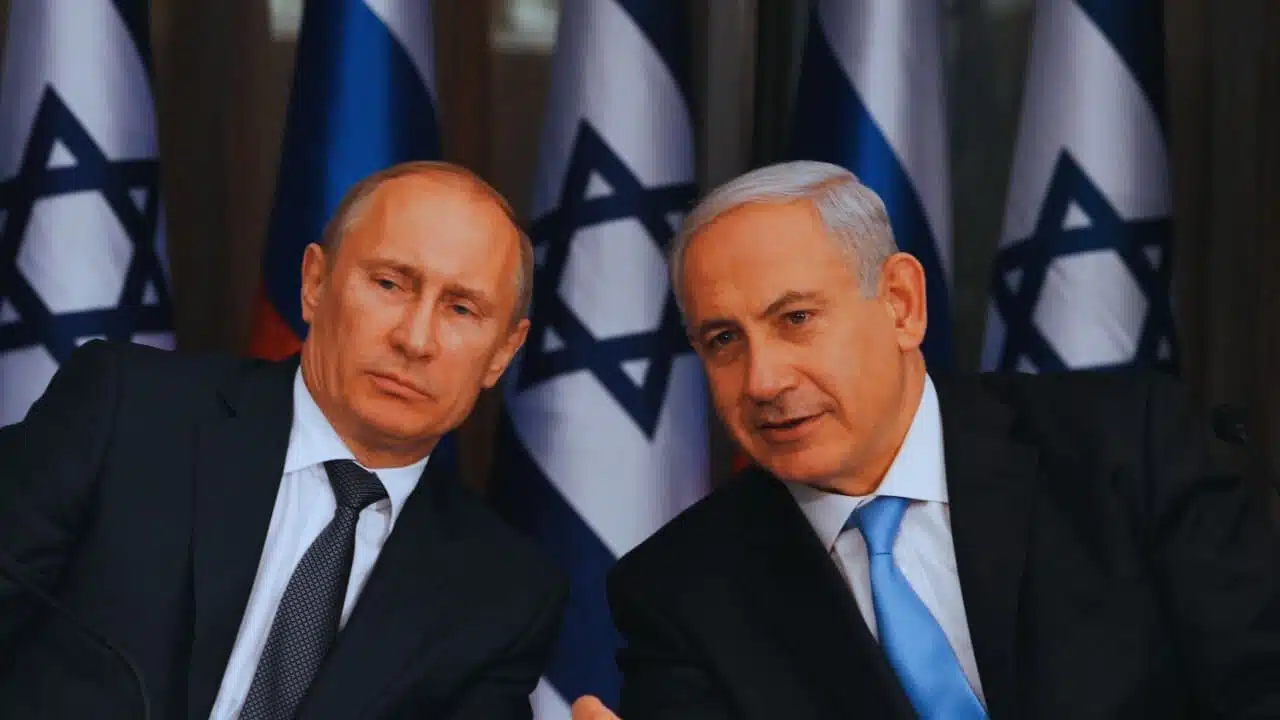
Russian President Vladimir Putin and Israeli Prime Minister Benjamin Netanyahu have held a key phone conversation focused on the ceasefire in Gaza, concerns over Iran’s nuclear program, and efforts to stabilize Syria, underlining how the Gaza conflict has evolved into a broader regional security test.
Call centers on Gaza ceasefire
According to the Kremlin’s readout, the two leaders conducted a “thorough exchange of views” on the situation in the Middle East, with particular emphasis on developments in the Gaza Strip. The discussion took place against the backdrop of a ceasefire agreement in Gaza, which includes a phased plan involving a halt to hostilities, exchanges of detainees, and a framework for reconstruction.
Putin and Netanyahu reviewed the implementation of the ceasefire, including mechanisms for the exchange of Israeli hostages and Palestinian detainees, an issue that remains highly sensitive in both Israeli and Palestinian societies. The ongoing indirect talks between Israel and Hamas, supported by mediators including Egypt, Qatar, the United States, and Turkey, form the diplomatic context in which Moscow is now seeking to project influence.
Russia’s push on Palestinian issue
The Kremlin reiterated that Russia maintains a long‑standing position in favor of a “comprehensive settlement” of the Palestinian question grounded in established international legal frameworks. Moscow has consistently framed itself as a supporter of a negotiated two‑state solution, while also leveraging its ties with Palestinian actors, including Hamas, to assert relevance in post‑war diplomacy.
For Russia, the Gaza file is not only about ending active hostilities but about shaping the political architecture that will follow, including governance arrangements in the Strip and broader Israeli‑Palestinian relations. The phone call with Netanyahu fits into a wider pattern of Russian outreach to regional players, including Iran, Egypt, Syria and the Palestinian Authority, aimed at positioning Moscow as an indispensable mediator.
Focus on Iran’s nuclear program
A major part of the conversation was devoted to the situation surrounding Iran’s nuclear program, which remains a core strategic concern for both Israel and Russia, albeit for different reasons. The leaders “exchanged views” on ways to address the nuclear file through negotiated solutions, reflecting ongoing diplomatic anxiety over possible escalation between Israel and Iran.
Israel has repeatedly warned that it will not allow Iran to move closer to nuclear weapons capability, and past calls between the two leaders have emphasized Jerusalem’s opposition to any entrenched Iranian military presence in the region, particularly in Syria. Russia, meanwhile, has deepened its military and economic partnership with Tehran in recent years, yet it also signals an interest in preventing a direct Israel‑Iran confrontation that could destabilize theaters where Russian forces are present.
Syria as a critical theater
Syria featured prominently in the discussion as another arena where Russian and Israeli interests intersect and sometimes collide. Putin underscored Moscow’s long‑repeated emphasis on the unity, sovereignty and territorial integrity of the Syrian Arab Republic, along with the need to safeguard the rights and interests of all ethnic and religious communities.
Israel has conducted a sustained campaign of airstrikes in Syria targeting Iranian‑linked assets, while Russia maintains a significant military footprint and air‑defense presence in the country. By discussing “further stabilization in Syria,” both sides signaled a desire to avoid unintended clashes and to keep existing de‑confliction mechanisms functioning despite broader tensions involving Ukraine and Iran.
Balancing acts and great‑power signaling
For Netanyahu, the conversation with Putin is part of a delicate balancing act in which Israel seeks to maintain working ties with Moscow while remaining firmly aligned with the United States. Russian‑Israeli communication channels have been especially important regarding Syria, where Israel needs freedom of action against Iranian and Hezbollah targets but must also avoid provoking Russian forces.
For Putin, the call is another opportunity to signal that Russia remains a key diplomatic player in the Middle East despite its international isolation over the war in Ukraine. By engaging directly with Israel while also nurturing ties with Iran, Arab states, and Palestinian factions, Moscow aims to present itself as a power that can talk to all sides and potentially shape the terms of any longer‑term Gaza arrangement.
Humanitarian backdrop to diplomatic moves
The diplomatic choreography unfolds as Gaza continues to grapple with catastrophic humanitarian consequences from Israel’s offensive since late 2023, which has left tens of thousands dead and much of the enclave in ruins. The current ceasefire framework, whose implementation Putin and Netanyahu discussed, includes not only prisoner exchanges but also provisions for reconstruction and the creation of a new governing mechanism in Gaza that excludes Hamas.
International actors, including Russia, are using the ceasefire period to push competing visions for Gaza’s future, from security arrangements on the border to who controls aid flows and reconstruction funds. The latest Putin–Netanyahu call underlines how decisions taken in Moscow and Jerusalem are now deeply entangled with the everyday fate of civilians in Gaza, the stability of Syria, and the uncertain trajectory of Iran’s nuclear ambitions.