Do you feel a heavy worry about climate change? Many young people feel strong climate-related emotions, like a knot in their stomach. They may feel a sense of hopelessness about the future.
These mental health effects can feel big. You are not alone in this climate distress.
A recent survey looked at nearly 16,000 U.S. youth. These young people were 16 to 25 years old. It showed 85% worried some about climate change. Over half felt very or extremely worried about its impacts.
But here is good news: young people are not just feeling these emotions. They are turning them into powerful climate action. This post will show you ten great projects. Youth activism is building emotional resilience and making change.
See how they do it.
Understanding the Climate Emotions Wheel
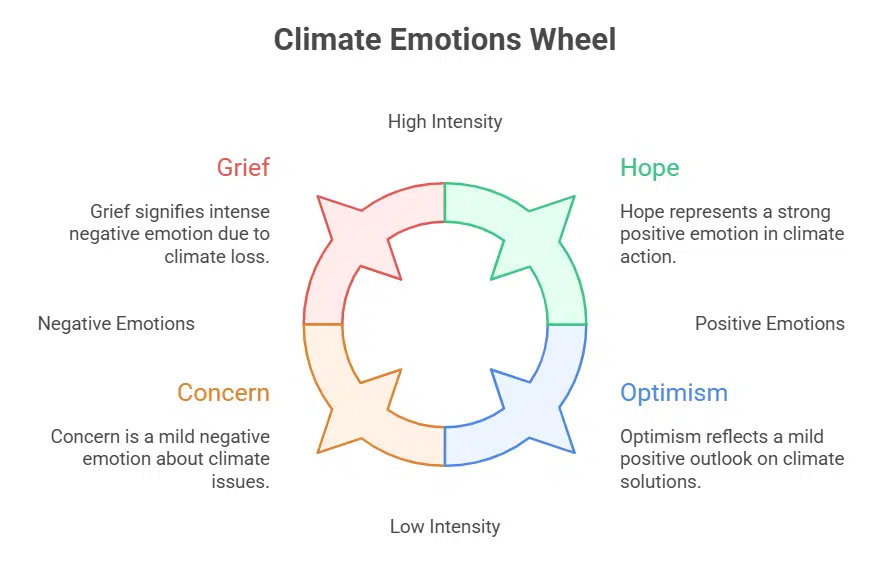
Moving past the broad idea of climate challenges, we confront the deep emotional impact. The Climate Emotions Wheel offers a vital tool. It helps individuals, especially teens, identify their climate-related emotions.
This wheel pinpoints 23 distinct feelings. Its reach is global, translated into more than 20 languages. Understanding these specific emotions, like grief, anger, or even hope, is a crucial step for mental well-being.
It moves us beyond vague climate anxiety.
Young people often carry a heavy burden of climate distress. A 2021 global survey revealed significant concern. This Avaaz survey of 10,000 youth, aged 16-24 across 10 countries, found 59% felt very or extremely concerned about climate change.
This shows widespread emotional distress among young people. The American Psychological Association’s 2023 report highlights climate change’s severe mental health risks. It even links these impacts to disrupted fetal development.
Recognizing these feelings, through tools like the wheel, fosters emotional resilience. It empowers youth activism and a positive mindset in the face of the climate crisis.
Crafting a Climate Emotions Toolkit
Young people often grapple with big climate-related emotions. A special guide now truly helps them process these feelings.
- This vital resource, called the Climate Emotions Toolkit, launched on March 26, 2025. The Climate Mental Health Network and NEEF developed it together.
- Imagine this: only 10% of teachers felt ready to address students’ climate change emotions before this guide. After a pilot program, that number soared to 77%, a huge step for climate education.
- A recent study confirmed its value; 100% of educators would recommend the toolkit. Plus, 99% observed student engagement with its activities, boosting emotional resilience.
- The toolkit provides practical methods for managing climate distress and climate anxiety. It includes exercises for self-care and emotion regulation, vital for young people’s well-being.
- It directly confronts the mental health effects of climate change, a growing worry for youth mental health. Therapists and other mental health professionals find its principles useful for psychological counseling.
- This guide empowers young people to channel climate anxiety into meaningful climate action. It fosters emotional resilience and a sense of purpose in environmental education.
This toolkit builds a strong foundation for young people to lead their own climate initiatives.
Empowering Youth-Led Climate Initiatives
Youth are taking charge, addressing climate change impacts directly. Programs like DearTomorrow offer a space for intergenerational conversations. Here, youth express their climate concerns, fostering a vital sense of community.
This process aids their mental health and builds emotional resilience. Such initiatives help counter climate distress.
Other youth activism groups, including Future Fighters, involve young people in tangible climate action. They organize beach cleanups, a clear form of earth care. These groups also spearhead fundraising efforts.
Such projects provide an empathetic outlet for climate-related emotions. Separately, youth pursue court cases, holding governments accountable. Navahine F. v. Hawaii Department of Transportation is a prime example of this climate litigation.
These efforts drive climate justice and cultivate optimism against the climate crisis.
Innovations by Mycelium Youth Network
While many young people champion climate action, some organizations stand out for their innovative approaches. The Mycelium Youth Network (MYN) prepares frontline young people for climate adaptation, mitigation, and resilience.
MYN addresses specific traumas. These traumas relate directly to the `climate crisis`. MYN helps young people manage `climate distress` and `climate-related emotions`. Their work strengthens `youth mental health` in the face of `extreme weather events`.
The organization empowers BIPOC young people. They learn to be `climate resilience` warriors. This training uses `ancestral knowledge` and STEAM education. MYN’s approach fosters `emotional resilience`.
It also promotes `climate justice`. These efforts improve `public health` outcomes. They help young people avoid feeling `burned out` by the `climate crisis`. Their `goals` include a healthier future for all.
Explore Permaculture and Biomaterials Workshops
The Mycelium Youth Network shows how young people can lead. These efforts often grow from practical knowledge, like that found in permaculture and biomaterials training.
- Workshops provide crucial climate education. Young people learn about sustainable practices, like regenerative farming. They also discover the environmental impacts of human activity. This deep understanding builds awareness, like planting a seed of knowledge.
- These training sessions foster a sense of control. Participants gain agency over their environmental impact. This active participation helps to lessen climate distress and climate anxiety. It shifts feelings of helplessness, offering a breath of fresh air.
- Youth-led climate action initiatives often use this newfound knowledge. Students apply what they learn to real-world projects. Their efforts become more impactful, much like a well-tended garden.
- Engaging in these practical courses empowers young people. They actively address climate issues. This engagement contributes to improved youth mental health and emotional resilience. It offers health benefits, a true win-win situation.
- Participants develop practical skills in environmental stewardship. They might learn about composting or building with natural materials. These hands-on learning experiences build confidence, giving young people tools for tomorrow.
- These workshops align with broader educational efforts. They tackle climate change and youth mental health together. This integrated approach supports young people, helping them stand strong.
- Learning about earth-friendly substances reinforces connections. Personal actions link to larger climate issues. This understanding helps alleviate climate anxiety. It shows a path for positive change, turning worries into action.
Building the Resilient Schools Network
Beyond hands-on permaculture, creating strong foundations for young people is crucial. The American Psychological Association, called the APA, helped form a key group. They joined with eleven national associations.
Together, they established the Network for Resilient Pre-K to 12 Schools in Extreme Climates. This initiative tackles `mental health` dangers from `climate change`. It specifically aids `youth mental health`.
Leading organizations support this effort. The American Academy of Pediatrics is a partner. The American Federation of Teachers also contributes. These groups recognize how the `climate crisis` affects `young people`.
They work to build `emotional resilience` in `learning environments`. This network helps schools prepare for `extreme weather events`. It reduces `climate distress` for students and `caregivers`.
Such `climate action` strengthens both `physical health` and `mental health`. It helps students become `resilient` in a changing world.
Establishing Peer Support Groups

Youth are finding ways to address climate distress. Many young people turn to peer support groups. These groups offer a promising avenue for youth mental health. They help with anxiety and depression.
Still, research needs to build a stronger evidence base for their full effectiveness.
A systematic review examined this approach. Nine controlled studies were part of this review. These studies included 2,003 participants. All participants were between 14 and 24 years old.
Emotional safety emerged as a key factor. Strengths-focused support also proved essential. These groups foster emotional resilience in young people. They provide vital climate action tools.
Advancing Youth Climate Litigation
Young people are taking climate action to court. This global trend shows their strong drive. Many cases show this legal push. Held v. State of Montana is one. Duarte Agostinho v. Portugal is another.
Recent U.S. cases found success. Navahine F. v. Hawaii Department of Transportation is one such case. These legal efforts push for environmental justice.
Children step forward as litigants. They claim their human rights. They often represent future generations. These are important legal battles. This activism helps with climate distress.
It draws attention to mental health effects. These come from climate change. Such lawsuits support stronger climate policy. They shield communities from climate change’s harsh effects.
Driving Community Engagement Projects
Youth activism often blooms in local community projects. Lulu Homer’s Future Fighters, for instance, shows this power. These young people engage creatively in climate advocacy. Such efforts help soothe climate anxiety.
Many young people experience this climate distress deeply. A 2021 Lancet study revealed a stark truth. It found 59% of global youth felt extreme worry about climate change. For nearly half, 45%, this worry impacted their daily life.
These projects offer a vital outlet for climate-related emotions. They build emotional resilience, too.
These efforts often grow into wider collaborations. Groups like the American Psychological Association, or APA, partner with schools. They work to build resilience within school settings.
They also tackle mental health concerns connected to climate change. These local programs provide vital climate education. They help young people process tough emotions. Such initiatives spark a sense of purpose.
They transform climate distress into meaningful climate action. This shared spirit helps young people confront the climate crisis. It illustrates how collective engagement offers a way forward.
Takeaways
These youth-led projects, from building emotional toolkits to advancing climate litigation, show real ways to face the climate crisis. Their practical approaches help young people find emotional balance amidst environmental concerns, as seen in Oregon’s findings.
What part will you play in amplifying these crucial voices and supporting their efforts? Their work highlights how involving young people in policy decisions creates lasting, positive change for everyone.
Let us champion these emerging leaders; their dedication lights a path toward a more hopeful, healthy future.
FAQs on Youth-Led Mental Health and Climate Projects in America
1. What are these projects all about, anyway?
These projects shine brightly, truly. U.S. youth are leading these special efforts. They aim to help with mental-health issues. They also tackle worries about climate worries. Think of them as helping hands, reaching out when the world feels heavy.
2. Who is taking charge of these efforts?
Who is at the helm, you wonder? It is our amazing U.S. youth, plain and simple. These young folks do not just sit around; they step up, taking the lead. They truly care about mental-health. They also help with climate worries for everyone. They make a real difference, one project at a time.
3. Why do these projects matter so much?
Oh, they matter a whole lot. Our world faces big challenges. Many people feel sad. They worry about mental-health issues. Climate worries add more stress. These projects offer a lifeline. They show young people can make a big change. They bring a breath of fresh air.
4. What kinds of activities do these projects involve?
Well, it is a mixed bag, in a good way. Some projects make safe places. People can talk about feelings there. Others plant trees. This helps the Earth and our minds. Some youth lead workshops. They teach ways to cope. They get creative, finding many paths to help others. They do not just talk; they act.
5. How do these projects help with worries about the climate?
They hit it head-on, really. These projects give young people a voice. When you act, you feel less helpless. This can lower climate worries. They also build communities. Sharing worries makes them feel lighter. You find your tribe. It is like finding your family in a big world.
6. What is the big goal for these youth-led efforts?
The goal is big, if you ask me. These U.S. youth are leading the way to a better future. They want to spread hope. They want to show we can face tough mental-health issues. We can also face climate worries together. They plant seeds for a healthier planet. They also plant seeds for healthier minds. They are shaping tomorrow.