

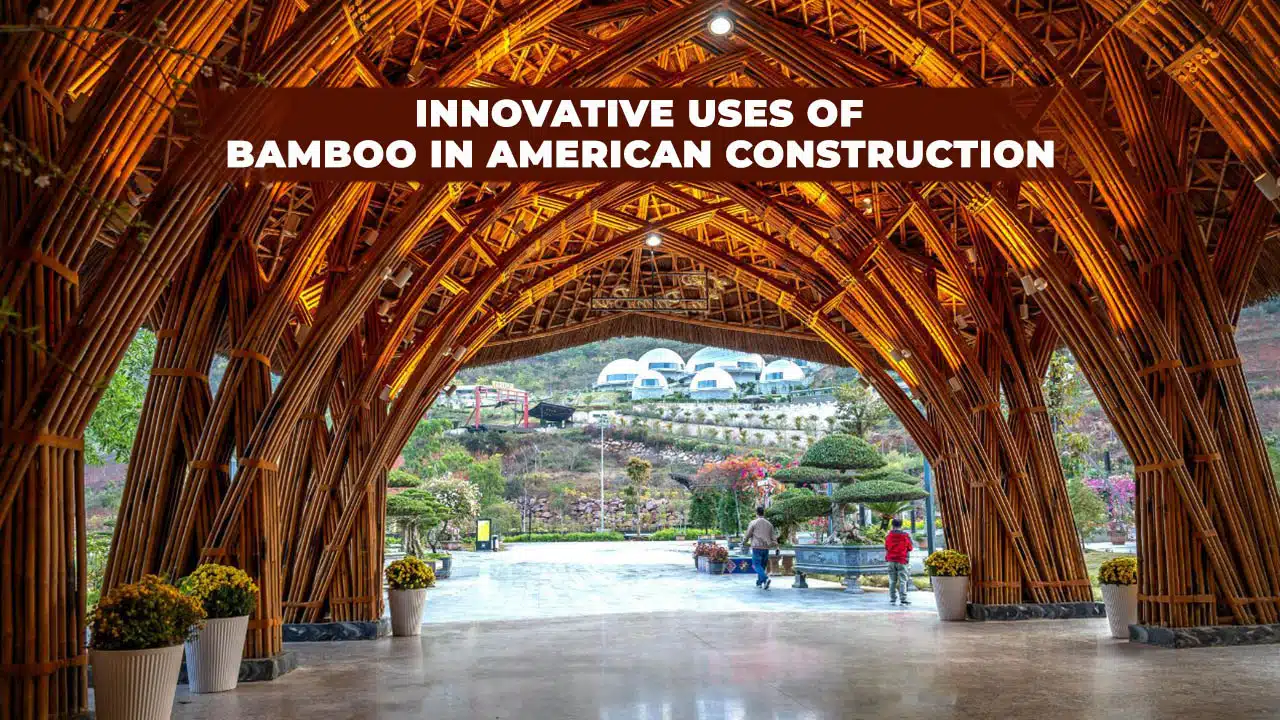
Many builders struggle to find a strong, renewable resource that won’t cost a lot. Bamboo can grow 100 centimeters per day, faster than hardwood trees. This post on 10 Innovative Uses Of Bamboo In American Construction will show how engineered bamboo, with high tensile strength and firm cell walls, and bamboo scaffolding can save time and money.
Keep reading.
Key Takeaways
- Bamboo can grow 100 cm per day and has pull strength like some steel alloys. It locks in carbon and regrows on a five-year harvest cycle.
- In January 2020, U.S. Department of Energy trials pressed thin bamboo strips into laminated panels. Those panels weigh 30 % less than oak and serve as beams and joists.
- Engineers test densified bamboo rods as rebar in concrete. They match corrosion-resistant steel in bridge decks, cut crane and truck loads, and stood firm in a 5.0-magnitude quake on a village bridge.
- Builders snap tongue-and-groove bamboo flooring and glue-laminated wall panels into place in minutes. They join bamboo roof trusses with stainless-steel fasteners for a sleek, eco-friendly finish.
- Solar or kiln drying plus chemical treatment make bamboo boards resist moisture, rot, and insects. This process shrinks carbon footprints and eases pressure on forests.
Structural Applications of Bamboo
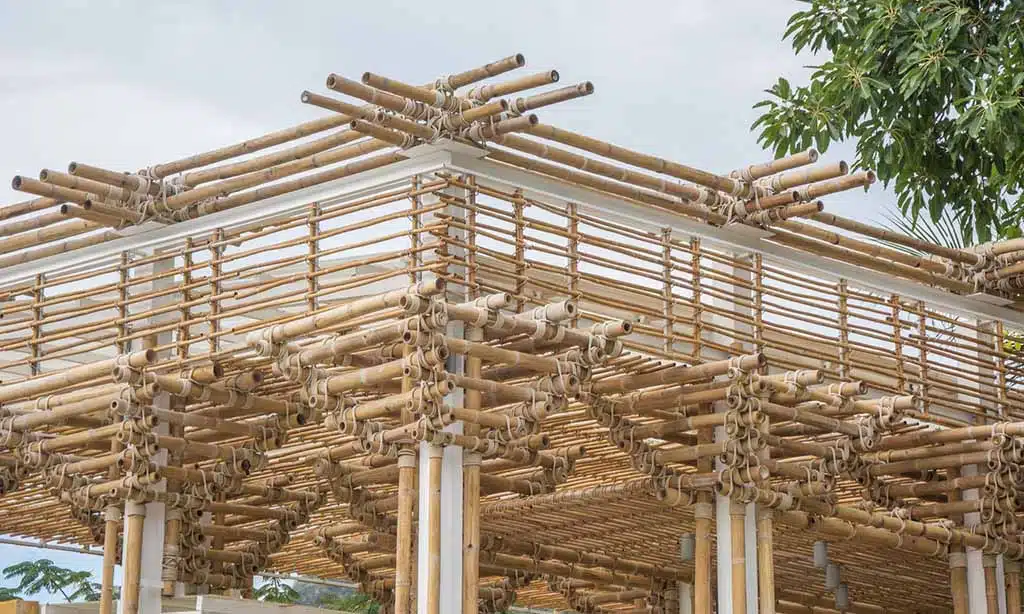
Builders tap bamboo’s tensile strength like they pluck a sturdy chord, framing walls that sway in heavy gusts. They mix shredded bamboo fibers into cement, let organic polymer bonds set, and use a finite element app to prove slim beams can carry massive loads.
Bamboo as a framing material
Bamboo has tensile strength that rivals some steel alloys. Teams treat it as a timber alternative in many house frames. Its lightweight nature cuts load without heavy beams or girders.
People call it green steel or plant based steel of the 21st century. This renewable resource can sequester carbon while it grows in managed forests.
Craftsmen lash poles in simple frames, or they clamp bolts and plates to engineered bamboo members. Modern projects use steel fillers and concrete to bind bamboo to other building materials.
Over 1,200 varieties offer a range of fiber patterns and organic polymers that boost load capacity. These node rich tubes flex under wind loads, thanks to strong hydrogen bonds between bamboo fibers and water molecules.
Workers reforest bamboo stocks under strict sustainable management after harvest cycles around every five years.
Bamboo-reinforced concrete
Civil engineers test densified bamboo as a novel rebar. This engineered bamboo shows higher tensile strength than corrosion-resistant alloy steel, high-alloy steels, and titanium alloys.
It also matches the stiffness of top-grade metals in bridge decks and major infrastructure. Concrete beams that house bamboo rods weigh less than those with steel bars. That means lighter loads for cranes and fewer trucks on roads.
This renewable resource cuts carbon emissions and boosts carbon storage in structures. Smart teams model intermolecular interaction in densified rods to predict strength.
Designers treat bamboo rods as a timber alternative in major spans. They love its lightweight material property and flexibility under stress. Contractors test its impact on scaffoldings, formworks, and safety rails.
This practice has spread to developing countries aiming at sustainable building material use. A simple village project shows a bridge standing strong after a magnitude five quake. That feels like a high-five for engineering fun.
Up next, check out bamboo for interior paneling and flooring.
Decorative Uses of Bamboo in Construction
Crafters slice glue-laminated bamboo sheets, a renewable biomass, with a jigsaw to craft chic wall cladding.
Strand-woven bamboo planks warm floors, while crafters braid bamboo slivers into lamp shades that glow like amber.
Bamboo for interior paneling and flooring
Builders install bamboo interior paneling and bamboo flooring as a renewable resource. Heavy planks slide into place in minutes, thanks to tongue and groove joints. The boards show a wood grain that sports a modern vibe, with warm honey hues.
Buyers love the low price, and they applaud the carbon sequestration in the stalks. This sustainable building material offers tensile strength and a lightweight material feel.
Workers cut strips on a power tool, then bond them with a special adhesive under high pressure. The pressing process forms an engineered bamboo sheet that resists dents and moisture.
Floors stay warm, while walls gain a sleek paneling look. A gram of bamboo can yield up to 6,000 calories of thermal energy if used as fuel, making leftovers handy for pellet stoves.
Bamboo as an aesthetic roofing material
Bamboo roofs bring a warm, textured look and a tropical vibe to homes. The material acts as a timber alternative; its high tensile strength and bamboo flexibility hold up under rain and wind.
Green designs use laminated bamboo panels on roof trusses, they look sleek, they make a lightweight material choice, they fit sloped terrains where woods might fail. Contractors join sections with a power drill and stainless steels fasteners, they save hours, they align beams with ease.
Homeowners praise its eco look. This sustainable building material acts as a renewable resource, it revives reforested lands, it slashes forest management costs. Bamboo roofs pair well with rainwater harvesting systems, they match solar panels on pitched tops.
Construction crews erect bamboo scaffolding, they finish installation fast, they use BIM models to cut waste. A roof made of bamboo stands tall, it charms guests, it blends art with function.
Eco-Friendly Construction Innovations with Bamboo
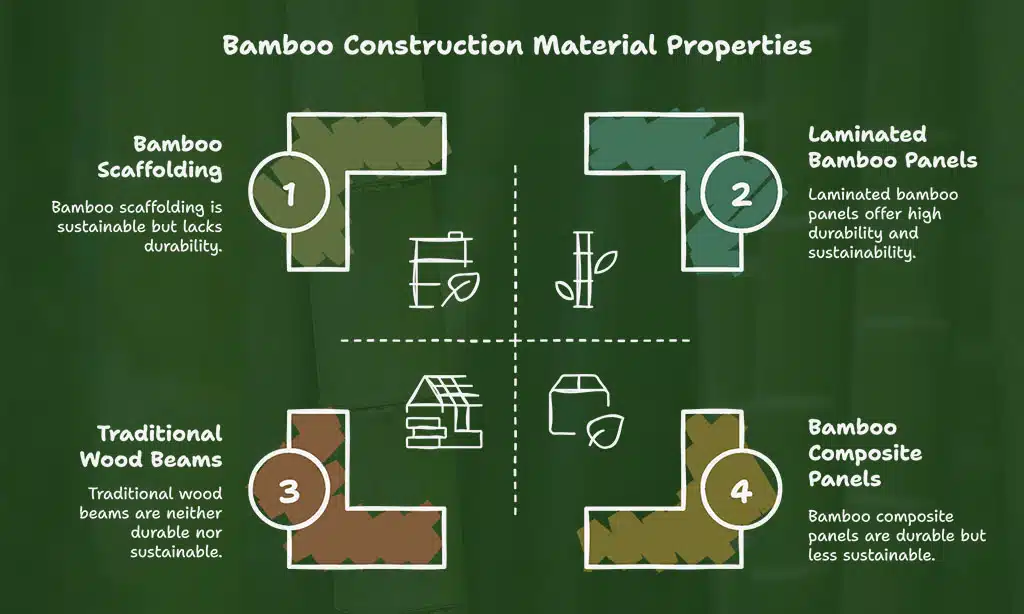
Layered bamboo beams slash carbon footprints and flex like a superhero while they hold heavy loads, proving a savvy choice for green builds. Modular scaffolding rigs and fiber panel presses turn these beams into tough, weather-ready walls that last for ages.
Laminated bamboo for sustainable structures
Researchers in January 2020 unveiled densified bamboo panels that proved strong, tough, and scalable. Labs pressed thin strips under heat to make an engineered bamboo product, called laminated bamboo.
It acts as a timber alternative for beams and joists in modern homes. The U.S. Department of Energy funds trials for this sustainable building material, and firms ramp up these green modules fast.
Builders note its tensile strength and bamboo flexibility, plus its low weight in frames. They install bamboo flooring and glue-laminated beams to cut costs and carbon. Each panel weighs 30 percent less than oak beams, so trucks haul more sections per trip.
The material glues like wood products, yet it endures damp, pests, and wind. This renewable resource looks sharp on walls and roofs, too.
Bamboo composite materials for durability
Bamboo composite panels pair bamboo strips with resin under heat. Manufacturers press these boards to create durable, high strength sheets. This method builds high tensile strength while it keeps a lightweight material.
Workers craft engineered bamboo from strips, making a timber alternative that cuts clear cut pressure on forests.
Solar dryers use sun power instead of natural gas to cut moisture and lower carbon output. Kiln drying or air drying also tames water absorption and fights fungi and bacteria. Chemical treatment bonds fibers tight, protecting boards from rot and insect decay.
Builders use laminated bamboo for flooring, bamboo scaffolding and roof joists. Harvested clusters regrow quickly, so bamboo stands as a sustainable building material, a renewable resource and protects the environment.
Takeaways
American builders tap its high tensile strength, and they frame walls with it. They shape Moso laminated strips into roof trusses, then they raise them like steel beams. Phyllostachys poles serve as cheap scaffolding on many sites, they cost less to ship, and they hold firm.
Researchers test engineered bamboo beams in labs, they crush them, they bend them, and they pass the test. This grass grows fast, faster than oak, and it can cut deforestation. You will see more of it on highways and in homes soon, it might even show up in your own yard.
This green timber alternative is set to change how we build. It stands tall in rain or shine, like a trusty friend.
FAQs
1. What makes bamboo a good timber alternative in American construction?
Bamboo has high tensile strength and bends like metal, yet it stays a lightweight material. It grows fast as a renewable resource and serves as a sustainable building material.
2. How do builders use engineered bamboo for floors and walls?
They glue and press bamboo strips to make engineered bamboo beams and laminated bamboo panels. Then they nail them down as floors or walls. Bamboo flooring made this way can last for years.
3. Can bamboo scaffolding hold up heavy loads?
Yes, bamboo scaffolding has top tensile strength and great bamboo versatility, it can hold up bricks and beams. Workers call it an old tool that still shines new.
4. Why pick bamboo instead of traditional wood?
As a renewable resource, bamboo grows quicker than trees, cutting down deforestation. It is a strong, lightweight material, a real crowd pleaser as a timber alternative for green builds.
5. What other uses exist for bamboo in modern buildings?
Builders shape bamboo pipes for water lines, weave bamboo mats as sound barriers, bend it for curved roofs, and build light work scaffolds too. It shines as a versatile building material, sparking many ideas.





















