
Crypto mining, the process of validating transactions on blockchain networks, has faced criticism for its high energy use. But efforts are now underway to make it more sustainable.
A 2020 study by the Cambridge Centre for Alternative Finance found that 29% of Bitcoin mining already runs on renewable energy. Companies like TeraWulf aim to push this further, committing to over 90% zero-carbon energy from sources like nuclear, hydroelectric, and solar power.
Energy efficiency in crypto mining has improved by 46% year-over-year thanks to better hardware and algorithms. This progress cuts costs and reduces environmental impact.
The Bitcoin Mining Council provides data on these trends while calling for accurate reporting methods.
Innovations include repurposing waste heat, shifting to cooler climates for mining operations, and exploring alternatives like Proof of Stake [PoS] over Proof of Work [PoW].
AI is also being used to optimize energy usage in mining.
How Crypto Mining Is Becoming More Sustainable shows promise through these strategies. Curious how these changes work?
Key Takeaways
- In 2020, 29% of bitcoin’s total hash rate was sourced primarily between China, Iceland, and Georgia. Iceland and Georgia offer renewable energy advantages with low-cost, reliable baseload generation ideal for large-scale industrial applications.
- Facilities operate continuously compared to grid-connected systems that face supply variations from seasonal weather. This results in lower overhead and maintenance expenses.
- Excess capacity produced during peak periods is sold to utilities. This revenue helps fund expansion and improvements in infrastructure for digital currency operations.
- Positive developments drive ecosystem health, foster innovation, and lower prices for consumers.
- Ongoing investment in research and development supports a sustainable future and helps overcome challenges from climate change, geopolitical uncertainties, economic instabilities, and social upheaval.
Transitioning to Renewable Energy for Crypto Mining
Crypto mining is shifting toward renewable energy to cut carbon emissions and boost efficiency. Bitcoin miners are increasingly turning to renewables like solar, wind, and hydroelectric power.
A 2020 study by the Cambridge Centre for Alternative Finance found that 29% of bitcoin mining already runs on renewable energy sources. Companies like TeraWulf lead the charge by using over 90% zero-carbon energy, including nuclear and hydroelectric power.
Their goal is to achieve 100% zero-carbon emissions by 2030. This move reduces environmental impact and improves profitability for miners. Renewable energy often costs less than fossil fuels in the long run.
It also aligns with global climate action goals, helping lower greenhouse gas emissions from crypto operations.
Investing in Energy-Efficient Hardware for Mining

Crypto mining efficiency has seen major leaps thanks to better hardware. Bitcoin mining’s energy efficiency improved by 46% year-over-year. This jump comes from using advanced SHA-256 ASIC chips, which are more powerful and use less electricity.
These chips make mining rigs far more energy-efficient than older models.
Halving events in Bitcoin’s algorithm also increase efficiency by 18-36% annually. By investing in newer, energy-efficient equipment, miners cut costs and reduce their environmental impact.
Modern hardware significantly reduces electricity demand and lowers carbon emissions linked to mining operations.
Introducing Carbon Offsetting in Mining Operations
Carbon offsetting is gaining traction in crypto mining to tackle carbon emissions. Miners can invest in projects like reforestation or renewable energy to balance their environmental footprint.
Critics argue that carbon credits might not always lead to permanent emission reductions, but they remain a popular tool for reducing greenhouse gas emissions.
Using carbon credits helps miners achieve carbon neutrality, though achieving zero carbon remains challenging. Some operations repurpose stranded energy or partner with hydroelectric power projects to offset their impact.
This approach aligns with climate action goals while addressing global electricity consumption concerns linked to cryptocurrency mining.
Repurposing Waste Heat from Crypto Mining
Crypto mining generates significant heat through its computing processes. Instead of letting that warmth go unused, innovative solutions are repurposing it to heat nearby buildings, greenhouses, and district heating systems.
Swedish companies already utilize mined heat in residential areas. This reduces reliance on fossil fuels for heating and strengthens local communities and grid stability.
Exploring Alternative Consensus Mechanisms for Sustainability
Proof of Work [PoW] has long been the backbone of blockchain technology, but it’s energy-intensive. Mining Bitcoin and other digital currencies using PoW requires massive amounts of electricity, often from fossil fuels. This raises concerns about carbon emissions and climate change.
Proof of Stake [PoS] offers a greener alternative by replacing energy-hungry mining with a system where validators are chosen based on the number of coins they hold and are willing to “stake.” This change drastically cuts energy consumption, making the process more sustainable.
PoS networks face challenges too. They might be classified as securities, which could impact security and control. Yet, PoS is gaining popularity because it reduces the environmental footprint.
Other mechanisms like Delegated Proof of Stake [DPoS] further lower energy use by limiting the number of validators. These alternatives show promise in balancing sustainability with network reliability.
Choosing Cooler Climates for Efficient Mining
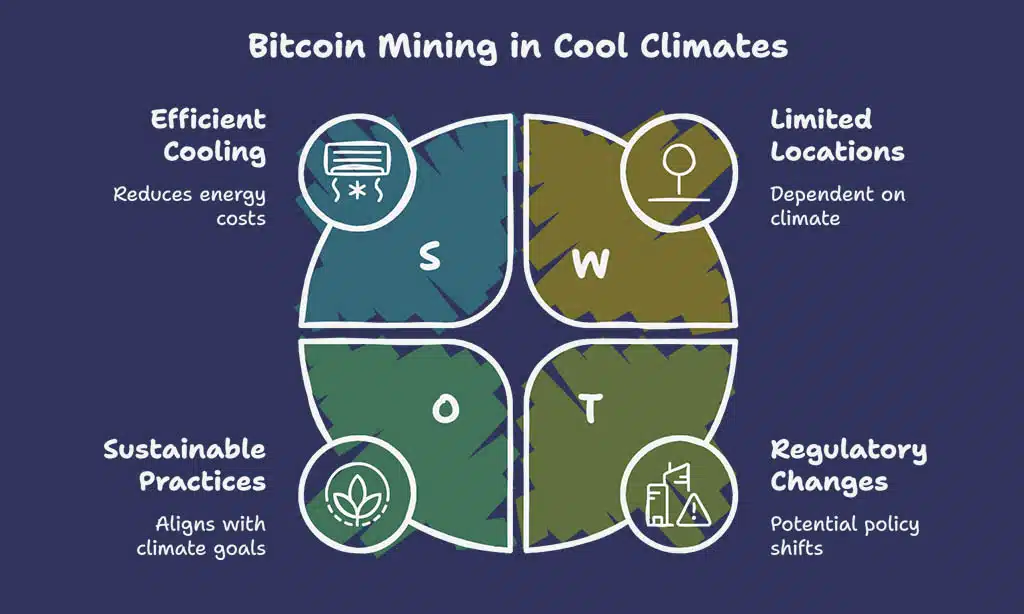
Bitcoin miners often set up shop in cooler climates to reduce energy costs. Cooler temperatures decrease the need for air conditioning, which consumes a significant amount of electricity. Places like Iceland and Canada are popular because they provide natural cooling throughout the year.
These regions also have access to renewable energy sources such as hydroelectric power. Using less energy for cooling helps decrease the carbon footprint of mining operations. Some areas with surplus renewable energy draw miners aiming for efficiency.
This method minimizes waste and supports sustainable resource management. Cold climates make mining more efficient and align with climate action goals.
Employing AI to Optimize Energy Usage
Artificial intelligence makes crypto mining smarter by reducing wasted power consumption that is often linked to fossil fuel use in digital gold extraction. Machines learn patterns over time, which allows automated adjustments across hardware systems.
Partnering with Governments on Green Initiatives
After using AI to cut energy use, crypto miners can progress by collaborating with governments. These collaborations drive green initiatives, making mining more sustainable. Governments establish policies that support renewable energy sources like wind, solar, and nuclear energy.
Janet Yellen has highlighted the carbon-intensive nature of crypto mining. A 2021 Nature Communications article proposes that clean energy incentives are more effective than taxing emissions. Bitcoin mining could align with global carbon reduction goals if managed properly.
These locations offer higher efficiency because data centers near rivers, dams, or lakes require less from cooling systems. This saves electricity production costs while still generating sufficient digital coins without causing significant harm to our planet.
Advocating for Transparent Energy Reporting
Crypto mining needs clear energy reports. The Bitcoin Mining Council shares data on power use and efficiency, helping miners track their carbon footprint. A 2020 study from the Cambridge Centre for Alternative Finance found that 29% of bitcoin mining runs on renewable energy.
Yet flawed studies spread misinformation about its impact.
Open data pushes accountability and helps the industry shift toward net zero goals faster.
Driving Innovation in Sustainable Mining Practices
Bitcoin miners are discovering innovative solutions to address their carbon footprint challenges by transforming unused assets into opportunities using renewable resources such as wind farms in off-grid locations.
Advanced algorithms adjust to real-time environmental conditions, preventing productivity losses and reducing profit margin risks. Experts with specialized knowledge monitor these processes and set benchmarks for effective practices that align with long-term sustainability goals.
Takeaways
Crypto mines now harness wind farms instead of coal plants as they shift toward cleaner energy grids worldwide. Smart systems cut waste significantly. Eco-friendly technology advances fast track a greener future, where small steps add up quickly.
Every step counts toward ending pollution as efforts grow stronger day-by-day. Boundary-pushing actions lead to new opportunities and positive outcomes. Collaborative efforts show promise for real change sooner rather than later. Partnerships drive progress as shared goals unite diverse groups.
Strong alliances form and joint initiatives gain momentum. Constructive dialogue builds bridges while mutual respect grows. Collective wisdom guides efforts as a common purpose unites all.
A united front tackles challenges head-on, and teamwork proves to be a key strategy in creating lasting impacts and shared victories that inspire confidence.
FAQs
1. How does crypto mining use renewable energy sources?
Crypto mining uses wind, solar, and hydroelectric power to reduce carbon emissions. These renewable energy resources help lower the environmental impact of bitcoin and other digital currencies.
2. What is stranded energy in crypto mining?
Stranded energy is unused electricity from remote areas. Crypto miners tap into this source of energy to power operations, cutting down on waste and greenhouse gas emissions.
3. Can proof of stake make crypto mining more sustainable?
Yes, proof of stake [pos] uses less energy than proof of work [pow]. It reduces the need for fossil fuels and helps shrink the carbon footprint of cryptocurrency mining.
4. How do regulatory frameworks support green crypto mining?
Governments create climate policies that encourage using renewable energy sources like nuclear or solar energy for bitcoin network operations. These rules push miners toward sustainable management practices.
5. Why is reducing electronic waste important in crypto mining?
Electronic waste harms the environment when old equipment piles up in landfills. Recycling parts can mitigate effects significantly within a circular economy approach adopted by some digital currencies today!
Disclosure: The author has no sponsorship or affiliate relationships related to this content. Citations include a 2020 study by the Cambridge Centre for Alternative Finance; data from the Bitcoin Mining Council; and a 2021 Nature Communications article.