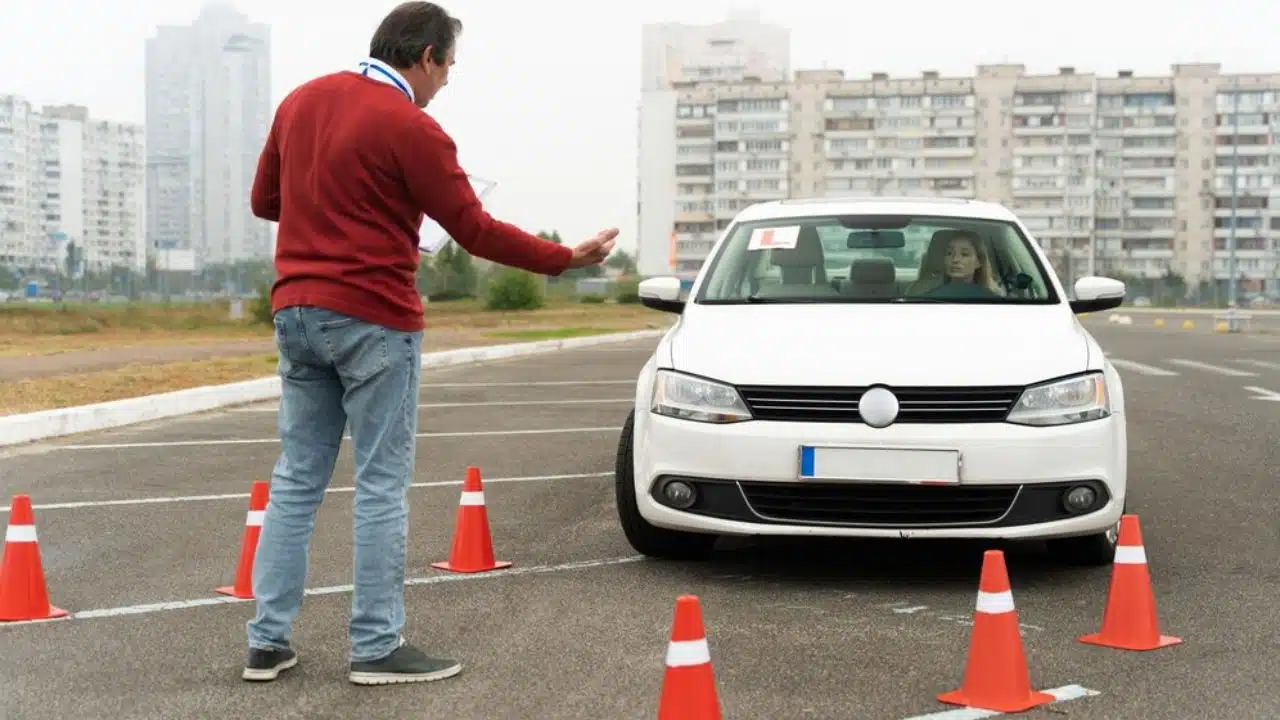
When someone is seeking a driver’s licence, it is important to practice a range of driving techniques because it is a crucial step in growing into a real driver. One of these skills that is very important while passing the driving test is the 3-point turn. Knowing the significance of this manoeuvre can improve the overall driving experience and allow you to navigate through tightly spaced areas safely.
What is the 3-Point Turn?
A 3-point turn, often referred to as a turnabout, involves turning a vehicle around in limited space using a series of controlled movements. This manoeuvre typically consists of three stages: moving forward, reversing, and then moving forward again to complete the turn. Its purpose is to change direction when roads are too narrow for a U-turn.
Significance in Driving Tests
There are a number of skills covered in driving tests, depending on their locations, which determine if one is capable enough to drive safely on the roads. The 3-point turn shows how a driver is able to drive in tight or small places. This is an important skill to have, as it often takes place in scenarios where the road is too narrow or the traffic prohibits one from using other methods of turning. This is actually a very practical technique, which is why many driving tests include it.
Developing Spatial Awareness
The ability to see where the road is all around you is part of what makes a 3-point turn work. While manoeuvring, drivers need to accurately judge distances to avoid obstacles. This part of the test aids the improvement of a driver’s skills to help them gauge space accurately, something that is highly beneficial in daily driving. Increased awareness of the surroundings helps improve traffic safety by preventing crashes.
Building Confidence
Drivers feel confident about performing a 3-point turn. Once they are able to face and conquer the challenge of this manoeuvre, they can be better prepared to tackle other difficult driving situations. The skills learned during this process can provide confidence, which in turn improves decision-making when behind the wheel, contributing to safer driving.
Improving Vehicle Control
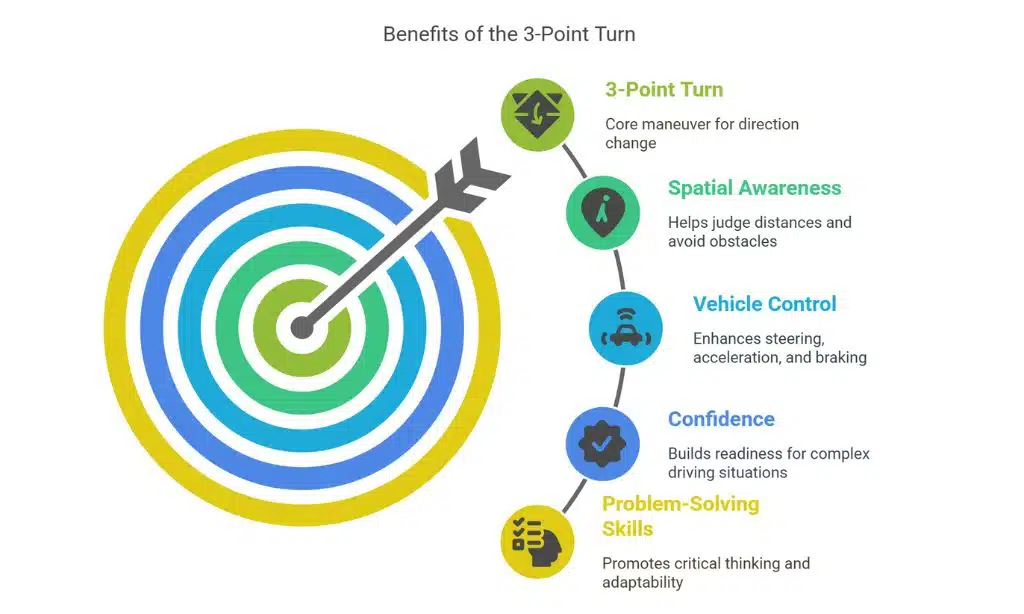
A 3-point turn requires having good control of the vehicle. Executing the manoeuvre requires careful control of the steering, acceleration, and braking. This amount of control helps the driver be more competent at controlling their vehicle in various conditions. This also fosters an appreciation for vehicle dynamics.
Prediction of Real-World Situations
Driving on the roads is completely different from driving in a controlled environment, and it often comes with unpredictable challenges. The 3-point turn prepares drivers with the necessary skills to manoeuvre in tight spaces and adjust to shifting circumstances. This move, as drivers call it, helps them manoeuvre through narrow streets, traffic jams, or unexpected blockades and enables them to stay calm amidst the situation.
Encouraging Deliberation and Care
Patience and caution are important for any driver. Executing the 3-point turn also involves some thought and care. The process can’t be rushed, and drivers need to be patient while assessing their surroundings. This creates an attitude of prudence, thus making people less prone to accidents and eventually cultivating a constructive driving culture.
Improving Your Ability to Solve Problems
A 3-point turn sharpens problem-solving skills. Drivers have to take a moment to assess the scenario, set up moves, and adapt if need be. Such a thoughtful approach to driving promotes critical thinking and flexibility. These skills come in handy in all sorts of driving situations, so new drivers become more versatile when they finally hit the road.
Your Comprehensive Skill Set Assessment
The best way to evaluate this skill is to include the 3-point turn in the driving tests. This move, along with others, provides a comprehensive picture of what the driver has got. This is especially useful, as driving tests can identify the more specific parts of the driving technique that learners need to work on.
Takeaways
The 3-point turn may sound quite basic, but it is arguably one of the most useful strategies in both exams and real-world driving. Spatial awareness, confidence, vehicle control, and patience are all amplified by it. When drivers can do this manoeuvre successfully, they are able to handle more complicated situations, such as where the road is not clear, without compromising driving safety. This notion is reasoned even better in the way that the 3-point turn is introduced as part of driving education, as it creates competent and confident drivers who are able to deal with the complexities of modern-day transportation.