

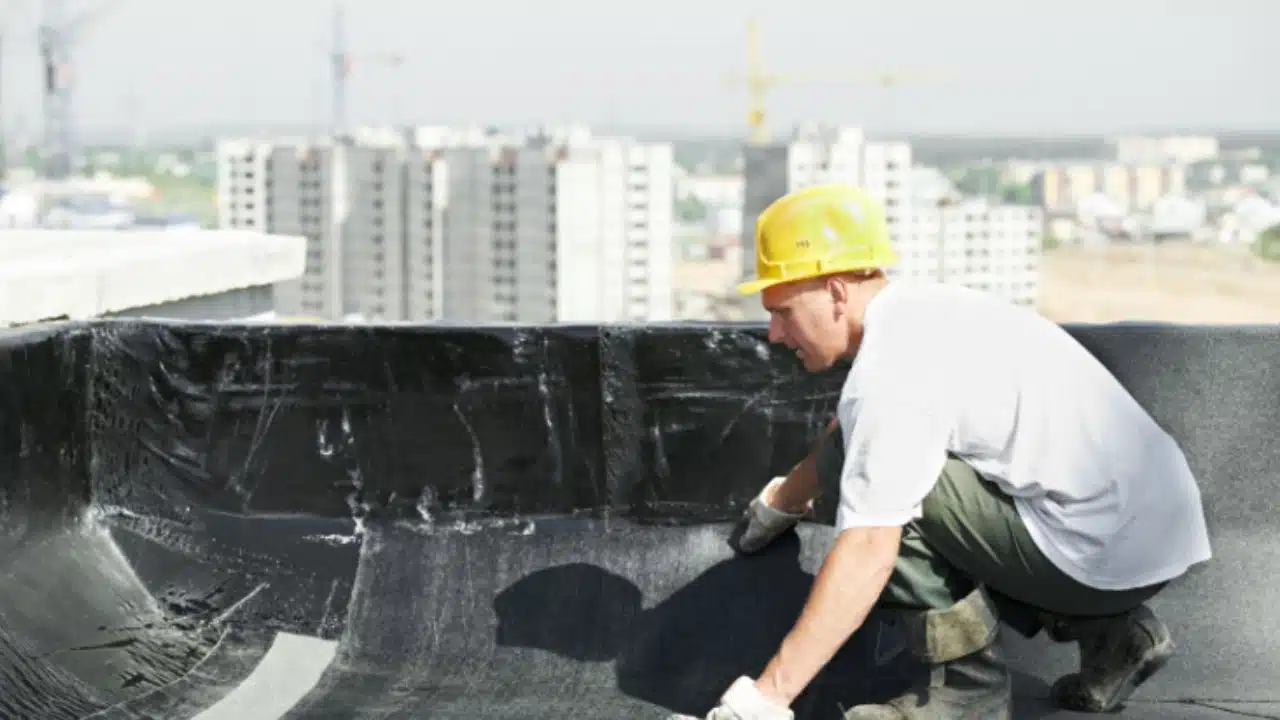
When diving into commercial roofing systems, it’s essential to grasp the unique characteristics that set them apart from residential roofs. One of the most noticeable differences is the roof’s slope. While homes often boast steeply pitched roofs, commercial buildings typically feature flat or gently sloped designs. This choice isn’t just about aesthetics; it’s a practical decision driven by the need to cover large areas like warehouses and shopping centers efficiently. The materials used in these systems also vary significantly. Residential roofs might rely on asphalt shingles or slate. Still, commercial structures often require more durable materials such as TPO, PVC, and EPDM to withstand the demands of larger surfaces and varied environmental conditions.
Understanding Commercial Roofing Systems
According to experts at Azul Roofing Solutions, when it comes to understanding commercial roofing systems, one of the primary distinctions lies in the slope of the roof. Unlike residential roofs, which often feature a steep slope, commercial roofs are typically flat or have a low slope. The size of the building primarily influences this design choice. Larger structures, such as warehouses and shopping centers, benefit from flat roofs because they can cover expansive areas efficiently. The materials used also differ significantly between these two types of roofing systems. While residential roofs might use asphalt shingles or slate, commercial roofs often utilize more robust options like TPO, PVC, and EPDM.
The size and purpose of a building play a crucial role in determining the appropriate roofing system and materials. For instance, a large commercial facility with high foot traffic might require a durable material that can withstand wear and tear while providing energy efficiency. Here are some factors that influence the choice of roofing materials for commercial buildings:
- Building Size: Larger buildings often need materials that can cover vast areas without compromising durability.
- Climatic Conditions: Areas prone to extreme weather conditions may require specialized materials that resist heat, cold, or moisture.
- Usage Needs: Buildings with specific functional requirements might need customized solutions for optimal performance.
By considering these elements, business owners can select a roofing system that protects their property and enhances its overall efficiency and longevity.
Choosing the Right Commercial Roofing Material
When selecting the ideal commercial roofing material, it’s essential to consider each option’s unique benefits and durability. TPO (Thermoplastic Olefin) is a popular choice due to its flexibility and resistance to weathering. This single-ply membrane is highly reflective, which can help reduce cooling costs in warmer climates. PVC (polyvinyl chloride) roofing is another excellent option, known for its longevity and fire resistance. It features UV-resistant additives that enhance its durability under harsh sunlight.
EPDM (Ethylene Propylene Diene Monomer) stands out for its elasticity and toughness, making it a preferred choice for low-slope commercial buildings. It’s particularly effective in resisting UV rays and extreme temperatures. Metal roofing offers unmatched aesthetics and longevity for those seeking a more traditional approach. It’s suitable for low-slope and steep roofs, providing excellent protection against severe weather conditions. Lastly, modified bitumen combines asphalt with chemical polymers for enhanced flexibility and temperature resistance, making it versatile across various climates. When choosing a material, consider factors such as:
- Climate suitability: Ensure the material can withstand local weather conditions.
- Durability: Look for materials that offer long-term performance with minimal maintenance.
- Energy efficiency: Opt for options that contribute to reduced energy consumption.
Understanding these materials’ characteristics can help you make an informed decision that is in accordance with your building’s needs.
Benefits of Modern Commercial Roofing Technology
Advancements in commercial roofing technology have significantly transformed the industry, offering solutions that enhance durability and improve energy efficiency. Modern roofing systems are designed to withstand extreme weather conditions, ensuring longevity and reduced maintenance costs. One of the key innovations is the development of materials that optimize environmental efficiency. These materials help reduce stormwater runoff, which is crucial for urban areas prone to flooding. These systems minimize potential damage and contribute to a more sustainable environment by effectively managing water flow.
In addition to managing water, modern roofing technologies play a vital role in regulating building temperatures. Innovations such as reflective roof coatings and advanced insulation materials help reduce heating and cooling expenses by maintaining a stable indoor climate. This not only leads to significant cost savings but also reduces the carbon footprint of commercial buildings. Some of the benefits include:
- Enhanced Durability: New materials offer increased resistance to wear and tear.
- Energy Efficiency: Improved insulation and reflective surfaces lower energy consumption.
- Sustainability: Reduced stormwater runoff contributes to environmental conservation.
By integrating these advanced technologies, businesses can achieve a balance between operational efficiency and environmental responsibility, making modern commercial roofing systems an essential component of sustainable building practices.
Types of Commercial Roofing Systems
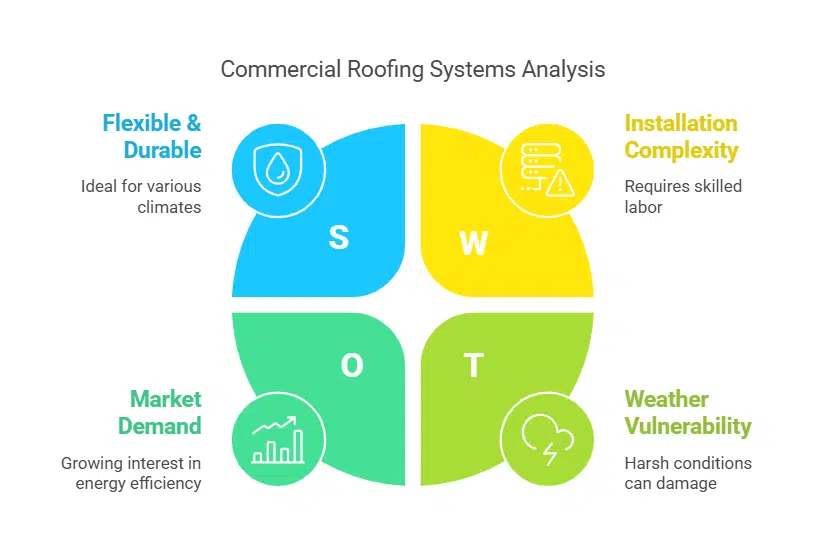
When it comes to commercial roofing systems, understanding the variety of options available can significantly impact the longevity and efficiency of your building. One popular choice is single-ply membranes, which include TPO, PVC, and EPDM. These materials are favored for their flexibility and durability, making them suitable for various climates. Single-ply membranes are designed to be installed in a single layer, offering easy installation and maintenance. Their resistance to peeling and cracking ensures they stand up well against harsh weather conditions.
Another option is built-up roofing (BUR), which has been a reliable choice for over a century. This system consists of multiple layers of bitumen alternated with reinforcing fabrics, creating a robust barrier against the elements. BUR is particularly effective in extreme climates due to its enhanced protection capabilities. Additionally, liquid-applied membranes offer superior waterproofing by reaching areas that are challenging to cover with traditional materials. These membranes are applied as a fluid, forming a seamless barrier that adapts to the roof’s shape, providing excellent protection without disrupting business operations during installation.
- Single-Ply Membranes: TPO, PVC, EPDM – flexible and durable.
- Built-Up Roofing (BUR): Multiple layers for enhanced protection.
- Liquid-Applied Membranes: Seamless application for superior waterproofing.
Each type of commercial roofing system offers unique benefits tailored to specific needs and environmental conditions. By selecting the right system, you can ensure your building remains protected while optimizing energy efficiency and reducing long-term maintenance costs.
Considerations for Installing Commercial Roofs
When installing commercial roofs, several critical factors must be considered to ensure the longevity and performance of the roofing system. One of the primary considerations is drainage. Proper drainage is essential to prevent water accumulation, which can lead to leaks and structural damage. Designing a system that efficiently channels water away from the roof surface is essential. Additionally, weight distribution plays a significant role in maintaining the integrity of the building structure, and ensuring that the roofing materials are evenly distributed helps avoid undue stress on any part of the building.
Another crucial aspect is understanding local climate conditions and adhering to building codes. Different regions have varying weather patterns, which can affect the choice of materials and installation techniques. For instance, areas prone to heavy snowfall may require roofs with higher load-bearing capacities. Compliance with local building codes ensures that your roofing system meets safety standards and legal requirements. Lastly, professional installation cannot be overstated. Hiring experienced contractors guarantees that all these factors are meticulously addressed, providing peace of mind and a roof that stands the test of time.
The Role of Insulation in Commercial Roofing
Insulation and cover boards play a pivotal role in enhancing the energy efficiency of commercial buildings. By installing high-quality insulation, you can significantly reduce heat transfer, which helps maintain a consistent indoor temperature. This contributes to a more comfortable environment for occupants and reduces the strain on heating and cooling systems, leading to lower utility bills. Cover boards add an extra layer of protection, improving the roofing system’s durability and providing a stable surface for roof membranes. Together, these components form a robust barrier against external weather conditions.
Timing is crucial when adding insulation to your commercial roof. The ideal moment to incorporate insulation is during a roof replacement or installation. This ensures that the new roofing system meets current energy codes and maximizes its performance from the outset. By integrating insulation at this stage, you can avoid potential disruptions and additional costs associated with retrofitting later. Additionally, selecting the correct type of insulation tailored to your building’s specific needs can further enhance energy savings and contribute to environmental sustainability.
Exploring Green Roofs and Solar Panels
Green roofs offer a multitude of benefits that extend beyond mere aesthetics. By incorporating vegetation into roofing systems, businesses can significantly reduce energy costs. The natural insulation provided by green roofs helps maintain a stable indoor temperature, reducing the need for excessive heating or cooling. This cuts down on utility bills and contributes to a more sustainable environment. Additionally, green roofs are vital in improving air quality by absorbing pollutants and releasing oxygen. They also help mitigate the Urban Heat Island Effect, making urban areas more remarkable and comfortable.
Integrating solar panels into commercial roofing systems is another effective strategy for achieving long-term cost savings. Solar panels harness sunlight to generate electricity, powering various operations within a building. This renewable energy source reduces reliance on traditional power grids and lowers electricity expenses over time. Solar panels can maximize energy efficiency and sustainability when combined with green roofs. Key advantages of integrating solar panels include:
- Reduced Energy Bills: Generate your own electricity and decrease dependence on external power sources.
- Environmental Impact: Lower carbon footprint by utilizing clean, renewable energy.
- Increased Property Value: Enhance the marketability of your building with eco-friendly features.
Together, green roofs and solar panels create a powerful synergy that promotes environmental responsibility while offering tangible financial benefits for businesses.
Summary
Understanding commercial roofing systems involves recognizing the differences in design and materials compared to residential roofs. Commercial roofs are generally flat or have a low slope, ideal for large buildings like warehouses and shopping centers. This design choice allows for efficient coverage of expansive areas. The materials used in commercial roofing, such as TPO, PVC, and EPDM, are chosen for their durability and ability to withstand various environmental conditions. These materials differ from those typically used in residential settings, like asphalt shingles or slate.
When selecting the right commercial roofing material, it’s essential to consider factors such as climate suitability, durability, and energy efficiency. Each material offers unique benefits; for example, TPO is known for its flexibility and weather resistance, while PVC provides longevity and fire resistance. EPDM is valued for its elasticity and toughness against UV rays. Additionally, modern advancements in roofing technology have led to systems that enhance energy efficiency and sustainability by reducing stormwater runoff and regulating building temperatures. By understanding these options, business owners can make informed decisions that align with their needs and environmental considerations.





















