The Australian agriculture sector plays a vital role in the country’s economy, providing food security, employment, and exports that contribute significantly to national revenue. With a strong commitment to sustainability, innovation, and expansion, the industry is on track to achieve an ambitious goal: reaching $100 billion in farm output by 2030.
This target, set by the National Farmers’ Federation (NFF), aims to strengthen the country’s agribusiness sector, increase global market presence, and leverage technological advancements.
With continuous investments in agritech, government-backed sustainability initiatives, and an increasing focus on international trade, Australia’s farming landscape is undergoing a transformative shift.
However, achieving this ambitious goal comes with its set of challenges, including climate change adaptation, labor shortages, and evolving consumer demands.
This article delves into the key factors driving the growth of Australian agriculture and the strategies that will help the sector meet the $100 billion target.
How the Australian Agriculture Sector is Contributing to the $100 Billion Target
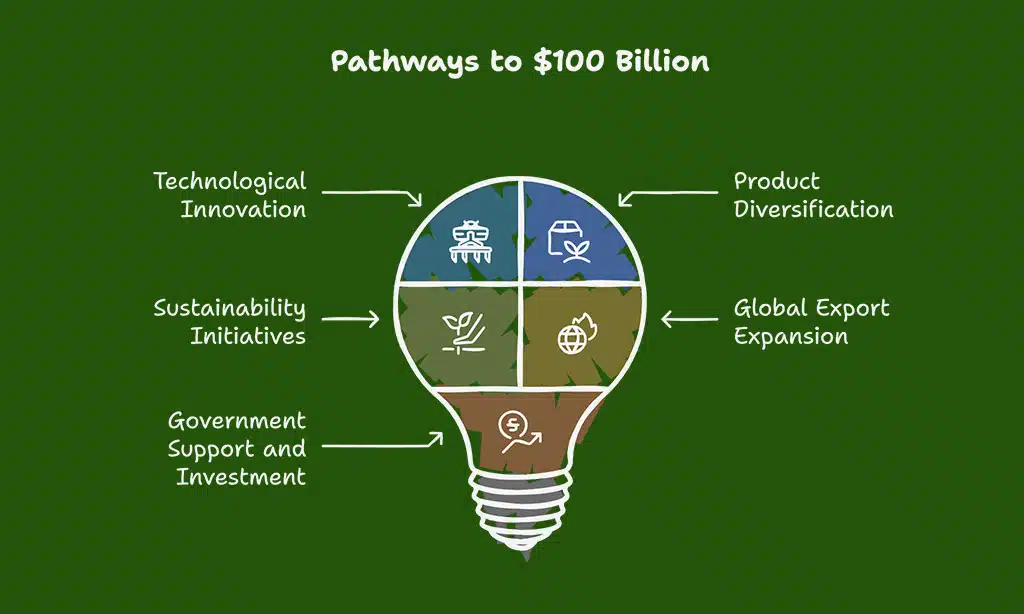
The Australian agriculture sector is making significant strides toward achieving the ambitious $100 billion target set for 2030. This goal aims to increase the value of farm gate output, bolstering the country’s agricultural exports and ensuring sustainability. Key contributions to reaching this target include:
- Technological Innovation: Advanced farming technologies, such as precision agriculture and automation, are improving productivity and reducing operational costs. These innovations enable farmers to produce more with fewer resources, increasing both yield and profit.
- Product Diversification: By expanding into new crops and livestock sectors, such as avocados, almonds, and high-quality beef, Australia is tapping into emerging global markets, further driving export growth.
- Sustainability Initiatives: Sustainable farming practices, including regenerative agriculture, water conservation technologies, and eco-friendly farming techniques, are attracting premium markets worldwide. These practices not only protect the environment but also enhance the agricultural sector’s long-term viability.
- Global Export Expansion: With a strong focus on exports to key markets in Asia, the Middle East, and beyond, Australian agriculture is meeting rising global demand for high-quality, sustainable food products. Free trade agreements have further facilitated these export opportunities.
- Government Support and Investment: The Australian government has invested heavily in rural infrastructure, research, and development, ensuring that farmers have the tools, knowledge, and resources needed to succeed in an increasingly competitive market.
Together, these factors are driving Australia’s agricultural growth, positioning the sector to contribute substantially to the $100 billion target, enhancing both economic prosperity and global food security.
Let’s get more detailed into it:
The $100 Billion Vision – What It Means for Australia
The vision of reaching $100 billion in farm output is not just about economic expansion but also about positioning Australia as a global leader in sustainable and technologically advanced agriculture.
Achieving this target requires collaboration between the government, private sector, research institutions, and farmers to drive innovation, enhance productivity, and open new markets.
By prioritizing key areas such as infrastructure development, investment in agri-tech, and climate-resilient farming techniques, Australia is setting a precedent for the future of global agriculture.
Understanding the Government’s Agricultural Growth Strategy
The Australian government, in collaboration with industry leaders, has developed a comprehensive set of policies and initiatives aimed at driving agricultural growth and ensuring that the sector meets the ambitious $100 billion target by 2030.
These policies focus on increasing productivity, expanding market access, integrating sustainable practices, and leveraging advanced agricultural technologies to optimize resource use.
Additionally, significant investments are being made to improve infrastructure, provide financial incentives for farmers, and enhance research and development initiatives that will shape the future of farming in Australia. These strategies include:
| Strategy | Key Benefits |
| Investment in Infrastructure | Improves transportation networks, cold storage, and irrigation systems to enhance productivity. |
| Trade Agreements | Strengthens international partnerships through free trade agreements (FTAs), increasing market access. |
| Sustainability Initiatives | Encourages regenerative agriculture and eco-friendly practices to ensure long-term viability. |
| Research and Development | Supports innovation in crop yields, livestock health, and precision farming technologies. |
Key Sectors Driving the Agricultural Boom
The growth of Australian agriculture is fueled by multiple sub-sectors, each contributing significantly to the national economy through innovation, exports, and job creation.
These sectors work together to enhance food security, improve market competitiveness, and support rural communities.
With increasing global demand for high-quality Australian produce, these sub-sectors are at the forefront of driving agricultural success, backed by government initiatives, research advancements, and sustainability practices.
| Sector | Economic Contribution |
| Livestock and Dairy | Beef, lamb, and dairy exports contribute billions to the national economy. |
| Grain and Crop Production | Wheat, barley, and canola drive significant farm revenue. |
| Horticulture and Viticulture | Fruit, vegetables, and wine exports continue to expand, supporting rural employment. |
| Aquaculture and Fisheries | Sustainable seafood farming boosts domestic and global markets. |
Innovations and Technologies Transforming Australian Agriculture
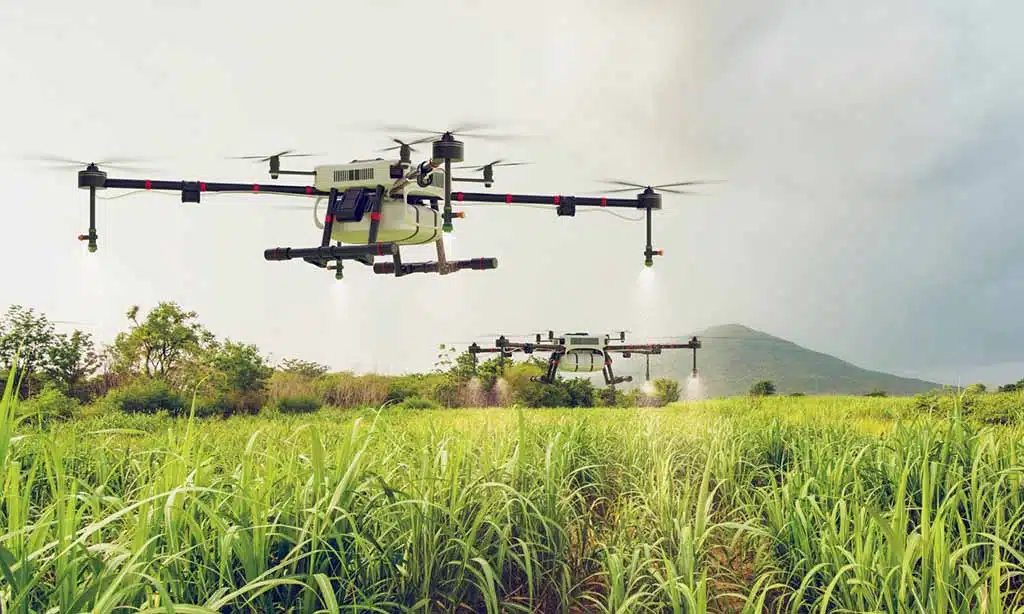
Technology continues to redefine the landscape of Australian agriculture, ushering in a new era of efficiency, sustainability, and profitability.
Farmers are increasingly adopting digital tools, automation, and data analytics to address traditional farming challenges while boosting productivity.
These innovations not only improve resource management but also pave the way for more resilient agricultural practices that can withstand climate change and fluctuating market demands.
Smart Farming and Precision Agriculture
Technology is at the core of agricultural growth, revolutionizing farm operations, increasing sustainability, and improving profitability.
The integration of digital tools, artificial intelligence, and data-driven insights has significantly transformed traditional farming methods, enabling Australian farmers to optimize productivity, reduce waste, and make informed decisions.
From real-time soil monitoring to automated harvesting, smart farming is leading the way in ensuring food security and economic growth. Key innovations include:
| Innovation | Impact on Agriculture |
| AI and IoT Integration | Automated machinery, drones, and smart sensors optimize farm management. |
| Big Data Analytics | Predictive modeling improves decision-making on crop rotation and pest control. |
| Automated Irrigation Systems | Precision irrigation reduces water wastage and boosts yields. |
Sustainable Farming Practices for Long-Term Growth
Sustainability is a priority for Australian farmers, ensuring long-term productivity while protecting natural resources.
As climate change and environmental concerns become more pressing, Australian agriculture has taken significant steps to adopt eco-friendly farming methods, reduce carbon footprints, and promote biodiversity.
These efforts not only enhance food security but also make farming more resilient to unpredictable weather patterns. Key sustainable practices include:
| Practice | Benefits |
| Regenerative Agriculture | Focuses on soil health, crop diversity, and carbon sequestration. |
| Water Conservation Techniques | Drip irrigation and rainwater harvesting optimize water use. |
| Renewable Energy in Farming | Solar panels and wind energy power many agricultural operations. |
Strengthening Local Supply Chains
A well-structured local supply chain is essential for ensuring food security, stabilizing prices, and reducing dependency on imports.
Australia has been making significant efforts to enhance supply chains by improving logistics, expanding storage facilities, and fostering collaborations between farmers, distributors, and retailers.
These improvements help prevent food wastage, improve product quality, and ensure timely deliveries. Key areas of focus include:
| Supply Chain Enhancement | Key Benefits |
| Farmer Cooperatives | Enables small-scale farmers to access better pricing and distribution networks. |
| Cold Storage and Logistics | Reduces post-harvest losses and ensures fresh produce reaches consumers efficiently. |
| Digitized Supply Chains | Enhances traceability and real-time tracking for better inventory management. |
| Sustainable Packaging | Reduces environmental impact and extends product shelf life. |
Takeaways
The Australian agriculture sector fuels the $100 billion target through a combination of innovation, sustainability, and market expansion. With strong government support, investment in agritech, and a commitment to environmental stewardship, the industry is on track to meet its ambitious goal.
Advanced technologies, such as AI-driven precision farming and automated irrigation systems, are enhancing efficiency, while sustainable practices like regenerative agriculture and water conservation help maintain long-term viability.
Furthermore, expanding global trade agreements and strengthening local supply chains will solidify Australia’s position as a leading agricultural powerhouse.
By addressing challenges such as climate change and labor shortages through strategic policy interventions and technological integration, the sector will not only achieve this target but also create a resilient and prosperous future for Australian farming.