The United States may have won the historic space race in 1969 by putting a man on the moon, but in 2025, the United Kingdom has secured a space victory of its own.
British astronaut Tim Peake has successfully collaborated with Vodafone to make the world’s first direct-to-cell satellite video call, surpassing Elon Musk’s Starlink in this technological race.
Vodafone’s Breakthrough in Satellite Communication
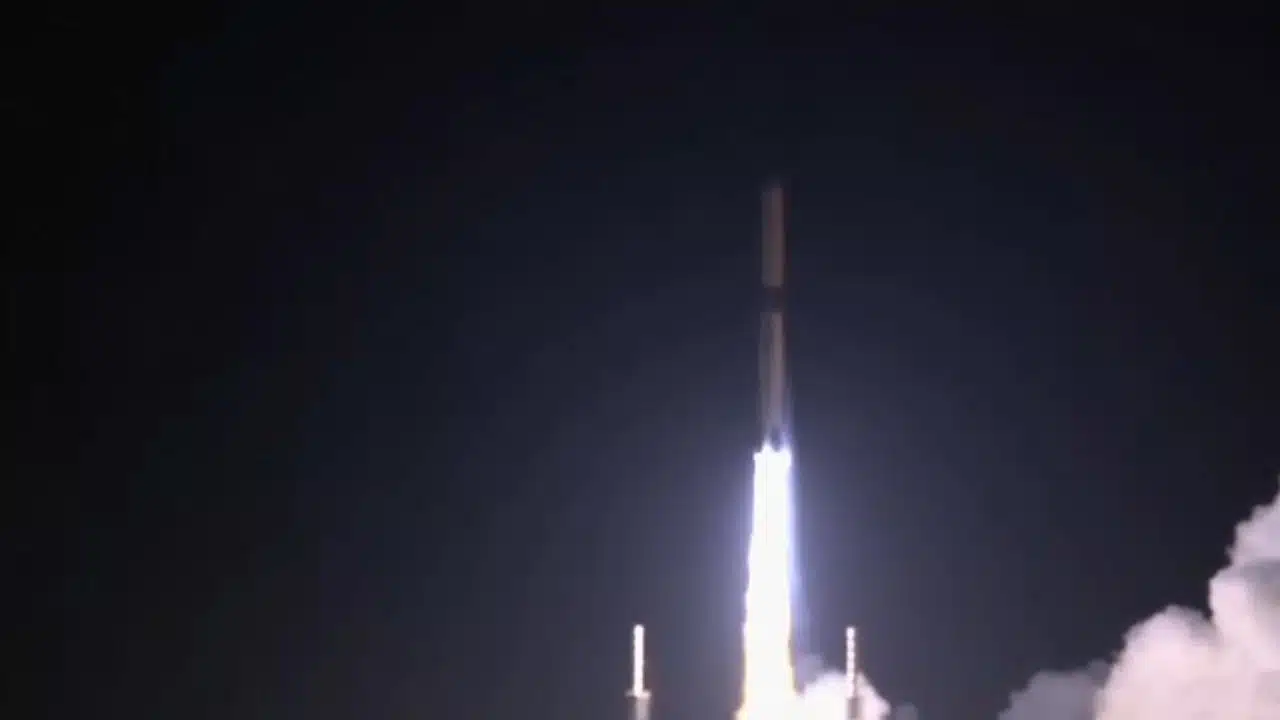
The achievement marks a major milestone in telecommunications, as it enables mobile phones to connect directly to satellites without requiring ground-based networks. The successful video call was made using an ordinary smartphone from a remote mountainous area in Wales, a location that has never been connected to a broadband network. Vodafone’s cutting-edge BlueBird satellites made this possible, boasting a massive 64-square-meter communications array, which provides a strong and direct connection to mobile phones.
Vodafone engineer Rowan Chesmer placed the historic call to Vodafone CEO Margherita Della Valle using this breakthrough technology. Unlike conventional satellite phones or Starlink connections, which require specialized and often bulky equipment, Vodafone’s system functions with standard mobile devices. According to Ms. Della Valle, this achievement represents a leap forward in making satellite connectivity accessible to everyone, even in the most remote locations.
How the Technology Works?
Typically, mobile video calls rely on signals being transmitted between ground-based towers. Satellite phones and Starlink technology allow users to bypass terrestrial networks, but they still depend on large and costly equipment. Vodafone’s new system eliminates that barrier by using powerful satellites to connect directly with unmodified smartphones.
When a call is placed, the signal is sent up to one of Vodafone’s satellites, which then relays it to a specialized ‘space-land gateway’ in the UK. From there, the signal is integrated into terrestrial networks and delivered to the recipient’s device. This innovation ensures 4G and 5G coverage even in previously unreachable areas, offering seamless connectivity worldwide.
Elon Musk’s Starlink Left Behind
While Vodafone celebrates its groundbreaking achievement, Musk’s Starlink remains in the early stages of its own direct-to-cell satellite technology. So far, Starlink has only managed to send a text message via satellite, a feat that requires significantly less bandwidth than a full video call. In comparison, Vodafone’s BlueBird satellites offer peak speeds of 120 Mbps, whereas Musk admitted in December that Starlink’s current capacity is only around 10 Mbps per beam.
Despite Musk’s existing advantage in satellite deployment—having launched over 6,900 communication satellites, including 330 with direct-to-cell capability—Vodafone’s head start in direct-to-cell video calling places it ahead in this new space race. While Starlink may eventually scale up its services, Vodafone has already proven its capability to deliver real-world results.
The Future of Space-Based Mobile Connectivity
Vodafone’s breakthrough paves the way for widespread global satellite communication, with plans to roll out commercial services across Europe by the end of this year. More extensive coverage is expected by 2026, making it possible for anyone to stay connected regardless of location.
Tim Peake, who was the first British astronaut to live on the International Space Station, emphasized the importance of staying connected in remote areas. Reflecting on his own experience, he highlighted how video calls made a significant difference when he communicated with his family from space. Now, thanks to this technological advancement, people on Earth will no longer face connectivity blackouts, no matter where they are.
Although Starlink maintains an edge in satellite deployment through its partnership with SpaceX, Peake suggests that even this advantage may soon diminish. As competition in the satellite launch industry intensifies, costs are expected to decrease, allowing more companies to challenge SpaceX’s dominance.
With Vodafone’s landmark achievement, the race for global satellite connectivity has taken a dramatic turn—one where Elon Musk is no longer in the lead. Instead, the UK has claimed victory in this latest chapter of space innovation, proving that the space race is far from over.
The Information is Collected from MSN and Daily Mail.