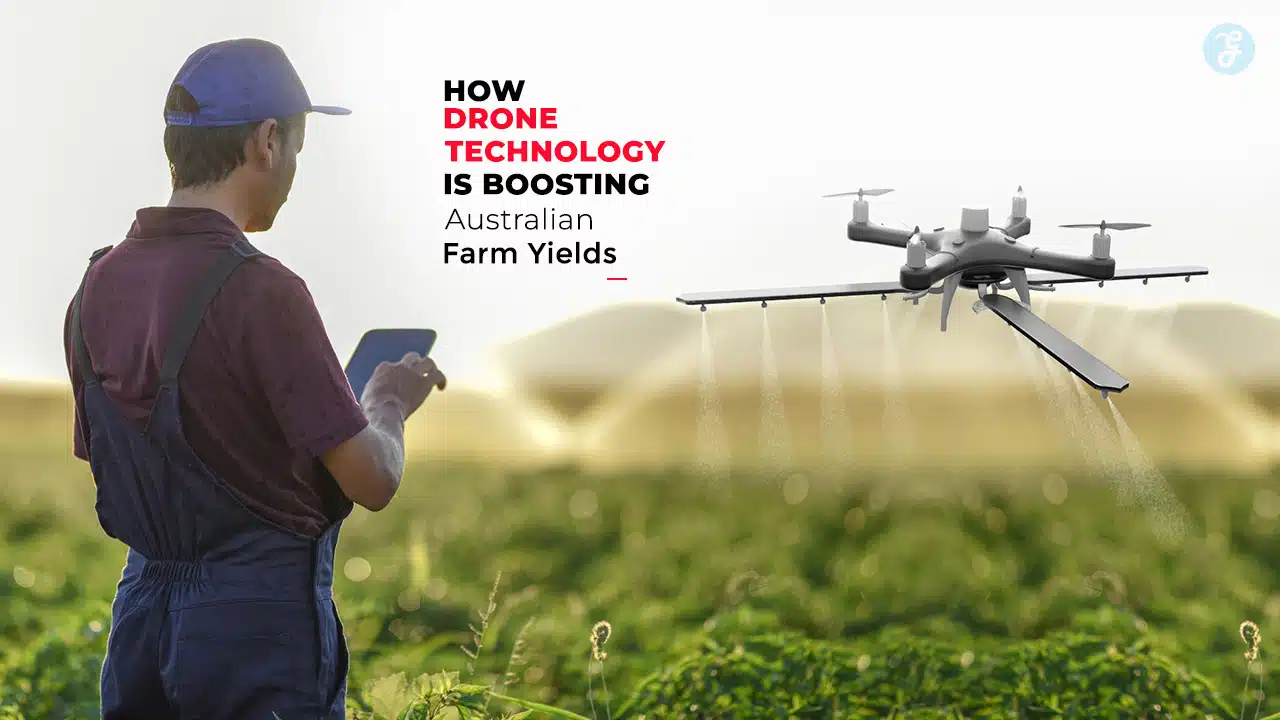
Agriculture in Australia is undergoing a revolution with the integration of drone technology. Farmers across the nation are leveraging drones to enhance crop management, streamline operations, and significantly boost yields.
These flying marvels provide real-time data, increase precision, and reduce labor-intensive tasks, making them indispensable in modern farming practices.
In this comprehensive guide, we’ll explore how drone technology is boosting Australian farm yields, ensuring farmers stay competitive in a rapidly evolving industry.
Why Drones Are Essential for Australian Farms
Addressing Australia’s Agricultural Challenges
Australia’s agriculture industry faces unique challenges, including:
- Climate Variability: Unpredictable weather patterns affecting crop health.
- Water Scarcity: Managing irrigation efficiently in drought-prone areas.
- Labor Shortages: Rising costs and limited workforce availability.
Drones offer practical solutions by providing accurate data for resource management, reducing dependency on manual labor, and optimizing yields despite environmental constraints.
For instance, drought-hit regions in New South Wales have reported a 30% reduction in water usage through drone-assisted irrigation. Additionally, drones help predict weather impacts, allowing farmers to plan planting and harvesting schedules with greater accuracy.
| Challenge | Drone Solution |
| Climate Variability | Real-time weather monitoring and crop analysis |
| Water Scarcity | Precision irrigation using moisture sensors |
| Labor Shortages | Automated mapping and surveillance |
Benefits of Drone Technology in Farming
- Precision Agriculture: Targeted application of fertilizers and pesticides.
- Cost Efficiency: Reduction in labor and resource wastage.
- Improved Crop Health: Early detection of pests, diseases, and nutrient deficiencies.
- Enhanced Planning: Advanced mapping capabilities for better crop rotation and resource allocation.
| Benefit | Details |
| Precision | Accurate input application |
| Efficiency | Reduced time for field analysis |
| Sustainability | Minimized environmental impact |
| Yield Optimization | Increased productivity through data insights |
Key Applications of Drones in Australian Agriculture
1. Crop Monitoring and Health Analysis
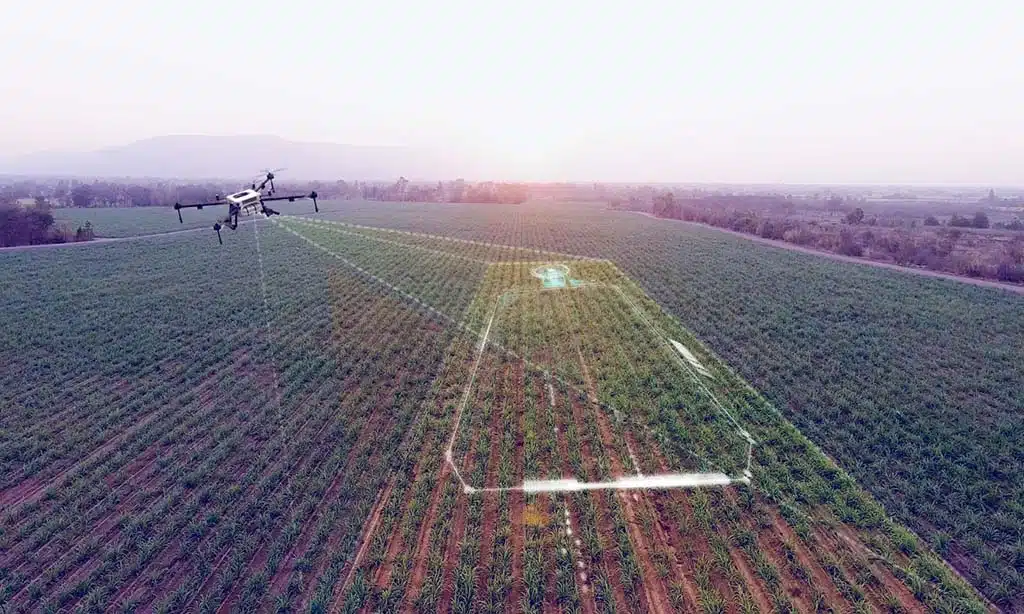
Drones equipped with advanced cameras and sensors provide detailed imaging of crops. Multispectral and thermal imaging helps identify:
- Stress from pests or diseases.
- Areas requiring fertilization or irrigation.
- Variability in crop health across fields.
Expanded Insights
For example, a sugarcane farm in Queensland used drones to identify regions affected by fungal infections. By addressing these areas early, the farm reduced crop losses by 25% and saved $10,000 in potential yield losses. Farmers have also reported improved decision-making when integrating drone data with existing farm management software.
| Feature | Benefit |
| Multispectral Imaging | Detects issues invisible to the naked eye |
| Thermal Cameras | Identifies water stress areas |
| Real-Time Data | Enables immediate corrective actions |
| Integration Capability | Combines with software for comprehensive insights |
2. Precision Agriculture
Drones play a pivotal role in precision farming by enabling:
- Targeted Spraying: Ensuring pesticides and fertilizers are applied only where needed.
- Optimized Planting: Mapping soil quality for better seed placement.
Practical Example
A cotton farm in Victoria implemented drone-assisted spraying, cutting chemical usage by 40%. This not only saved costs but also improved soil health by avoiding over-application of fertilizers. Additionally, farmers utilized drone data to evaluate planting density, optimizing yield in different soil zones.
| Task | Traditional Method | Drone Technology |
| Fertilizer Application | Manual spraying | Targeted drone application |
| Soil Quality Mapping | Manual soil sampling | Aerial mapping |
| Planting Evaluation | General observation | Zone-specific recommendations |
3. Irrigation and Water Management
Efficient water use is critical in Australia’s dry climate. Drones help farmers:
- Map soil moisture levels using hyperspectral sensors.
- Detect irrigation inefficiencies and leaks.
- Plan water distribution for optimal crop growth.
Expanded Insights
In Western Australia, a wheat farm used drones to analyze soil moisture across 200 hectares. This analysis revealed uneven irrigation, prompting adjustments that saved 20% in water usage over one growing season. Furthermore, drones can identify salt-affected areas, enabling corrective measures to maintain soil fertility.
| Task | Traditional Method | Drone Technology |
| Soil Moisture Mapping | Manual sampling | Sensor-based aerial mapping |
| Leak Detection | Visual inspection | Thermal imaging |
| Salinity Assessment | Laboratory testing | Remote drone analysis |
Case Studies: Success Stories from Australian Farms
1. Vineyards in South Australia
A prominent vineyard in South Australia reported a 20% increase in grape quality after integrating drones. By monitoring pest activity and optimizing irrigation schedules, the vineyard achieved:
- Healthier vines.
- Reduced water usage.
- Enhanced yield consistency.
Expanded Details
Using drones equipped with multispectral sensors, the vineyard identified areas needing immediate attention. This proactive approach prevented potential pest outbreaks during critical growth stages. The vineyard also leveraged drone data to plan future planting patterns based on historical yield trends.
2. Wheat Farms in Western Australia
A wheat farmer used drones to monitor 500 hectares, saving 40% on pesticide costs and increasing yield by 15%. The drones identified pest hotspots, allowing for targeted intervention.
| Farm Type | Location | Outcome |
| Vineyard | South Australia | 20% improvement in grape quality |
| Wheat Farm | Western Australia | 15% increase in yield, 40% reduction in costs |
| Mixed Crops | New South Wales | 25% water savings, reduced labor costs |
Advantages of Using Drones in Farming
Efficiency and Cost Savings
Drones collect data faster and more accurately than traditional methods. For example:
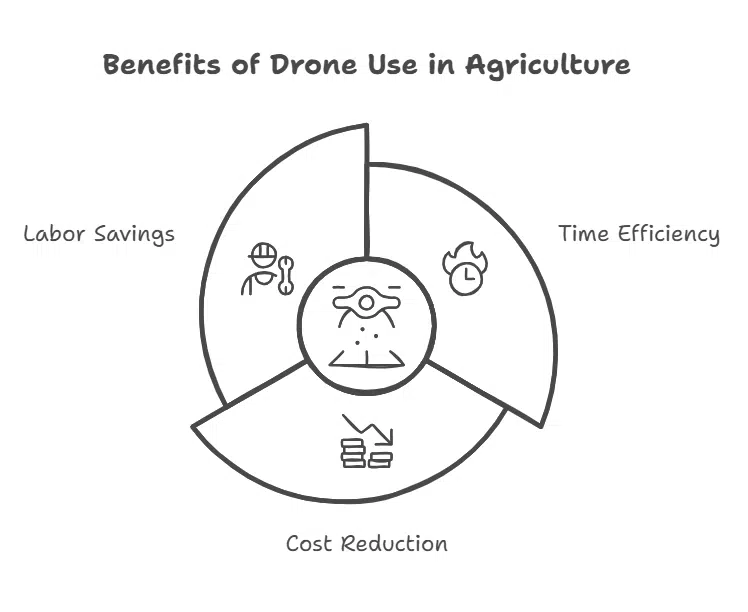
- Time Efficiency: Mapping a 100-hectare farm takes hours with drones compared to days manually.
- Cost Reduction: Targeted spraying reduces chemical use by up to 30%.
- Labor Savings: Reduces reliance on manual labor for routine tasks like surveillance.
Environmental Sustainability
By minimizing chemical runoff and optimizing resource use, drones support eco-friendly farming practices. This is essential for preserving Australia’s fragile ecosystems. In addition, drones help monitor biodiversity on farmlands, ensuring compliance with conservation regulations.
| Factor | Traditional Methods | Drone Technology | Improvement |
| Mapping Time | 3 days | 3 hours | 90% faster |
| Chemical Wastage | High | Minimal | Reduced by 50% |
| Labor Dependency | High | Low | Significant reduction |
Challenges in Adopting Drone Technology
Regulatory Hurdles
Farmers must adhere to regulations set by Australia’s Civil Aviation Safety Authority (CASA). Key requirements include:
- Licensing for commercial drone use.
- Flight restrictions in certain areas.
Expanded Details
For example, CASA regulations mandate that drones cannot be flown over 120 meters without special permissions, limiting certain types of data collection. Collaborative efforts are underway to streamline approval processes for agricultural drone operations.
High Initial Investment
While drones offer long-term savings, their upfront cost can be a barrier for small-scale farmers. Government subsidies and cooperative ownership models can help mitigate this.
| Expense | Estimated Cost |
| Entry-Level Drone | AUD 2,000–5,000 |
| Advanced Drone Setup | AUD 20,000–50,000 |
| Training and Licensing | AUD 1,000–2,500 |
| Maintenance | AUD 500–1,000 annually |
Future Trends: The Evolving Role of Drones in Australian Farming
Integration with AI and Machine Learning
The next wave of innovation includes drones equipped with artificial intelligence, enabling:
- Predictive analytics for crop yield estimation.
- Automated decision-making based on collected data.
- Autonomous flight paths for comprehensive farm coverage.
Expanding Capabilities
New drone models feature:
- Real-time weather data collection.
- Livestock tracking and health monitoring.
- Advanced soil nutrient analysis for precision farming.
| Feature | Description |
| AI-Powered Insights | Predictive analytics for better planning |
| Livestock Monitoring | Tracks health and movement of animals |
| Weather Sensors | Real-time data for climate resilience |
| Nutrient Analysis | Soil quality mapping for better yields |
Takeaway
Drone technology is revolutionizing Australian agriculture by addressing critical challenges like climate variability, water scarcity, and labor shortages. From boosting farm yields to promoting sustainable practices, drones are empowering farmers with tools to stay ahead in a competitive industry.
As technology continues to evolve, the integration of AI and advanced sensors will further enhance the capabilities of drones, ensuring they remain at the forefront of modern farming innovation.
Investing in drones is no longer optional but essential for future-ready farming. By adopting this transformative technology, Australian farmers can achieve greater efficiency, sustainability, and profitability.