People who send money, share financial data, or use a payment app want a service that works when they need it—and doesn’t expose them to avoidable risk. The fintech trends in 2026 are changing how providers try to meet those expectations, from instant payments to AI-assisted decisions.
The pace varies by country. Some developments are already part of everyday financial services; others remain pilots or early experiments. The difference matters. A technology can look promising in a trial and still be years from offering a reliable, well-protected service to ordinary customers.
1. AI Enters Everyday Finance
Banks and payment companies have used machine learning to flag suspicious transactions for years. They are now exploring artificial intelligence (AI) for tasks such as reviewing documents, supporting customer service, checking compliance, and analyzing financial data.
The Financial Stability Board (FSB) sees potential for greater efficiency and improved compliance. It also warns about cybersecurity, model governance, and reliance on a small number of technology providers.
The practical question for customers is when AI affects an important decision. An automated answer to a routine question is not the same as a system influencing access to credit or an account. Providers should explain consequential decisions and give customers a way to challenge errors. That makes responsible AI one of the more consequential fintech trends in 2026.
2. AI Agents Move Toward Payments
An AI agent can plan and complete several steps in a task. In commerce, that could eventually include comparing products and making a purchase on someone’s behalf. The idea is still early, not a routine feature across financial services.
The hard part is setting boundaries. Customers need to know what an agent can buy, how much it may spend, and when it must ask first. A Federal Reserve official described agentic commerce as an early-stage development that could affect payments if adoption grows.
This is one of the fintech trends in 2026 where convenience depends on control. A useful agent should make it easy to review its actions, limit payment authority, and stop it from spending.
3. Instant Payments Become Expected
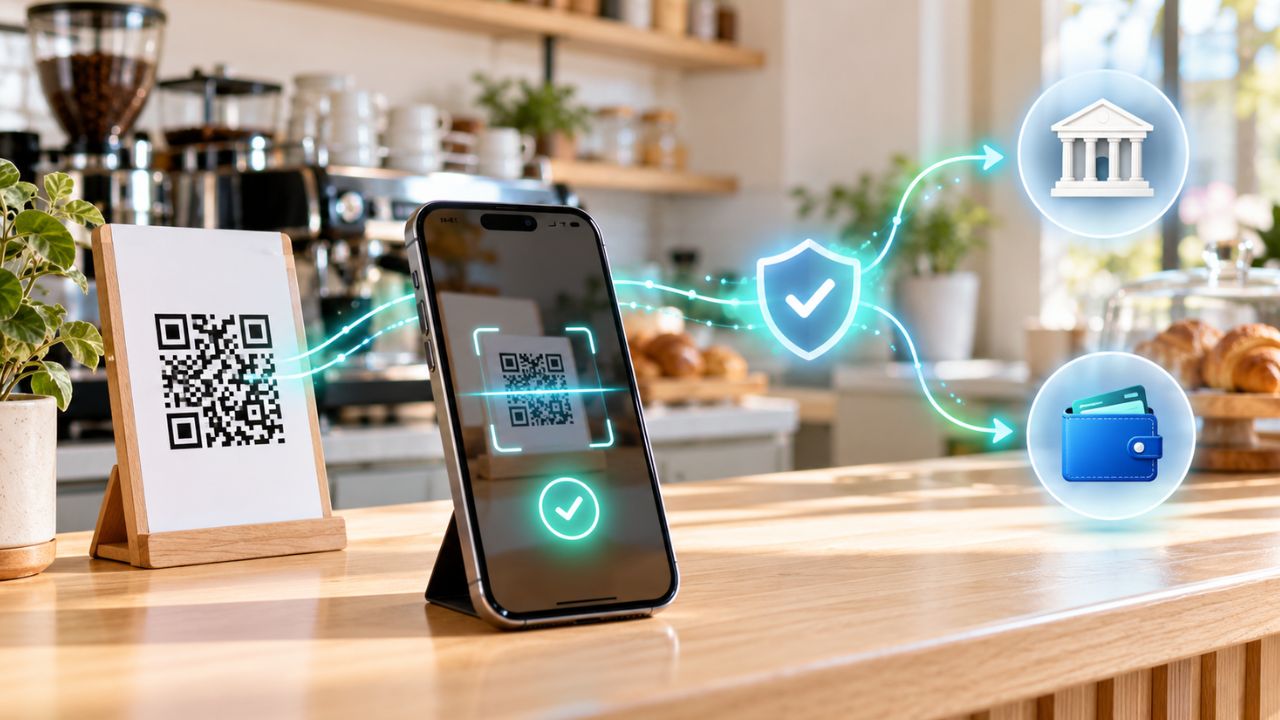
Fast payment systems let participating accounts exchange money quickly, often outside normal banking hours. That can help a household receive money sooner or a small business access funds without waiting for a traditional transfer to clear.
The World Bank’s payment-system work includes fast payments and interoperability between providers. When banks and wallets connect, people have fewer reasons to keep separate balances just to move money between services.
Faster does not always mean safer. Once a transfer is sent, there may be little time to stop it. Customers should check recipient details before confirming, especially when a payment request arrives unexpectedly. Among the fintech trends in 2026, instant payments may be the most visible to everyday users.
4. Cross-border Payments Remain Costly
International transfers can pass through several providers, with currency conversion, fees, and delays along the way. The FSB’s 2025 progress report found some improvement in speed, but said global costs remained persistent and progress had not yet delivered broad gains for end users.
Banks and central banks are testing connected payment networks. The BIS’s Project Agorá, for example, explores a shared platform for wholesale cross-border payments. It is a project, not evidence that consumer transfers will soon be instant or inexpensive everywhere.
For now, compare the exchange rate, total fee, delivery estimate, and local availability before choosing a provider. This remains one of the fintech trends in 2026 where global headlines can run ahead of what customers actually experience.
5. Open Finance Widens Data Sharing
Open banking lets customers authorize sharing certain account information with other providers. Open finance extends that approach to a wider set of financial data and services, depending on local rules.
A customer might bring accounts together in a budgeting tool or authorize a lender to consider a broader view of their finances. The World Bank describes open finance as a way for consumers to control and share financial data with other providers, potentially supporting more tailored products.
Before agreeing, check what data the service wants, who receives it, and how to withdraw access. Data portability can widen choice, but it also creates more places where sensitive information must be protected. Open finance is one of the fintech trends in 2026 where customer consent needs to be clear and practical.
6. Stablecoins Face a Trust Test
Stablecoins are digital tokens designed to track the value of an asset, often a national currency. Financial firms are examining their possible use in payments and settlement, including some cross-border transactions.
The name does not make them risk-free. Users need to understand how a token is backed, whether it can be redeemed, what protections apply, and which rules govern its issuer.
The BIS’s 2026 analysis says stablecoins could support faster, programmable payments, but raises concerns about redemption, interoperability, financial crime, and financial stability. Wider use could also affect bank funding and monetary systems.
The important fintech trends in 2026 story is closer scrutiny of where regulated stablecoins may fit—not an immediate replacement for ordinary bank transfers.
7. Tokenization Reaches Traditional Finance
Tokenization represents an asset or claim digitally on a programmable platform. It can apply to financial assets such as bonds or bank deposits; it is not limited to cryptocurrency.
The potential benefit is coordinating steps in a transaction, such as issuance and settlement. But institutions still have to answer basic questions: Who controls the platform? How can an asset be redeemed? What happens when a transaction goes wrong?
The BIS has examined how tokenization might fit into the existing financial system, including through programmable payments. It also emphasizes the need for legal frameworks and supervision.
For now, much of the activity involves financial institutions and markets rather than everyday consumer accounts. Tokenization is one of the fintech trends in 2026 worth watching, but a successful pilot does not prove a service is ready to scale.
8. CBDC Projects Progress Unevenly
A central bank digital currency (CBDC) is digital money issued by a central bank. A retail CBDC would be available to the public; a wholesale version would be used by financial institutions.
A 2025 BIS survey found that 91% of 93 central banks surveyed were exploring a retail CBDC, a wholesale CBDC, or both. Wholesale work was generally more advanced, and countries’ goals and approaches varied.
Exploration does not mean a country is about to launch a CBDC. It can mean research, design work, or a pilot. Any public version would require decisions about privacy, access, and how it interacts with bank deposits and existing payment systems.
9. Digital Identity Affects Access
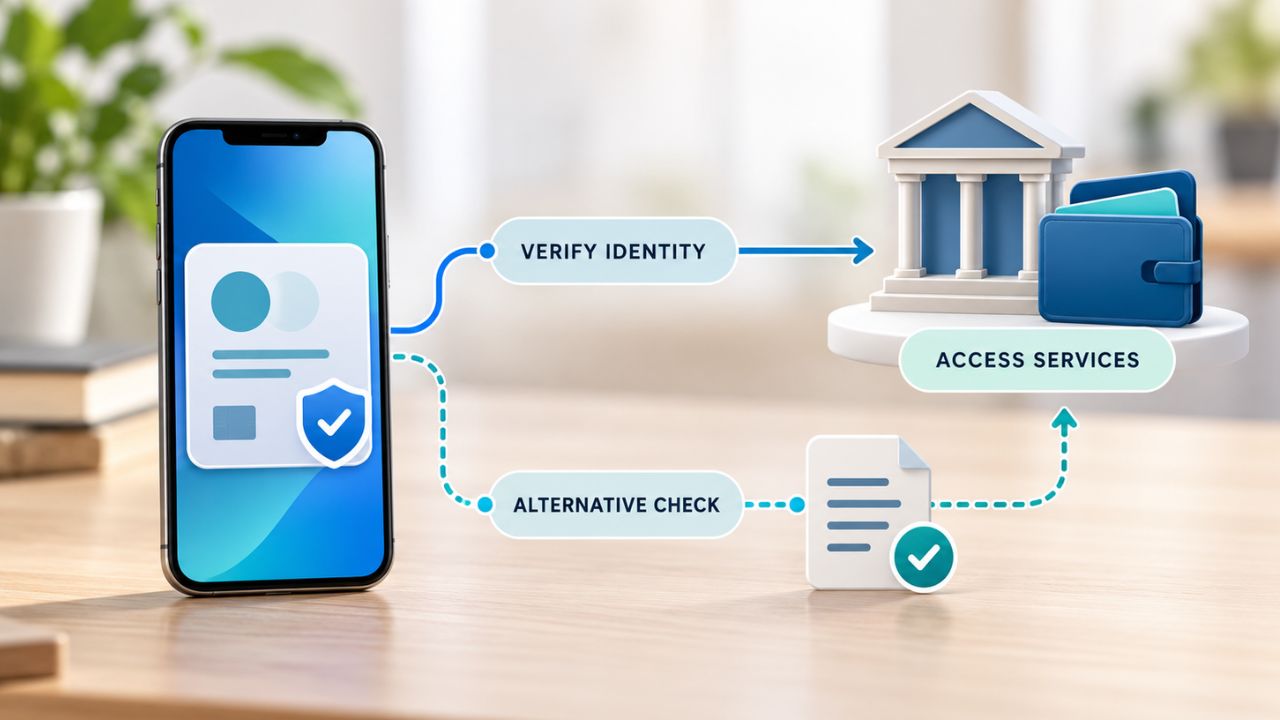
Financial providers need to verify customers, and digital identity tools can make remote checks easier. They may help people open accounts without visiting a branch, but rigid systems can exclude people whose documents or records cannot be verified.
The World Bank’s 2025 Global Findex drew on surveys of about 148,000 adults in 141 economies. It added globally comparable information on mobile phone ownership, internet use, and digital safety, showing how connectivity and financial access intersect.
A good onboarding process needs a way to correct mismatches and offer alternatives. Digital identity is one of the fintech trends in 2026 that can widen access only when customers can resolve errors without getting locked out.
10. Fraud Protection Becomes Central
Fast, always-on payments give fraudsters less time to act, but also leave customers less time to stop a transfer. A BIS report on cross-border payment fraud points to fragmented data, limited real-time checks, and difficulty sharing information between systems as ongoing challenges.
Security depends on more than a bank’s core system. Payment interfaces, authentication, software providers, and recovery plans can all affect whether customers can access their money during an incident. A BIS speech on digital banking stresses that these connected dependencies need protection and oversight.
Customers may see more verification steps or warnings before a transfer. Providers should make those checks understandable and proportionate. Security is becoming a defining part of fintech trends in 2026, not a feature that can be added after launch.
Final Thoughts
The fintech trends in 2026 bring real convenience, but speed and automation are not enough to make a service trustworthy. Customers need clear control over payments and data, a way to challenge mistakes, and confidence that essential services can recover from disruption.
Before adopting a new financial service, check its local availability, permissions, fees, and support options. That small review is more useful than assuming a new technology is automatically safer or better.
Frequently Asked Questions (FAQs) on Fintech Trends
Is a CBDC the same as mobile money?
No. Mobile money is generally provided by a private company or financial institution. A CBDC is a digital form of money issued by a central bank.
Does tokenization mean an asset is a cryptocurrency?
No. Tokenization is a way of representing an asset or claim digitally. The asset may be a regulated financial product or bank deposit, and its legal rights depend on the specific arrangement.
Can customers revoke open-finance data access?
That depends on the provider and local framework. Before connecting accounts, check how to withdraw permission and whether the provider retains any information after access ends.